Skip to content
wheretotravel.info
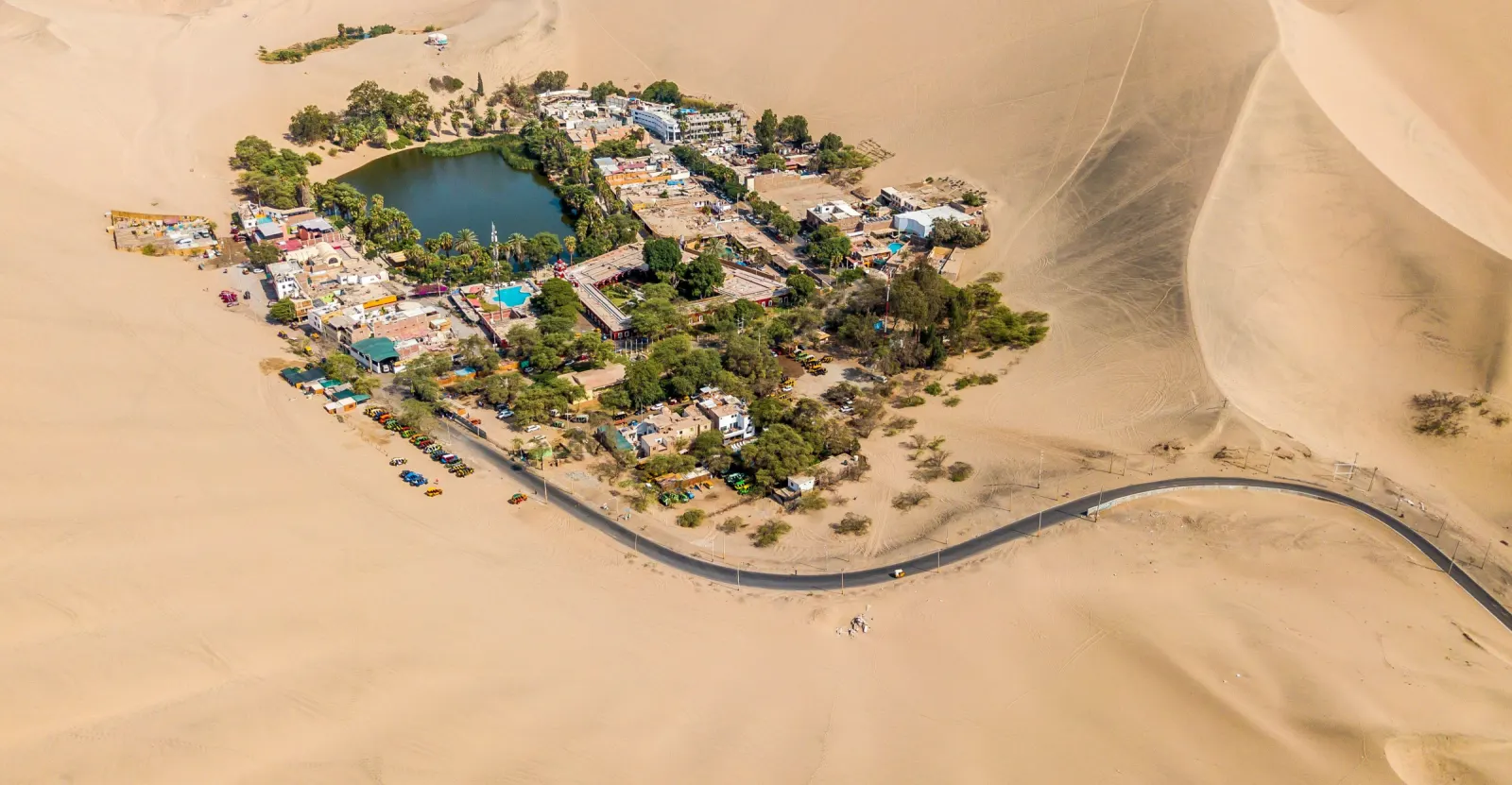
aerial view of Huacachina oasis town surrounded by dunes

Ica travel guide

What to see, where to stay and the best time to visit Ica, Peru.

Best: Jun, Jul, Aug, Sep

Photo: Willian Justen de Vasconcellos / Pexels

Country
Peru

About Ica

Ica is an inland city in Peru with about 282,407 people, surrounded by sand dunes and desert. Many first-time visitors stay in Huacachina, a small oasis known for dune buggy rides and sandboarding. In the city you can see the Plaza de Armas and the Ica Regional Museum. Wineries in La Tinguiña and Subtanjalla offer wine and pisco tastings. The Ocucaje Desert fossil tour takes half a day. The best months to go are June to September.

How many days do you need in Ica?

Plan on about 2 days. Spend the first day at Huacachina Oasis, including a 2–3 hour dune buggy and sandboarding tour. On the second day, visit a winery, the museum and the Plaza de Armas, or take the half-day Ocucaje fossil tour.

Top attractions in Ica

  1. 1Huacachina Oasis

    half a day

    Huacachina

    A small lagoon ringed by palm trees and tall sand dunes on the edge of Ica. Most visitors come to walk the dunes, watch the sunset from the ridges and use it as a base for desert trips.

  2. 2Dune buggy and sandboarding tours

    2–3 hours

    Huacachina

    Buggy tours take you into the dune field around Huacachina, stopping so you can sandboard down the slopes. Late-afternoon trips often end with a sunset view over the desert. The ride is fast and bumpy, so it suits people who enjoy thrills.

  3. 3Ica Regional Museum (Museo Regional Adolfo Bermúdez Jenkins)

    1–2 hours

    Ica city

    The main history museum of the region, with finds from the Paracas, Nazca and Ica cultures. Highlights include mummies, textiles, ceramics and skulls that show ancient skull surgery.

  4. 4Tacama Winery (Viña Tacama)

    2–3 hours

    La Tinguiña

    One of Peru's oldest wine and pisco estates, set in a colonial hacienda among vineyards. Tours show the production process and end with a tasting.

  5. 5El Catador Winery

    1–2 hours

    Subtanjalla

    A traditional family bodega that makes pisco and wine using older methods. It is a common stop on pisco tours and gives a more rustic view of production than the large estates.

  6. 6Vista Alegre Winery

    1–2 hours

    La Tinguiña

    A long-running pisco and wine producer close to the city. Guided visits cover the vineyards, the stills and a tasting of different pisco styles.

  7. 7Plaza de Armas

    1 hour

    Ica city

    The main square of Ica, lined with colonial-style buildings and a cathedral. It is a good place to start a walk through the centre and try local sweets such as tejas.

  8. 8Ocucaje Desert fossil tour

    half a day

    Ocucaje

    A 4x4 trip into the desert south of Ica, where fossils of ancient whales, sharks and other sea creatures lie exposed in the sand. Many tours also stop at the Ocucaje winery.

  9. 9Cachiche

    1–2 hours

    Cachiche

    A small village on the edge of the city known for its local legends of witches and healers. Visitors come to see its statues and the famous seven-headed palm tree.

Ica by month

Average weather and our month score, from 10 years of climate data.

Weather by month and month scores for Ica
Month High / low Rain days Sunshine Score
January 31°C / 20°C 6 days (21 mm) 10.5 h/day 6.3/10
February 32°C / 21°C 7 days (22 mm) 9.9 h/day 5.8/10
March 32°C / 21°C 4 days (17 mm) 10.5 h/day 4.5/10
April 31°C / 19°C 1 day (3 mm) 11.2 h/day 7.4/10
May 28°C / 16°C 0 days (1 mm) 10.9 h/day 8.9/10
Best month: June 26°C / 13°C 0 days (0 mm) 10.5 h/day 10.0/10
Best month: July 25°C / 12°C 0 days (0 mm) 10.6 h/day 10.0/10
Best month: August 26°C / 12°C 0 days (0 mm) 11.0 h/day 10.0/10
Best month: September 27°C / 13°C 0 days (0 mm) 11.6 h/day 9.5/10
October 29°C / 14°C 0 days (1 mm) 11.8 h/day 8.7/10
November 29°C / 15°C 0 days (1 mm) 11.8 h/day 8.4/10
December 31°C / 18°C 1 day (4 mm) 11.2 h/day 7.5/10
  1. Jan

    Hot, with highs of 31°C and lows near 20°C. Expect about 5.5 rain days as the wetter spell begins. Verdict: good (6.3/10).

  2. Feb

    Highs of 31.7°C and 6.8 rain days, the most of any month, though only 22 mm falls. Warm nights at 21°C. Verdict: ok (5.8/10).

  3. Mar

    The hottest month, with highs of 32.3°C and warm 21°C nights. About 4.2 rain days. It has the lowest score of the year: ok (4.5/10).

  4. Apr

    Rain almost stops, with 0.7 rain days, and highs ease to 31°C. Expect 11.2 hours of sun a day. Verdict: good (7.4/10).

  5. May

    Highs drop to 28.1°C and there are 0 rain days. Nights cool to 15.6°C. Verdict: best (8.9/10).

  6. Jun

    Mild and dry, with highs of 25.5°C and 0.1 rain days. Nights fall to 13.1°C, so pack a layer. Verdict: best (10/10).

  7. Jul

    The coolest days of the year at 25.2°C, with 0 rain days and 12.2°C nights. Verdict: best (10/10).

  8. Aug

    Highs of 25.9°C, 0 rain days and the coldest nights of the year at 11.9°C. Verdict: best (10/10).

  9. Sep

    Warming to 27°C, with 0 rain days and 11.6 hours of sun a day. Verdict: best (9.5/10).

  10. Oct

    Highs of 28.5°C, 0.1 rain days and 11.8 hours of sun, the sunniest level of the year. Verdict: best (8.7/10).

  11. Nov

    Warm and dry, with highs of 29.2°C, 0.1 rain days and 11.8 hours of sun a day. Verdict: best (8.4/10).

  12. Dec

    Heat builds again, with highs of 30.5°C and 1.1 rain days as the wetter months approach. Verdict: best (7.5/10).

Climate averages 2015–2024 · Best time to visit Peru →

Where to stay in Ica

The best areas to base yourself and who each one suits.

Huacachina

Good for first-timers, backpackers, dune sports

A small desert oasis built around a lagoon and ringed by tall sand dunes, just west of Ica city. Staying here puts you on the doorstep of dune buggy tours, sandboarding and sunset walks on the dunes. The drawback is that it gets crowded with day-trippers, and some hostels hold loud parties late into the night.

Centro

Good for budget travellers, transport links, local life

The city centre around the Plaza de Armas has markets, local restaurants, banks and most bus company offices, so it is practical for short stays and onward travel. It feels like a working Peruvian city rather than a resort. The drawback is heavy traffic and street noise, and you need a taxi to reach the oasis and dunes.

La Angostura

Good for families, couples, pool stays

A residential area on the road between the centre and Huacachina, with larger resort-style lodgings, gardens and pools. It is calmer than the oasis but still a short taxi ride from both the dunes and the city. The drawback is that it is spread out and not very walkable, with few places to eat nearby.

Subtanjalla

Good for wine and pisco lovers, quiet

A semi-rural district north of the city with vineyards and traditional pisco bodegas, some of which offer tastings. It suits travellers who want a slower pace and the valley's farming side. The drawback is distance: you depend on taxis or tours to get to the centre and Huacachina, and evenings are very quiet.

Cachiche

Good for quiet stays, local folklore

A small traditional village on the southwest edge of Ica, known for its local legends about witches and its low-key, countryside feel. It is peaceful and close to the road towards the dunes. The drawback is limited services and a scattered layout, so you will rely on transport for most meals and activities.

Getting to and around Ica

From the airport
Few travellers fly into Ica, and we have no airport route data. Most visitors arrive by long-distance bus and take a taxi from the bus station to their hotel in Centro or out at Huacachina.
Public transport
Ica has little formal public transport. Locals use shared colectivos, mototaxis and taxis, and a taxi is the usual way between Centro and Huacachina. Tip: agree the fare with the driver before you get in.
On foot
Centro is easy on foot around Plaza de Armas. Huacachina is a small oasis you can walk round. Wineries in Subtanjalla and La Tinguiña need a taxi or tour.

Food to try in Ica

Pisco

Ica is at the heart of Peru's pisco country. This clear grape brandy is made in bodegas around the city. Locals drink it neat or in a pisco sour, and many bodegas offer tastings.

Tejas and chocotejas

Tejas are Ica's best-known sweets. They are pecans or dried fruit wrapped in manjar blanco, a milk caramel, then coated in sugar icing or chocolate. Shops sell them across town, and people often buy boxes as gifts.

Carapulcra con sopa seca

This is a pairing from Chincha, in the Ica region. Carapulcra is a stew of dried potato and pork. It comes with sopa seca, spiced noodles. Families serve it for big meals and celebrations.

Picante de pallares

Ica is known for its pallares, large lima beans grown in the valley. Cooks turn them into a creamy, lightly spicy stew, usually served with rice at lunchtime in local restaurants.

Frejol colado

This is a thick, sweet dessert of black beans cooked with sugar, milk and spices, often topped with sesame seeds. It comes from Chincha and is eaten across the region, usually after a meal.

Cachina

Cachina is a young, partly fermented grape wine. It is sweet and cloudy. Small bodegas around Ica sell it, and locals drink it around the grape harvest.

More of Peru

Peru travel guide →

Ica: frequently asked questions

When is the best time to visit Ica?

The best time to visit Ica is June to September. These months score between 9.5 and 10 out of 10. They are dry, with 0 mm of rain in July, August and September. Days are warm, not hot, with highs of 25 to 27°C. You also get 10.5 to 11.6 hours of sun a day. May, October and November also rate as best months, with slightly warmer highs.

Is Ica good to visit in July?

Yes, July is one of the best months for Ica, with a score of 10 out of 10. The average high is 25.2°C and there is no rain on record for the month. You get about 10.6 hours of sun a day. Nights are cooler, with lows around 12.2°C, so bring a warm layer for the evenings.

Does it rain in Ica?

Ica gets very little rain, and almost all of it falls between January and March. February is the wettest month, with 6.8 rain days and 22 mm of rain. March has 4.2 rain days and 17 mm. From May to November, rain is close to zero, with 0 to 1 mm a month.

How hot does Ica get in summer?

Ica is hottest from January to March, with highs of 31 to 32°C. March is the peak at 32.3°C, and nights stay warm, with lows around 21°C. This heat, plus a few rain days, gives March the lowest score of the year, 4.5 out of 10. Travellers who like heat still get about 10.5 hours of sun a day.

How many days do I need in Ica?

Plan for more than a day to see Ica's main sights. The Huacachina Oasis takes half a day, and so does the Ocucaje Desert fossil tour. Together they fill a full day. Wineries such as Tacama take 2–3 hours, while El Catador and Vista Alegre take 1–2 hours each. The Ica Regional Museum needs 1–2 hours, and the Plaza de Armas about 1 hour.