Skip to content
wheretotravel.info
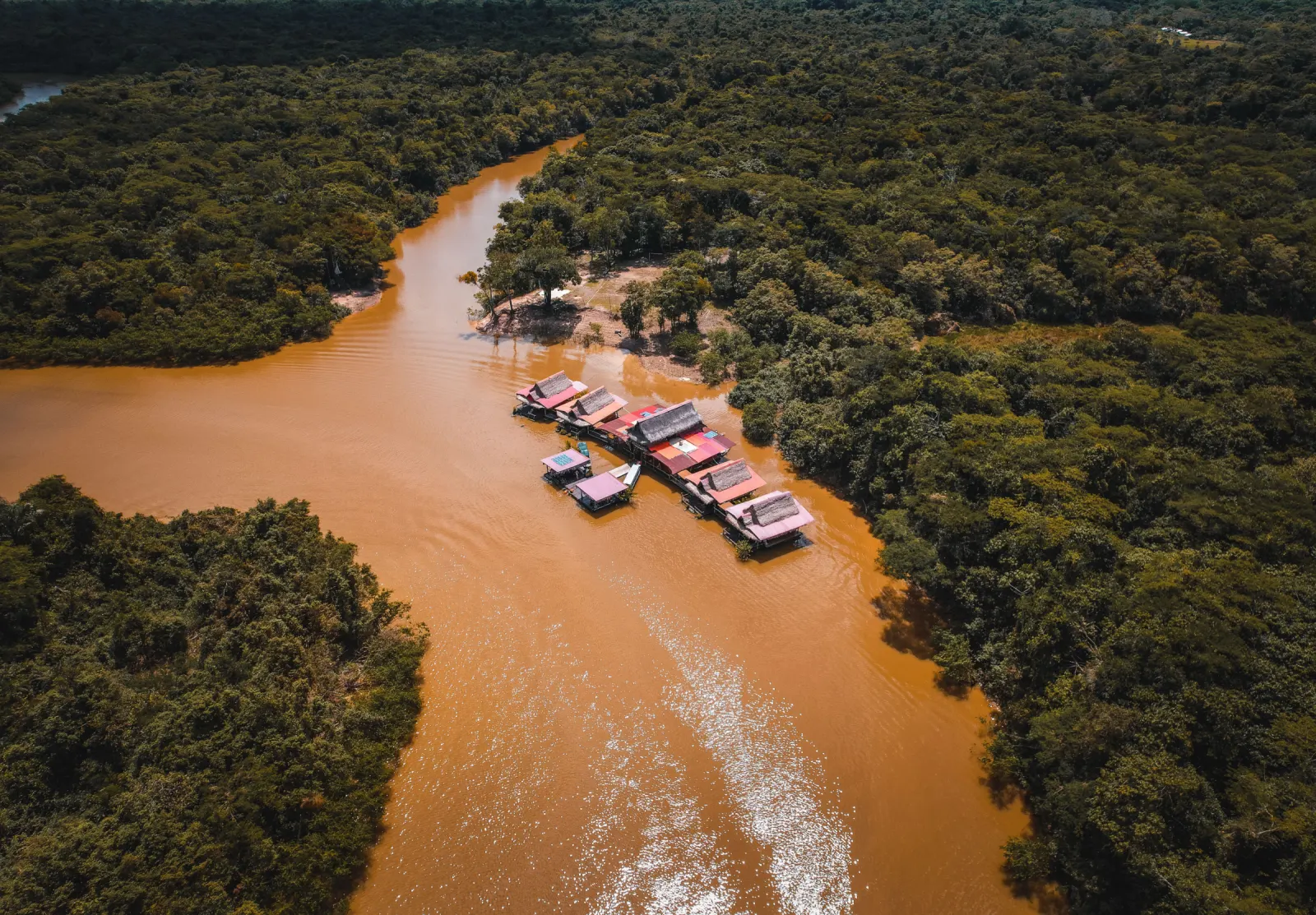
Aerial view of floating houses on muddy river

Iquitos travel guide

What to see, where to stay and the best time to visit Iquitos, Peru.

Best: May, Jun

Photo: Nando Freitas / Pexels

Country
Peru

About Iquitos

Iquitos is a Peruvian city of about 377,609 people and a base for nature trips into the Amazon. In the centre, you can walk the Malecón Tarapacá riverfront, see the Iron House on the Plaza de Armas and visit small museums. Belén has a busy market and a floating neighbourhood. Outside town are a butterfly farm, an animal rescue centre and the Allpahuayo-Mishana National Reserve. May and June are the best months to go.

How many days do you need in Iquitos?

Plan your time around the sights you want to see. The central museums and the riverfront take about 1 hour each. Belén's market and floating neighbourhood need 1–2 hours each. Pilpintuwasi and Quistococha take half a day each, and Allpahuayo-Mishana takes a full day.

Top attractions in Iquitos

  1. 1Belén Market

    1–2 hours

    Belén

    This is the city's biggest and busiest street market, with stalls selling jungle fruit, river fish, medicinal plants and bark remedies. It is the best place to see what Amazon people eat and use every day. Keep valuables out of sight, as the crowded lanes attract pickpockets.

  2. 2Belén Floating Neighbourhood

    1–2 hours

    Belén

    Below the market, houses sit on stilts or float on rafts, and people get around by canoe when the river is high. Local boatmen offer short paddle trips through the channels. Water levels change a lot through the year, so the district looks very different depending on the season.

  3. 3Malecón Tarapacá

    1 hour

    City centre

    This riverside promenade has old rubber-era buildings with tiled fronts on one side and views over the Amazon floodplain on the other. It is the main place for an evening walk, with street food, cafés and bars along the way.

  4. 4Plaza de Armas and the Iron House

    30 minutes–1 hour

    City centre

    The main square is home to the Cathedral and the Iron House, a metal-plated building from the rubber boom that local stories link to Gustave Eiffel's workshop. It is a short, easy stop and a good starting point for exploring the centre on foot.

  5. 5Pilpintuwasi Butterfly Farm and Animal Orphanage

    Half a day

    Padre Cocha

    This butterfly farm also cares for rescued animals such as monkeys, a jaguar and a manatee. You reach it by a short boat ride up the Nanay River and a walk from Padre Cocha village, which makes the trip part of the fun.

  6. 6Amazon Rescue Center

    1–2 hours

    San Juan Bautista

    This centre rescues and rehabilitates orphaned Amazonian manatees and other wildlife before releasing them back into the wild. Guided visits explain the work, and you can often see young manatees being fed. It lies on the road towards Nauta, a short taxi or mototaxi ride from the centre.

  7. 7Quistococha Tourist Complex

    Half a day

    San Juan Bautista

    A lake surrounded by forest, with a small zoo of Amazon animals, a fish farm with giant paiche, and a sandy beach. Local families go at weekends to swim and eat, so it gives a relaxed look at city life outside the centre.

  8. 8Museum of Indigenous Amazonian Cultures

    1 hour

    City centre

    This small museum on the riverfront displays clothing, tools, masks and ritual objects from many Amazon peoples. Clear displays help you understand the region's indigenous groups before heading into the jungle.

  9. 9Ayapua Historic Ship Museum

    1 hour

    City centre

    The Ayapua is a restored rubber-boom riverboat moored near the riverfront. On board, exhibits tell the story of the rubber era, river trade and the harsh treatment of indigenous workers.

  10. 10Allpahuayo-Mishana National Reserve

    Full day

    Road to Nauta

    This protected area of white-sand forest is the closest real rainforest reserve to the city, reachable by road. It is known for rare birds and plants, and guided walks let you see primary forest without a long river journey. Expect heat, humidity and mud on the trails.
Iquitos by month

Average weather and our month score, from 10 years of climate data.

Weather by month and month scores for Iquitos
Month High / low Rain days Sunshine Score
January 30°C / 24°C 25 days (237 mm) 8.6 h/day 2.8/10
February 30°C / 24°C 23 days (235 mm) 8.4 h/day 2.8/10
March 30°C / 24°C 27 days (309 mm) 8.0 h/day 2.8/10
April 30°C / 24°C 27 days (321 mm) 8.2 h/day 2.9/10
Best month: May 29°C / 23°C 26 days (282 mm) 8.7 h/day 3.3/10
Best month: June 29°C / 23°C 24 days (190 mm) 9.4 h/day 3.4/10
July 29°C / 23°C 21 days (166 mm) 9.9 h/day 3.3/10
August 30°C / 23°C 18 days (152 mm) 10.1 h/day 2.8/10
September 31°C / 24°C 19 days (128 mm) 10.0 h/day 2.3/10
October 31°C / 24°C 22 days (185 mm) 9.1 h/day 2.4/10
November 30°C / 24°C 24 days (245 mm) 8.8 h/day 2.6/10
December 30°C / 24°C 27 days (268 mm) 8.6 h/day 2.8/10
  1. Jan

    High 29.9°C, with rain on 25 days (237 mm). Hot, humid and wet most days, so the score is a low 2.8.

  2. Feb

    High 30.1°C, with rain on 23.4 days (235 mm). It stays steamy, with showers most days, and the score is a low 2.8.

  3. Mar

    High 30°C, with rain on 27.3 days and 309 mm in total. Heavy, frequent downpours keep the score at 2.8.

  4. Apr

    The wettest month by volume, with 321 mm over 26.7 rain days and a high of 29.7°C. Expect downpours most days. Score 2.9.

  5. May

    High 29°C, with rain on 25.6 days (282 mm). Still very wet, though the score edges up to 3.3.

  6. Jun

    The coolest high, at 28.6°C, and rain drops to 190 mm over 24.2 days. It has the year's top score, 3.4, though that is still low.

  7. Jul

    High 28.9°C, with rain on 21.2 days (166 mm) and 9.9 sun hours a day. Milder and drier. Score 3.3.

  8. Aug

    The fewest rain days, 17.6, with 152 mm and 10.1 sun hours a day. The heat builds again to a high of 30.1°C. Score 2.8.

  9. Sep

    The hottest month, with a high of 31.2°C, and the driest, with 128 mm over 18.6 days. Heat and humidity bring the lowest score, 2.3.

  10. Oct

    High 30.9°C, with rain on 21.9 days (185 mm). Hot, humid and getting wetter. Score 2.4.

  11. Nov

    High 30.4°C, and rain climbs to 245 mm over 24.4 days. Hot, sticky and showery. Score 2.6.

  12. Dec

    High 29.9°C, with rain on 27.3 days (268 mm), one of the highest rain-day counts of the year. Score 2.8.

Climate averages 2015–2024 · Best time to visit Peru →

Where to stay in Iquitos

The best areas to base yourself and who each one suits.

Plaza de Armas

Good for first-timers, short stays

This is the historic centre around the main square, with old rubber-boom buildings, tour agencies, banks and cafés all within walking distance. It is the easiest base for booking jungle trips and finding transport. The drawback is constant noise from motocarros, which runs from early morning into the night.

Malecón Tarapacá

Good for couples, river views, evening strolls

The riverfront promenade just east of the main square has views over the Itaya River, bars and restaurants, and a lively scene after sunset. You can walk to everything in the centre. On weekend nights the music and crowds can be loud, so ask for a room away from the street.

Punchana

Good for boat travellers, budget stays

This district to the north of the centre holds the main river ports and the Bellavista-Nanay area, where boats leave for villages and lodges. Staying here saves time if you start a river trip early. It feels more local and less polished, and you will need a motocarro to reach the centre's restaurants.

San Juan Bautista

Good for families, quiet, airport access

This residential district to the south of the centre lies on the road towards the airport and has calmer streets and more space. It suits travellers who want rest between jungle trips. The drawback is distance, as most sights and restaurants are a motocarro ride away.

Getting to and around Iquitos

From the airport
The airport lies south of the centre, on the San Juan Bautista side of the city. We have no route data, so no times or fares. Most visitors take a motocarro (motorised rickshaw) or a taxi into town.
Public transport
There is no metro or tram. Motocarros are the main way to get around, with local buses and river boats as well. Tip: agree the fare with the driver before you get in.
On foot
The centre is compact and flat. Plaza de Armas, the Iron House, Malecón Tarapacá, the Museum of Indigenous Amazonian Cultures and the Ayapua ship museum sit close together. Belén Market is nearby.

Food to try in Iquitos

Juane

Seasoned rice with chicken, egg and olives, wrapped in bijao leaves and boiled. It is the classic dish of the San Juan festival, but you can find it year-round at markets and local restaurants.

Tacacho con cecina

Green plantain mashed with pork fat and shaped into balls, served with smoked, cured pork. Locals often eat it for breakfast at markets and small cafés.

Patarashca

River fish seasoned with local peppers and herbs, wrapped in bijao leaves and grilled over coals. It is a common lunch at riverside restaurants and family meals.

Paiche

A very large Amazon river fish with firm white meat. Restaurants serve it grilled, fried or in ceviche, and it appears on many menus around town.

Suri

Fat palm weevil larvae, usually grilled on skewers. Street vendors sell them in Belén market and on city streets, and they are a well-known local snack.

Aguajina

A cold, sweet drink made from the orange fruit of the aguaje palm. Street sellers and juice stands offer it all over the city, especially on hot afternoons.

More of Peru

Peru travel guide →

Iquitos: frequently asked questions

What is the best time to visit Iquitos?

June and May are the best months to visit Iquitos. June is the pick, with 190 mm of rain, 24.2 rain days, 9.4 hours of sun and a high of 28.6°C, the coolest of the year. May is wetter, with 282 mm, but still a little cooler than most months. Expect rain in every month. Iquitos is in the Amazon, so no month is truly dry.

Is Iquitos good in September?

September is the driest and sunniest time in Iquitos, but also the hottest. It has 128 mm of rain on 18.6 days and 10 hours of sun a day. Highs reach 31.2°C and nights stay at 24°C, so it feels hot and humid. It suits travellers who want more dry hours and don't mind the heat.

When is the rainy season in Iquitos?

The wettest months in Iquitos are March and April. April gets 321 mm of rain and March gets 309 mm, with about 27 rain days each. December is also very wet, with 27.3 rain days. Rain falls on many days all year, though. Even August, the month with the fewest rain days, has 17.6.

How hot is Iquitos all year?

Iquitos is hot all year, with little change between months. Daytime highs range from 28.6°C in June to 31.2°C in September. Night lows stay between 22.7°C in July and 24.2°C in October and November. Pack light clothes for every season, plus rain gear.

How many days do I need in Iquitos?

Plan a day for the city, a day for nearby trips and a full day for the forest. City centre sights like Plaza de Armas and Malecón Tarapacá take 30 minutes–1 hour each, and Belén Market takes 1–2 hours. Pilpintuwasi Butterfly Farm and Quistococha each need half a day. Allpahuayo-Mishana National Reserve needs a full day.