Chilli crab
A whole crab cooked in a thick, sweet and spicy tomato-chilli sauce. It is a signature Singapore dish, usually shared at seafood restaurants with fried mantou buns for dipping.
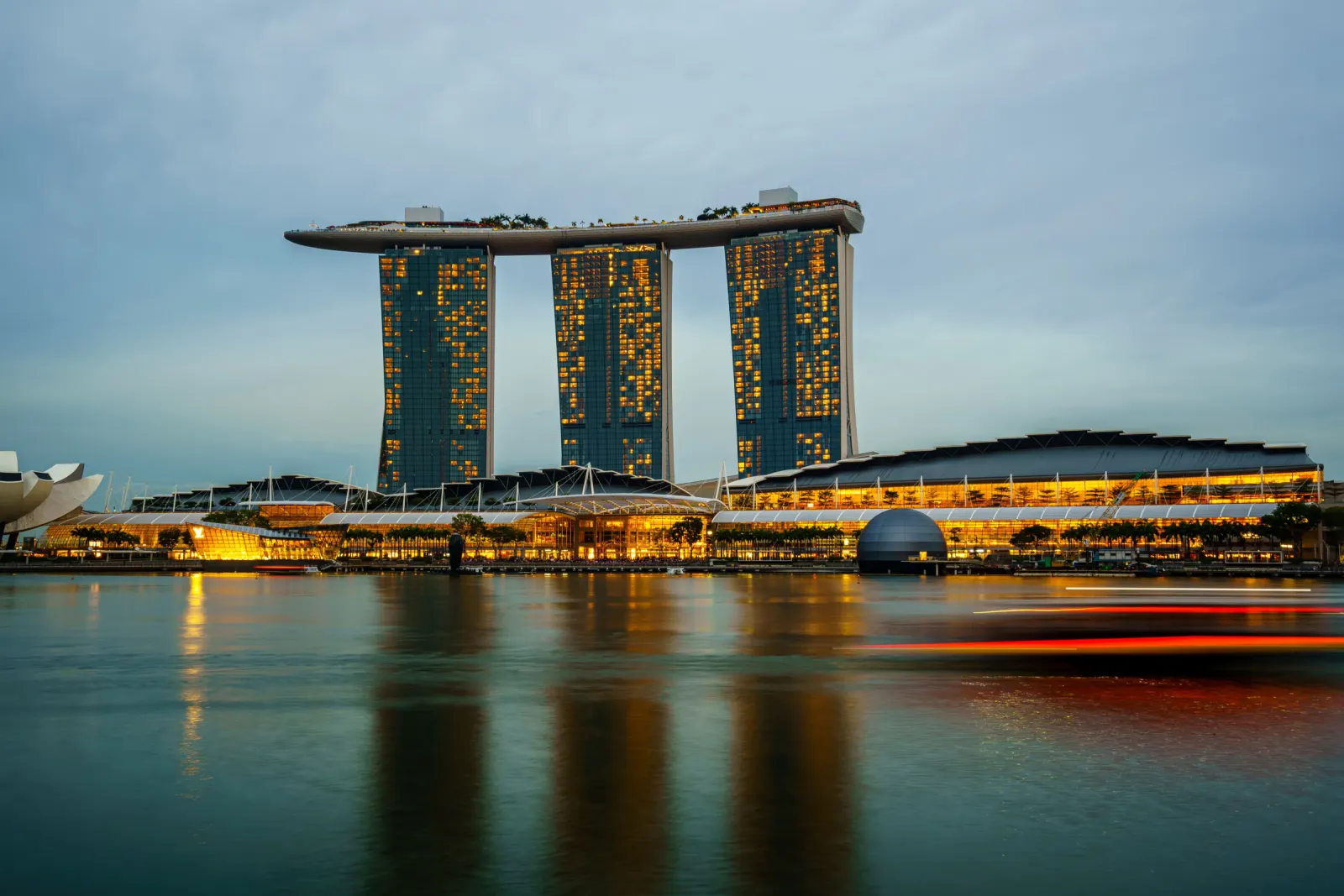
A compact coastal city-state that suits short city breaks and stopovers in South-Eastern Asia
Photo: Cyrill / Pexels
Jan, Jun
Scores 4.6, the year's top rating, with 271mm of rain over 24 rain days and 9.1 sun hours daily.
Mar, Apr
Singapore covers just 710 km², so it works best as a short city break or a stopover rather than a long tour. Its languages include English, Malay, Tamil and Chinese, and English makes signs and menus easy to follow. The best months to go are January and June. The honest limitation is scale. The whole country is essentially one coastal city, so if you want varied landscapes or long road trips, plan to combine it with a neighbouring country.
Singapore is both capital and nearly the entire population, with 5,866,139 of the country's 6,208,500 people living there. Packed into just 710 km2, it's one of the most compact places you can explore without long transfers between sights.
English is an official language alongside Malay, Tamil and Chinese, so getting around and asking questions is simple. Traffic drives on the left, and plugs are type G at 230 V, matching the UK standard many travellers already know.
At 710 km2, Singapore is smaller than many single cities elsewhere, which means short travel times between neighborhoods. It sits in the UTC+08:00 timezone, convenient for onward trips across South-Eastern Asia.
The two recommended months to visit are January and June. These months are flagged as the best time to plan a trip, balancing the region's typically warm, humid conditions.
Singapore city is coastal, giving it a natural role as a port and gateway. With a calling code of +65 and the Singapore dollar (SGD) as currency, it functions as a practical hub for trips further into South-Eastern Asia.
Great for
Less ideal for
Averages for Singapore.
This climate data is for Singapore city. February is the driest and sunniest stretch, with 127mm of rain over 18.2 days and 10.1 sun hours, while January and June also score well for a mostly warm, steady climate around 29°C highs. November and December bring the toughest weather, with 380mm and 314mm of rain spread across 28 or more rain days each month.
Singapore (country average) · averages 2015–2024
A whole crab cooked in a thick, sweet and spicy tomato-chilli sauce. It is a signature Singapore dish, usually shared at seafood restaurants with fried mantou buns for dipping.
Poached chicken served with rice cooked in chicken fat and stock, plus chilli sauce and ginger paste. You find it at hawker centres across the island, often ranked as the national dish.
A spicy coconut noodle soup, usually with prawns, fish cakes and bean sprouts. Singapore-style laksa often uses thick rice noodles and a rich, orange broth.
Flat rice noodles fried with soy sauce, prawns, egg, bean sprouts and Chinese sausage. It is a classic hawker-stall dish, cooked quickly over very high heat.
Skewers of grilled meat, usually chicken, beef or mutton, served with a peanut dipping sauce, rice cakes and cucumber. Satay stalls are common in hawker centres, especially in the evening.
Crisp toast spread with kaya, a coconut and egg jam, often served with soft-boiled eggs and dark soy sauce. It is a typical breakfast, paired with local coffee called kopi.
Yes. August scores 4.4 out of 5 in our data, in the same range as most of the year. Expect a high of 29.2°C, a low of 24.9°C, and rain on about 25.6 days with 230 mm total. Sun hours sit at 9.9, close to the yearly norm.
January and June score highest, at 4.6 and 4.4 out of 5. January is drier with 271 mm of rain over 24.3 days, more sun at 9.1 hours, and a high of 28.9°C. June has less rain, 292 mm over 25.5 days, and a similar high of 29.3°C.
Yes, year-round. Rain days range from 18.2 in February to 28.6 in December, and monthly totals go from 127 mm in February up to 380 mm in November. There is no truly dry month, so pack a light rain jacket whenever you go.
These two months score lowest in our data, 3.8 and 3.9 out of 5. March brings 208 mm of rain over 25.1 days, and April brings 290 mm over 26.8 days. Temperatures stay warm, with highs near 30°C in both months, so the lower score reflects rain rather than cold.
Daily highs stay close to 29–30°C all year, with March the warmest month at 30.4°C. Lows barely change either, staying between 23.7°C and 25.3°C across the year. This means temperature is not a factor when choosing a month; rainfall and sun hours matter more.
Sun hours stay fairly low and stable, between 8 and 10.7 per day across the year. March has the most sun at 10.7 hours, while November has the least at 8 hours. Even the sunniest months still see frequent rain, since high rain days and sun hours overlap.
Countries with a year of weather much like Singapore.
Enter to search · Esc to close