Skip to content
wheretotravel.info
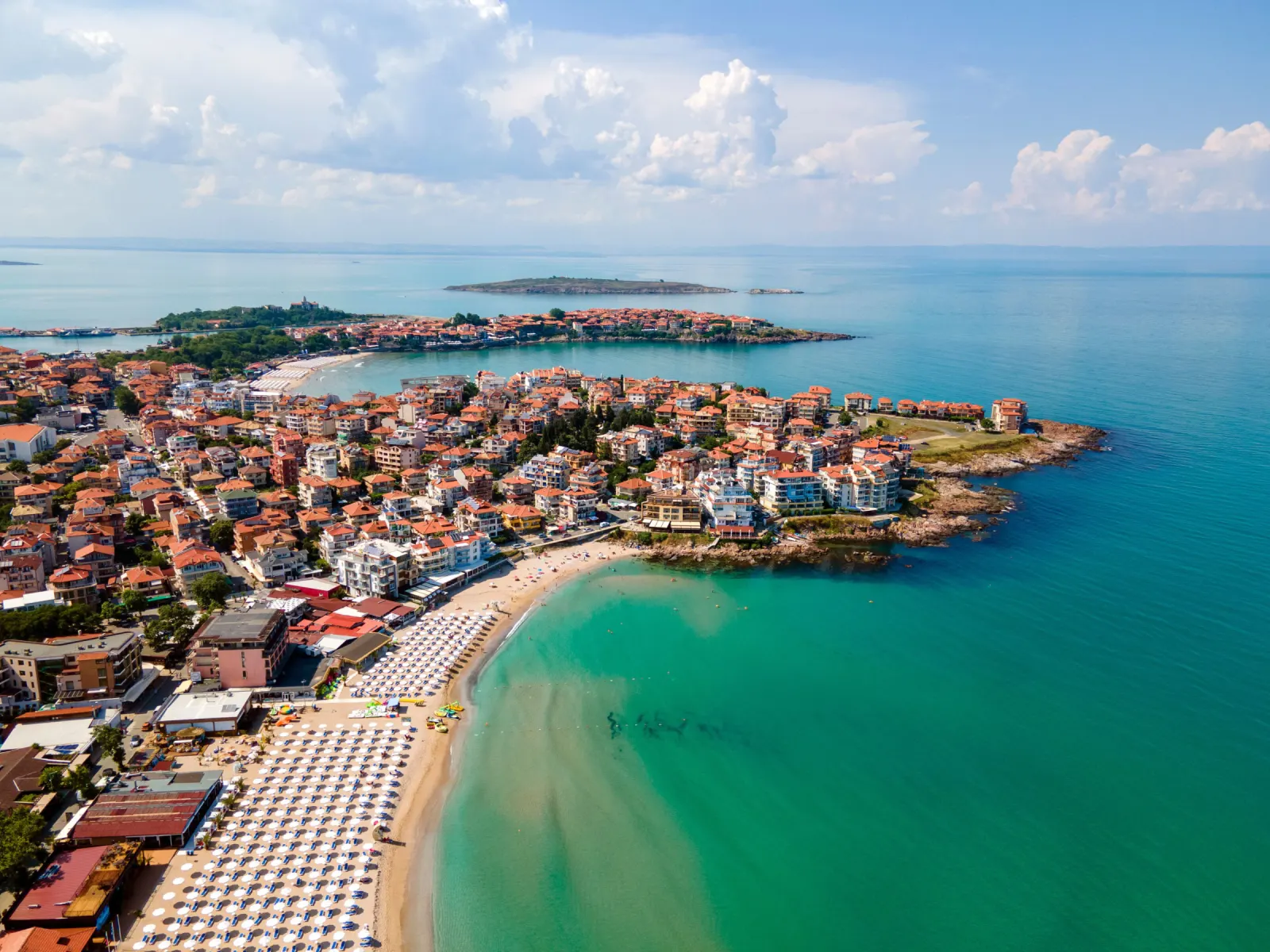
Aerial view of Burgas beach and coastal town

Burgas travel guide

What to see, where to stay and the best time to visit Burgas, Bulgaria.

Best: Jul, Aug, Sep, Oct

Photo: Denitsa Kireva / Pexels

Country
Bulgaria

About Burgas

Burgas is a coastal city in Bulgaria, built around a long seafront and the Sea Garden park. It mixes beach time with wetlands and lagoons just outside the centre, like Poda Protected Area and Atanasovsko Lake, which draw birdwatchers as well as sunbathers. The city centre is compact and walkable, with Aleksandrovska Street, museums and a cathedral all close together. Best months to visit are July, August, September and October, when the sea and city life are both at their best.

How many days do you need in Burgas?

Two to three days cover the city centre, Sea Garden, the beach and one nature site like Poda or Atanasovsko Lake, with time left for Aquae Calidae or St. Anastasia Island.

Top attractions in Burgas

  1. 1Sea Garden

    2–3 hours

    City centre, seafront

    A long, shady park that runs along the shore above the beach, with paths, flower beds, monuments and an open-air theatre. It is the main place where locals walk in the evening, and it links easily to the beach and the pier.

  2. 2Burgas Central Beach and Pier

    1–2 hours

    Seafront

    A wide public sand beach right next to the city centre, with a pier that reaches out into the bay. Walk to the end of the pier for views back over the coast and the port.

  3. 3St. Anastasia Island

    Half a day

    Burgas Bay

    A small rocky island in the bay with a monastery, a lighthouse and stories of pirates and prisoners. Boats leave from the Burgas port, but they run mainly in the warmer months and depend on the sea, so check before you go.

  4. 4Poda Protected Area

    1–2 hours

    Southern edge of the city

    A wetland reserve between the sea and the lakes, with a visitor centre, a short trail and bird hides. Burgas sits on a major bird migration route, so it is a good stop for birdwatchers, especially in spring and autumn.

  5. 5Atanasovsko Lake

    1–3 hours

    North of the city

    A shallow salt lake where salt is still produced, known for its pink and red water colours and for its healing mud. Many birds feed here, and some visitors come for mud baths on the shore.

  6. 6Aleksandrovska Street

    1 hour

    City centre

    The main pedestrian street of Burgas, lined with shops, cafés and old buildings. It runs to Troykata Square and is the easiest way to see the centre on foot.

  7. 7Cathedral of Saints Cyril and Methodius

    30 minutes–1 hour

    City centre

    The main Orthodox church of Burgas, a large stone building close to the pedestrian streets. Step inside to see the painted interior and carved wooden iconostasis.

  8. 8Aquae Calidae

    1–2 hours

    Vetren district, outside the centre

    An archaeological site at the old Burgas Mineral Baths, where thermal springs were used from ancient times through the Roman and Ottoman periods. The remains have been conserved and opened with a visitor centre that explains the long history of the baths.

  9. 9Burgas Archaeological Museum

    1 hour

    City centre

    A compact museum with finds from the Burgas region, from prehistoric times through the Thracian, Greek and Roman periods. It gives useful background before visiting Aquae Calidae or nearby ancient towns on the coast.

  10. 10Burgas Ethnographic Museum

    1 hour

    City centre

    Housed in an old town house, it shows traditional costumes, textiles and home interiors from the region. It is a quiet, short visit that shows how people lived on this part of the Black Sea coast.
Burgas by month

Average weather and our month score, from 10 years of climate data.

Weather by month and month scores for Burgas
Month High / low Rain days Sunshine Sea temp Score
January 8°C / 0°C 8 days (69 mm) 5.8 h/day 9°C 2.8/10
February 11°C / 2°C 7 days (49 mm) 6.9 h/day 7°C 4.7/10
March 13°C / 4°C 9 days (50 mm) 8.0 h/day 9°C 5.5/10
April 17°C / 7°C 9 days (55 mm) 10.2 h/day 12°C 7.8/10
May 21°C / 12°C 11 days (63 mm) 12.0 h/day 16°C 7.9/10
June 26°C / 18°C 11 days (67 mm) 13.0 h/day 23°C 8.1/10
Best month: July 29°C / 20°C 6 days (41 mm) 13.6 h/day 26°C 9.2/10
Best month: August 30°C / 20°C 5 days (29 mm) 12.7 h/day 27°C 9.4/10
Best month: September 26°C / 16°C 6 days (37 mm) 10.8 h/day 25°C 9.2/10
Best month: October 20°C / 11°C 6 days (57 mm) 8.2 h/day 20°C 8.8/10
November 15°C / 7°C 8 days (63 mm) 6.3 h/day 16°C 6.1/10
December 10°C / 3°C 8 days (61 mm) 5.4 h/day 12°C 3.6/10
  1. Jan

    Cold and grey, with highs of 7.8°C, lows near 0.2°C and 8.2 rain days. The sea is 9°C. It scores 2.8, the lowest of the year.

  2. Feb

    Still chilly at 10.6°C, but drier, with 6.8 rain days. It scores 4.7, an ok month for quiet city walks.

  3. Mar

    Highs reach 12.7°C, but 9.3 rain days and an 8.8°C sea keep it cool. It scores 5.5, an ok month.

  4. Apr

    Spring warms up to 17.2°C with 9 rain days. It scores 7.8, one of the best months, though the sea is only 12.2°C.

  5. May

    Pleasant highs of 21.4°C and 12 sun hours a day, but 10.7 rain days. It scores 7.9, one of the best months.

  6. Jun

    Warm at 26.3°C, and the sea reaches 23.2°C. It has the most rain days of the year, at 10.9. It scores 8.1, a best month.

  7. Jul

    Hot and sunny, with 29.1°C highs, 13.6 sun hours and only 6.2 rain days. The sea is 26.4°C. It scores 9.2, a best month.

  8. Aug

    The top month, scoring 9.4. Highs reach 29.7°C, there are just 4.5 rain days and the sea is at its warmest, 26.5°C.

  9. Sep

    Still summer-like at 25.6°C, with 5.7 rain days and a 24.8°C sea. It scores 9.2, a best month.

  10. Oct

    Mild at 19.6°C with 6 rain days, and the sea is still 20.4°C. It scores 8.8, one of the best months.

  11. Nov

    Cooler at 14.5°C, with 8.4 rain days and 6.3 sun hours. It scores 6.1, a good month for a quiet city trip.

  12. Dec

    Cold, damp and dark, with highs of 9.8°C, 8.4 rain days and 5.4 sun hours, the fewest of the year. It scores 3.6.

Climate averages 2015–2024 · Best time to visit Bulgaria →

Where to stay in Burgas

The best areas to base yourself and who each one suits.

Tsentar

Good for first-timers, walkers, nightlife

The city centre spreads around the pedestrian streets Aleksandrovska and Bogoridi, with cafés, shops and the main squares. You can walk to the Sea Garden, the central beach and the train and bus stations. Summer evenings can be loud, with crowds and bars open late.

Lazur

Good for beach lovers, longer stays

Lazur is a residential district north of the centre, next to the Sea Garden and the northern beach. It feels more local and calmer than the centre, and the city is still within walking distance. Most housing is in large apartment blocks, so the streets have less character.

Vazrazhdane

Good for budget travellers, local feel

Vazrazhdane is a mostly residential area just north-west of the centre, with everyday shops and a quieter atmosphere. It is a practical base if you want to be close to the centre without the evening noise. There is little to see in the area itself, and the beach is a longer walk.

Sarafovo

Good for families, beach holidays

Sarafovo is a former seaside village on the northern edge of Burgas, with its own beach and many small guesthouses. It has a relaxed holiday mood and is close to Burgas Airport. Planes fly low overhead, and you need a bus or taxi to reach the city centre.

Kraimorie

Good for couples, quiet, nature

Kraimorie is a small seaside district south of the city, with a fishing harbour and a slower pace. It suits travellers who want calm evenings and easy access to the southern coast. It is far from the centre, so you depend on buses, taxis or a car.

Getting to and around Burgas

From the airport
Burgas Airport sits close to the city. The usual options are a taxi or a public bus into the centre; no official times or prices are available here, so check current schedules locally.
Public transport
Burgas runs a city bus network that connects the centre, Sarafovo, Lazur and other districts. There's no metro or tram. A practical tip: buy your bus ticket from the driver or a kiosk before boarding, since route numbers aren't always clearly marked for visitors.
On foot
The city centre is compact and walkable. Aleksandrovska Street, the Cathedral of Saints Cyril and Methodius, the Archaeological Museum, the Ethnographic Museum and the Sea Garden all sit within easy walking distance of each other.

Food to try in Burgas

Tsatsa (fried sprats)

Small Black Sea sprats are rolled in flour and fried, then eaten whole with lemon. Locals order a plate with a cold beer at seaside fish taverns, mostly in summer.

Midi (Black Sea mussels)

Mussels from the Black Sea are steamed with white wine and herbs or fried in batter. They are a common dish in fish restaurants along the Burgas coast.

Safrid (horse mackerel)

This small local fish is usually fried or grilled and served with a simple salad. You will find it on the menu of most fish restaurants near the sea.

Tarator

A cold soup made from yoghurt, cucumber, garlic, dill and often walnuts. Bulgarians eat it as a light starter on hot summer days.

Shopska salad

Chopped tomatoes, cucumbers, peppers and onion topped with grated white sirene cheese. It is the classic starter in Bulgarian restaurants, often eaten with a glass of rakia.

Banitsa

Layers of filo pastry filled with eggs and sirene cheese, baked until crisp. Locals buy it warm from bakeries for breakfast, often with ayran (a salty yoghurt drink) or boza.

More of Bulgaria

Bulgaria travel guide →

Burgas: frequently asked questions

Is Burgas good in August?

Yes. August is one of the best months, with a score of 9.4 out of 10. Daytime highs reach 29.7°C, sea temperature is 26.5°C, and rain falls on only 4.5 days with just 29mm of total rainfall. It's a reliable month for beach time on Burgas Central Beach.

How many days do I need in Burgas?

Two to three days cover the main sights. The Sea Garden takes 2–3 hours, the beach and pier 1–2 hours, and the city centre sights like Aleksandrovska Street, the cathedral and the museums each take about an hour. Add a half-day for St. Anastasia Island and an hour or two for Poda Protected Area or Atanasovsko Lake if you have extra time.

What is the best time to visit Burgas?

The best months run from July to October, scoring between 8.8 and 9.4. September and October still bring warm seas of 24.8°C and 20.4°C, with fewer rain days than summer. July and August are the hottest, with highs near 29°C and the warmest sea water of the year.

Is Burgas warm in winter?

No. December and January score lowest, at 3.6 and 2.8, and are the coldest months. January highs average just 7.8°C with lows near 0.2°C, and sun hours drop to 5.8, the lowest of the year. Sea temperature falls to around 7–9°C in winter.

Does it rain a lot in Burgas?

Rainfall is generally low and concentrated in spring. May and June see the most rain days, 10.7 and 10.9, though monthly totals stay under 70mm. August is the driest month, with only 4.5 rain days and 29mm of rain, making it a good bet for sunny beach days.