Skip to content
wheretotravel.info
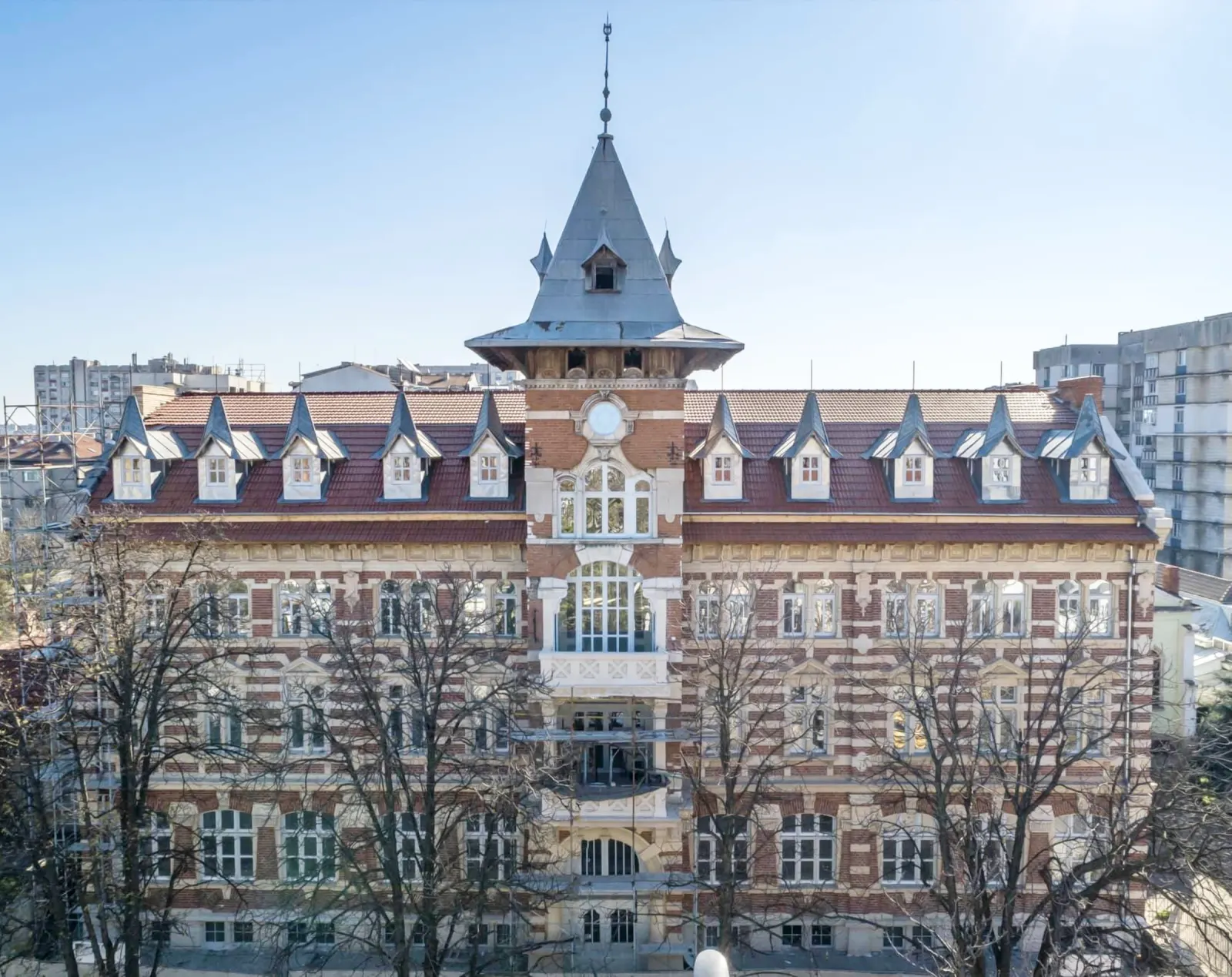
Historic building with ornate tower and dormer windows

Ruse travel guide

What to see, where to stay and the best time to visit Ruse, Bulgaria.

Best: Apr, May, Sep, Oct

Photo: RAPTORSKI / Wikimedia Commons

Country
Bulgaria

About Ruse

Ruse sits on the Danube in northern Bulgaria, known for its grand 19th-century architecture that earned it the nickname "Little Vienna". With 120,282 people, it's a compact city that rewards a slow walk through its centre, past the Monument of Liberty, the Profitable Building and the Pantheon of the National Revival Heroes. The riverside park adds a green, open-air side to a visit. September, October, April and May bring milder, drier weather for walking the streets and the Danube promenade.

How many days do you need in Ruse?

One to two days cover the main sights: the central square, the museums and the riverside park. Most attractions here take only 30 minutes to 2 hours each, so a short stay is enough.

Top attractions in Ruse

  1. 1Liberty Square and the Monument of Liberty

    1 hour

    City centre

    Ruse's main square is the best place to start a walk through the city centre. In the middle stands the Monument of Liberty, a tall column topped by a female figure with a sword. Many fine late-19th-century buildings stand around the square. These buildings are why Ruse is often called 'Little Vienna'.

  2. 2Pantheon of the National Revival Heroes

    1 hour

    City centre

    This memorial with a golden dome holds the remains of Bulgarian revolutionaries and leaders of the National Revival. It stands in a quiet park and has a small exhibition inside. Come here to learn about Bulgaria's struggle for independence.

  3. 3Ruse Regional Museum of History

    1–2 hours

    City centre

    This is the city's main history museum. Its collection covers the region from prehistoric times to the modern era. It also has archaeological finds from the Danube area.

  4. 4Sexaginta Prista Roman Fortress

    1 hour

    Danube riverside

    These are the remains of a Roman military camp and port on the Danube, the earliest settlement on the site of Ruse. A small museum next to the ruins explains the Roman frontier along the river.

  5. 5Dohodno Zdanie (Profitable Building)

    30 minutes–1 hour

    City centre

    This is one of the most photographed buildings in Ruse. It is a richly decorated Neo-Baroque building on Liberty Square. Today it is home to the Ruse Drama Theatre. See its facade from outside, or come back for an evening performance.

  6. 6Holy Trinity Cathedral

    30 minutes

    City centre

    This is the oldest surviving church in Ruse. Its main hall lies partly below street level, so you walk down steps to enter. Inside are old icons and murals.

  7. 7Museum of Urban Lifestyle in Ruse

    1 hour

    City centre

    The museum is in Kaliopa House, an elegant historic mansion. It shows how wealthy families in Ruse lived when the city was an important Danube trading port. Its rooms are furnished with period furniture, clothes and everyday objects.

  8. 8Danube Riverside Park and Promenade

    1–2 hours

    Danube riverside

    This long, green walkway runs along the Danube, with Romania on the far bank. It is popular with locals for evening walks. It has river views, cafés and benches.

Ruse by month

Average weather and our month score, from 10 years of climate data.

Weather by month and month scores for Ruse
Month High / low Rain days Sunshine Score
January 5°C / -2°C 8 days (52 mm) 5.5 h/day 2.8/10
February 9°C / 1°C 7 days (39 mm) 6.7 h/day 3.7/10
March 12°C / 3°C 10 days (59 mm) 7.7 h/day 5.2/10
Best month: April 18°C / 7°C 9 days (58 mm) 10.1 h/day 8.3/10
Best month: May 23°C / 13°C 11 days (63 mm) 11.5 h/day 7.8/10
June 27°C / 17°C 11 days (79 mm) 12.8 h/day 7.2/10
July 30°C / 20°C 7 days (55 mm) 13.5 h/day 6.5/10
August 31°C / 20°C 5 days (32 mm) 12.4 h/day 6.6/10
Best month: September 26°C / 15°C 5 days (39 mm) 10.6 h/day 9.0/10
Best month: October 19°C / 9°C 6 days (50 mm) 8.1 h/day 8.8/10
November 13°C / 5°C 8 days (61 mm) 5.7 h/day 5.0/10
December 7°C / 1°C 9 days (48 mm) 4.9 h/day 2.5/10
  1. Jan

    The coldest month, with highs of 5°C and lows of -2.3°C. Expect 7.9 rain days and 5.5 hours of sun. It scores just 2.8.

  2. Feb

    Still cold, with highs of 9°C, lows of 0.5°C and 7.3 rain days. Short, grey days keep the score low at 3.7.

  3. Mar

    Spring starts slowly. Highs reach 12.3°C, but there are 9.6 rain days and 7.7 hours of sun. An ok month, scoring 5.2.

  4. Apr

    One of the best months, scoring 8.3. Highs reach 18.1°C and lows 7.4°C, with 8.7 rain days and 10.1 hours of sun.

  5. May

    Warm at 22.6°C, but May has the most rain days of the year, 11. It is still one of the best months, scoring 7.8.

  6. Jun

    Highs of 27.3°C and the most rain of the year, 79 mm over 10.9 rain days. A good month, scoring 7.2.

  7. Jul

    Hot days of about 30°C and warm nights of 19.5°C. Rain drops to 6.9 days. The heat lowers the score to 6.5, still good.

  8. Aug

    The hottest month, with highs of 30.9°C and 12.4 hours of sun. Only 4.9 rain days. A good month, scoring 6.6, for those who handle heat.

  9. Sep

    The top month, scoring 9. Highs of 25.9°C, just 4.9 rain days and 10.6 hours of sun make it easy for walking.

  10. Oct

    Mild and fairly dry, with highs of 19°C, 5.9 rain days and 8.1 hours of sun. One of the best months, scoring 8.8.

  11. Nov

    Cooler and damper, with highs of 12.5°C, 8.3 rain days and only 5.7 hours of sun. An ok month, scoring 5.

  12. Dec

    The lowest score of the year, 2.5. Highs of 7.3°C, lows of 0.5°C, 8.8 rain days and the least sun, 4.9 hours.

Climate averages 2015–2024 · Best time to visit Bulgaria →

Where to stay in Ruse

The best areas to base yourself and who each one suits.

Vazrazhdane

Good for budget travellers, longer stays

A mainly residential district next to the centre, with everyday shops, local bakeries and a quieter, lived-in feel. You can usually walk to the main square while sleeping on calmer streets. It has fewer sights and restaurants of its own, so evenings out mean heading into Tsentar.

Druzhba

Good for families, quiet, travellers with a car

A large residential area in the east of the city, built mostly with apartment blocks and close to green space and big supermarkets. It suits visitors who want more room and a local routine rather than a historic setting. It is too far from the old centre to walk comfortably, so you will rely on buses, taxis or a car.

Charodeyka

Good for quiet, nature lovers, drivers

A residential district on the western side of Ruse, with a calmer pace than the centre. It works for travellers who plan day trips by car out of the city and prefer peace at night. The trade-off is distance: the centre and riverfront are not within easy walking range, and there is little to do in the area after dark.

Getting to and around Ruse

From the airport
Ruse does not have scheduled passenger flights, so most visitors arrive overland. The usual options are a taxi, a private transfer, or a bus or train connection from a nearby city, since no route data is available for an airport transfer here.
Public transport
Ruse has a city bus network, but there is no metro or tram system. Visitors mostly walk around the compact centre and use buses mainly to reach neighbourhoods like Druzhba or Charodeyka outside the core.
On foot
The city centre is compact and walkable. Liberty Square, the Pantheon, the museums, and Holy Trinity Cathedral sit close together, with the Danube riverside sights a short walk further on.

Food to try in Ruse

Banitsa

A baked pastry of thin filo layers filled with eggs and white brine cheese (sirene). Locals buy it warm from bakeries in the morning, often with a cup of ayran or boza.

Boza

A thick, slightly sweet and sour drink made from fermented grain. It is sold in bakeries and pastry shops and is a common partner for banitsa at breakfast.

Danube fish soup

Ruse sits on the Danube, so river fish is common on menus. Fish soup (ribena chorba) and fried river fish are served in restaurants near the riverbank.

Shopska salad

Chopped tomatoes, cucumbers, peppers and onion topped with grated sirene cheese. Bulgarians usually eat it as a starter, often with a glass of rakia before the main meal.

Tarator

A cold soup of yoghurt, water, cucumber, garlic and dill, sometimes with walnuts. It is a standard lunch starter on hot summer days.

Kebapche and kyufte

Grilled minced meat: kebapche is a long spiced sausage shape and kyufte is a flat patty. Both come from grill houses (skara) and are often served with fries and sirene.

More of Bulgaria

Bulgaria travel guide →

Ruse: frequently asked questions

Is Ruse good in August?

Yes, August works, with a score of 6.6 out of 10. Days reach 30.9°C and it's mostly dry, with only 4.9 rain days and 32mm of rain. Sun hours average 12.4 a day, so it's hot but reliable for sightseeing if you plan around the midday heat.

Is Ruse good in December or January?

No, these are the lowest-scoring months, December at 2.5 and January at 2.8. Highs only reach 7.3°C in December and 5°C in January, with lows near or below freezing. Sunshine drops to under 5.5 hours a day, and rain falls on 7 to 9 days each month.

What is the best time to visit Ruse?

September and October score highest, at 9 and 8.8 out of 10, followed by April (8.3) and May (7.8). September brings warm highs of 25.9°C with only 4.9 rain days, while October cools to 19°C with 8.1 sun hours. April and May offer rising temperatures and good sunshine before summer heat arrives.

How many days do I need in Ruse?

One to two days is enough. The main sights, Liberty Square, the Pantheon, the Regional Museum, Sexaginta Prista Fortress and the Danube promenade, each take 30 minutes to 2 hours. A full day covers the city centre sites, with a second day for the riverside and museums if you want a slower pace.

Is Ruse good in June or July?

Both are good, scoring 7.2 and 6.5. July is the hottest month, with highs of 30.3°C, but it's also drier, with just 6.9 rain days and 55mm of rain. June is slightly cooler at 27.3°C but wetter, with 10.9 rain days and 79mm, the highest monthly rainfall of the year.