Skip to content
wheretotravel.info
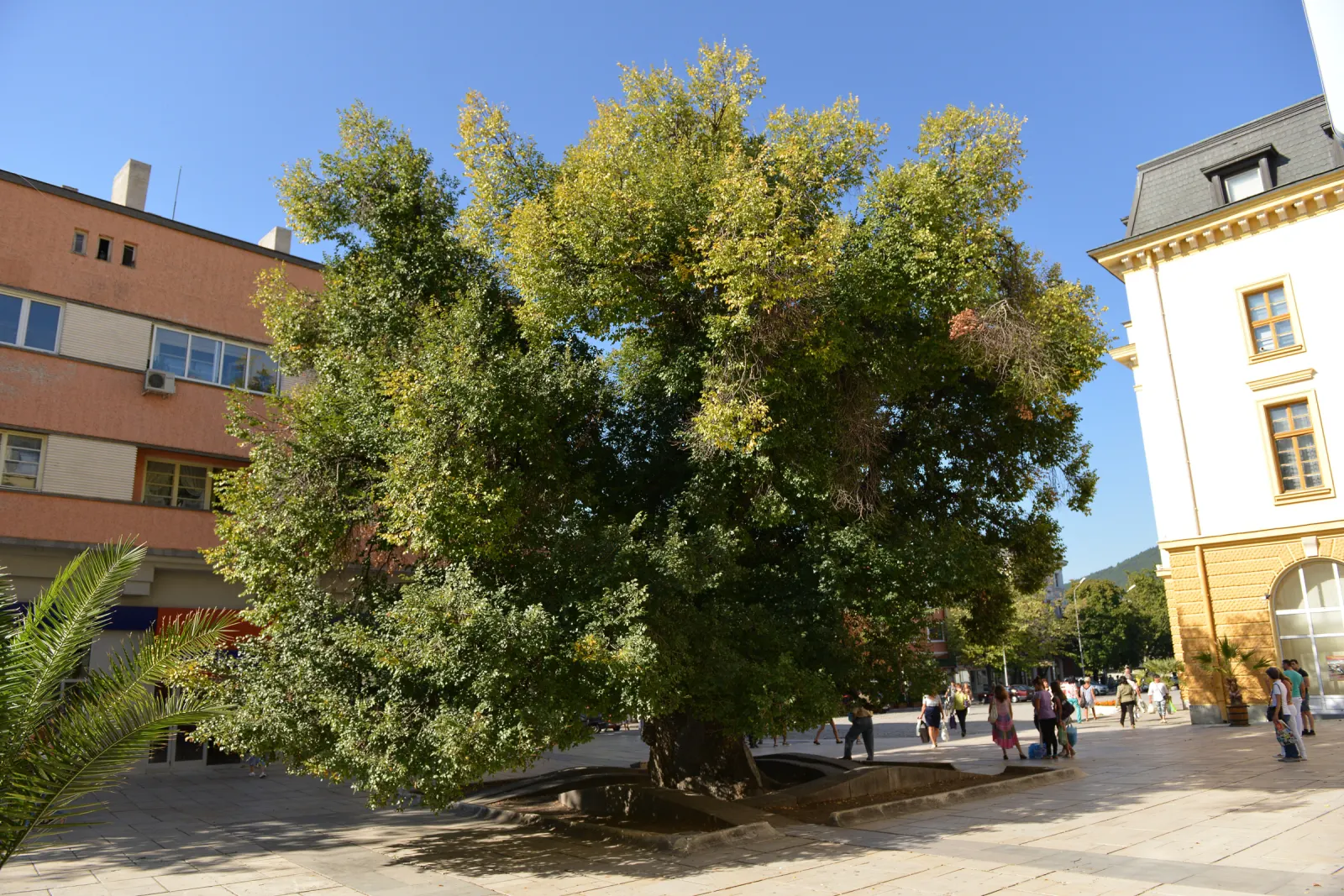
Large tree in town square with people walking

Sliven travel guide

What to see, where to stay and the best time to visit Sliven, Bulgaria.

Best: Apr, Sep, Oct

Photo: Georgi Angelov / Wikimedia Commons

Country
Bulgaria

About Sliven

Sliven sits at the foot of the Blue Rocks, a rugged nature park that gives this Bulgarian city of 77,832 people its nickname, the "City of the Hundred Voivodes". It's a small, non-coastal city built for nature lovers: come to walk through the cliffs, visit museums tied to local history like the Hadzhi Dimitar House, and enjoy a slower pace than Bulgaria's bigger cities. September, October and April bring mild temperatures, good for hiking the Blue Rocks without summer heat or winter cold.

How many days do you need in Sliven?

Two days work well: one for the Blue Rocks Nature Park, Halkata and Karandila, and one for the city centre museums and the Old Elm.

Top attractions in Sliven

  1. 1Blue Rocks Nature Park

    Half a day

    North edge of the city

    A protected area of grey-blue rock ridges that rise straight above the city. Marked hiking trails lead through beech forest to wide viewpoints over Sliven and the plain below. Most visitors come here first.

  2. 2Halkata (The Ring)

    2–3 hours

    Blue Rocks Nature Park

    A natural stone arch on a ridge of the Blue Rocks. It is a popular short hike and the best-known landmark of Sliven. Local legend says that passing through the ring brings luck.

  3. 3Karandila

    Half a day

    Blue Rocks Nature Park

    A high meadow area in the Blue Rocks with mountain huts and a starting point for longer walks. On clear days the views reach far over the Thracian Plain. It is a good base for a full day outdoors.

  4. 4Old Elm

    Under 1 hour

    City centre

    A very old elm tree on the main square, protected as a natural monument. It is a symbol of the city and a natural meeting point. Combine it with a walk around the central streets.

  5. 5Hadzhi Dimitar House Museum

    1 hour

    City centre

    The birthplace of Hadzhi Dimitar, a hero of the Bulgarian struggle against Ottoman rule. The house and inn complex show traditional rooms and tell the story of the local rebels. It gives good background on why Sliven is called the city of the haidouks.

  6. 6Sliven Regional History Museum

    1–2 hours

    City centre

    The main city museum, with finds from Thracian, Roman and medieval sites around Sliven. Displays also cover the Bulgarian National Revival and the city's later history. A good first stop to understand the region.

  7. 7Deyova House (Ethnographic Museum)

    1 hour

    City centre

    A wealthy merchant's house from the National Revival period, now an ethnographic museum. Carved wooden ceilings, period furniture and local costumes show how a rich Sliven family lived. The quiet courtyard is pleasant on a hot day.

  8. 8Museum of Textile Industry

    1 hour

    City centre

    Sliven was the home of the first textile factory in Bulgaria, and this museum tells that story. Old looms and machines show how wool cloth was made. It explains the trade that shaped the city.

  9. 9Dimitar Dobrovich Art Gallery

    1 hour

    City centre

    The city art gallery, named after a Sliven-born painter. It holds Bulgarian painting, graphic art and sculpture, with a focus on artists linked to the region. A calm indoor option when the weather turns.

Sliven by month

Average weather and our month score, from 10 years of climate data.

Weather by month and month scores for Sliven
Month High / low Rain days Sunshine Score
January 6°C / -1°C 9 days (75 mm) 5.9 h/day 3.3/10
February 10°C / 1°C 8 days (55 mm) 7.0 h/day 5.4/10
March 12°C / 3°C 10 days (63 mm) 8.0 h/day 6.4/10
Best month: April 17°C / 7°C 11 days (65 mm) 10.2 h/day 7.5/10
May 22°C / 11°C 12 days (63 mm) 11.7 h/day 7.2/10
June 27°C / 16°C 11 days (65 mm) 13.0 h/day 6.4/10
July 30°C / 19°C 5 days (28 mm) 13.7 h/day 6.2/10
August 31°C / 19°C 5 days (23 mm) 12.6 h/day 5.9/10
Best month: September 26°C / 15°C 5 days (27 mm) 10.7 h/day 8.2/10
Best month: October 19°C / 9°C 6 days (51 mm) 8.4 h/day 8.5/10
November 13°C / 5°C 9 days (83 mm) 6.3 h/day 6.6/10
December 8°C / 1°C 9 days (75 mm) 5.4 h/day 4.2/10
  1. Jan

    The coldest month, with highs of 6.1°C, lows of -1.1°C and 9.2 rain days. Frost and only 5.9 sun hours give it the lowest score, 3.3.

  2. Feb

    Still cold, with highs of 9.5°C and 8 rain days. Nights stay near freezing at 0.9°C. It scores an ok 5.4.

  3. Mar

    Spring starts with highs of 12.2°C, 9.9 rain days and 8 sun hours a day. A good month, scoring 6.4.

  4. Apr

    One of the best months, scoring 7.5. Highs reach 17.4°C, but there are 10.8 rain days, so pack a light rain jacket.

  5. May

    Warm at 21.8°C, but it has the most rain days of the year, 12. Showers break up 11.7 sun hours a day. Good, at 7.2.

  6. Jun

    Highs of 26.5°C and 13 sun hours a day, though showers still fall on 10.8 days. A good month, scoring 6.4.

  7. Jul

    Hot and dry, with highs of 29.9°C and just 5.1 rain days. Strong afternoon heat keeps the score at a good 6.2.

  8. Aug

    The hottest month, with highs of 30.5°C and 5.2 rain days. Afternoon heat makes walking tough, so it scores only ok, at 5.9.

  9. Sep

    One of the best months, scoring 8.2. Highs of 25.7°C and the fewest rain days of the year, 4.5, make sightseeing easy.

  10. Oct

    The top score of the year, 8.5. Mild highs of 19.1°C, only 6.4 rain days and 8.4 sun hours a day.

  11. Nov

    Cooler at 13°C and the wettest month by volume, with 83 mm over 9.1 rain days. Still a good month, scoring 6.6.

  12. Dec

    Cold and dark, with highs of 8.1°C, 8.9 rain days and the fewest sun hours of the year, 5.4. It scores ok, at 4.2.

Climate averages 2015–2024 · Best time to visit Bulgaria →

Where to stay in Sliven

The best areas to base yourself and who each one suits.

Sliven Centre

Good for first-timers, short stays, no car

The flat, walkable core around Hadzhi Dimitar Square, with the pedestrian main street, cafés, museums and the old elm known as the Old Elm Tree. You can reach most sights and restaurants on foot, and buses leave from nearby. Evenings on the main street can be noisy in summer, and parking is tight.

Karandila

Good for walkers, families, cool summer nights

A mountain plateau high above the city, with pine forest, viewpoints over the Thracian plain and marked trails. It is much cooler than the city in summer and very quiet at night. It is far from shops and restaurants, the road is steep and winding, and in winter snow and fog can make access harder.

Sliven Mineral Baths

Good for spa stays, relaxing, slow travel

A small village outside the city known for its warm mineral springs and spa hotels. It suits a calm stay built around baths and rest, with day trips into Sliven. You need a car, taxi or bus to reach the city, and there is little to do in the evening.

Kluchohor

Good for budget travellers, local feel

A residential quarter next to the centre, with older houses, small shops and everyday neighbourhood life. It is close enough to walk to the main square while staying quieter than the main street. Streets are less polished, and some lanes climb gently, so check your exact location before booking.

Getting to and around Sliven

From the airport
Sliven has no airport route data available here. Visitors usually arrive by taxi, private transfer, or a pre-booked car from the nearest larger airport, since no direct timed route into the centre is listed.
Public transport
There is little formal public transport information available for Sliven. Visitors mainly get around the city centre and nearby sites on foot or by taxi, so plan on walking or arranging a taxi for anything outside the centre.
On foot
The city centre is compact and walkable, with the Old Elm, Hadzhi Dimitar House Museum, Sliven Regional History Museum, Deyova House, Museum of Textile Industry, and Dimitar Dobrovich Art Gallery all close together and each taking under two hours to see.

Food to try in Sliven

Banitsa

Flaky filo pastry layered with eggs and white sirene cheese. People in Sliven buy it warm from bakeries in the morning and often drink it with ayran, a salty yoghurt drink.

Shopska salad

Chopped tomatoes, cucumbers, peppers and onion under a thick layer of grated sirene cheese. It is the usual starter in Bulgarian taverns, called mehanas, and is often served with a glass of rakia.

Kavarma

A slow-cooked stew of pork or chicken with onions, peppers and mushrooms, baked and served in a clay pot. Mehanas serve it all year, but it is most popular in the colder months.

Kebapcheta and kyufteta

Grilled sausages and patties of spiced minced meat. Locals order them at grill stalls and casual restaurants, usually with chips topped with cheese and a cold beer.

Rakia

A strong fruit brandy, most often made from grapes or plums, and many families distil their own. Bulgarians sip it slowly with salad at the start of a meal, not as a quick shot.

Wine from the Sliven area

The vineyards around Sliven are among Bulgaria's better-known wine areas, growing red and white grapes. Ask for a local bottle in restaurants or at wineries near the city.

More of Bulgaria

Bulgaria travel guide →

Sliven: frequently asked questions

Is Sliven good in August?

Sliven is okay but hot in August, scoring 5.9 out of 10. The average high is 30.5°C with a low of 18.8°C. On the plus side, rain is rare, with only 5.2 rain days and 23mm of rainfall, and you get 12.6 hours of sunshine a day.

What is the best month to visit Sliven?

October is the top-rated month, scoring 8.5 out of 10. Daytime highs average 19.1°C and lows 9.4°C, which is mild for walking around. September (8.2) and April (7.5) are also rated 'best', so the shoulder seasons work well here.

How many days do I need in Sliven?

One full day covers the city centre sights. Museums like the Hadzhi Dimitar House, Regional History Museum, Deyova House, Museum of Textile Industry and the Art Gallery each take 1–2 hours, and the Old Elm needs under an hour. Add a second day if you want to visit Blue Rocks Nature Park, since Halkata and Karandila each take half a day or more.

Is Sliven cold in winter?

Yes, January is the coldest and lowest-scoring month, at 3.3 out of 10. The average high is just 6.1°C and the low drops to -1.1°C, with 9.2 rain days and only 5.9 hours of sunshine. December and February are a bit milder but still rated only 'ok'.

Does it rain a lot in Sliven?

Rain is spread through the year but heaviest from autumn to spring. November has the most rainfall at 83mm over 9.1 rain days, while July and August are the driest, with 28mm and 23mm respectively and around 5 rain days each.