Skip to content
wheretotravel.info
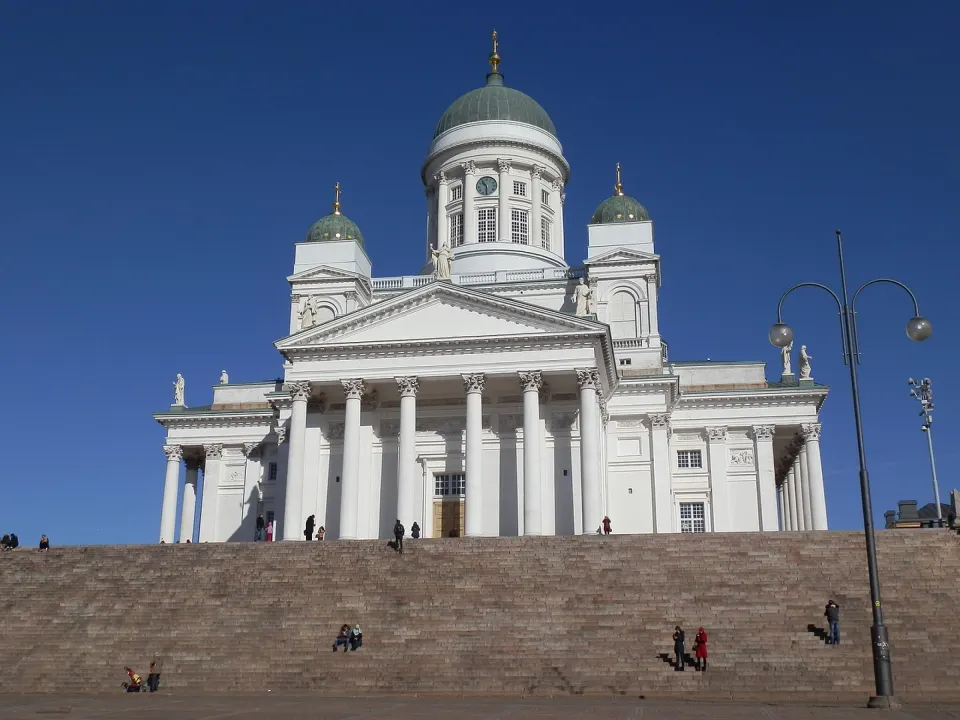
Helsinki Cathedral with steps and blue sky

Helsinki travel guide

What to see, where to stay and the best time to visit Helsinki, Finland.

Best: Jun, Aug

Photo: cuetor59 / Pixabay

Country
Finland

About Helsinki

Helsinki is Finland's coastal capital, with granite harbours, ferries, and a mix of neoclassical and modern architecture. With 694392 people, it feels calm and walkable rather than crowded. Visitors come for design museums, churches like the Rock Church, and island trips to Seurasaari. June and August bring long daylight and the mildest weather, making them the best months to explore the city on foot.

How many days do you need in Helsinki?

Two to three days cover the main sights: the cathedrals, Market Square, Ateneum, Oodi library, and a half-day trip to Seurasaari island.

Top attractions in Helsinki

  1. 1Helsinki Cathedral and Senate Square

    1 hour

    Kruununhaka

    The white Lutheran cathedral with green domes is the city's best-known landmark. It sits at the top of wide steps above Senate Square, which is surrounded by neoclassical buildings. The inside is plain, so most of the reason to go is the square and the view from the steps.

  2. 2Temppeliaukio Church (Rock Church)

    30 minutes–1 hour

    Töölö

    A Lutheran church built directly into solid rock, with a copper dome and natural rock walls inside. The acoustics are good and concerts are held here. It is small and gets crowded when tour groups arrive, so try to visit early or late in the day.

  3. 3Market Square and Old Market Hall

    1 hour

    Kaartinkaupunki / harbour front

    An open-air market on the South Harbour, with stalls selling fish, berries, snacks and souvenirs. The Old Market Hall next to it is a covered food hall with Finnish produce and small places to eat. Outdoor stalls are fewer and quieter in winter.

  4. 4Uspenski Cathedral

    30 minutes–1 hour

    Katajanokka

    A red-brick Orthodox cathedral with gold onion domes, standing on a small hill above the harbour. It shows the Russian influence on the city's history. The hilltop gives a good view over Market Square and the harbour.

  5. 5Ateneum Art Museum

    2–3 hours

    Kluuvi (by Central Railway Station)

    Finland's main museum of classic art, part of the Finnish National Gallery. It holds the best-known Finnish paintings of the national romantic period, alongside European works. It is the best single place to understand Finnish art.

  6. 6Oodi Helsinki Central Library

    1 hour

    Kluuvi / Töölönlahti

    A modern public library with a curved wooden design, facing the Parliament House. Besides books, it has makerspaces, study areas and a large open top floor with a terrace. It is free to walk in and a good place to rest and see how locals use the city.

  7. 7Seurasaari Open-Air Museum

    2–3 hours

    Seurasaari (island west of the centre)

    An island museum of old wooden farmhouses, manors and a church moved here from around Finland. You reach it over a footbridge, and the island is also a pleasant forest walk. Most buildings are only open in the summer season; out of season you can walk the grounds but not go inside.

  8. 8Kiasma Museum of Contemporary Art

    1–2 hours

    Kluuvi (Mannerheimintie)

    The contemporary art museum of the Finnish National Gallery, in a curved modern building. Exhibitions change often and include Finnish and international artists. Skip it if you have no interest in contemporary or experimental art.

  9. 9Sibelius Monument

    30 minutes

    Töölö (Sibelius Park)

    An abstract steel sculpture of many organ-like pipes, honouring the composer Jean Sibelius. It stands in a seaside park, which is a pleasant stop on a walk or cycle through Töölö. It is a short visit, so combine it with Temppeliaukio Church or Seurasaari.
Helsinki by month

Average weather and our month score, from 10 years of climate data.

Weather by month and month scores for Helsinki
Month High / low Rain days Sunshine Sea temp Score
January -1°C / -6°C 14 days (68 mm) 1.4 h/day 0°C 0.5/10
February -1°C / -5°C 12 days (63 mm) 3.6 h/day 0°C 1.6/10
March 2°C / -4°C 11 days (45 mm) 6.6 h/day 1°C 2.5/10
April 7°C / 0°C 10 days (45 mm) 9.9 h/day 4°C 3.0/10
May 14°C / 6°C 9 days (48 mm) 13.0 h/day 10°C 6.1/10
Best month: June 19°C / 11°C 10 days (57 mm) 14.7 h/day 16°C 8.0/10
July 21°C / 14°C 13 days (79 mm) 13.3 h/day 19°C 7.4/10
Best month: August 20°C / 14°C 13 days (83 mm) 11.2 h/day 20°C 7.5/10
September 15°C / 10°C 11 days (70 mm) 8.2 h/day 17°C 6.6/10
October 9°C / 5°C 13 days (80 mm) 4.8 h/day 11°C 2.2/10
November 4°C / 1°C 15 days (78 mm) 2.0 h/day 6°C 0.6/10
December 1°C / -2°C 14 days (67 mm) 1.3 h/day 2°C 0.5/10
  1. Jan

    Highs sit at -1°C with lows near -6°C and 14 rain or snow days; only 1.4 hours of sun daily makes this the darkest, coldest stretch, scoring just 0.5.

  2. Feb

    Still icy at -0.5°C high and -5.3°C low, with 11.6 wet days and just 3.6 sun hours; the score of 1.6 reflects a cold, dim month.

  3. Mar

    Highs climb to 1.9°C but nights stay below freezing at -3.7°C; 10.7 rain days and a low score of 2.5 show winter still has a grip.

  4. Apr

    Daytime highs reach 7.1°C and sun hours double to 9.9, yet 10.2 rain days and a 3 score mean it's a transitional, still-chilly month.

  5. May

    Warming fast to 13.7°C by day with only 8.7 rain days and 13 sun hours, May scores 6.1, marking the start of good conditions.

  6. Jun

    With highs of 18.7°C, sea temperature up to 16.1°C and 14.7 sun hours, June scores the year's best at 8, the sweet spot for a visit.

  7. Jul

    Warmest air at 20.5°C and sea at 18.6°C, though rain picks up to 13.1 days and 79mm; still rated good at 7.4.

  8. Aug

    Highs of 19.9°C and the warmest sea at 19.5°C pair with 12.7 rain days; it ties for the year's top score at 7.5.

  9. Sep

    Highs drop to 15.4°C and sun hours fall to 8.2, but 10.6 rain days keep conditions pleasant enough for a 6.6 score.

  10. Oct

    Highs fall to 9.1°C with 12.9 rain days and just 4.8 sun hours; a wetter, duller month that scores only 2.2.

  11. Nov

    Highs of 4.4°C, 14.5 rain days and a mere 2 sun hours bring heavy grey skies; the score drops to 0.6, among the lowest of the year.

  12. Dec

    Highs barely reach 1.2°C with lows of -2.4°C, 14.3 rain or snow days and just 1.3 sun hours; the darkest month ties January's low 0.5 score.

Climate averages 2015–2024 · Best time to visit Finland →

Where to stay in Helsinki

The best areas to base yourself and who each one suits.

Kluuvi and Kaartinkaupunki (city centre)

Good for first-timers, short stays

This is the core of Helsinki, close to the Esplanadi park, Market Square and the main railway station. You can walk to most sights and ferry terminals. It is the busiest part of the city, so expect crowds and some street noise in summer.

Kamppi

Good for first-timers, transport links

Kamppi sits just west of the centre and has the main bus station, a metro stop and a large shopping centre. It is practical for airport buses and day trips. The area around the transport hub feels commercial and can be noisy late at night.

Punavuori

Good for couples, design and food lovers

Part of the Design District, Punavuori has small shops, galleries, cafés and restaurants on quiet older streets. It is a short walk to the centre and the southern seafront. Bars on some streets stay open late, which can mean weekend noise.

Kallio

Good for budget travellers, nightlife

Kallio is a former working-class area north of the centre, now known for cheap bars, cafés and a young, relaxed crowd. It has good tram and metro links into town. It is the loudest area on this list at night, and some streets feel rough around the edges.

Töölö

Good for families, quiet

Töölö is a calm residential area with parks, the Sibelius Monument and easy access to the bay for walks. It suits people who want a local feel and peaceful nights. It is further from the harbour and Market Square, so you will rely more on trams.

Katajanokka

Good for ferry travellers, quiet

This small island next to the centre has Art Nouveau buildings, the Uspenski Cathedral and a terminal for ferries to Stockholm. It is quiet in the evenings yet close to the main sights. There are fewer restaurants and shops, and it can feel empty outside ferry times.

Getting to and around Helsinki

From the airport
Helsinki Airport sits outside the centre. The usual options are a train or bus into the city, or a taxi if you have luggage or arrive late. No fixed times or prices are given here, so check current schedules before you travel.
Public transport
Helsinki runs trams, buses, a metro line and ferries, all useful for a visitor. Trams cover the centre well, while the metro and buses reach further out. Ferries link Katajanokka and nearby islands. Tip: one ticket type usually covers tram, bus and metro, so check before buying separate tickets.
On foot
The city centre is compact. Kluuvi, Kaartinkaupunki, Kamppi and Kruununhaka sit close together, so Helsinki Cathedral, Ateneum, Oodi and Kiasma are all within easy walking distance of each other.

Food to try in Helsinki

Karjalanpiirakka

A rye pastry filled with rice porridge, often topped with egg butter. Finns eat it for breakfast or as a quick snack from a market hall or kiosk.

Salmon soup (lohikeitto)

A creamy soup made with salmon, potatoes, and dill. It is served in harbourside restaurants and at the Market Square stalls by the waterfront.

Grilled herring at the Market Square

Fried or grilled Baltic herring, sold from stalls near the harbour. Locals buy it for lunch, especially when the weekly fish market is running.

Reindeer dishes

Sautéed or cured reindeer meat, a specialty with roots further north but common on Helsinki restaurant menus. It is usually served with mashed potatoes and lingonberry sauce.

Cinnamon buns (korvapuusti)

A spiced bun eaten with coffee throughout the day. Bakeries and cafés across the city sell them fresh, and they are a standard part of a Finnish coffee break.

Rye bread (ruisleipä)

Dense, dark bread made from rye flour, a staple on Finnish tables. It is eaten with butter, cheese, or cold cuts at breakfast or alongside soups.

More of Finland

Finland travel guide →

Helsinki: frequently asked questions

Is Helsinki good to visit in August?

Yes, August is one of the best months, with a score of 7.5 out of 10. Daytime highs reach 19.9°C and the sea warms up to 19.5°C, the warmest of the year. There are 12.7 rain days and 83mm of rain, so pack a light rain jacket, but the warm sea makes it a good month for a swim.

What is the best time to visit Helsinki?

June and August are rated best, both scoring 7.5-8 out of 10. June has the most sun, 14.7 hours a day, and a high of 18.7°C, while August brings the warmest sea at 19.5°C. May, July and September are also rated good, with scores between 6.1 and 7.4.

How many days do I need in Helsinki?

Two to three days cover the main sights. The nine core attractions, including Helsinki Cathedral, Temppeliaukio Church, Ateneum Art Museum and Seurasaari Open-Air Museum, add up to roughly 11 to 12 hours of visiting time, which fits comfortably into two full days with a third for a slower pace or a day trip.

Is Helsinki cold in winter?

Yes, winter is cold with very little daylight sun. January averages a high of -1.2°C and a low of -5.9°C, with sun hours dropping to just 1.4 a day. The sea also freezes, reaching 0.1°C in January and -0.2°C in February. January, February and December all score below 2 out of 10 for travel conditions.

Does it rain a lot in Helsinki?

Rain is spread fairly evenly through the year rather than concentrated in one season. July and August see the most, 79mm and 83mm, with 12.7 to 13.1 rain days. January and November are the wettest by rain days, each with over 14 days of rain, though with lower totals of 68mm and 78mm.