Skip to content
wheretotravel.info
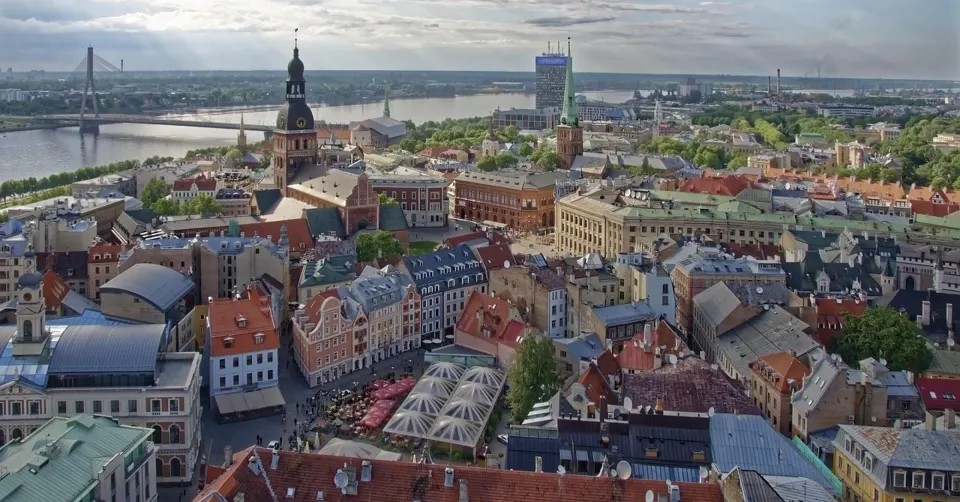
Aerial view of Riga old town skyline

Riga travel guide

What to see, where to stay and the best time to visit Riga, Latvia.

Best: May, Jun, Sep

Photo: Makalu / Pixabay

Country
Latvia

About Riga

Riga is the capital of Latvia, a coastal city with around 588911 people. It mixes a medieval Old Town, Art Nouveau streets in the Quiet Centre, and a lively market scene in Maskavas Forštate. Spring and early autumn bring mild weather without the summer crowds, while June offers long daylight hours for walking the city and nearby parks. May, June and September are the best months to visit, balancing comfortable temperatures with manageable tourist numbers.

How many days do you need in Riga?

Riga's main sights, from the Old Town to the Art Nouveau district and Central Market, can be covered well in 2 to 3 days, including time for a half-day trip to the open-air museum.

Top attractions in Riga

  1. 1Riga Old Town

    half a day

    Vecrīga

    The medieval core of the city is a compact area of cobbled lanes, merchant houses, churches and small squares, listed by UNESCO as a World Heritage Site. It is easy to explore on foot and links most of the central sights.

  2. 2Riga Cathedral

    1 hour

    Vecrīga

    Riga's main Lutheran cathedral stands on Dome Square and mixes Romanesque, Gothic and Baroque styles. It is known for its large historic pipe organ, and organ concerts are a popular way to see the interior.

  3. 3St. Peter's Church

    1–2 hours

    Vecrīga

    This Gothic church has a tall spire with a viewing platform that you reach by lift. From the top you get one of the best views over the Old Town rooftops, the Daugava River and the newer city beyond.

  4. 4Art Nouveau District

    2–3 hours

    Centrs (Quiet Centre)

    Riga has one of the largest collections of Art Nouveau buildings in Europe, and the richest streets are Alberta iela and Elizabetes iela. The Riga Art Nouveau Centre on Alberta iela shows a restored period apartment from the inside.

  5. 5Riga Central Market

    1–2 hours

    Maskavas Forštate

    One of Europe's largest markets fills a row of converted Zeppelin hangars next to the Old Town. Come for smoked fish, rye bread, cheese, berries and other local food, and to see everyday Riga at work.

  6. 6Freedom Monument

    30 minutes

    Centrs

    This tall monument, topped by a female figure holding three stars, is a national symbol of Latvian independence. It stands on the boulevard between the Old Town and the Art Nouveau streets, so most visitors pass it anyway; watch for the changing of the honour guard.

  7. 7Latvian National Museum of Art

    2–3 hours

    Centrs

    The country's main art museum sits in a grand restored building by Esplanāde park. It is the best place to see Latvian and Baltic painting, and the rooftop terrace gives a good view over the boulevards.

  8. 8Latvian Ethnographic Open-Air Museum

    half a day

    Bergi (Lake Jugla)

    This large open-air museum in a pine forest on the shore of Lake Jugla brings together old farmhouses, windmills, churches and fishermen's huts from all regions of Latvia. It shows rural life away from the city and is pleasant for a long walk.

  9. 9Three Brothers

    30 minutes–1 hour

    Vecrīga

    This row of three old houses on Mazā Pils iela is the oldest surviving group of residential buildings in Riga, each from a different period. One of them holds the Latvian Museum of Architecture.

  10. 10Kalnciema Quarter

    1–2 hours

    Āgenskalns

    A cluster of restored wooden houses across the river from the Old Town, now home to cafés, small shops and a weekend market with local food and crafts. It is a good look at Riga's wooden architecture and a quieter, local side of the city.
Riga by month

Average weather and our month score, from 10 years of climate data.

Weather by month and month scores for Riga
Month High / low Rain days Sunshine Sea temp Score
January 0°C / -5°C 14 days (55 mm) 2.2 h/day 1°C 0.8/10
February 2°C / -3°C 11 days (47 mm) 4.2 h/day 0°C 1.8/10
March 6°C / -2°C 11 days (43 mm) 7.0 h/day 2°C 2.6/10
April 11°C / 2°C 11 days (45 mm) 10.1 h/day 6°C 4.2/10
Best month: May 17°C / 7°C 10 days (53 mm) 12.8 h/day 11°C 7.6/10
Best month: June 22°C / 12°C 11 days (69 mm) 13.9 h/day 17°C 7.8/10
July 22°C / 14°C 16 days (89 mm) 13.2 h/day 20°C 7.0/10
August 22°C / 14°C 13 days (89 mm) 11.4 h/day 20°C 7.3/10
Best month: September 18°C / 11°C 12 days (64 mm) 9.1 h/day 19°C 7.6/10
October 11°C / 5°C 15 days (74 mm) 5.5 h/day 12°C 3.0/10
November 5°C / 2°C 13 days (59 mm) 2.6 h/day 8°C 1.0/10
December 2°C / -2°C 14 days (50 mm) 1.7 h/day 4°C 0.6/10
  1. Jan

    Highs sit at -0.1°C with 13.5 rain or snow days, so pavements stay icy. Score is low at 0.8, reflecting cold, dark days with just 2.2 sun hours.

  2. Feb

    Still cold at 1.7°C high, with 11.2 rain days and only 4.2 sun hours. Score of 1.8 shows this is a tough month for sightseeing.

  3. Mar

    Highs reach 5.6°C but nights drop below freezing; 10.9 rain days and 7 sun hours. Score 2.6 marks a slow, muddy transition out of winter.

  4. Apr

    Highs climb to 10.9°C with 11.3 rain days and 10.1 sun hours. Score 4.2 makes this an ok shoulder month as the city thaws.

  5. May

    Highs of 17°C, fewer rain days at 9.5, and 12.8 sun hours. Score 7.6 marks this as one of the best months to visit.

  6. Jun

    Warm at 21.9°C high with 13.9 sun hours, though rain picks up to 11.1 days. Score 7.8, the top-rated month of the year.

  7. Jul

    Highs of 22.4°C bring the warmest sea at 20.2°C, but rain is heaviest with 15.8 days and 89mm. Score 7 still counts as good.

  8. Aug

    Highs stay at 22.4°C with warm sea at 20.3°C; rain days ease slightly to 13.3. Score 7.3 keeps this a good summer choice.

  9. Sep

    Highs drop to 17.8°C but sun hours fall to 9.1 and rain eases to 11.7 days. Score 7.6 makes it one of the best months.

  10. Oct

    Highs fall to 11°C with rain on 14.5 days and sun down to 5.5 hours. Score 3 shows cooling, wetter weather setting in.

  11. Nov

    Highs of 5.4°C, 13.4 rain days and only 2.6 sun hours bring short, grey days. Score 1 reflects the dim, damp conditions.

  12. Dec

    Highs of 2°C with 14.2 rain or snow days and just 1.7 sun hours mean long dark days. Score 0.6, the lowest of the year.

Climate averages 2015–2024 · Best time to visit Latvia →

Where to stay in Riga

The best areas to base yourself and who each one suits.

Old Town

Good for first-timers, short city breaks

Riga's medieval core, called Vecrīga, has cobbled lanes, church spires and the main sights within a short walk. It is the easiest base if you only have a few days. Weekend nights can be loud with bars and stag groups, and the cobbles are hard work with a wheeled suitcase.

Quiet Centre

Good for architecture fans, couples, calm stays

Known locally as Klusais centrs, this is the leafy area north of the Old Town around Alberta iela, famous for its Art Nouveau facades. Streets are calm at night but still close to parks, cafés and the Old Town on foot. Evening dining and nightlife are thinner than in the Old Town.

Centrs

Good for independent travellers, food and cafés

The wider city centre around Brīvības iela and Tērbatas iela is where locals live, work and eat out, with plenty of restaurants and good tram links. It feels less touristy than the Old Town and is easy to reach from the bus and train stations. Main roads like Brīvības iela carry heavy traffic, so street-facing rooms can be noisy.

Maskavas forštate

Good for market lovers, budget-minded, curious explorers

The Moscow Suburb sits just south-east of the Old Town, beside the Central Market and the Spīķeri warehouse district with its galleries and cafés. It has old wooden houses and a strong sense of everyday Riga. Some streets look run-down and feel quiet and poorly lit late at night.

Āgenskalns

Good for slow travellers, quiet, local life

Across the Daugava river, Āgenskalns has wooden houses, green courtyards and its own restored market hall. It is a relaxed place to stay and gives you views back over the river to the Old Town. You will need a tram, bus or a longer walk over the bridge to reach the main sights.

Mežaparks

Good for families, nature, outdoor lovers

This garden suburb in the north of the city has villas set among pine forest, with a lake, walking paths and Riga Zoo nearby. It is the calmest choice and good for children. The centre is a tram ride away, so it suits longer stays more than a quick first visit.

Getting to and around Riga

From the airport
No route data is given for Riga Airport (RIX) to the centre. The usual options are a public bus, taxi, or ride-hailing app, which most visitors use to reach the city centre.
Public transport
Riga has trams, buses, and trolleybuses, but no metro. Public transport covers the city well. Tip: buy a ticket before boarding or from the driver, since fare rules vary by vehicle.
On foot
Old Town (Vecrīga) is very walkable, with the Cathedral, St. Peter's Church, and Three Brothers close together. The Art Nouveau District and Freedom Monument in Centrs are an easy walk from Old Town.

Food to try in Riga

Rye bread (rupjmaize)

Dark, dense rye bread is a staple at every Latvian table. Locals eat it with butter, smoked fish, or as a base for rupjmaizes kārtojums, a layered rye bread dessert with cream and berries.

Grey peas with bacon

Pelēkie zirņi ar speķi, grey peas cooked with smoked bacon and onions, is a traditional winter dish. It is hearty, filling food often served in Riga's old-style restaurants.

Smoked fish

Riga sits on the Baltic coast, so smoked herring, sprats, and other local fish are common. They are sold fresh at Riga Central Market and eaten with rye bread or potatoes.

Pīrāgi

These small baked pastries are filled with bacon and onion. Latvians eat pīrāgi as a snack, at parties, and especially around Christmas and other celebrations.

Sorrel soup

Skābeņu zupa is a sour soup made from wild sorrel leaves, often with a boiled egg and sour cream on top. It is a seasonal dish, eaten in spring when sorrel is fresh.

Riga Black Balsam

This dark, bitter herbal liqueur has been made in Riga since the 18th century. Locals drink it neat, with coffee, or mixed into cocktails, especially in winter.

More of Latvia

Latvia travel guide →

Riga: frequently asked questions

Is Riga good to visit in August?

Yes, August scores 7.3 out of 10, rated 'good'. Daytime highs reach 22.4°C and lows stay around 13.8°C, so it's warm without being hot. There are 13.3 rain days and 11.4 hours of sunshine on average, and the sea warms up to 20.3°C, which is the warmest month to swim near Riga.

How many days do I need in Riga?

Two to three days cover the main sights comfortably. Riga Old Town needs about half a day, the Art Nouveau District 2–3 hours, and the Central Market 1–2 hours. Add a half day for the Latvian Ethnographic Open-Air Museum if you want to see it, which brings a relaxed visit to three days total.

When is the best time to visit Riga?

May, June and September are rated 'best', each scoring 7.6–7.8 out of 10. June has the warmest highs at 21.9°C with 13.9 hours of sunshine, while May and September are drier and milder, with highs of 17°C and 17.8°C. July and August are also rated 'good' but bring more rain, 89 mm each.

Is Riga cold in winter?

Yes, winter in Riga is cold and dark. January highs average -0.1°C with lows of -4.5°C, and there are only 2.2 hours of sunshine a day. December and February are similar, with highs staying below 2°C and sunshine dropping as low as 1.7 hours in December. These months score under 2 out of 10.

Can you swim in the sea near Riga?

Swimming is only really comfortable in summer. Sea temperatures peak at 20.2°C in July and 20.3°C in August, with September still a mild 18.6°C. From November through April the sea stays below 8°C, dropping to 0.4°C in February, so swimming outside summer means very cold water.