Skip to content
wheretotravel.info
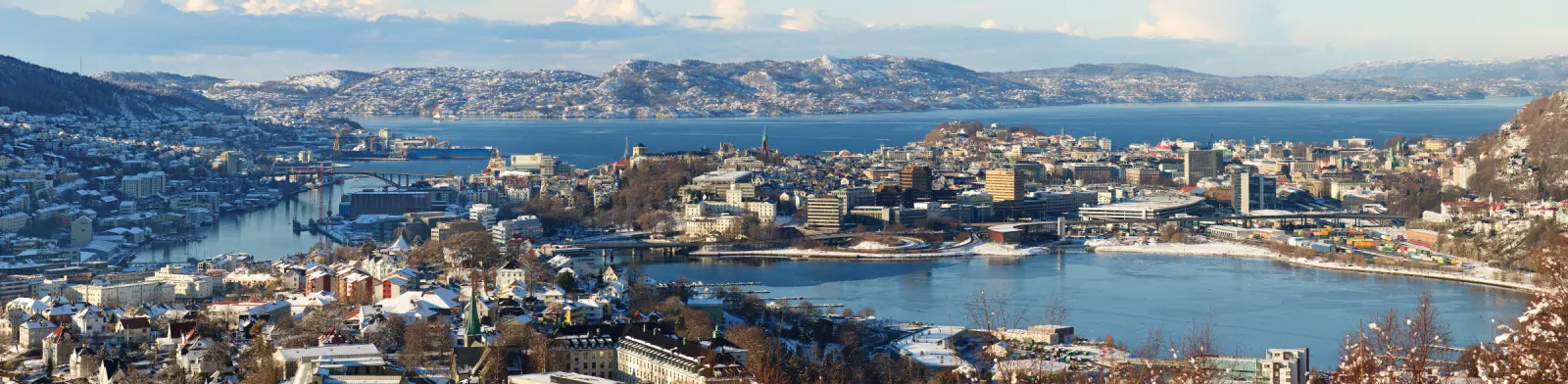
Panoramic snowy view of Bergen city and fjord

Bergen travel guide

What to see, where to stay and the best time to visit Bergen, Norway.

Best: Jul, Aug

Photo: Aqwis / Wikimedia Commons

Country
Norway

About Bergen

Bergen sits on Norway's west coast, wrapped around a harbour and surrounded by mountains like Fløyen and Ulriken. It's a city for walking, with the old wooden houses of Bryggen, a working fish market, and museums covering art and music within easy reach. The mountains mean weather changes fast, and rain is common, but cable cars and funiculars make the viewpoints accessible even on grey days. July and August are the best months to visit, with the warmest, driest conditions of the year.

How many days do you need in Bergen?

Two to three days cover Bryggen, the Fish Market, Bergenhus Fortress and one mountain trip by funicular or cable car, with time left for a museum or a walk around Nordnes.

Top attractions in Bergen

  1. 1Bryggen

    1–2 hours

    Sentrum

    Bryggen is the row of old wooden merchant houses along the harbour, listed as a UNESCO World Heritage Site. Walk the narrow passages between the buildings to see small shops, workshops and the timber construction up close.

  2. 2Mount Fløyen and the Fløibanen Funicular

    2–3 hours

    Sentrum

    The Fløibanen funicular runs from the city centre up Mount Fløyen, one of the mountains around Bergen. At the top you get a wide view over the city, the harbour and the fjords, plus forest trails and a lake for easy walks.

  3. 3Mount Ulriken

    half a day

    Landås

    Ulriken is the highest of the mountains around Bergen, reached by cable car. It has open views over the city, the coast and the islands, and hiking trails lead across the high ground towards Fløyen for fit walkers.

  4. 4Fish Market

    1 hour

    Sentrum

    The Fish Market sits at the inner end of the harbour, close to Bryggen. Stalls and an indoor hall sell seafood, and many visitors stop here for a seafood meal.

  5. 5Bergenhus Fortress

    1–2 hours

    Sentrum

    Bergenhus is one of Norway's oldest and best-preserved fortresses, at the harbour entrance. Its main buildings are Haakon's Hall, a medieval royal hall, and the Rosenkrantz Tower, and the grounds are open for walking.

  6. 6KODE Art Museums

    2–3 hours

    Sentrum

    KODE is a group of art museums in buildings around the Lille Lungegårdsvann lake in the city centre. The collections include Norwegian and international art and design, with a large collection of works by Edvard Munch.

  7. 7Troldhaugen – Edvard Grieg Museum

    half a day

    Fana

    Troldhaugen was the home of the composer Edvard Grieg, on a lake south of the city centre. You can see his villa, his composer's hut and his grave, and concerts are held in the concert hall on the site.

  8. 8Old Bergen Museum

    2–3 hours

    Sandviken

    The Old Bergen Museum is an open-air museum of wooden houses moved here from central Bergen. Streets, shops and homes show how people in the town lived in earlier centuries.

  9. 9Bergen Aquarium

    2–3 hours

    Nordnes

    The aquarium is at the tip of the Nordnes peninsula and shows sea life from Norwegian waters and beyond. Seals, penguins and feeding sessions make it a popular stop for families, especially on rainy days.

  10. 10Nordnes Park

    1 hour

    Nordnes

    Nordnes Park covers the end of the Nordnes peninsula next to the aquarium. Paths run along the shoreline with views across the fjord, and the walk from the centre passes through old streets of wooden houses.
Bergen by month

Average weather and our month score, from 10 years of climate data.

Weather by month and month scores for Bergen
Month High / low Rain days Sunshine Sea temp Score
January 3°C / -2°C 21 days (264 mm) 2.1 h/day 6°C 0.5/10
February 4°C / -1°C 19 days (233 mm) 3.7 h/day 6°C 0.9/10
March 6°C / 0°C 18 days (182 mm) 5.7 h/day 6°C 1.4/10
April 9°C / 1°C 15 days (108 mm) 9.7 h/day 7°C 2.7/10
May 14°C / 6°C 15 days (116 mm) 10.6 h/day 11°C 4.8/10
June 17°C / 9°C 16 days (133 mm) 11.1 h/day 13°C 6.3/10
Best month: July 17°C / 11°C 19 days (193 mm) 10.3 h/day 17°C 6.6/10
Best month: August 17°C / 11°C 21 days (257 mm) 8.6 h/day 16°C 6.6/10
September 15°C / 9°C 17 days (265 mm) 6.9 h/day 15°C 5.2/10
October 10°C / 5°C 21 days (295 mm) 4.8 h/day 13°C 2.4/10
November 6°C / 2°C 18 days (244 mm) 2.8 h/day 10°C 0.7/10
December 4°C / 0°C 22 days (291 mm) 1.4 h/day 8°C 0.4/10
  1. Jan

    Cold and dark, with a high of 3°C and rain on about 21 days. Sun hours sit at just 2.1 a day, giving this month the lowest score of the year.

  2. Feb

    Still cold at a 4°C high, with 19 rain days. Sunshine creeps up slightly to 3.7 hours, but the score stays very low.

  3. Mar

    Highs reach 6°C and rain falls on 18 days. Sun hours rise to 5.7, pushing the score up a little, though it remains weak.

  4. Apr

    Spring brings a 9°C high and fewer rain days, 14.5 on average. Sun hours jump to 9.7, lifting the score closer to a middle rating.

  5. May

    A 13.5°C high and 15 rain days make this a turning point, with the score reaching 4.8, an okay month for a visit.

  6. Jun

    Highs of 17°C, 15.7 rain days and 11.1 sun hours give June a score of 6.3, rated good for travel.

  7. Jul

    Warmest alongside August at 17.2°C, but rain picks up to 18.9 days. Sun hours stay strong at 10.3, keeping the score good at 6.6.

  8. Aug

    Same 17.2°C high as July, with more rain, 20.5 days and 257mm. Sun hours drop to 8.6, yet the score holds at 6.6, still good.

  9. Sep

    Highs fall to 15°C and rain increases to 265mm over 17.1 days. Sun hours drop to 6.9, giving an okay score of 5.2.

  10. Oct

    Autumn turns wet, with 295mm of rain over 20.5 days and a high of just 10°C. Sun hours fall to 4.8, and the score drops sharply to 2.4.

  11. Nov

    Highs of 6°C and 17.5 rain days bring short, dark days with only 2.8 sun hours. The score falls to 0.7, among the weakest of the year.

  12. Dec

    The wettest and darkest month, with 21.6 rain days, 291mm of rain and just 1.4 sun hours. Highs of 4°C give the year's lowest score at 0.4.

Climate averages 2015–2024 · Best time to visit Norway →

Where to stay in Bergen

The best areas to base yourself and who each one suits.

Bryggen

Good for first-timers, sightseeing

The old Hanseatic wharf, a UNESCO World Heritage Site, with its wooden buildings sits a short walk from the Fish Market and the Fløibanen funicular. Staying here puts most of Bergen's best-known sights on your doorstep. The drawback is crowds, especially on days when cruise ships are in port.

Sentrum

Good for first-timers, nightlife, shopping

The flat city centre around Torgallmenningen and Festplassen has most of the shops, restaurants and bars, and the light rail from the airport stops here. It is the easiest base if you arrive without a car and want everything within walking distance. Bars and late-night foot traffic can make it noisy on weekend nights.

Nordnes

Good for couples, quiet, walkers

This peninsula west of the centre has narrow lanes of white wooden houses, the Bergen Aquarium and a seaside park at its tip. It feels residential and calm, yet the harbour is only a short walk away. The streets are steep and cobbled in places, and there are few shops or restaurants.

Nygårdshøyden

Good for culture lovers, budget travellers, cafés

The university district on the hill south-west of the centre has student cafés, the university museums and green spaces, and the KODE art museums are close by. It has a relaxed, local feel and is still walkable to the harbour. Expect hills, and some noise from student nightlife during term.

Sandviken

Good for families, quiet, repeat visitors

North of Bryggen along the fjord, Sandviken is a mostly residential area of old wooden houses and converted waterfront warehouses. It is quieter than the centre and gives you a sense of everyday Bergen life. You will need a longer walk or a bus ride to reach the main sights and restaurants.

Fjellsiden

Good for hikers, views, couples

The mountainside above the centre, around Skansen and Stølen, is a maze of steep lanes and small wooden houses with wide views over the city and harbour. Trails up Mount Fløyen start close by, so it suits people who want to hike. The slopes are very steep, which makes arriving with heavy luggage hard work.

Getting to and around Bergen

From the airport
No specific route data is available for Bergen's airport. Visitors usually choose between an airport bus, a taxi, or in some cases a light rail link into the centre.
Public transport
Bergen has a light rail (Bybanen) and city buses that cover most of the city. There is little metro or tram network beyond this, so buses and the light rail are the main options for getting around. A practical tip: check connections before your first trip since coverage can be limited outside the centre.
On foot
Sentrum is very walkable, with Bryggen, the Fish Market, Bergenhus Fortress, KODE Art Museums and Mount Fløyen's funicular all within this one area. Nordnes, home to the Aquarium and Nordnes Park, is also within easy walking distance of Sentrum.

Food to try in Bergen

Fiskesuppe

This creamy fish soup is a Bergen classic, made with local fish and vegetables. You find it in most restaurants around the harbour, served as a warming starter or light meal.

Bergen Fish Market

The Fisketorget by the harbour sells fresh and smoked seafood, shrimp, and fish cakes. Locals and visitors alike stop here to eat seafood straight from the stalls.

Smoked Salmon

Norway's coastal waters make salmon a staple here. In Bergen, it's often served smoked or cured, on open sandwiches or as part of a seafood platter.

Fish Cakes (Fiskekaker)

These pan-fried cakes made from white fish are a everyday comfort food. They're commonly eaten with boiled potatoes and a simple sauce, often at home or in casual eateries.

Seafood Platters

Given Bergen's coastal location, platters with shrimp, crab, and other shellfish are popular, especially in restaurants near the waterfront, enjoyed as a shared meal.

More of Norway

Norway travel guide →

Bergen: frequently asked questions

Is Bergen good to visit in August?

Yes, August is one of Bergen's best months, scoring 6.6 out of 10 in our data. Daytime highs reach 17.2°C and sea temperatures hit 15.8°C, among the warmest of the year. Still, rain falls on about 20.5 days in August with 257mm total, so pack a waterproof jacket even in summer.

Is Bergen rainy?

Yes, Bergen gets rain on many days year-round. December is the wettest month with 21.6 rain days and 291mm of rainfall, while March is drier with 18.2 rain days and 182mm. Even the sunniest months, like June and July, still see 15 to 19 rain days, so an umbrella is useful whenever you go.

When is the best time to visit Bergen?

July and August are the best months, both scoring 6.6 out of 10. Highs reach 17.2°C in both months, sun hours peak at 10 to 11 hours a day in June and July, and sea temperatures climb to 15.8–16.8°C for swimming. May and September are decent alternatives, scoring 4.8 and 5.2.

Is Bergen cold in winter?

Yes, Bergen winters are cold and dark. January highs average just 2.8°C with lows of -1.5°C, and sun hours drop to only 2.1 a day. December is the gloomiest month at 1.4 sun hours daily. These months score 0.4 to 0.9 out of 10 in our data, reflecting the low light and chill rather than ruling the city out for a winter trip.

How many days do I need in Bergen?

Plan for 2 to 3 days to see the main sights. Bryggen, the Fish Market and Bergenhus Fortress each take 1 to 2 hours, while Mount Fløyen and KODE Art Museums need 2 to 3 hours. Add a half day for Mount Ulriken or the Troldhaugen Edvard Grieg Museum if you want to go further outside the centre.