Skip to content
wheretotravel.info
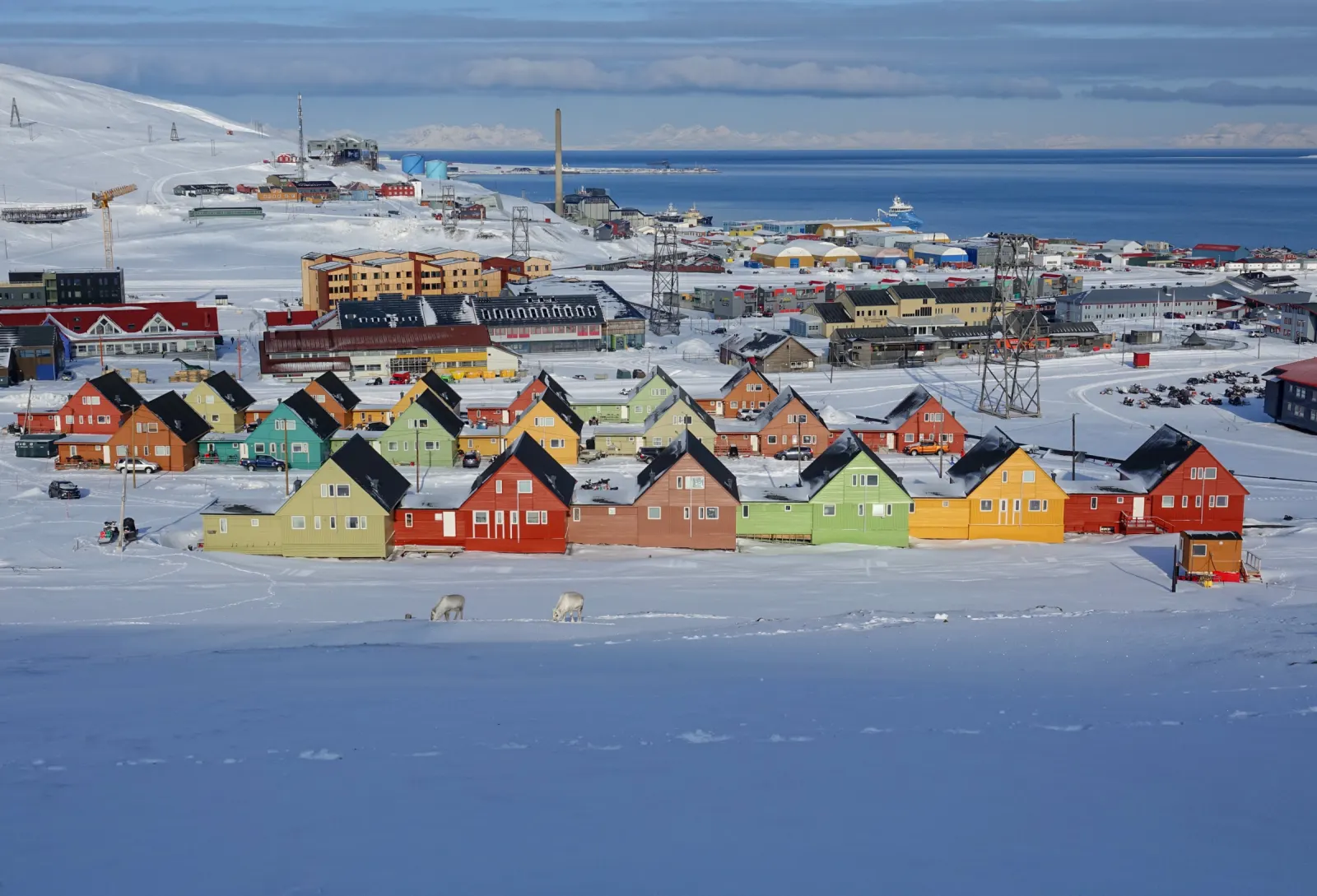
Colorful houses with reindeer in snowy town

Longyearbyen travel guide

What to see, where to stay and the best time to visit Longyearbyen, Norway.

Best: Jul, Aug

Photo: Bjørn Christian Tørrissen / Wikimedia Commons

Country
Norway

About Longyearbyen

Longyearbyen sits on Svalbard, far north of mainland Norway, and feels like nowhere else on the itinerary. It's a small coastal town of 2,417 people, built around coal-mining history, polar bears, and the Arctic landscape. Visitors come for the Svalbard Global Seed Vault, former coal mines, and husky or snowmobile trips rather than city sights. July and August bring the midnight sun and milder temperatures, making outdoor exploring easier than in the dark winter months.

How many days do you need in Longyearbyen?

Plan for 2 to 3 days. The town's indoor sights, such as the Svalbard Museum, Mine 3, Svalbard Church, and the North Pole Expedition Museum, each take 1 to 3 hours, leaving time for a guided trip to the Seed Vault or a walk through Nybyen.

Top attractions in Longyearbyen

  1. 1Svalbard Museum

    1–2 hours

    Town centre

    This museum covers the natural and human history of Svalbard, from Arctic wildlife to trapping, whaling and coal mining. It is a good first stop to understand the islands before you head out on tours.

  2. 2Mine 3 (Gruve 3)

    2–3 hours

    Near the airport

    This former coal mine is now open for guided tours. You can walk into the tunnels and see the old equipment. It shows the hard working life that built Longyearbyen.

  3. 3Svalbard Church

    30–60 minutes

    Skjæringa

    This wooden church is one of the northernmost churches in the world and a quiet place to warm up. It also works as a meeting point for the local community, and visitors are welcome.

  4. 4North Pole Expedition Museum

    1–2 hours

    Longyearbyen

    This small private museum tells the stories of early airship and balloon expeditions that tried to reach the North Pole from Svalbard. It has original objects, photos and newspaper pages from the time.

  5. 5Gallery Svalbard

    1 hour

    Nybyen

    This gallery shows Arctic art, including works by painter Kåre Tveter, plus old maps and books about Svalbard. It sits in the upper part of the valley, a pleasant walk from the centre.

  6. 6Coal cableway and cableway central station

    30–60 minutes

    Town centre

    Wooden pylons from the old coal cableway still stand across the valley, and the central station building is a protected heritage site. They are an easy, free way to see the mining past that shaped the town.

  7. 7Svalbard Global Seed Vault

    1–2 hours including travel

    Platåberget, near the airport

    The seed vault stores backup seeds of food crops from around the world, deep inside the mountain. Visitors cannot go inside, but many come to see and photograph the entrance. It is outside the town's safe zone, so go with a tour or a guide because of the polar bear risk.

  8. 8Longyearbyen Cemetery

    30 minutes

    This small cemetery on the hillside above town holds graves of early miners and victims of the Spanish flu. You view it from outside the fence, and it gives a calm, sober look at life in the early mining town.

  9. 9Nybyen

    1–2 hours

    Nybyen

    This upper part of town has old miners' barracks, now used as guesthouses, with the mountains and glaciers close by. Walking up the valley road from the centre shows how the town spreads along the valley floor. Stay inside the settlement, as polar bears can appear beyond it.

Longyearbyen by month

Average weather and our month score, from 10 years of climate data.

Weather by month and month scores for Longyearbyen
Month High / low Rain days Sunshine Sea temp Score
January -9°C / -14°C 10 days (42 mm) 0.0 h/day 0°C 1.2/10
February -9°C / -14°C 11 days (49 mm) 0.4 h/day -1°C 1.1/10
March -11°C / -16°C 11 days (43 mm) 5.3 h/day -2°C 2.4/10
April -7°C / -12°C 9 days (33 mm) 11.0 h/day -1°C 3.5/10
May -1°C / -4°C 9 days (33 mm) 12.9 h/day 2°C 3.4/10
June 5°C / 2°C 8 days (27 mm) 11.6 h/day 5°C 3.6/10
Best month: July 10°C / 6°C 10 days (43 mm) 10.4 h/day 9°C 5.3/10
Best month: August 8°C / 5°C 12 days (57 mm) 7.5 h/day 9°C 4.1/10
September 4°C / 0°C 13 days (65 mm) 3.5 h/day 6°C 1.3/10
October -2°C / -6°C 11 days (48 mm) 0.8 h/day 3°C 1.1/10
November -5°C / -10°C 12 days (53 mm) 0.0 h/day 2°C 0.7/10
December -7°C / -13°C 12 days (54 mm) 0.0 h/day 1°C 0.7/10
  1. Jan

    Polar night continues with 0 sun hours, a high of -8.7°C and rain or snow on about 10 days; the score sits at 1.2, reflecting the dark, cold conditions.

  2. Feb

    Still almost no daylight, 0.4 sun hours, highs near -9°C and about 11 days of precipitation; the low score of 1.1 mirrors the deep winter chill.

  3. Mar

    Daylight returns with 5.3 sun hours but it's the coldest month, high -10.7°C, low -15.8°C, with 10.5 rain or snow days; score stays low at 2.4.

  4. Apr

    Highs climb to -6.6°C with 11 sun hours and fewer rain days, 8.7; conditions ease slightly but the score of 3.5 still shows a cold, wintery month.

  5. May

    Temperatures edge above -1.3°C with almost 13 sun hours, sea temp still cold at 1.5°C, and 9.1 rain days; score of 3.4 reflects a transition month.

  6. Jun

    Midnight sun brings 11.6 sun hours and a high of 4.6°C, sea temp 4.9°C, with 8 rain days; score of 3.6 shows milder but still cool weather.

  7. Jul

    The warmest month, high 9.7°C, sea temp 8.5°C, with 10.4 sun hours and 9.8 rain days; this is the best-scoring month at 5.3, rated ok for a visit.

  8. Aug

    Still mild with a high of 8.3°C and sea temp 8.8°C, but rain increases to 11.9 days and sun hours drop to 7.5; score of 4.1 keeps the ok rating.

  9. Sep

    Temperatures fall fast to a high of 3.7°C, sun hours drop to 3.5, and rain days peak at 13.1; score drops sharply to 1.3 as darkness returns.

  10. Oct

    Highs turn negative at -1.5°C, sun hours almost gone at 0.8, and 11.1 rain or snow days; score of 1.1 shows the slide into winter cold and dark.

  11. Nov

    Polar night sets in again with 0 sun hours, high of -4.8°C and 11.9 rain or snow days; the lowest score of the year, 0.7, reflects total darkness and cold.

  12. Dec

    Deep winter continues, 0 sun hours, high of -7.4°C, low -12.5°C and 12.2 rain or snow days; score stays at 0.7 for this dark, cold month.

Climate averages 2015–2024 · Best time to visit Norway →

Where to stay in Longyearbyen

The best areas to base yourself and who each one suits.

Sentrum

Good for first-timers, short stays, no car

The small town centre around the pedestrian street holds most shops, cafés, bars and tour pick-up points, so everything is a short walk away. It is the easiest base in the dark or cold months, when you want little time outside between stops. It has less wilderness feel than the upper valley, and rooms here tend to fill first in busy seasons.

Nybyen

Good for hikers, quiet, mountain views

This former miners' quarter sits at the top of the valley, with old wooden buildings and mountains on three sides. It feels calm and close to nature, and some trails start nearby. The walk down to the centre is uphill on the way back and can be icy or windy, and it lies at the edge of town, where polar bear rules for the area outside the settlement start to matter.

Skjæringa

Good for quiet, repeat visitors

A small residential area on the slope near Svalbard Church, between the centre and the upper valley. It is quieter than Sentrum but still within walking distance of restaurants and shops. There are few places to stay, and the paths up and down the slope get slippery in winter.

Hotellneset

Good for early flights, fjord views

This spot on the shore near the airport has open views over Adventfjorden and very quick access to flights. It suits a first or last night on the islands. It is a long way from the centre, so you will depend on the airport bus, taxis or tour transfers, and it is exposed to wind off the fjord.

Getting to and around Longyearbyen

From the airport
No specific route data is given for Longyearbyen Airport. Visitors usually take the local airport bus, a taxi, or arrange a hotel shuttle to reach the centre, since the airport sits close to town on Spitsbergen.
Public transport
Longyearbyen has no metro, tram or regular city bus network. There is little public transport in town. Most visitors get around on foot, by taxi, or by joining organised snowmobile, boat or bus excursions for trips outside the centre.
On foot
Sentrum, the town centre, is compact and walkable, with the Svalbard Museum and the Coal cableway central station close together. Skjæringa and its church are a short walk away, while Nybyen and the airport-area sights need a taxi or tour.

Food to try in Longyearbyen

Fresh Arctic seafood

Longyearbyen sits on the coast, so restaurants serve fresh catches like cod and king crab. Local menus often change with what boats bring in that day.

Reindeer dishes

Reindeer meat from Svalbard herds shows up on many menus as stew, steak, or smoked slices. It's a filling choice after a day out in the cold.

Seal meat

Some restaurants offer seal as a local specialty, reflecting the traditional Arctic diet. It's usually served as a main course in the evening.

Bidos-style stews

Warming stews made with local game or fish are common comfort food in winter, when outdoor temperatures make hearty, hot meals a priority for residents and visitors alike.

Arctic char

This cold-water fish is a staple on local tables, often grilled or smoked. It pairs well with simple sides and is a lighter alternative to reindeer or seal.

More of Norway

Norway travel guide →

Longyearbyen: frequently asked questions

Is Longyearbyen good to visit in August?

Yes. August scores 4.1 out of 10 and is rated ok, one of the two best months along with July. Highs reach 8.3°C and lows 5°C, so it's the warmest period of the year. Rain is frequent though, with 11.9 rain days and 57mm, the wettest month on record.

What is the best time to visit Longyearbyen?

July and August are the best months, both rated ok rather than avoid. July has the highest temperatures, with highs of 9.7°C and lows of 6.3°C, plus the most sun hours at 10.4. Every other month scores below 3.6 out of 10, mostly due to extreme cold and near-zero sunlight.

How cold does it get in Longyearbyen in winter?

Very cold. December, January and February all average highs below -7°C, with lows down to -14.3°C in February. These months also get zero or almost zero sun hours, since Longyearbyen sits far enough north to have a polar night. Scores for these months are under 1.2 out of 10.

Does Longyearbyen get sunlight all year?

No. Sun hours drop to zero in January, November and December, and stay near zero in February (0.4) and October (0.8). The brightest months are May and June, with 12.9 and 11.6 sun hours. This reflects the extreme seasonal light swing typical of places above the Arctic Circle.

How many days do I need in Longyearbyen?

Two to three days cover the main sights. The attractions listed, such as Svalbard Museum (1–2 hours), Mine 3 (2–3 hours), Svalbard Church (30–60 minutes), the North Pole Expedition Museum (1–2 hours) and the Seed Vault viewpoint (1–2 hours including travel), can be combined comfortably over that time.