Skip to content
wheretotravel.info
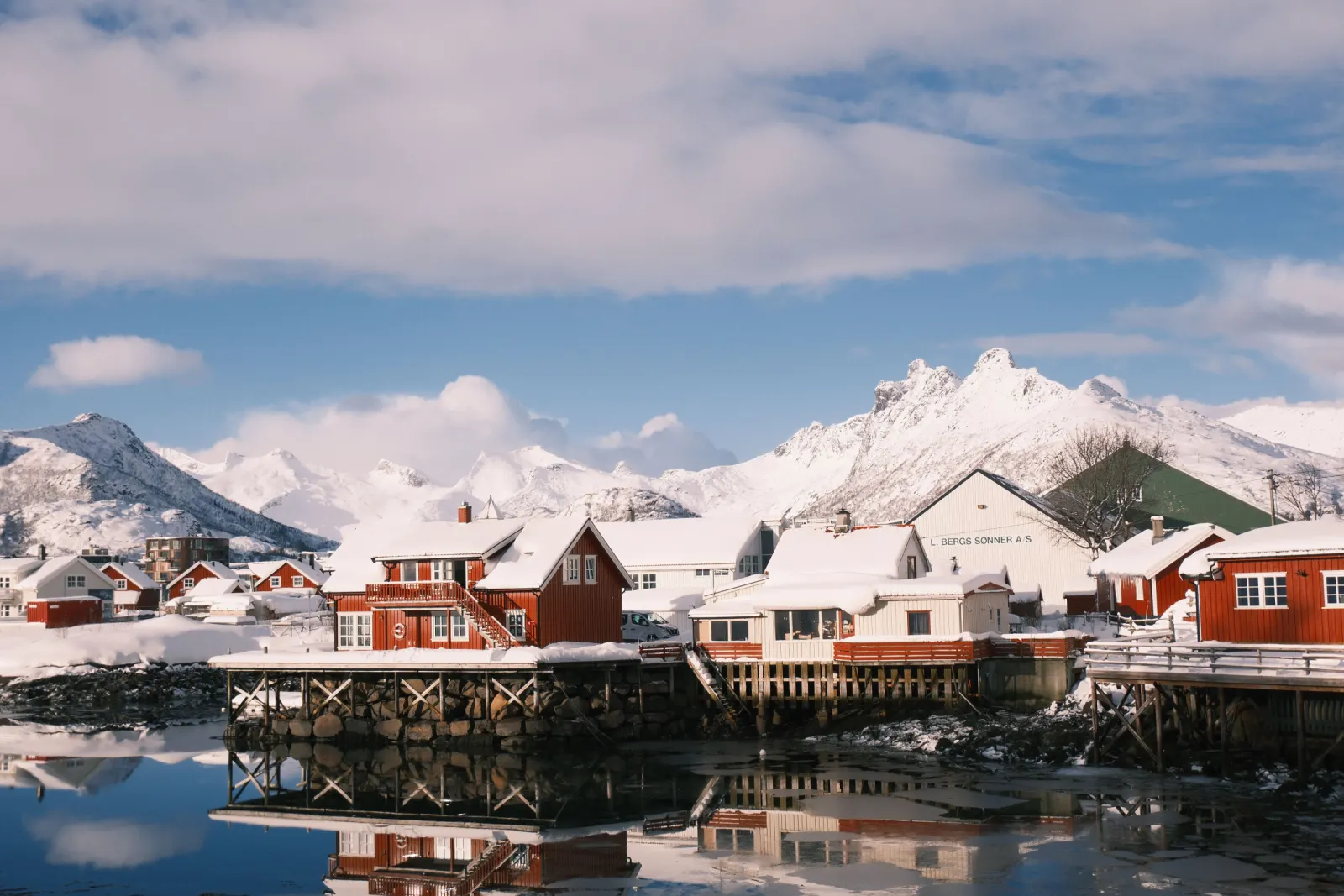
Snow-covered red houses reflecting in harbor water

Svolvær travel guide

What to see, where to stay and the best time to visit Svolvær, Norway.

Best: Jul, Aug

Photo: Jiafan Shi / Pexels

Country
Norway

About Svolvær

Svolvær is a small fishing town of 4,807 people on the coast of Norway's Lofoten islands, surrounded by sharp peaks and open water. It works as a base for hiking the jagged Svolværgeita and Djevelporten rock formation, taking a boat into Trollfjord, or exploring nearby Kabelvåg and Henningsvær. With a population this small, don't expect city buzz — it's a nature-focused stop. July and August bring the mildest weather and the longest daylight, which suits hiking and boat trips best.

How many days do you need in Svolvær?

Two to three days cover the main sights: the Svolværgeita hike, a Trollfjord boat trip, and a half-day in Henningsvær or Kabelvåg, with time left for the smaller museums and galleries.

Top attractions in Svolvær

  1. 1Svolværgeita and Djevelporten hike

    half a day

    Svolvær

    A steep trail above town leads to Djevelporten (the Devil's Gate), a large boulder wedged in a gully, with views over Svolvær and the islands. Svolværgeita (the Svolvær Goat) is the twin-horned rock pinnacle that climbers jump between; hikers can view it from the path. The trail is rocky and slippery when wet, so wear proper boots.

  2. 2Trollfjord boat trip

    2–3 hours

    Svolvær harbour

    Boats leave from Svolvær for the Trollfjord, a narrow fjord with steep mountain walls on both sides. Many trips also look for sea eagles on the way. It is the easiest way to see this part of the coast without a car.

  3. 3Henningsvær

    half a day

    Henningsvær

    A fishing village spread over small islands south-west of Svolvær, reached by road and bridges. Walk among the fish-drying racks, galleries and cafés, and see the football pitch set on the rocks by the sea.

  4. 4Vågan Church (Lofoten Cathedral)

    under 1 hour

    Kabelvåg

    A large wooden church built for the crowds of fishermen who came to Lofoten for the winter cod season. Its size and simple painted interior show how important the fishery once was.

  5. 5Lofoten Museum

    1–2 hours

    Storvågan, Kabelvåg

    A museum on the site of an old fishing village and trading post, with historic buildings, fishermen's cabins and boats. It explains how people lived from the cod fishery in Lofoten.

  6. 6Lofoten Aquarium

    1–2 hours

    Storvågan, Kabelvåg

    An aquarium showing fish and sea life from the waters around Lofoten, with seals and otters outside. A good choice with children or on a rainy day.

  7. 7Gallery Espolin

    about 1 hour

    Storvågan, Kabelvåg

    An art gallery dedicated to Kaare Espolin Johnson, known for his dark, dramatic pictures of fishermen and life on the northern coast. It sits next to the Lofoten Museum, so it is easy to combine the two.

  8. 8Lofoten War Memorial Museum

    about 1 hour

    Svolvær

    A small museum packed with uniforms, objects and stories from the Second World War in northern Norway. It covers the raids on Lofoten and the German occupation.

  9. 9Magic Ice Lofoten

    about 1 hour

    Svolvær

    An ice bar and gallery where sculptures carved from ice show scenes from Lofoten life, such as fishing and the northern lights. Warm capes are provided, and drinks are served in glasses made of ice.

  10. 10Svinøya

    about 1 hour

    Svolvær

    A small island linked to the town centre by a bridge, with old red and yellow fishermen's cabins (rorbuer) along the water. It is a short, easy walk and a good place for photos of the harbour and mountains.
Svolvær by month

Average weather and our month score, from 10 years of climate data.

Weather by month and month scores for Svolvær
Month High / low Rain days Sunshine Sea temp Score
January 0°C / -4°C 17 days (134 mm) 0.4 h/day 5°C 0.1/10
February 0°C / -4°C 17 days (126 mm) 2.8 h/day 4°C 0.7/10
March 1°C / -4°C 18 days (111 mm) 6.6 h/day 4°C 1.7/10
April 4°C / -1°C 14 days (74 mm) 9.8 h/day 4°C 2.3/10
May 9°C / 4°C 16 days (97 mm) 11.4 h/day 6°C 3.8/10
June 13°C / 8°C 15 days (82 mm) 13.5 h/day 11°C 5.8/10
Best month: July 17°C / 11°C 14 days (80 mm) 13.0 h/day 15°C 6.8/10
Best month: August 16°C / 11°C 17 days (134 mm) 10.2 h/day 16°C 6.5/10
September 12°C / 8°C 17 days (130 mm) 7.2 h/day 13°C 4.9/10
October 7°C / 3°C 17 days (136 mm) 4.5 h/day 11°C 1.8/10
November 3°C / 0°C 19 days (138 mm) 1.0 h/day 8°C 0.3/10
December 1°C / -3°C 19 days (150 mm) 0.0 h/day 7°C 0.0/10
  1. Jan

    Highs sit at -0.1°C with rain or snow on 17.4 days and just 0.4 sun hours; polar night and dark, cold conditions give a low score of 0.1.

  2. Feb

    Highs reach 0.2°C, lows -4.3°C, with 17 rain days and only 2.8 sun hours; still cold and dim, scoring a low 0.7.

  3. Mar

    Highs climb to 0.9°C but lows stay at -4.1°C, with 18 rain days; sun hours rise to 6.6, yet the score stays low at 1.7.

  4. Apr

    Highs reach 4.4°C, lows near 0°C, with fewer rain days (13.7) and more sun (9.8 hours); still scores low at 2.3.

  5. May

    Highs hit 8.9°C, sea temp 6°C, rain on 16.3 days; sun hours jump to 11.4 but the score stays low at 3.8.

  6. Jun

    Highs of 13.4°C, sea warming to 10.6°C, 15 rain days and 13.5 sun hours; an okay month with a score of 5.8, good light for midnight sun.

  7. Jul

    Warmest month: highs 16.6°C, sea 15°C, 13.7 rain days, 13 sun hours; the best score of the year at 6.8.

  8. Aug

    Highs 15.6°C, sea 15.8°C, but rain returns on 17.1 days with 134mm; still a good month, scoring 6.5.

  9. Sep

    Highs drop to 11.8°C, sea still 13.1°C, 16.7 rain days; an ok month with a score of 4.9 as daylight shortens.

  10. Oct

    Highs fall to 6.6°C, rain on 17.2 days, only 4.5 sun hours; cold, wet, and dim, with a low score of 1.8.

  11. Nov

    Highs 3.3°C, lows near freezing, rain on 18.6 days, just 1 sun hour; dark and wet, scoring a very low 0.3.

  12. Dec

    Highs 1.4°C, rain or snow on 18.9 days, 150mm total, zero sun hours; the darkest, lowest-scoring month at 0.

Climate averages 2015–2024 · Best time to visit Norway →

Where to stay in Svolvær

The best areas to base yourself and who each one suits.

Svinøya

Good for couples, classic Lofoten stay

A small island joined to the centre by a short bridge, lined with traditional red fishermen's cabins (rorbuer) on stilts over the water. You get a waterside setting and harbour views while staying within walking distance of the centre. Drawback: the cabins are close together and can feel busy with other guests in peak season, and parking is limited.

Lamholmen

Good for couples, quiet, waterfront

A tiny islet just off the town centre, reached by a footbridge and almost entirely taken up by rorbu-style accommodation. It feels calm and self-contained but is only a few minutes' walk from shops and restaurants. Drawback: there is very little on the islet itself, so you walk into town for almost everything.

Kabelvåg

Good for families, slower pace, history

A small, older fishing village a short drive west of Svolvær, with a harbour, a pleasant village centre and the large wooden Vågan Church nearby. It is quieter than Svolvær and handy for the Lofoten Aquarium and museums at Storvågan. Drawback: you need a car or the local bus to reach Svolvær's restaurants, ferries and tour departures.

Getting to and around Svolvær

From the airport
Svolvær has a small local airport a short drive from the centre. Taxis are the usual way into town. Many visitors instead arrive by car, coastal ferry or long-distance bus.
Public transport
Public transport is limited. Local buses link Svolvær with Kabelvåg and Henningsvær, but departures are infrequent. Check timetables before you set out. Many visitors rent a car to explore Lofoten freely.
On foot
The centre is compact and easy on foot. Svinøya, Lamholmen, Magic Ice, the War Memorial Museum and harbour boat trips are close together. Kabelvåg and Henningsvær need a bus or car.

Food to try in Svolvær

Tørrfisk (stockfish)

Cod is hung on wooden racks to dry in the cold air along the Lofoten coast. Svolvær has drying racks nearby, and the dried fish is a local export eaten year-round in stews and snacks.

Skrei (Arctic cod)

This migrating cod arrives in Lofoten waters each winter to spawn. Locals serve it fresh in restaurants during the cold months, often simply boiled with potatoes and liver.

Fish soup

A creamy soup made with local fish, often cod or other catch from the Vestfjord. It's a common lunch choice in Svolvær's harbour-side cafes, especially in colder weather.

Bacalao

A tomato-based stew made from salted, dried cod rehydrated and cooked slowly with onions and peppers. It reflects the long history of stockfish trade between Lofoten and southern Europe.

Cod liver and roe

Parts of the cod beyond the fillet are used in traditional meals. Liver is often fried or boiled, while roe is served on bread or mixed into dishes during the fishing season.

More of Norway

Norway travel guide →

Svolvær: frequently asked questions

Is Svolvær good in August?

Yes, August is one of the two best months to visit, alongside July. It scores 6.5 out of 10 with a "good" verdict. Daytime highs reach 15.6°C and sea temperature peaks around 15.8°C, the warmest of the year. There are 17.1 rain days, so pack a rain jacket even in high season.

What is the best time to visit Svolvær?

July and August are the best months, both rated "good" with scores of 6.8 and 6.5. July has the warmest air, with highs of 16.6°C and lows of 10.8°C, plus 13.7 rain days, fewer than most months. June is a reasonable backup, scoring 5.8 with 13.5 sun hours and milder rain at 15 days.

How many days do I need in Svolvær?

Two to three days cover the main sights. The Svolværgeita and Djevelporten hike takes half a day, the Trollfjord boat trip runs 2–3 hours, and a half-day trip to nearby Henningsvær is easy to add. Smaller stops like the Lofoten Museum, Lofoten Aquarium, Vågan Church and Magic Ice Lofoten each take 1–2 hours, so a third day lets you fit several of these in Kabelvåg.

Is Svolvær worth visiting in winter?

Winter months score low for weather comfort, with December at 0 and January at 0.1, both rated "avoid." Daylight is scarce, with 0 sun hours in December and only 0.4 in January, and highs stay below freezing from December to March. Travellers still come for the polar night and northern lights, but expect dark days, cold air near -4°C lows, and frequent rain or snow with 17 to 19 rain days a month.

Does it rain a lot in Svolvær?

Yes, rain is frequent nearly all year. Every month has at least 13.7 rain days, and November has the most at 18.6 days. Even the driest month, April, still sees 13.7 rain days with 74 mm of rainfall, so a waterproof layer is useful whenever you visit.