Skip to content
wheretotravel.info
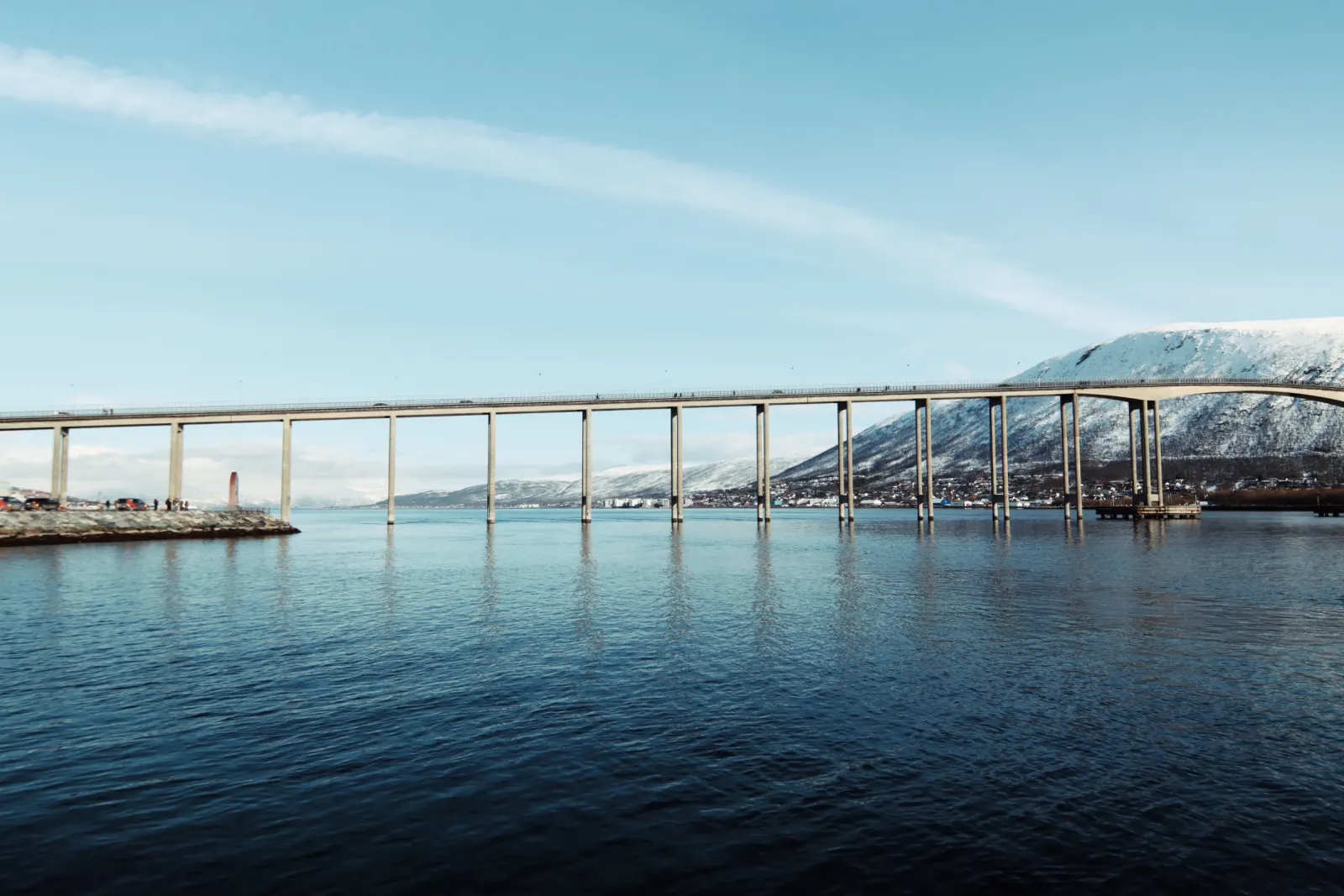
Tromsø bridge spanning fjord with snowy mountain backdrop

Tromsø travel guide

What to see, where to stay and the best time to visit Tromsø, Norway.

Best: Jul, Aug

Photo: Efrem Efre / Pexels

Country
Norway

About Tromsø

Tromsø sits above the Arctic Circle on an island in northern Norway, with mountains and fjords on every side. It's a small, walkable city with a working harbour, a university, and a lively bar scene for its size. In winter you get polar night and a strong chance of northern lights; in summer the midnight sun keeps the sky bright around the clock. July and August bring the mildest weather, making them the best months for hiking, boat trips, and long days outdoors without heavy winter gear.

How many days do you need in Tromsø?

Two to three days cover the main sights: the Arctic Cathedral, the cable car, the museums, and a walk around the harbour. Add a day if you want a northern lights tour, a fjord cruise, or time in Kvaløya.

Top attractions in Tromsø

  1. 1Arctic Cathedral

    1 hour

    Tromsdalen

    This white, triangular church stands across the bridge from the city centre and is Tromsø's best-known landmark. Inside, a large glass mosaic fills the east wall. It also hosts concerts, including evening shows under the midnight sun and the northern lights season.

  2. 2Fjellheisen (Tromsø cable car)

    1–2 hours

    Tromsdalen

    The cable car climbs to the Storsteinen ledge, which looks over the city, the island and the surrounding fjords and mountains. On a clear winter evening it is a popular place to watch for the northern lights. It gets cold and windy at the top, so bring warm layers in any season.

  3. 3Polaria

    1–2 hours

    City centre

    An Arctic aquarium and experience centre in a building shaped like toppled ice floes. Visitors come mainly to see the bearded seals and harbour seals, and to learn about sea life and climate in the far north. It works well with children and on bad-weather days.

  4. 4Polar Museum

    1–2 hours

    City centre (harbour)

    Set in an old wooden warehouse on the harbour, this museum tells the story of Arctic trapping, hunting and polar expeditions from Tromsø. Displays cover explorers such as Roald Amundsen and Fridtjof Nansen. It gives useful background on why the city is called the gateway to the Arctic.

  5. 5The Arctic University Museum of Norway (Tromsø Museum)

    2–3 hours

    Folkeparken

    The university museum covers Sámi culture, the natural history of northern Norway and church art. A northern lights exhibition explains the science behind the aurora. It is a short bus ride south of the centre.

  6. 6Mack Brewery and Ølhallen

    1–2 hours

    City centre

    Mack is a long-running Tromsø brewery, and its old beer hall, Ølhallen, is a classic local pub with many beers on tap. Guided brewery tours tell the history of brewing in the north. It is a relaxed place to spend a dark winter evening.

  7. 7Tromsø Cathedral

    Under 1 hour

    City centre

    A Gothic Revival church built from wood, standing in the middle of the main shopping area. It is a quick, quiet stop while walking through the centre. Do not confuse it with the Arctic Cathedral across the water.

  8. 8Northern Norway Art Museum

    1–2 hours

    City centre

    This art museum shows paintings, crafts and contemporary works from and about northern Norway, including Sámi artists. Landscapes of the region help explain how artists have seen the Arctic light and seasons. It is easy to combine with other sights in the centre.

  9. 9Perspektivet Museum

    1 hour

    City centre

    A small museum about life in Tromsø and the region, with changing exhibitions on local history, society and photography. It is housed in an old town house in the centre. A good choice for travellers who want to understand the city beyond its tours.

  10. 10Tromsø Arctic-Alpine Botanic Garden

    1–2 hours

    Breivika

    A free outdoor garden run by the university, with plants from Arctic and mountain regions around the world. It is at its best in the snow-free months, when many plants flower under the midnight sun. In winter the garden lies under snow and there is little to see.
Tromsø by month

Average weather and our month score, from 10 years of climate data.

Weather by month and month scores for Tromsø
Month High / low Rain days Sunshine Score
January -4°C / -9°C 16 days (134 mm) 0.1 h/day 0.0/10
February -3°C / -7°C 15 days (117 mm) 2.1 h/day 0.5/10
March -1°C / -6°C 18 days (126 mm) 5.5 h/day 1.4/10
April 3°C / -3°C 16 days (100 mm) 8.7 h/day 2.0/10
May 8°C / 2°C 18 days (109 mm) 10.2 h/day 2.0/10
June 13°C / 7°C 19 days (112 mm) 10.7 h/day 4.4/10
Best month: July 17°C / 10°C 15 days (103 mm) 11.6 h/day 6.3/10
Best month: August 16°C / 10°C 18 days (125 mm) 8.6 h/day 5.8/10
September 11°C / 6°C 18 days (116 mm) 5.8 h/day 3.2/10
October 5°C / 1°C 17 days (112 mm) 3.1 h/day 0.8/10
November 0°C / -4°C 16 days (107 mm) 0.4 h/day 0.1/10
December -2°C / -6°C 16 days (114 mm) 0.0 h/day 0.0/10
  1. Jan

    High around -4°C with 15.5 rain or snow days and almost no sun. Polar night conditions make this a tough, dark month, scoring just 0 of 10.

  2. Feb

    Still cold at -2.8°C high, 15.2 rain days, and only 2.1 sun hours. Low score of 0.5 reflects the dark, icy conditions, though northern lights chances are strong.

  3. Mar

    Highs reach -0.8°C with 18.2 rain days, the wettest-by-frequency month. Daylight returns with 5.5 sun hours, but the score stays low at 1.4.

  4. Apr

    Temperatures climb to 2.7°C high with 16.2 rain days and 8.7 sun hours. Still a weak score of 2, as snow and cold linger.

  5. May

    High of 7.7°C, 17.5 rain days, 10.2 sun hours. Milder but still scores just 2, with unsettled spring weather common.

  6. Jun

    Highs reach 12.7°C with 19 rain days, the wettest month by frequency, but 10.7 sun hours and near-continuous daylight lift the score to 4.4, rated ok.

  7. Jul

    Warmest month at 16.6°C high, with fewer rain days (15.1) and 11.6 sun hours. Best-rated month of the year at 6.3, a good time to visit.

  8. Aug

    High of 15.6°C, 18.3 rain days, 8.6 sun hours. Still warm with a solid 5.8 score, rated ok, as days start shortening.

  9. Sep

    Highs drop to 11.4°C with 17.7 rain days and 5.8 sun hours. Score falls to 3.2 as autumn weather sets in, though northern lights can start appearing.

  10. Oct

    High of 4.5°C, 16.9 rain days, only 3.1 sun hours. Score drops sharply to 0.8 as cold, dark conditions return.

  11. Nov

    Highs near 0.4°C with 16.4 rain days and just 0.4 sun hours. Near-zero score of 0.1 reflects the approach of polar night and heavy darkness.

  12. Dec

    High of -1.9°C, 16.3 rain days, and 0 recorded sun hours. Deep polar night brings the lowest score of the year, 0, though aurora viewing is a draw.

Climate averages 2015–2024 · Best time to visit Norway →

Where to stay in Tromsø

The best areas to base yourself and who each one suits.

Sentrum

Good for first-timers, nightlife, no car

The compact city centre on the east side of Tromsøya island has most restaurants, bars, museums and the harbour where many tours start. Almost everything is walkable, and most northern lights and whale tours pick up here. The drawback is weekend bar noise and street lighting that makes aurora spotting from your window unlikely.

Tromsdalen

Good for views, hikers, cable car fans

This mainland district across the Tromsø Bridge is home to the Arctic Cathedral and the lower station of the Fjellheisen cable car. It is quieter than the centre and has good views back over the city. The downside is that the walk into town crosses a long, exposed bridge, which is cold and windy in winter.

Telegrafbukta

Good for couples, quiet, nature walks

This residential area on the southern tip of Tromsøya sits by a small beach and coastal paths with open views over the water. It is darker than the centre, so northern lights viewing nearby is easier. It is mostly homes and holiday rentals with few shops, and reaching the centre means a bus or an uphill-and-down walk.

Breivika

Good for budget, longer stays, students

The northern part of Tromsøya around the university and main hospital is practical and calm, with supermarkets and regular buses to the centre. It suits people who want a quiet base and self-catering. It feels functional rather than scenic, and you will rely on buses to reach the harbour and nightlife.

Kvaløya

Good for northern lights, self-drivers, cabins

This large, rural island west of Tromsøya has fjords, mountains and very little light pollution, so you can often watch the aurora from your door. Stays are mostly cabins and rentals in small settlements. You really need a car, winter roads can be icy, and shops and restaurants are far apart.

Getting to and around Tromsø

From the airport
No route data is given for Tromsø airport, but visitors usually take an airport bus or a taxi into the centre, since this is the standard way to cover the short distance from the airport to Sentrum.
Public transport
Tromsø has a city bus network, which is the main public transport for visitors; there's no metro or tram. A bus can be useful to reach the Fjellheisen cable car in Tromsdalen across the bridge, or the Arctic-Alpine Botanic Garden in Breivika.
On foot
The city centre, Sentrum, is compact and walkable, with Polaria, the Polar Museum, Mack Brewery, Tromsø Cathedral, the Northern Norway Art Museum and Perspektivet Museum all within easy walking distance of each other.

Food to try in Tromsø

Fresh cod (torsk)

Tromsø sits on the coast, so cod is a staple here. Locals eat it boiled with potatoes, butter and cod liver on the side, especially in the colder months.

King crab (kongekrabbe)

This giant crab lives in the cold Arctic waters near Tromsø. Restaurants serve it as a seasonal treat, often as a tasting menu item.

Reindeer (reinsdyr)

Reindeer meat comes from the Sami herding tradition of northern Norway. It usually appears as a stew or thin-sliced on a plate with mashed potatoes and berry sauce.

Stockfish (tørrfisk)

Fish hung outdoors to dry in the Arctic air is a traditional way to preserve the catch along this coastline. It's often rehydrated and cooked into stews or fish cakes.

Bacalao

This dried and salted cod dish, cooked with tomatoes, onions and olive oil, shows up on menus around Tromsø as a hearty, warming meal for the long winter season.

More of Norway

Norway travel guide →

Tromsø: frequently asked questions

Is Tromsø good to visit in August?

Yes, August is rated "ok" with a score of 5.8 out of 10. Daytime highs average 15.6°C and lows sit at 9.6°C, so it feels like a mild Scandinavian summer. Rain is common, with 18.3 rain days and 125mm of rainfall, and sunshine drops to 8.6 hours a day as nights start to darken again.

What is the best time to visit Tromsø?

July and August are the best months, based on the data. July scores 6.3 out of 10 and is rated "good", with highs of 16.6°C, lows of 10.1°C and 11.6 hours of sunshine a day. August follows with a 5.8 score, slightly cooler at 15.6°C by day but still mild enough for walking and boat trips.

Does Tromsø get dark in winter?

Yes, daylight almost disappears from November to January. Sun hours drop to 0.4 in November, 0.1 in January and 0 in December, meaning the sun doesn't rise above the horizon for stretches of midwinter. These are also the lowest-scoring months on the site, from 0 to 0.1 out of 10, reflecting how little daylight there is rather than poor conditions overall.

Is Tromsø cold in July?

No, July is the mildest month. The average high is 16.6°C and the low is 10.1°C, making it the warmest point of the year in Tromsø. Rain still falls on about 15.1 days that month, totalling 103mm, so pack a light rain jacket even in summer.

How many days do I need in Tromsø?

Two days covers the main sights at a relaxed pace. The city centre holds most attractions, including the Polar Museum, Polaria and Tromsø Cathedral, each taking 1 to 2 hours, while the Arctic-Alpine Botanic Garden and Fjellheisen cable car sit a short trip away and need a similar amount of time. With ten attractions listed in total, splitting them across two days avoids rushing.