Skip to content
wheretotravel.info
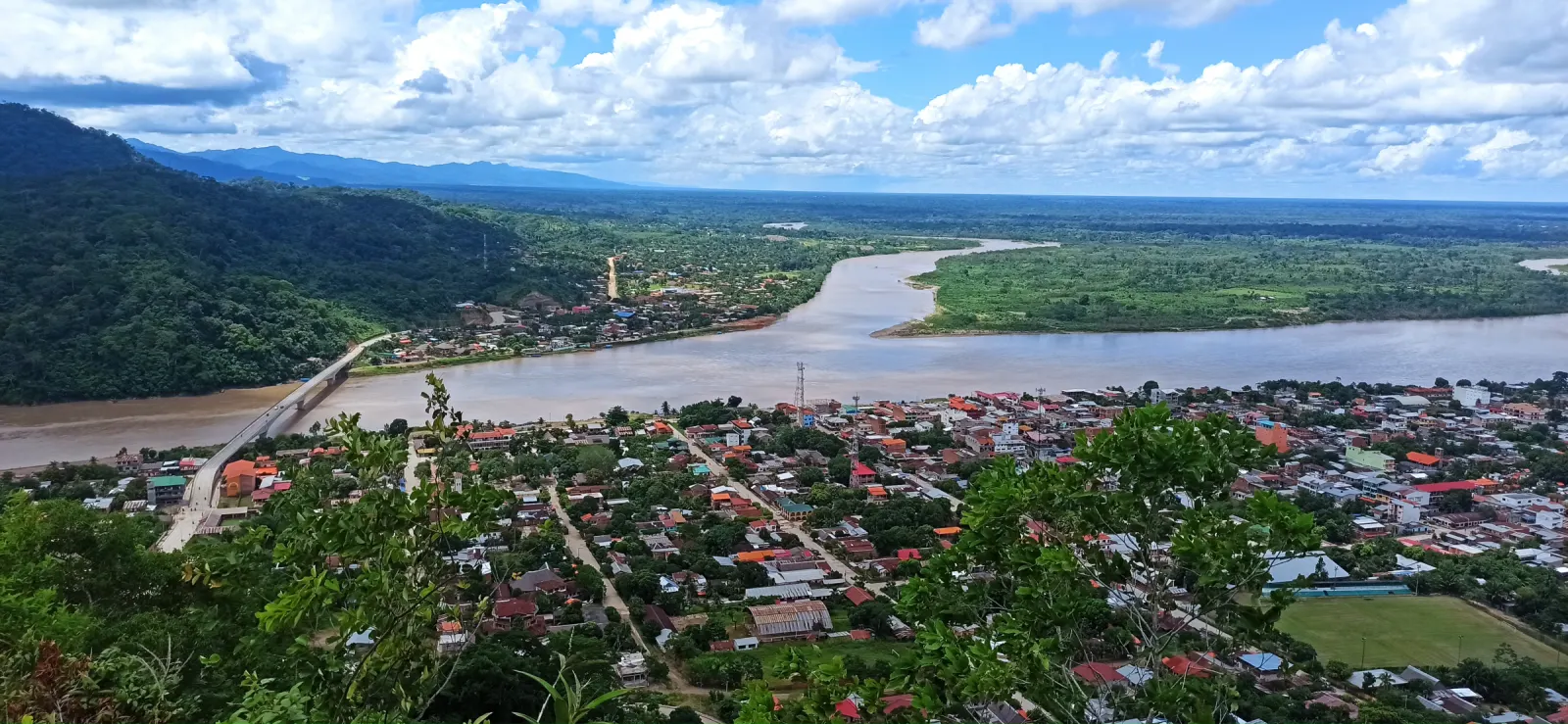
aerial view of town beside wide river

Rurrenabaque travel guide

What to see, where to stay and the best time to visit Rurrenabaque, Bolivia.

Best: Jun, Jul

Photo: Carlillasa / Wikimedia Commons

Country
Bolivia

About Rurrenabaque

Rurrenabaque is a small town of about 21,240 people on the Beni River in Bolivia. Most visitors come for the nature around it rather than the town itself. It is the starting point for trips upriver into Madidi National Park and for Pampas Tours near Santa Rosa del Yacuma. In town, you can walk the Beni River waterfront or climb to Mirador La Cruz in 1–2 hours. June and July are the best months to go.

How many days do you need in Rurrenabaque?

Plan your stay around the tours. Madidi National Park and the Pampas del Yacuma each take several days, so doing both means a long stay. Add a full day for Pilón Lajas or San Miguel del Bala, and half a day for San Buenaventura.

Top attractions in Rurrenabaque

  1. 1Madidi National Park

    Several days

    Upriver from Rurrenabaque

    A huge protected area of rainforest that climbs from the Amazon lowlands toward the Andes. Most visitors take a guided tour up the Beni and Tuichi rivers to stay at a jungle lodge or camp. Expect forest walks, monkeys, macaws and night hikes.

  2. 2Pampas del Yacuma (Pampas Tours)

    Several days

    Near Santa Rosa del Yacuma

    Open wetlands and slow rivers where wildlife is easy to see from a boat. Tours usually look for pink river dolphins, caimans, capybaras and many birds. It is often the easier choice for people who want lots of animal sightings in a short time.

  3. 3Chalalán Ecolodge

    Several days

    Madidi National Park

    A lodge on a lake deep in Madidi, run by the Indigenous community of San José de Uchupiamonas. Guests take guided forest walks and canoe trips with local guides. Money from stays supports the community.

  4. 4San Miguel del Bala Ecolodge

    Full day

    Upriver on the Beni River

    A Tacana community lodge a short boat ride from town, at the edge of Madidi. It works well as a day trip if you have limited time, with forest trails and a visit to the community.

  5. 5Pilón Lajas Biosphere Reserve

    Full day

    South of Rurrenabaque

    A protected forest that is also an Indigenous territory, across the river from Madidi. Visits are often arranged through the community-run Mapajo Ecolodge, with walks and time with Tsimane and Mosetén families.

  6. 6Mirador La Cruz

    1–2 hours

    Hill above town

    A viewpoint with a cross on the hill behind Rurrenabaque. The walk up is short but steep and hot. From the top you see the Beni River, the town and the forested hills, and many people go for sunset.

  7. 7Beni River waterfront

    1–2 hours

    Town centre

    The riverbank is where boats leave for jungle tours and where local life happens. It is a good place for an evening walk and to watch canoes come and go.

  8. 8San Buenaventura

    Half a day

    Across the Beni River

    A quiet town on the opposite bank, reached by a short boat crossing. It feels more local than Rurrenabaque and is home to the Madidi park office. Go for a slower look at river-town life.

Rurrenabaque by month

Average weather and our month score, from 10 years of climate data.

Weather by month and month scores for Rurrenabaque
Month High / low Rain days Sunshine Score
January 31°C / 23°C 24 days (289 mm) 9.2 h/day 2.6/10
February 30°C / 23°C 23 days (347 mm) 8.1 h/day 2.8/10
March 30°C / 23°C 22 days (297 mm) 8.4 h/day 2.8/10
April 30°C / 22°C 18 days (179 mm) 9.0 h/day 3.0/10
May 28°C / 21°C 12 days (96 mm) 8.5 h/day 5.6/10
Best month: June 27°C / 19°C 9 days (80 mm) 9.1 h/day 6.5/10
Best month: July 28°C / 19°C 6 days (46 mm) 9.4 h/day 6.8/10
August 30°C / 20°C 8 days (54 mm) 9.9 h/day 4.4/10
September 32°C / 22°C 9 days (78 mm) 9.9 h/day 1.7/10
October 33°C / 23°C 14 days (148 mm) 9.8 h/day 0.3/10
November 32°C / 23°C 17 days (214 mm) 9.4 h/day 2.0/10
December 31°C / 23°C 23 days (293 mm) 9.0 h/day 2.4/10
  1. Jan

    Expect a high of 30.5°C with rain on 24 days and 289mm total. Wet, sticky weather makes this a tough month to plan outdoor river trips around.

  2. Feb

    Highs reach 30.1°C and rain falls on about 23 days, with 347mm the wettest total of the year. Heavy downpours are common.

  3. Mar

    Temperatures stay near 30.1°C with 22 rain days and 297mm of rain. Still deep in the wet season, so trails and rivers can be hard going.

  4. Apr

    Highs drop slightly to 29.5°C and rain eases to 18 days with 179mm. Conditions start improving but humidity and mud remain.

  5. May

    With a high of 27.7°C and rain down to 12 days (96mm), this month scores 'ok' as the dry season begins to take hold.

  6. Jun

    One of the best months: 27.1°C highs, only 9 rain days and 80mm of rain, with 9.1 sun hours a day. Scores 'good' for drier, clearer conditions.

  7. Jul

    The driest month, with just 6 rain days, 46mm of rain and 9.4 sun hours daily. Highs sit at 28°C, and this is rated the top month overall.

  8. Aug

    Highs climb to 30.3°C with 7.5 rain days and 54mm of rain. Still fairly dry, but the score dips to 'ok', likely due to rising heat.

  9. Sep

    Highs jump to 32.4°C with 8.7 rain days and 78mm of rain. Heat builds sharply here, pushing the month into tougher territory for comfort.

  10. Oct

    The hottest and lowest-scoring month: 32.8°C highs, 14 rain days and 148mm of rain. Rising humidity alongside intense heat makes this a demanding time to visit.

  11. Nov

    Highs stay high at 31.8°C, with rain returning across 17 days and 214mm total. The wet season is clearly building again.

  12. Dec

    Highs of 30.8°C come with rain on 23 days and 293mm total, marking a firm return to wet-season conditions and lower comfort scores.

Climate averages 2015–2024 · Best time to visit Bolivia →

Where to stay in Rurrenabaque

The best areas to base yourself and who each one suits.

Riverfront

Good for couples, sunset views, short stays

The streets along the Beni River give views of the water and the forested hills on the far bank, with a cooling breeze in the evening. Boats to the national park and to San Buenaventura leave from here, and the centre is a short walk away. Low-lying spots can be damp and buggy, especially in the rainy season.

Hillside

Good for nature lovers, quiet, longer stays

Lodgings on the green slopes at the edge of town feel closer to the forest, with birdsong, gardens and hammocks instead of street noise. It suits travellers who want to rest between jungle and pampas trips. Expect steep walks back from town in the heat, and more insects than in the centre.

San Buenaventura

Good for slow travellers, local life, quiet

This small town across the Beni River is quieter and more local than Rurrenabaque, with a relaxed plaza and few visitors. Staying here gives a calmer, more everyday view of the region. You depend on the small boats across the river to reach tour agencies, restaurants and the airport road.

Getting to and around Rurrenabaque

From the airport
Rurrenabaque's small airport sits close to town. Visitors usually take a taxi or a moto-taxi into the centre, or arrange a hotel pickup. No fixed times or fares are listed here, so confirm with your driver before you go.
Public transport
Rurrenabaque has little formal public transport. There's no metro, tram or city bus network. Most people get around on foot, by moto-taxi, or by boat across the Beni River to San Buenaventura. A practical tip: agree the price before any moto-taxi or boat ride.
On foot
The town centre is small and walkable. The Beni River waterfront and Mirador La Cruz are both reachable on foot, and San Buenaventura is just a short boat ride across the river.

Food to try in Rurrenabaque

Surubí

This is a large river catfish from the Beni River, often grilled or fried whole. Local restaurants near the river serve it with rice, plantain and yuca as a main lunch dish.

Masaco de plátano

This is mashed green plantain pounded with dried beef or cheese. It is a filling snack or breakfast dish common across Bolivia's Amazon lowlands, including Rurrenabaque.

Pacú

Pacú is another freshwater fish from local rivers, usually fried and served whole with lime. Riverside eateries in town often have it on the menu depending on the day's catch.

Locoto relleno

This is a spicy pepper stuffed with meat, rice and vegetables, then baked or fried. It appears on many Bolivian lunch menus, including in Rurrenabaque's small comedores.

Chicha

Chicha is a fermented corn drink found throughout Bolivia. In Rurrenabaque it is sold by street vendors and in local markets, often alongside other jungle-town snacks.

More of Bolivia

Bolivia travel guide →

Rurrenabaque: frequently asked questions

Is Rurrenabaque good to visit in August?

August is an okay month, scoring 4.4 out of 10. Rain drops to 54mm over 7.5 days, but the high of 30.3°C and 9.9 hours of sun make it feel drier and brighter than most of the year. It's not peak season, but conditions are workable for jungle and pampas trips.

What is the best time to visit Rurrenabaque?

June and July are the best months, both rated 'good' with scores of 6.5 and 6.8. Rain days fall to 9.1 and 6.2, with only 80mm and 46mm of rain. Daytime highs stay near 27–28°C, and sun hours reach 9.1 to 9.4, giving the clearest, driest trails for visiting Madidi National Park and the pampas.

How many days do I need in Rurrenabaque?

Plan for at least 4 to 6 days. Madidi National Park and the Pampas del Yacuma tours both take several days each, and most travellers combine one jungle trip with one pampas trip. Add half a day for San Buenaventura and an hour or two each for Mirador La Cruz and the Beni River waterfront.

Is Rurrenabaque rainy in January?

Yes. January is one of the wettest months, with 289mm of rain falling over 24 days, the highest rain-day count of the year. It still scores low at 2.6, mainly because near-constant rain limits river and jungle access. Sun hours drop to 9.2, and humidity stays high with lows around 23.2°C.

Does Rurrenabaque have a dry season?

Yes, roughly May through August. Rain days fall from 11.7 in May to 6.2 in July, and rainfall drops as low as 46mm in July compared to over 200mm in the wettest months. This dry stretch, especially June and July, offers the most reliable weather for river travel and wildlife viewing.