Skip to content
wheretotravel.info
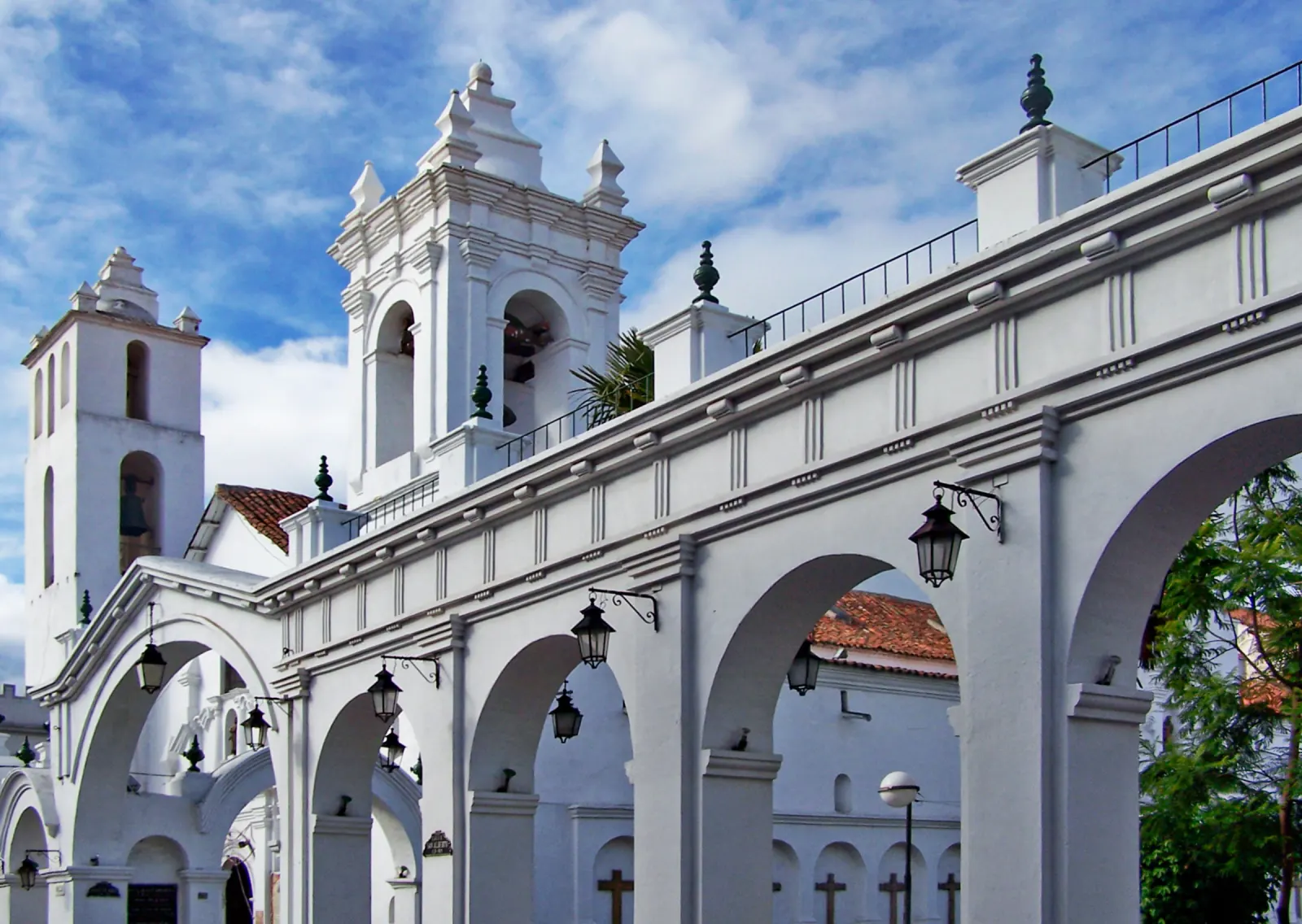
White colonial building with bell towers and arches

Sucre travel guide

What to see, where to stay and the best time to visit Sucre, Bolivia.

Best: May, Jun, Jul, Aug

Photo: Tom D'Arby / Pexels

Country
Bolivia

About Sucre

Sucre is Bolivia's constitutional capital, a city of 360,544 people known for its white colonial buildings and the Plaza 25 de Mayo at its centre. It's a calm, walkable place with museums, convents and dinosaur footprints just outside town, plus hillside viewpoints over the city. The best months to visit are May, June, July and August, when dry season weather makes sightseeing and walking around the historic centre easier.

How many days do you need in Sucre?

With around ten main sights split between the historic centre, Recoleta and the outskirts, 2 to 3 days is enough to see the plaza, museums, viewpoints and Cretaceous Park without rushing.

Top attractions in Sucre

  1. 1Casa de la Libertad

    1–2 hours

    Plaza 25 de Mayo

    This colonial building is where Bolivia's declaration of independence was signed, and it is the country's most important historical museum. Guided tours take you through the assembly hall, portraits of independence leaders and the original declaration.

  2. 2Plaza 25 de Mayo

    1 hour

    Historic centre

    Sucre's main square is shaded by trees and lined with white colonial buildings, government offices and cafés. It is the best starting point for walking the historic centre, which is a UNESCO World Heritage Site.

  3. 3Metropolitan Cathedral (Catedral Metropolitana)

    1 hour

    Plaza 25 de Mayo

    The cathedral on the main square mixes Renaissance and Baroque styles. Its attached museum holds religious paintings, silverwork and a richly decorated image of the Virgin of Guadalupe.

  4. 4Cretaceous Park (Parque Cretácico)

    half a day

    Cal Orck'o, northern outskirts

    This park sits beside a limestone quarry wall covered with thousands of dinosaur footprints, one of the largest track sites in the world. Life-size dinosaur models and a viewing platform make it popular with families; the park can be reached by taxi or a tourist bus from the centre.

  5. 5La Recoleta Viewpoint and Monastery

    1–2 hours

    Recoleta

    A short uphill walk from the centre leads to a plaza with arcades and the best views over Sucre's white rooftops. The Franciscan monastery next to it has a museum, quiet cloisters and finely carved wooden choir stalls.

  6. 6Museum of Indigenous Art (Museo de Arte Indígena ASUR)

    1–2 hours

    Recoleta

    This museum explains the weaving traditions of the Jalq'a and Tarabuco communities near Sucre, with clear displays and sometimes weavers at work. Its shop sells textiles made by local weavers.

  7. 7San Felipe Neri Convent

    1 hour

    Historic centre

    This former convent is known for its rooftop terraces, where you can walk among the bell towers and look across the city. It now houses a school, so visits are limited to set times.

  8. 8Central Market (Mercado Central)

    1 hour

    Historic centre

    Sucre's main market sells fruit, vegetables, meat and bread, with simple food stalls on the upper floor. It is a good place to try fresh fruit juices and local dishes alongside residents.

  9. 9General Cemetery (Cementerio General)

    1 hour

    South of the centre

    The city cemetery has tree-lined paths, ornate family mausoleums and the tombs of notable Bolivians. It is calm and well kept, and shows another side of the city's history.

  10. 10Glorieta Castle (Castillo de la Glorieta)

    1–2 hours

    Southern outskirts

    This eclectic mansion mixes European architectural styles and was built for a wealthy Sucre couple. It sits on a military site outside the centre and makes an unusual half-day trip by taxi or local bus.
Sucre by month

Average weather and our month score, from 10 years of climate data.

Weather by month and month scores for Sucre
Month High / low Rain days Sunshine Score
January 19°C / 11°C 24 days (178 mm) 10.7 h/day 7.0/10
February 19°C / 11°C 22 days (163 mm) 10.0 h/day 7.0/10
March 18°C / 10°C 21 days (137 mm) 9.7 h/day 7.0/10
April 18°C / 9°C 11 days (64 mm) 9.7 h/day 7.7/10
Best month: May 19°C / 8°C 4 days (15 mm) 10.0 h/day 9.1/10
Best month: June 19°C / 6°C 2 days (8 mm) 10.4 h/day 9.6/10
Best month: July 19°C / 5°C 2 days (9 mm) 10.4 h/day 9.5/10
Best month: August 20°C / 6°C 3 days (15 mm) 10.5 h/day 9.3/10
September 22°C / 8°C 8 days (29 mm) 10.7 h/day 8.4/10
October 22°C / 10°C 12 days (57 mm) 10.8 h/day 7.6/10
November 22°C / 10°C 16 days (86 mm) 10.6 h/day 7.0/10
December 20°C / 11°C 21 days (156 mm) 10.1 h/day 7.0/10
  1. Jan

    Highs reach 19°C with rain on about 23.5 days and 178mm falling. Wet and green, but still rated good at a score of 7.

  2. Feb

    Expect 18.5°C highs and rain on 22 days. The wet season continues, scoring 7, a good but soggy month.

  3. Mar

    Highs of 18.1°C with 21.3 rain days and 137mm. Rain tapers off slowly; still a good month at score 7.

  4. Apr

    Rain drops sharply to 11.3 days and 64mm, with highs near 18.4°C. Conditions improve fast, pushing the score to 7.7, the best range.

  5. May

    Dry season sets in: just 4.4 rain days, 15mm, and highs of 18.9°C. One of the best months, scoring 9.1.

  6. Jun

    Cold nights of 5.5°C and dry days with only 2 rain days make this the top month, scoring 9.6.

  7. Jul

    Nights stay cold at 5.3°C, but days reach 19.4°C with almost no rain, 2.3 days. Score 9.5, among the best.

  8. Aug

    Highs climb to 20.2°C with just 3.4 rain days. Dry and sunny, with a score of 9.3.

  9. Sep

    Highs rise to 21.7°C and rain picks up slightly to 7.9 days. Still a best-rated month at 8.4.

  10. Oct

    Highs of 22.1°C with rain returning on 12 days and 57mm. Score falls to 7.6 but stays in the best range.

  11. Nov

    Rain increases to 15.6 days and 86mm as the wet season builds, with highs of 21.5°C. Score drops to 7, a good month.

  12. Dec

    Highs of 19.7°C with heavy rain on 21.3 days and 156mm. Wet but still rated good, scoring 7.

Climate averages 2015–2024 · Best time to visit Bolivia →

Where to stay in Sucre

The best areas to base yourself and who each one suits.

Centro Histórico

Good for first-timers, sightseeing, cafés

The grid of white colonial streets around Plaza 25 de Mayo puts you within walking distance of the main churches, museums, cafés and Spanish schools. It is the easiest base for a first visit. Rooms facing the plaza or busy streets can get traffic, horn and festival noise, especially on weekends.

La Recoleta

Good for couples, views, slower stays

This quieter area sits uphill from the centre around Plaza Anzures and the Recoleta convent, with a viewpoint over the city's red roofs. It feels calmer in the evening and suits travellers who want sunsets and fresh air. The drawback is the steep climb back from the centre, which feels harder at Sucre's altitude.

Mercado Central

Good for budget travellers, food lovers

The streets around the central market are a few blocks from the main plaza and full of juice stalls, cheap eateries and local shops. It is a practical, lively base for eating well and seeing everyday city life. Early mornings are busy and noisy, and the area feels more crowded than the quieter colonial lanes.

Parque Bolívar

Good for families, joggers, quiet

This leafy area around Parque Bolívar, on the north side of the centre, has green space, wider streets and a more residential feel. It suits families and anyone who wants room to walk or let children play. Evenings are quieter, with fewer cafés and bars than near the main plaza.

San Roque

Good for repeat visitors, local feel

This older residential area east of the centre, around the San Roque church, has hillside streets and a neighbourhood atmosphere with few tourists. It suits travellers who want local life over convenience. Streets are hilly and the walk back from the main sights is longer, so expect to use taxis at night.

Getting to and around Sucre

From the airport
The fact pack has no route data for Sucre's airport. Visitors usually take a taxi into the centre, which is the standard option for getting from the airport to Centro Histórico and other central areas.
Public transport
Sucre has little formal public transport for visitors. Local buses (micros) and shared taxis (trufis) run around the city, but routes aren't always clear to outsiders. A tip: taxis are a simple, affordable way to reach sights like Cretaceous Park or Glorieta Castle, which sit outside the walkable centre.
On foot
The historic centre is compact and easy to walk. Plaza 25 de Mayo, Casa de la Libertad, the Cathedral, San Felipe Neri Convent and the Central Market are all close together, each needing only about an hour to see.

Typical journey times and fares from the airport and other cities.

Route By Time Price
Sucre → Potosí Direct buses take about 3 h. There are about 13 departures a day between 6:00 and 19:00, run by companies including Trans Emperador. Potosí buses use the new terminal on Av. Las Banderas. A 2014-era traveller blog gives the fare as Bs 30; check current prices. Shared taxis are also available. bus 3 h 30 BOB ↗

Food to try in Sucre

Chorizo chuquisaqueño

A spicy pork sausage grilled and served with mote (boiled corn) and a side salad. It's a Sucre specialty often eaten at lunch in local markets.

Mondongo chuquisaqueño

A hearty pork stew in a spicy red chili sauce, served with corn, potatoes, and chuño. It's a traditional weekend lunch dish in the Sucre region.

Salteñas

A baked pastry filled with juicy meat, potato, and a slightly sweet-spicy sauce. Locals eat these as a mid-morning snack, often before midday since they're best fresh.

Api con pastel

A thick, warm purple corn drink paired with a sugar-dusted fried pastry. This combination is a popular breakfast or early evening treat sold by street vendors.

Fritanga

Chunks of seasoned pork simmered and then fried, served with mote and llajwa (a spicy tomato salsa). It's commonly eaten on Sundays as a late-morning meal.

Picante de pollo

Chicken cooked in a spicy sauce made from ground chili peppers, served with rice and potatoes. This dish is common in Sucre's traditional comedores (eateries) for lunch.

More of Bolivia

Bolivia travel guide →

Sucre: frequently asked questions

Is Sucre good to visit in August?

Yes, August is one of the best months to visit Sucre. It scores 9.3 out of 10, with a daytime high of 20.2°C and only 3.4 rain days. Nights are cold, dropping to 5.9°C, so pack a warm layer, but days are dry and sunny with 10.5 hours of sunshine.

What is the best time to visit Sucre?

The best months are May, June, July and August, all rated 'best' with scores of 9.1 or higher. June has the highest score, 9.6, thanks to just 2 rain days and a high of 19.2°C. These months fall in the dry season, so you get clear skies and little rain, though nights can drop below 6°C.

How many days do I need in Sucre?

Plan for 2 to 3 days. The historic centre sights, including Plaza 25 de Mayo, Casa de la Libertad, the Metropolitan Cathedral and San Felipe Neri Convent, take about an hour or two each. Add a half day for Cretaceous Park and another hour or two each for Recoleta's viewpoint, the Museum of Indigenous Art and Glorieta Castle on the outskirts.

Does it rain a lot in Sucre in January?

Yes, January is the wettest month in Sucre. It averages 178mm of rain spread over 23.5 days, more rain days than any other month. The high still reaches 19.3°C, but the frequent rain and lower sunshine, 10.7 hours, make it part of the wet season, which runs roughly from November to March.

Is Sucre cold at night?

Nights get cold year-round, especially from May to August. July has the lowest average night temperature, 5.3°C, and June is close behind at 5.5°C. Daytime highs stay mild in the same months, around 19 to 20°C, so the main thing to plan for is the temperature drop after sunset.