Skip to content
wheretotravel.info
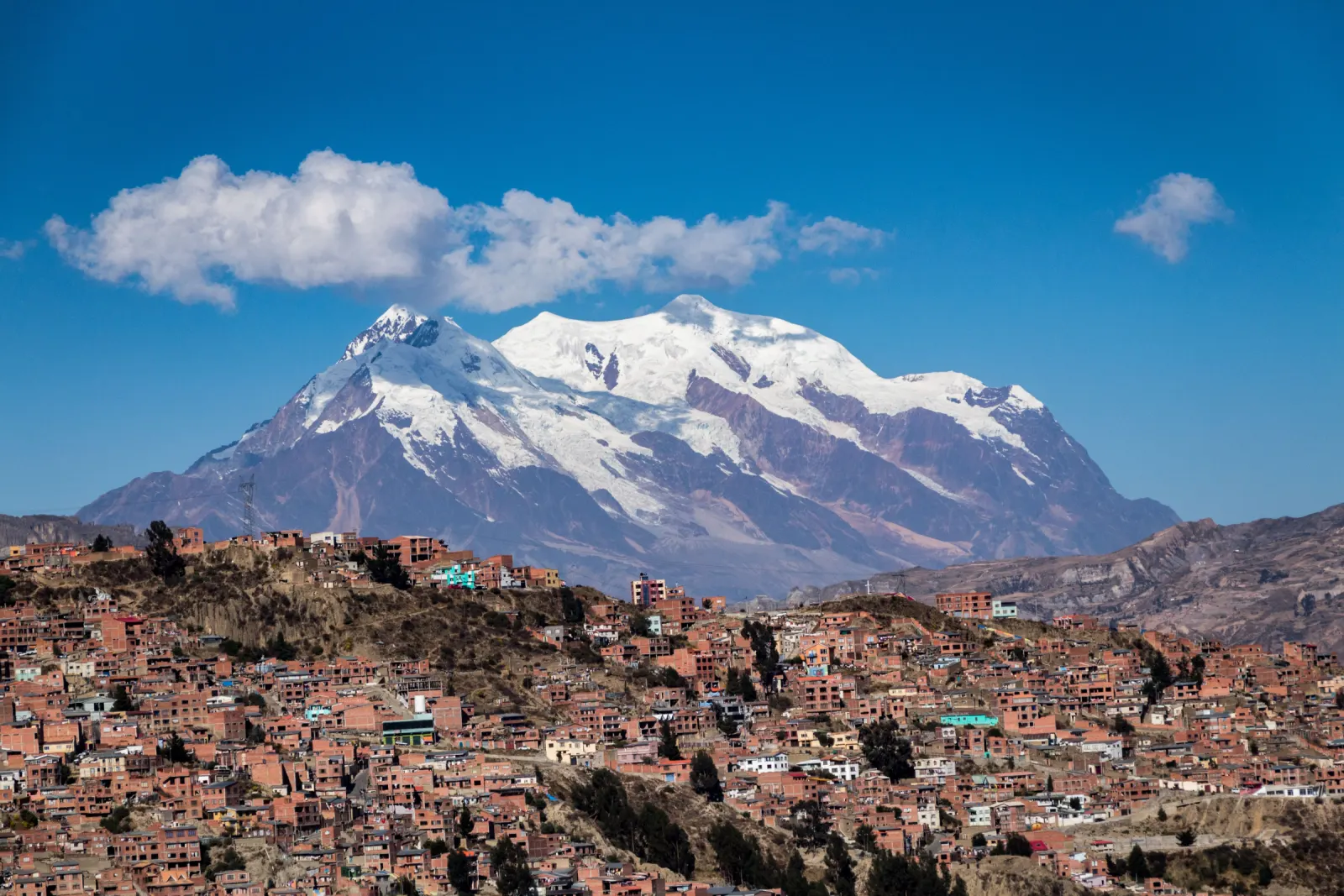
Snow-capped mountain towering over city

La Paz travel guide

What to see, where to stay and the best time to visit La Paz, Bolivia.

Best: May, Jun, Jul, Aug

Photo: Nair Cristopher Sánchez Muñoz / Pexels

Country
Bolivia

About La Paz

La Paz is Bolivia's capital, set high in the Andes, with steep streets that climb from the center up toward El Alto. It's a city of markets, colonial-era buildings around Plaza Murillo, and viewpoints like Mirador Killi Killi that show off the surrounding mountains. The best months to visit are May, June, July, and August, when drier weather makes walking the hilly streets and day trips to Valle de la Luna easier.

How many days do you need in La Paz?

Two to three days let you cover the main sights: Centro, Casco Viejo, Valle de la Luna, and a half-day trip to El Alto's 16 de Julio Market or a Cholita Wrestling show.

Top attractions in La Paz

  1. 1Valle de la Luna (Moon Valley)

    1–2 hours

    Mallasa

    Wind and rain have worn the clay hills here into tall spires and deep gullies. Short marked paths take you through the formations, and it is a quick trip from the southern part of the city.

  2. 2Plaza Murillo

    1 hour

    Centro

    The main square is the political centre of Bolivia, with the Metropolitan Cathedral, the government palace and the Legislative Palace around it. Sit on a bench, watch the pigeons and the guards, and take in the colonial and republican buildings.

  3. 3Basilica of San Francisco

    1–2 hours

    Centro

    This colonial church has a carved stone front that mixes Spanish and Andean designs. A guided visit through the attached convent museum usually takes you up onto the roof for views over Plaza San Francisco.

  4. 4Calle Jaén

    1–2 hours

    Casco Viejo

    A short, steep cobbled street with colourful colonial houses, now home to a group of small museums. It is one of the best-kept parts of the old town and is pleasant to walk even if you skip the museums.

  5. 5National Museum of Ethnography and Folklore (MUSEF)

    1–2 hours

    Centro

    The museum covers the cultures of Bolivia through textiles, masks, featherwork and ceramics. The festival mask and weaving collections help explain the costumes you see in the city's parades.

  6. 6Mirador Killi Killi

    1 hour

    Villa Pabón

    This viewpoint on a hill above the centre gives a wide view of the city, El Alto on the rim above and the mountains behind. It is popular at sunset and after dark, when the city lights fill the valley.

  7. 716 de Julio Market (Feria 16 de Julio)

    Half a day

    El Alto

    A huge open-air street market that sells almost everything, from car parts and used clothes to food and furniture. Reach it by cable car and keep a close eye on your belongings in the crowds.

  8. 8Cholita Wrestling

    2–3 hours

    El Alto

    Women wrestlers in traditional Aymara skirts and bowler hats take on opponents in a show that mixes sport, comedy and theatre. Many visitors go with an organised tour that includes transport up to El Alto.

La Paz by month

Average weather and our month score, from 10 years of climate data.

Weather by month and month scores for La Paz
Month High / low Rain days Sunshine Score
January 16°C / 6°C 22 days (124 mm) 10.7 h/day 5.8/10
February 15°C / 6°C 20 days (127 mm) 10.2 h/day 5.7/10
March 15°C / 6°C 21 days (112 mm) 10.4 h/day 5.7/10
April 16°C / 5°C 12 days (51 mm) 10.6 h/day 6.4/10
Best month: May 16°C / 3°C 6 days (25 mm) 10.8 h/day 7.9/10
Best month: June 15°C / 1°C 3 days (9 mm) 10.9 h/day 8.0/10
Best month: July 16°C / 1°C 2 days (9 mm) 10.8 h/day 8.4/10
Best month: August 16°C / 2°C 4 days (16 mm) 11.0 h/day 8.4/10
September 17°C / 3°C 9 days (36 mm) 11.2 h/day 7.7/10
October 18°C / 5°C 13 days (57 mm) 11.6 h/day 7.2/10
November 18°C / 6°C 13 days (60 mm) 11.6 h/day 7.5/10
December 17°C / 6°C 19 days (106 mm) 10.7 h/day 6.3/10
  1. Jan

    Highs reach 15.6°C with 21.5 rain days, the wettest spread of the year. Score 5.8, rated ok: expect frequent showers.

  2. Feb

    Highs stay near 15.4°C with 19.5 rain days and 127mm of rain, the wettest month by volume. Score 5.7, rated ok.

  3. Mar

    Highs of 15.3°C with 20.5 rain days still bring regular rain. Score 5.7, rated ok, as wet weather lingers.

  4. Apr

    Rain eases to 12.2 days and 51mm as highs hit 15.6°C. Score 6.4, rated good, marking a shift toward drier conditions.

  5. May

    Rain drops sharply to 5.5 days and 25mm, with highs at 15.9°C. Score 7.9, rated best, as the dry season sets in.

  6. Jun

    One of the driest months with just 3 rain days and 9mm, though lows fall to 1.1°C. Score 8, rated best, despite cold nights.

  7. Jul

    Driest conditions of the year: 2 rain days and 9mm of rain, but lows drop to 1°C. Score 8.4, rated best, with cold mornings a trade-off.

  8. Aug

    Highs climb to 16.2°C with only 3.7 rain days. Score 8.4, rated best, the top-scoring month alongside July.

  9. Sep

    Highs reach 16.9°C with 8.8 rain days as rain starts to return. Score 7.7, rated best, still dry overall.

  10. Oct

    Highs of 17.6°C come with 12.8 rain days as rain picks up further. Score 7.2, rated good.

  11. Nov

    Highs peak at 18°C with 12.5 rain days, a warm and fairly dry window. Score 7.5, rated best.

  12. Dec

    Highs of 16.5°C come with 19.4 rain days as the wet season returns. Score 6.3, rated good, with rain more frequent again.

Climate averages 2015–2024 · Best time to visit Bolivia →

Where to stay in La Paz

The best areas to base yourself and who each one suits.

Rosario

Good for first-timers, backpackers, budget

This is the traveller hub around Calle Sagárnaga and the Witches' Market, just above San Francisco church, with tour agencies, cafés and craft shops all close together. It is the easiest base for booking day trips and walking to the main sights. The streets are very steep, traffic is loud, and pickpockets work the busy areas.

Casco Viejo

Good for history lovers, museums, sightseeing

The old colonial centre around Plaza Murillo and Calle Jaén has government buildings, churches and small museums within walking distance. You can see most of the historic core on foot from your door. Some streets get quiet after dark, and protest marches sometimes close roads near the plaza.

Sopocachi

Good for food lovers, nightlife, longer stays

A leafy, mostly residential area south of the centre with good restaurants, bars and small parks, popular with local professionals and artists. It feels calmer and more local than the backpacker streets, but still close to the centre. Walking back up to the old town is a steep climb, and some bars are noisy late at night.

San Pedro

Good for budget travellers, local life, markets

A working neighbourhood around Plaza San Pedro and its covered market, with cheap places to eat and everyday street life. It is close to the centre and gives a less touristy view of the city. It is less polished, with fewer travel services, and some side streets feel empty at night.

Zona Sur

Good for families, quiet, comfort

The southern suburbs such as Calacoto and San Miguel sit lower in the valley, so the air feels slightly warmer and less thin than in the centre. Streets are calmer, with modern shopping centres and restaurants. It is far from the old town, and road traffic can be slow, though the cable car lines help.

Getting to and around La Paz

From the airport
The fact pack has no route for La Paz's airport, so no times or prices can be given. First-timers usually take a taxi or an airport shuttle into the centre; agree on the trip before you get in, since no official fare data is available here.
Public transport
La Paz has no metro or tram for visitors to use. The main public transport is the Mi Teleférico cable car network, which links hillside districts like El Alto with the centre and avoids traffic jams. Minibuses also cover the city, but routes aren't always obvious to newcomers, so the cable car is the easier option.
On foot
Centro is walkable: Plaza Murillo, the Basilica of San Francisco and MUSEF are all close together, each needing about 1 hour to see.

Typical journey times and fares from the airport and other cities.

Route By Time Price
La Paz → Copacabana Operators: Manco Kapac, Trans Titicaca and Vicuña Travel, from the La Paz bus terminal. Fares come from aggregator listings in USD; I couldn't find a Bs fare. Local buses take about 3 h and run hourly. Timetabled coaches take about 4 h (Busbud lists departures from 7:00). The trip includes a short boat crossing at the Strait of Tiquina. A traveller blog says tourist double-decker buses cost about Bs 50, run twice a day and should be booked ahead. bus 3 h 4–7 USD ↗
La Paz → Uyuni Overnight bus taking about 9–12 h. Bolivia Hop recommends Todo Turismo, which offers semi-cama and cama seats with blankets, a meal and a toilet. Fares start at about USD 43 (Bs fare not found). VIP seats cost extra. Another option is a bus to Oruro (about 4 h), then a train to Uyuni (about 7 h). bus 9 h 43 USD ↗

Food to try in La Paz

Salteñas

A baked pastry filled with meat, potatoes, olives and a slightly sweet, juicy broth. Locals eat these as a mid-morning snack, often before noon, from street stalls and bakeries.

Anticuchos

Skewers of grilled beef heart, marinated and served with boiled potato. They are a common evening street food, sold from carts around plazas and busy corners after dark.

Api con pastel

A thick, hot purple corn drink spiced with cinnamon, served with a sugar-dusted fried pastry. It is a classic breakfast combination sold at markets and street corners in the early morning.

Chairo

A hearty soup made with dehydrated potato (chuño), lamb or beef, vegetables and herbs. It is eaten as a warming lunch, suited to La Paz's high altitude and cool air.

Pique macho

A plate of fried beef and sausage pieces mixed with chips, onions, tomatoes and chili. It is usually shared between two or more people, often ordered in the evening or for a late lunch.

Plato paceño

A plate of corn, broad beans, potato and cheese, sometimes with a slice of meat. It is a traditional lunch dish named after the city and found in local comedor-style restaurants.

More of Bolivia

Bolivia travel guide →

La Paz: frequently asked questions

Is La Paz good to visit in August?

Yes, August is one of the best months to visit La Paz. It scores 8.4 out of 10. Daytime highs reach 16.2°C and lows drop to 1.6°C. Rain is rare, with only 3.7 rain days and 16mm of rainfall for the month, and you get 11 hours of sun a day.

What is the best time of year to visit La Paz?

May to September is the best window, based on scores of 7.7 to 8.4 out of 10. These months fall in the dry season, with rain days dropping as low as 2 in July and 3 in June. Sun hours stay above 10.8 a day. Nights are cold then, with lows near 1°C in June and July.

Is La Paz cold at night?

Yes, nights in La Paz are cold all year. Lows average between 1°C and 6.2°C across the 12 months. The coldest nights come in June and July, averaging 1.1°C and 1°C. Daytime highs stay mild year-round, ranging from 15.2°C to 18°C, so pack layers for the temperature swing.

How many days do I need in La Paz?

Two to three days cover the main sights. Plaza Murillo, the Basilica of San Francisco, Calle Jaén and the MUSEF museum each take 1 to 2 hours and sit in or near Centro. Add half a day for the 16 de Julio Market in El Alto and 1 to 2 hours for Valle de la Luna in Mallasa, plus time for Mirador Killi Killi and cholita wrestling.

Does La Paz get a lot of rain?

Rain is heavy from December to March but light the rest of the year. January and February each bring around 125mm of rain over 19 to 22 rain days. By contrast, June and July see only 9mm of rain across 2 to 3 rain days, making the dry season months far less wet.