Skip to content
wheretotravel.info
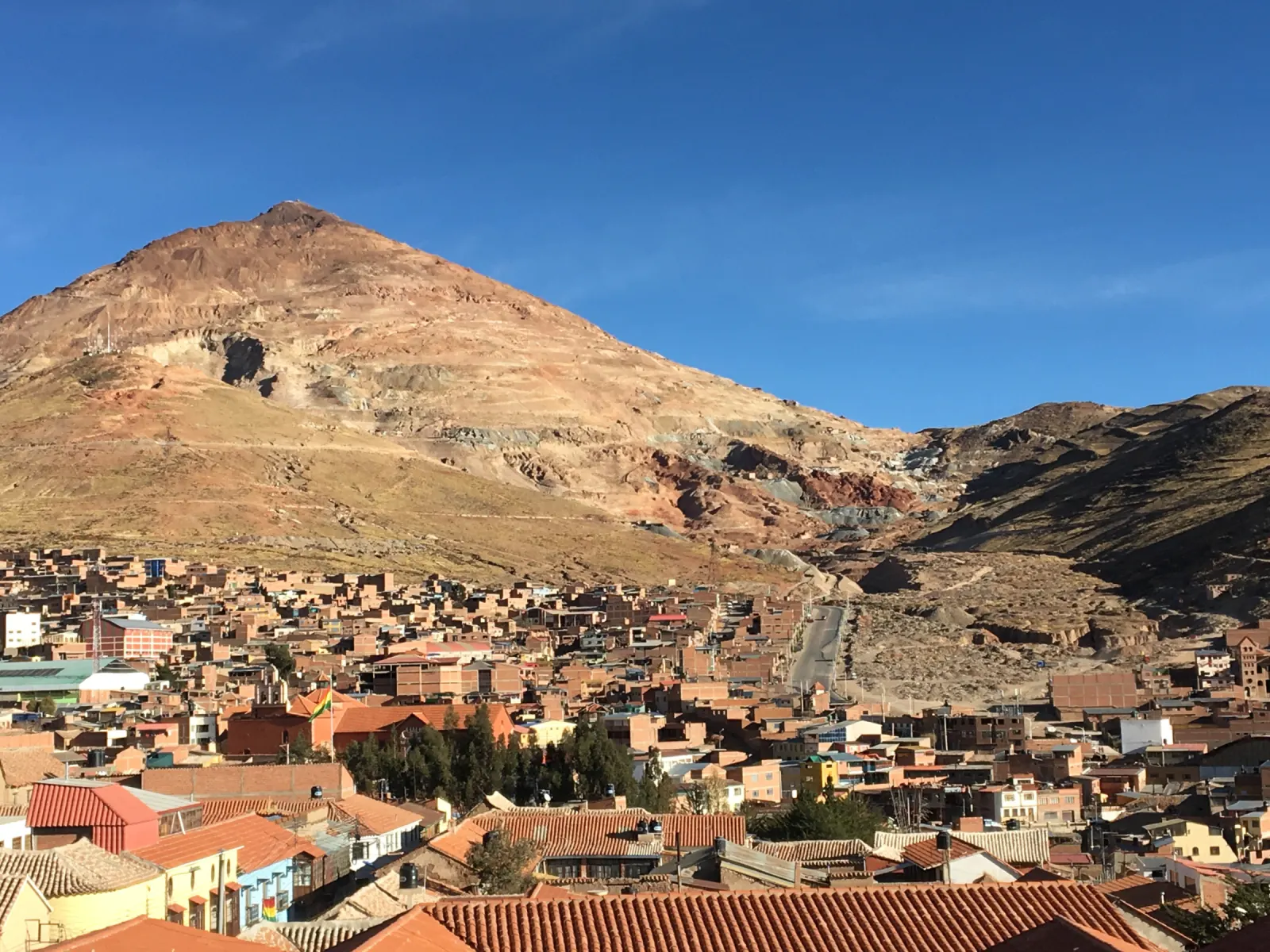
Cerro Rico mountain above Potosí city

Potosí travel guide

What to see, where to stay and the best time to visit Potosí, Bolivia.

Best: May, Aug

Photo: Jbmurray / Wikimedia Commons

Country
Bolivia

About Potosí

Potosí is a Bolivian city of about 189,652 people, and most visitors come for its colonial historic centre. The main sights sit close together around Plaza 10 de Noviembre, including the cathedral, the Casa Nacional de Moneda (National Mint) and the Santa Teresa and San Francisco convents. First-timers usually stay in Centro Histórico, and backpackers often choose Calle Bolívar. Outside the city, the Ojo del Inca at Tarapaya makes an easy side trip. The best months to visit are May and August.

How many days do you need in Potosí?

Plan a full day for the historic centre. The National Mint alone takes 2–3 hours, and most other sights take 1 hour or less. Add half a day if you want to visit the Ojo del Inca.

Top attractions in Potosí

  1. 1Casa Nacional de Moneda (National Mint)

    2–3 hours

    Historic centre

    This large colonial building once minted the silver coins of the Spanish Empire. Today it is one of Bolivia's most important museums, with original minting machinery, colonial art and displays on the city's silver history. Visits are by guided tour.

  2. 2Plaza 10 de Noviembre

    1 hour

    Historic centre

    The main square is the heart of the old city and a good starting point for exploring. It is surrounded by colonial and republican buildings, including the cathedral, and is a pleasant place to sit and watch local life.

  3. 3Potosí Cathedral

    1 hour

    Historic centre

    The cathedral stands on the main square and has a neoclassical interior. Climbing the bell tower gives wide views over the rooftops of the old city towards Cerro Rico.

  4. 4Convento de Santa Teresa (Museo Santa Teresa)

    1–2 hours

    Historic centre

    This Carmelite convent is now a museum with guided tours through cloisters, cells and rooms full of religious art. It gives a clear picture of the closed life of the nuns who lived here in colonial times.

  5. 5Convento y Museo de San Francisco

    1–2 hours

    Historic centre

    The Franciscan convent holds a museum of religious paintings and sculpture. Tours usually include the crypts and the roof, which offers some of the best views of the city and Cerro Rico.

  6. 6Iglesia de San Lorenzo de Carangas

    30 minutes–1 hour

    Historic centre

    This church is known for its carved stone façade in the Andean mestizo baroque style, which mixes European and indigenous symbols. The doorway is the main reason to visit and is a classic example of Potosí's colonial architecture.

  7. 7Torre de la Compañía de Jesús

    30 minutes–1 hour

    Historic centre

    The ornate bell tower of the former Jesuit church is one of the city's landmarks. Visitors can climb it for views across the historic centre.

  8. 8Ojo del Inca

    half a day

    Tarapaya, outside the city

    Ojo del Inca is a round, warm-water lagoon in a volcanic crater outside Potosí. Locals and visitors come to swim and relax, and it makes an easy trip after the cold of the city.

Potosí by month

Average weather and our month score, from 10 years of climate data.

Weather by month and month scores for Potosí
Month High / low Rain days Sunshine Score
January 13°C / 5°C 25 days (167 mm) 11.0 h/day 4.5/10
February 13°C / 5°C 24 days (147 mm) 10.3 h/day 4.3/10
March 13°C / 4°C 23 days (117 mm) 10.6 h/day 4.3/10
April 14°C / 4°C 9 days (37 mm) 10.7 h/day 6.0/10
Best month: May 14°C / 1°C 1 day (5 mm) 10.8 h/day 7.5/10
June 13°C / 0°C 1 day (1 mm) 10.7 h/day 7.3/10
July 13°C / 1°C 1 day (5 mm) 10.8 h/day 7.4/10
Best month: August 14°C / 1°C 2 days (10 mm) 10.9 h/day 7.5/10
September 15°C / 2°C 7 days (29 mm) 11.3 h/day 7.3/10
October 16°C / 3°C 12 days (51 mm) 11.7 h/day 6.5/10
November 16°C / 4°C 17 days (74 mm) 11.7 h/day 5.9/10
December 14°C / 5°C 24 days (143 mm) 11.0 h/day 5.2/10
  1. Jan

    Daytime highs reach 12.9°C with lows near 4.6°C. Rain falls on 25.3 days, the wettest month of the year. Score 4.5, an ok time with frequent showers and lower sun hours.

  2. Feb

    Highs stay around 12.6°C and rain hits 23.6 days with 147mm total. Still the rainy season, scoring 4.3, ok. Expect cloudy skies and cooler nights near 4.6°C.

  3. Mar

    Rain continues but eases slightly to 22.6 days and 117mm. Highs hold at 12.6°C. Score 4.3, ok, as the wet season winds down.

  4. Apr

    Rain drops sharply to 9.1 days and 37mm, with highs of 13.7°C. Nights get cold at 3.5°C. Score rises to 6, good, as drier weather sets in.

  5. May

    One of the driest months with just 1.4 rain days and 5mm. Highs sit at 13.6°C but nights drop to 1.4°C. Score 7.5, the best month, thanks to clear skies.

  6. Jun

    Almost no rain, 0.7 days, but this is the coldest month with lows of 0.4°C and highs of 12.8°C. Score 7.3, good, with dry, sunny, chilly days.

  7. Jul

    Dry conditions persist with 1 rain day and highs of 13.2°C. Lows near freezing at 1°C. Score 7.4, good, for clear high-altitude days.

  8. Aug

    Highs climb to 13.9°C with only 2.1 rain days. Nights remain cold at 0.6°C. Score 7.5, the best month, with dry air and strong sun of 10.9 hours.

  9. Sep

    Rain picks up slightly to 6.7 days and highs reach 15.2°C, the warmest so far. Score 7.3, good, with milder nights near 2.1°C.

  10. Oct

    Highs of 15.9°C and rain increases to 12.3 days as the wet season approaches. Score 6.5, good, with warmer but less stable weather.

  11. Nov

    Rain rises further to 16.5 days and 74mm, with highs of 15.8°C. Score drops to 5.9, ok, as showers become more regular.

  12. Dec

    Highs of 14.3°C but rain returns strongly with 24.2 days and 143mm. Score 5.2, ok, marking the start of the wet, cloudier season.

Climate averages 2015–2024 · Best time to visit Bolivia →

Where to stay in Potosí

The best areas to base yourself and who each one suits.

Centro Histórico

Good for first-timers, sightseeing

The old colonial grid around Plaza 10 de Noviembre holds the main churches, the Casa Nacional de Moneda and most tour agencies for the Cerro Rico mine trips. You can walk to almost everything, which matters at this altitude. Streets are steep and narrow, and traffic and horns can be loud in the daytime.

Calle Bolívar

Good for budget travellers, backpackers

This long street runs east from the centre and has many simple guesthouses, cafés and small shops. It is a short walk to the main square and the markets. Some buildings are old and poorly heated, so nights can feel very cold indoors.

Mercado Central

Good for food lovers, local life

The streets around the central market are busy from early morning with food stalls, juice sellers and everyday shopping. Staying here gives you cheap meals and a real view of daily life, still close to the historic sights. It is crowded and noisy, and quieter rooms are harder to find.

San Francisco

Good for couples, quieter stays

The area around the San Francisco church and convent, on the southern edge of the centre, feels calmer than the main square in the evening. The rooftop of the convent gives good views over the city and Cerro Rico. Getting back here means walking uphill, which is tiring at high altitude.

Nueva Terminal

Good for short stopovers, early buses

The district around the new bus terminal, north of the centre, suits travellers arriving late or leaving early for Uyuni, Sucre or La Paz. It has a few practical places to sleep and eat. It is a taxi ride from the historic centre and has little character for longer stays.

Getting to and around Potosí

From the airport
No airport route data is given for Potosí. Most visitors arrive overland instead, by bus from Sucre (3 hours) or on to Uyuni (3 hours). From the bus terminal, a taxi is the usual way into the centre.
Public transport
Potosí has little organised public transport for visitors. Taxis and shared minibuses cover the city, but most sights sit close together in the historic centre, so walking is often simpler than waiting for transport.
On foot
The historic centre is compact and walkable. The National Mint, Plaza 10 de Noviembre, the cathedral, Santa Teresa, San Francisco, San Lorenzo church and the Jesuit tower all sit in this same small area, within easy walking distance of each other.

Typical journey times and fares from the airport and other cities.

Route By Time Price
Sucre → Potosí Direct buses take about 3 h. There are about 13 departures a day between 6:00 and 19:00, run by companies including Trans Emperador. Potosí buses use the new terminal on Av. Las Banderas. A 2014-era traveller blog gives the fare as Bs 30; check current prices. Shared taxis are also available. bus 3 h 30 BOB ↗
Potosí → Uyuni 204 km on a paved road, about 3 h. Leaves from Potosí's old bus terminal on Av. Universitaria. A traveller report says Uyuni–Potosí buses leave around 9:00–9:30 and 18:00–18:30. Fare not found. bus 3 h – ↗

Food to try in Potosí

Kalapurka

This hot soup is a Potosí specialty, made with ground corn, meat and chili. A hot volcanic stone is dropped into the bowl at the table, so it keeps bubbling as you eat it.

K'allu de verduras

A thick vegetable and meat stew eaten as a main meal, often with potatoes and corn. Locals eat it at lunchtime, especially on cold mountain days in this high-altitude city.

Salteñas

These baked pastries are filled with a juicy mix of meat, potato, egg and olives. They're a popular mid-morning snack sold by street vendors and in small bakeries around town.

Api con pastel

Api is a warm, sweet drink made from purple corn, cinnamon and cloves. It's served for breakfast alongside a crispy fried pastry called pastel, often from market stalls early in the day.

Chicharrón de cerdo

Crispy fried pork pieces, usually served with corn, potatoes and a spicy sauce. This dish is common at weekend family lunches and local market eateries.

Tojorí

A thick, sweet drink made from white corn, boiled slowly with sugar and cinnamon. It's a traditional way to warm up in Potosí's cold climate, often drunk in the evening.

More of Bolivia

Bolivia travel guide →

Potosí: frequently asked questions

Is Potosí good to visit in August?

Yes. August is one of the two best months, with a score of 7.5. Days reach 13.9°C and nights drop to 0.6°C. Rain is rare, with only 2.1 rain days and 10mm for the month, and you get 10.9 hours of sun a day.

What is the best time to visit Potosí?

May and August are the top-rated months, both scoring 7.5. May has almost no rain, just 1.4 rain days and 5mm total, with highs of 13.6°C. Nights are cold though, dropping to 1.4°C in May and 0.6°C in August, so pack warm layers.

How many days do I need in Potosí?

One full day covers the main sights. The Casa Nacional de Moneda takes 2–3 hours, Potosí Cathedral and the Plaza 10 de Noviembre about 1 hour each, and the Convento de Santa Teresa and Convento de San Francisco 1–2 hours each. Add a half day if you want to reach Ojo del Inca in Tarapaya outside the city.

Is Potosí cold at night?

Yes, nights are cold year-round. Lows sit near or below freezing from May to September, with June the coldest at 0.4°C. Even in the warmer months of November and December, nights only reach around 4.6°C, so warm clothing is needed whenever you go.

How rainy is Potosí in January?

January is the wettest month. It has 25.3 rain days and 167mm of rain, the highest totals of the year. Sun hours are also lower, at 11 a day, and the score for the month is 4.5, rated 'ok' rather than ideal.