Skip to content
wheretotravel.info
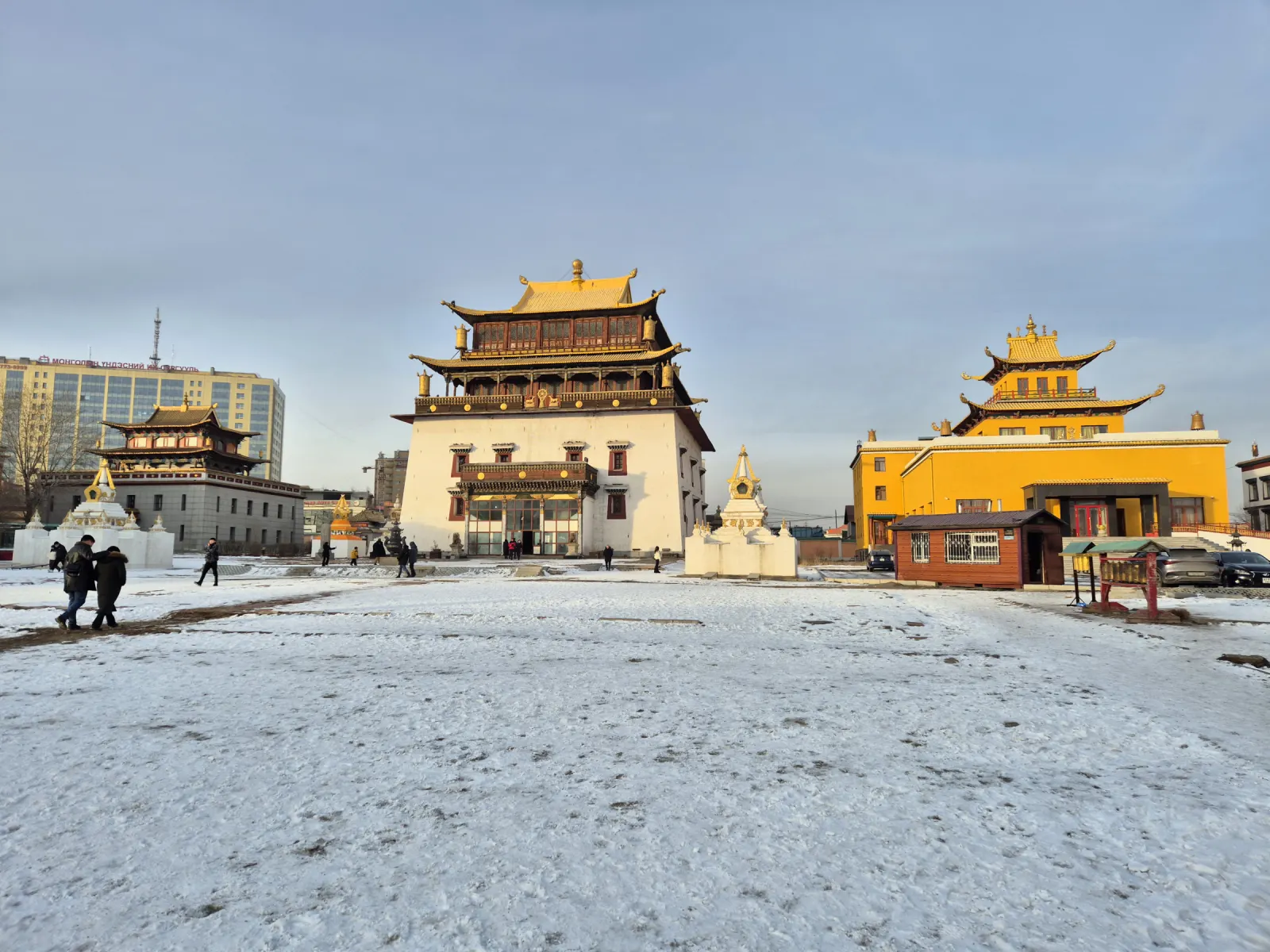
Golden-roofed Buddhist monastery with snow

Ulaanbaatar travel guide

What to see, where to stay and the best time to visit Ulaanbaatar, Mongolia.

Best: May, Jun, Aug

Photo: Chongkian / Wikimedia Commons

Country
Mongolia

About Ulaanbaatar

Ulaanbaatar is Mongolia's capital, home to around 1,396,288 people. It's a mix of Soviet-era blocks, Buddhist monasteries and modern towers, with the Gobi and grasslands just beyond the edges. It works well as a base before or after a countryside trip, with museums, temples and markets to fill a few days. The best months to visit are May, June and August, when temperatures are milder than the harsh winter and summer rains haven't peaked.

How many days do you need in Ulaanbaatar?

Two to three days are enough to see the main sights: Gandan Monastery, Sükhbaatar Square, the Chinggis Khaan National Museum, Choijin Lama Temple and Zaisan Memorial, plus time for the Naran Tuul Market.

Top attractions in Ulaanbaatar

  1. 1Gandan Monastery

    1–2 hours

    West of the city centre

    Mongolia's main working Buddhist monastery, where monks chant in the morning and pilgrims spin prayer wheels. The main hall holds a very tall gilded statue of Migjid Janraisig. It is a living religious site, so dress modestly and walk clockwise.

  2. 2Chinggis Square (Sükhbaatar Square)

    30–60 minutes

    Sükhbaatar District

    The large central square in front of the Government Palace, with a seated statue of Chinggis Khaan on the palace steps. It is the easiest place to get your bearings, and many museums and theatres are within walking distance.

  3. 3Chinggis Khaan National Museum

    2–3 hours

    Sükhbaatar District

    A large modern museum covering Mongolian history from the Stone Age through the Mongol Empire and later eras. It is the best single place to understand the country's past before heading out to the steppe.

  4. 4Choijin Lama Temple Museum

    1–1.5 hours

    Sükhbaatar District

    A group of old temples that survived the purges of the 1930s, now kept as a museum. Inside are Buddhist statues, masks used in tsam dances and detailed thangka paintings, set against the modern towers around it.

  5. 5Bogd Khan Palace Museum

    1–2 hours

    Khan-Uul District

    The winter palace of the last Bogd Khan, Mongolia's religious and political ruler before the communist period. Its temples and residence hold religious art, the ruler's belongings and a collection of preserved animals.

  6. 6Zanabazar Museum of Fine Arts

    1–2 hours

    City centre

    A museum of Mongolian art named after Zanabazar, the 17th-century sculptor and religious leader. It is best known for his gilded bronze Buddhist figures, along with thangkas and traditional paintings.

  7. 7Zaisan Memorial

    1 hour

    Khan-Uul District

    A Soviet-era war memorial on a hill south of the city, with a circular mural showing Soviet–Mongolian friendship. The climb up the steps gives wide views over Ulaanbaatar and the Tuul River valley, though the city can be hazy with smog in winter.

  8. 8Tumen Ekh Ensemble

    1–1.5 hours

    City centre

    An evening show of Mongolian folk music and dance, including khöömii throat singing, the horsehead fiddle and contortion. It is a compact introduction to traditional performing arts.

  9. 9Naran Tuul Market

    2–3 hours

    Bayanzürkh District

    Ulaanbaatar's huge open-air market, often called the Black Market, selling everything from felt boots and deels to saddles and ger parts. It is useful for buying camping gear before a trip to the countryside; it gets crowded, so keep a close eye on your bags.

Ulaanbaatar by month

Average weather and our month score, from 10 years of climate data.

Weather by month and month scores for Ulaanbaatar
Month High / low Rain days Sunshine Score
January -13°C / -24°C 1 day (2 mm) 8.0 h/day 4.8/10
February -8°C / -21°C 1 day (3 mm) 9.4 h/day 4.8/10
March 2°C / -10°C 3 days (9 mm) 10.7 h/day 4.5/10
April 10°C / -3°C 5 days (18 mm) 11.2 h/day 4.8/10
Best month: May 16°C / 3°C 7 days (27 mm) 12.0 h/day 7.9/10
Best month: June 22°C / 10°C 10 days (53 mm) 12.1 h/day 7.9/10
July 25°C / 13°C 13 days (87 mm) 11.2 h/day 7.4/10
Best month: August 22°C / 11°C 12 days (88 mm) 11.1 h/day 7.6/10
September 16°C / 4°C 8 days (41 mm) 9.8 h/day 7.4/10
October 7°C / -4°C 4 days (13 mm) 9.0 h/day 4.2/10
November -4°C / -14°C 3 days (10 mm) 7.8 h/day 4.4/10
December -12°C / -22°C 1 day (3 mm) 7.4 h/day 4.7/10
  1. Jan

    Daytime highs sit at -12.6°C with lows near -24.2°C, so this is deep winter cold. Rain days are almost zero (0.8) and sun hours average 8. Score is 4.8, rated ok.

  2. Feb

    Still cold, with a high of -8.1°C and a low of -20.9°C. Only 1 rain day and 9.4 sun hours. Score is 4.8, an ok month.

  3. Mar

    Highs climb above freezing to 2.1°C, but lows still drop to -10.4°C. Rain days rise slightly to 2.7. Score is 4.5, ok.

  4. Apr

    Highs reach 9.5°C and lows are -2.7°C, so it's a transition month with 4.7 rain days. Score is 4.8, ok.

  5. May

    Warmer days average 16.4°C with lows of 2.8°C and 6.5 rain days. This is one of the best months, scoring 7.9.

  6. Jun

    Highs hit 22.3°C and lows 9.7°C, with rain picking up to 10.4 days and 53mm. Score is 7.9, among the best months.

  7. Jul

    The warmest month, with a high of 24.5°C and low of 13.3°C, but also the wettest, with 13.2 rain days and 87mm. Score is 7.4, good.

  8. Aug

    Highs of 21.6°C and lows of 10.7°C come with heavy rain too, 12 days and 88mm, the highest monthly total. Score is 7.6, rated best.

  9. Sep

    Highs cool to 16.2°C and lows to 4.3°C, with rain easing to 8.3 days. Score is 7.4, a good month.

  10. Oct

    Highs drop sharply to 6.6°C and lows to -3.9°C as winter approaches, with 3.9 rain days. Score is 4.2, the lowest of the year, rated ok.

  11. Nov

    Highs fall to -4.4°C and lows to -14.4°C, with sun hours down to 7.8, the lowest of the year. Score is 4.4, ok.

  12. Dec

    Deep winter returns, with a high of -11.9°C and low of -21.5°C, and rain almost absent at 0.9 days. Score is 4.7, ok.

Climate averages 2015–2024 · Best time to visit Mongolia →

Where to stay in Ulaanbaatar

The best areas to base yourself and who each one suits.

Sükhbaatar Square

Good for first-timers, sightseeing

This is the central square, with Parliament, the national history museum and the opera house within walking distance. It is the easiest base for a short first visit, and tour companies often pick up nearby. Traffic on the surrounding roads is heavy and loud for much of the day.

Seoul Street

Good for nightlife, eating out

This street, a short walk south-west of the centre, has many bars, pubs, karaoke places and restaurants, including Korean and Western options. It suits travellers who want an evening scene close to their bed. Rooms facing the street can be noisy late at night, especially at weekends.

Peace Avenue

Good for shoppers, transport links

The city's main east–west road runs past the State Department Store, cafés and many bus stops, so getting around is simple. It is a practical, central choice with plenty of shops and supermarkets. The road is often jammed, and in winter the air can be smoky from coal and traffic.

Gandan

Good for culture, budget travellers

This area in the west of the city grows around Gandan Monastery, the city's main working Buddhist monastery, and early morning chanting is easy to join as a visitor. It feels more local and less polished than the centre. It is further from most restaurants and nightlife, and the streets around it are less well lit at night.

Zaisan

Good for families, quiet, views

This newer district in the south, below the Zaisan Memorial hill, has modern apartment blocks, malls and easy access to walks in the hills. The air is often a little cleaner and the pace calmer than downtown. You will need taxis to reach the centre, and the main road there can be slow at rush hour.

Getting to and around Ulaanbaatar

From the airport
The fact pack has no route data for getting from Ulaanbaatar's airport into the centre. Visitors usually rely on a taxi or a pre-booked airport transfer, since public transport links from the airport are limited.
Public transport
Ulaanbaatar has no metro or tram network. Buses run around the city, but routes and timetables can be confusing for visitors. A taxi or ride-hailing app is often the simpler option for getting between districts.
On foot
Sükhbaatar Square, Chinggis Square, the Chinggis Khaan National Museum and the Choijin Lama Temple Museum all sit in Sükhbaatar District, making this part of the centre easy to cover on foot.

Typical journey times and fares from the airport and other cities.

Route By Time Price
Ulaanbaatar → Dalanzadgad Aero Mongolia (MIAT also listed on this route). The fare range is from a tour agency's Aero Mongolia contract price list, and the schedule on that page dates from 2018, so check the current fare with the airline. Flight time is about 1 h 20 min to 1 h 30 min. The duration includes an estimated transfer to the new Chinggis Khaan airport (UBN), which is outside the city. Flights follow summer and winter timetables. flight 3 h 30 min 110–130 USD ↗
Ulaanbaatar → Mörön Aero Mongolia and Hunnu Air. This is the gateway to Lake Khövsgöl. The fare range is from a tour agency's Aero Mongolia contract price list, which may be out of date. The duration is an estimate that includes the transfer to UBN airport. In summer, book early. flight 3 h 30 min 110–130 USD ↗
Ulaanbaatar → Ölgii Aero Mongolia, Hunnu Air and MIAT, about 4 flights a week. Flight time is about 2 h 20 min. Ölgii is 1 hour behind Ulaanbaatar, so the timetable shows 1 h 20 min westbound and 3 h 10 min eastbound. The duration is an estimate that includes the transfer to UBN airport. The fare range is from a tour agency's contract price list, which may be out of date. Some flights are seasonal. flight 4 h 50 min 140–160 USD ↗

Food to try in Ulaanbaatar

Buuz

These are steamed dumplings filled with minced mutton or beef and onion. Locals eat them daily, but they are the centerpiece of Lunar New Year (Tsagaan Sar) feasts in Ulaanbaatar homes.

Khorkhog

This is meat, usually mutton, cooked with hot stones in a sealed milk can or pot. Families often prepare it outdoors for celebrations and summer gatherings around the city.

Tsuivan

This is a noodle dish made with hand-pulled noodles stir-fried with meat and vegetables. It is a common home-cooked meal and shows up on menus at simple canteens across Ulaanbaatar.

Khuushuur

These are fried pastries stuffed with minced meat, similar to buuz but deep-fried instead of steamed. Street vendors and market stalls in the city sell them as a quick snack.

Airag

This is fermented mare's milk, a traditional drink with a mildly sour, tangy taste. In Ulaanbaatar it is often served at markets and during summer festivals like Naadam.

Boodog

This is a method of cooking a whole goat or marmot from the inside using hot stones placed in the cavity. It is less common as daily food but appears at special outdoor meals near the capital.

More of Mongolia

Mongolia travel guide →

Ulaanbaatar: frequently asked questions

Is Ulaanbaatar good to visit in August?

Yes, August is one of the best months, with a score of 7.6 out of 10. The average high is 21.6°C and the low 10.7°C, so days are warm and nights mild. It's also the wettest month, with 88mm of rain over 12 rain days, so expect some showers between sunny spells (11.1 sun hours a day).

When is the best time to visit Ulaanbaatar?

May, June and August score highest, all rated 'best'. June has the most sun (12.1 hours a day) with a high of 22.3°C and only 53mm of rain. May is drier still, with 27mm of rain over 6.5 days and a high of 16.4°C. July is close behind at a 'good' score of 7.4 but is the wettest month, with 87mm of rain.

How cold does Ulaanbaatar get in winter?

Very cold. January is the coldest month, with an average high of just -12.6°C and a low of -24.2°C. December and February are similar, with highs around -12°C and -8°C. Snowfall is light rather than heavy: January sees only 0.8 rain days and 2mm of precipitation, since most moisture falls as dry, powdery snow in a very dry climate.

How many days do I need in Ulaanbaatar?

Two days are enough to see the main sights. The city's nine key attractions, including Gandan Monastery, Chinggis Khaan National Museum and the Zaisan Memorial, each take 1 to 3 hours, adding up to roughly 14 hours of sightseeing in total, which fits comfortably into two full days with time to spare.