Skip to content
wheretotravel.info
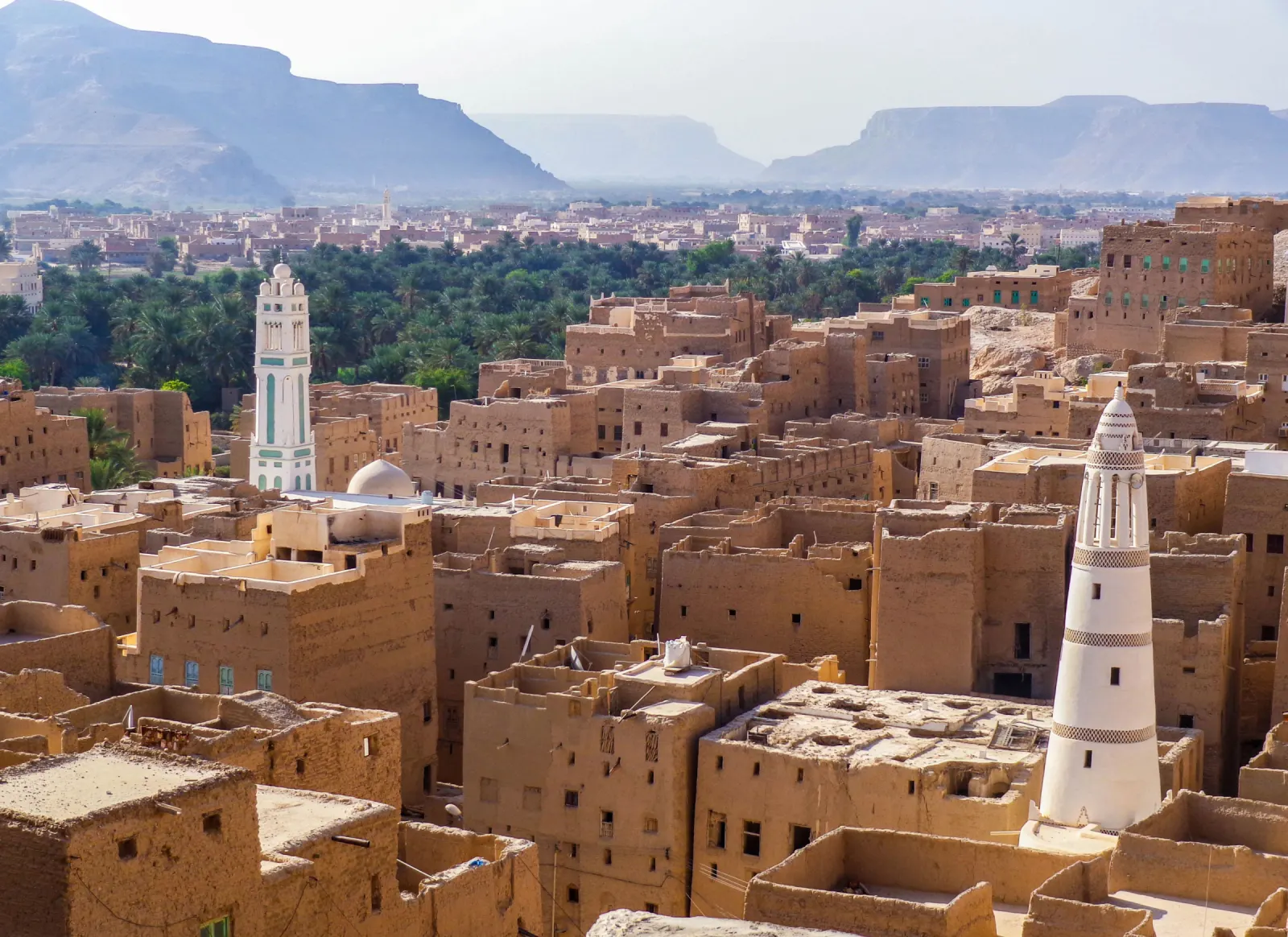
Old mudbrick city with minarets and mountains

Yemen travel guide

Old inland towns and Arabian Sea ports for independent travellers who plan with care

Best: Jan, Feb, Nov, Dec

Photo: Mohammad Hadi / Pexels

Capital
Sana'a
Language
Arabic
Currency
Yemeni rial (YER)
Time zone
UTC+03:00
Plugs
Type A, G · 230 V
Driving
On the right
Emergency
199

Why visit Yemen

Yemen suits travellers drawn to Arabic-speaking cities with a long past. The capital, Sana'a, and the inland town of Shibam sit away from the sea, while Aden and Mukalla are coastal ports. The best months are November, December, January and February. One honest limitation is that the recommended window is short: it covers only those months, so the rest of the year falls outside it. Check current travel conditions before you commit to any plans.

  • Cooler months for travel

    The best months to visit Yemen are November, December, January and February. This is the cooler part of the year, so days are easier for walking around cities and for long road trips between regions.

  • Sanaa, the inland capital

    Sanaa is Yemen's capital and its largest city, with about 2957000 people. It lies inland, away from the coast, and is the country's main centre of Arabic language and daily life.

  • Aden on the coast

    Aden is a coastal city of about 1154410 people and is also listed as a capital. It shows a different, sea-facing side of Yemen compared with the inland cities.

  • Mukalla, a smaller port city

    Mukalla is a coastal city of about 144137 people. It is much smaller than Sanaa or Aden, and it gives a quieter look at life along Yemen's shoreline.

  • Shibam and a large country

    Shibam is a small inland town of about 13316 people, a strong contrast to the big cities. Yemen covers 527968 km² and has a population of 32684503, so distances and landscapes vary a lot between places.

Is Yemen right for you?

Great for

  • Dry-season trips in January and February, which average 0 rain days and 0 mm of rain
  • Travellers who like mild winter days, with highs near 23°C in December and January
  • Sun seekers, with 10 to 12 hours of sunshine a day in every month
  • City trips to Sana'a, home to about 3 million people, plus coastal Aden and Mukalla
  • Trips in November, with highs near 25°C and under 1 rain day

Less ideal for

  • Heat-sensitive travellers in June, when highs average 33°C
  • Travellers who want dry summer weather, as July and August bring about 5 rain days
  • Those who need cool nights in summer, with lows near 21°C from June to August
  • Travellers who dislike cold evenings in winter, as lows drop to about 10°C in December and January

Yemen right now: October

8.7/10
Avg high
28°C
Avg low
16°C
Rain days
1

Averages for Yemen.

Weather by month

The climate data covers Yemen as a whole rather than one city, and November to February is the best time, with highs of 23–25°C, lows of 10–13°C, almost no rain and about 11 hours of sun. June has the toughest weather, with highs of 33°C and warm nights of 21°C, while July and August bring the most rain, about 5 rain days and up to 21 mm.

Average highs and lows in Yemen by month January: high 23°C, low 10°C , 0 rain days . February: high 25°C, low 12°C , 0 rain days . March: high 27°C, low 15°C , 1 rain days . April: high 29°C, low 17°C , 2 rain days . May: high 31°C, low 19°C , 2 rain days . June: high 33°C, low 21°C , 1 rain days . July: high 31°C, low 21°C , 5 rain days . August: high 31°C, low 21°C , 5 rain days . September: high 31°C, low 20°C , 2 rain days . October: high 28°C, low 16°C , 1 rain days . November: high 25°C, low 13°C , 1 rain days . December: high 23°C, low 10°C , 0 rain days . 23°C 10°C JAN 0d 25°C 12°C FEB 0d 27°C 15°C MAR 1d 29°C 17°C APR 2d 31°C 19°C MAY 2d 33°C 21°C JUN 1d 31°C 21°C JUL 5d 31°C 21°C AUG 5d 31°C 20°C SEP 2d 28°C 16°C OCT 1d 25°C 13°C NOV 1d 23°C 10°C DEC 0d
Best months Other months (low–high) Nd = rain days

Yemen (country average) · averages 2015–2024

Best time to visit Yemen: month-by-month weather →

Sample itineraries

7 days

One week from the coast to inland Shibam

  1. Day 1–3

    Aden

    Start in Aden, a coastal city of 1154410 people. Use 3 days to settle in, get Yemeni rial and explore the seafront at an easy pace. The local emergency number is 199.

  2. Day 4–5

    Mukalla

    Move along the coast to Mukalla, a much smaller coastal city of 144137 people. Spend 2 days by the sea and enjoy a slower pace than in Aden.

  3. Day 6–7

    Shibam

    Finish inland in Shibam, a town of just 13316 people. Its small size suits slow walks and quiet evenings, and it makes a clear change from the 2 coastal cities.

10 days

Sanaa to Aden via Shibam and Mukalla

  1. Day 1–3

    Sanaa

    Begin in Sanaa, the capital and the largest city on this route with 2957000 people. It lies inland. Take 3 days to find your feet, sort out cash and explore on foot.

  2. Day 4–5

    Shibam

    Continue inland to Shibam, a town of 13316 people. After the big capital, its small scale makes it easy to explore on foot in 2 days.

  3. Day 6–7

    Mukalla

    Reach the coast at Mukalla, a city of 144137 people. Use these 2 days for time by the sea and a slower pace after the inland stops.

  4. Day 8–10

    Aden

    End in Aden, a coastal city of 1154410 people that is also listed as a capital. Spend the last 3 days by the sea before you leave.

Food to try in Yemen

Saltah

Saltah is a bubbling meat and vegetable stew topped with a frothy fenugreek paste called hulba. It is served in a hot stone pot, mostly at lunch, and is closely linked to Sana'a.

Fahsa

Fahsa is shredded lamb or beef cooked in broth in a stone pot until it thickens. People scoop it up with flatbread, often at lunch.

Mandi

Mandi is spiced rice with lamb or chicken, traditionally cooked slowly in a pit oven so the meat turns very tender. It is common at family meals and gatherings.

Bint al-sahn

Bint al-sahn is a soft cake made from many thin layers of dough, baked with butter and served with honey. It is often shared with tea or at celebrations.

Qishr

Qishr is a light drink brewed from coffee husks rather than the beans, usually spiced with ginger. It is drunk throughout the day in homes and cafés.

Shahi adeni

Shahi adeni is sweet black tea made with milk and spices such as cardamom. As the name suggests, it comes from the port city of Aden.

Know before you go

  • Plugs and voltage: Yemen uses plug types A and G, with a 230 V supply. Bring an adapter that fits both. If your devices are built only for lower voltage, you will also need a converter.
  • Driving side: Traffic in Yemen drives on the right. If you come from a country that drives on the left, take extra care at junctions and when overtaking.
  • Emergency number: The emergency number in Yemen is 199. Save it in your phone before you arrive, together with your accommodation's contact details.
  • Currency: The local currency is the Yemeni rial (YER). Check how you will get and pay with local money before you travel, as options can differ from what you are used to.
  • Language: Arabic is the official language. Learning a few basic Arabic greetings and phrases will help in daily situations and is usually appreciated.
  • Time zone: Yemen is on UTC+03:00. Keep this in mind when you plan calls home or book onward connections.
  • Calling code: The country calling code for Yemen is +967. Use it when you give your number to others or call a Yemeni number from abroad.

Yemen: frequently asked questions

What is the best time to visit Yemen?

December to February is the best time to visit Yemen, with November close behind. December, January and February all score 10 out of 10. Daytime highs are about 23 to 25°C, and there are almost no rain days. November scores 9.9, with highs near 25°C. These figures are 2015–2024 averages for Yemen as a whole.

Is Yemen good to visit in June?

June is the lowest-scoring month in Yemen, at 4.8 out of 10. The reason is heat, not rain. Highs average 33.1°C, the warmest of the year. Nights stay near 21°C. It is still very dry, with only 0.8 rain days and 11 hours of sun a day.

Does it rain in Yemen in July and August?

Yes, July and August are the wettest months in Yemen, but rain is still light. July averages 5.1 rain days and 21 mm, and August 5.3 rain days and 18 mm. You still get 10 to 11 hours of sun a day. Highs sit around 31°C, and both months score as good.

How cold does Yemen get at night in winter?

Winter nights in Yemen are cool, at about 10°C. January averages a low of 10.1°C and December 10.3°C. Days are much warmer, with highs near 23°C, so the gap between day and night is large. Pack a warm layer for evenings in December, January and February.

What plugs and voltage does Yemen use?

Yemen uses plug types A and G, and the voltage is 230 V. Type G has 3 rectangular pins, and type A has 2 flat pins. Check that your devices work at 230 V before you plug them in, or bring a suitable adapter or converter.

What currency, language and time zone does Yemen use?

Yemen uses the Yemeni rial (YER), and the official language is Arabic. The country is on UTC+03:00. Other basics: the calling code is +967, the emergency number is 199, and traffic drives on the right. The capital is Sana'a.

Similar destinations

Countries with a year of weather much like Yemen.