Skip to content
wheretotravel.info
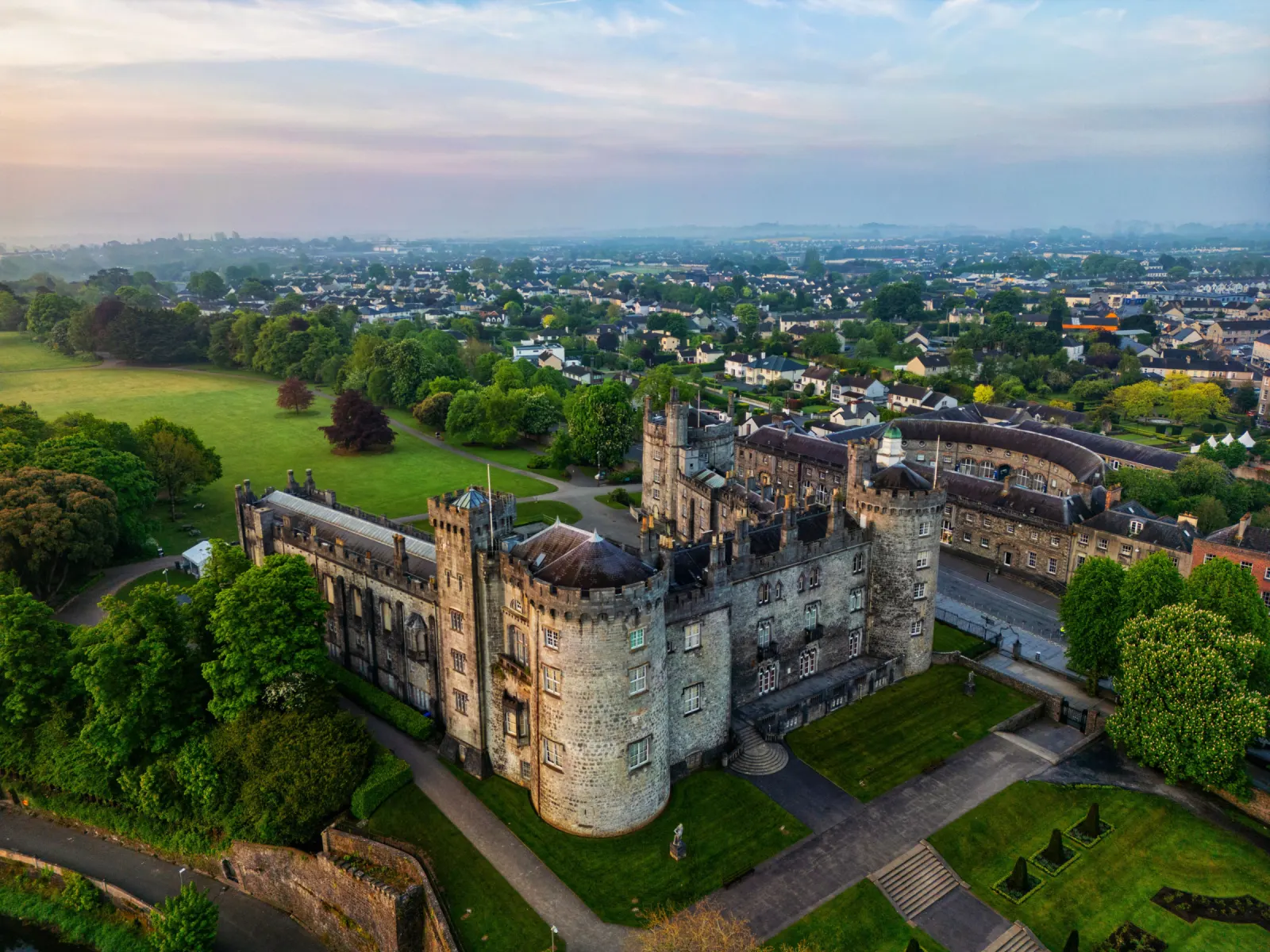
Aerial view of castle and surrounding parkland

Kilkenny travel guide

What to see, where to stay and the best time to visit Kilkenny, Ireland.

Best: Jun, Aug

Photo: Jay's Photography / Pexels

Country
Ireland

About Kilkenny

Kilkenny is a small Irish city with a medieval core you can walk end to end in minutes. Narrow lanes like the Butter Slip, a Norman castle on the river, and a round tower at St Canice's give it a compact, historic feel. It's a city for wandering, not rushing: museums, galleries and old churches sit close together, and pubs fill up in the evenings. June and August bring the best weather for walking the Medieval Mile and sitting outside.

How many days do you need in Kilkenny?

Two days is enough to see the castle, St Canice's, the Medieval Mile Museum and walk the old streets, with time left for a pub evening or a trip out to Dunmore Cave.

Top attractions in Kilkenny

  1. 1Kilkenny Castle

    2–3 hours

    The Parade

    A large stone castle beside the River Nore, long the home of the Butler family. You can tour the restored rooms and walk in the big public park behind it. It is the main sight in the city, so arrive early to avoid the busiest times.

  2. 2St Canice's Cathedral and Round Tower

    1–2 hours

    Irishtown

    A medieval cathedral with old stone tombs and fine windows, which gave the city its name. Next to it stands a tall round tower that you can climb for views over the rooftops. The steps inside the tower are steep and narrow, so it is not suitable for everyone.

  3. 3Medieval Mile Museum

    1–2 hours

    St Mary's Lane

    A museum inside a restored medieval church that tells the story of the city's past. It holds carved tombs and other finds from the town. It is a good place to start before walking the old streets.

  4. 4Rothe House & Garden

    1–2 hours

    Parliament Street

    A merchant's townhouse from the Tudor period, built around courtyards with a restored garden and orchard behind. It shows how a wealthy family lived in the old town. It is quieter than the castle.

  5. 5Smithwick's Experience Kilkenny

    1 hour

    Parliament Street

    A guided tour about the history of Smithwick's beer and brewing in the city. It ends with a tasting for adults. Choose this if you like beer or local history; skip it if you don't drink.

  6. 6Black Abbey

    30 minutes–1 hour

    Abbey Street

    A Dominican church that is still in use, known for its large stained-glass windows. It is a short walk from the main street. Visit quietly, as services take place here.

  7. 7Kilkenny Design Centre and National Design & Craft Gallery

    1 hour

    Castle Yard

    Old castle stables across the road from Kilkenny Castle, now used for Irish craft shops and a free design and craft gallery. It is easy to combine with a castle visit.

  8. 8Butler Gallery

    1 hour

    Evans' Home, John's Quay

    A contemporary art gallery in a restored historic building by the river. Exhibitions change, so check what is on before you go.

  9. 9Medieval Mile walk and the Butter Slip

    1–2 hours

    City centre

    The old street route that links the castle and St Canice's Cathedral, with narrow lanes such as the Butter Slip along the way. You can walk it on your own or join a guided walking tour. It is the easiest way to see the city's old buildings in one go.

  10. 10Dunmore Cave

    1–2 hours

    Near Ballyfoyle, outside the city

    A limestone cave with guided tours through large chambers and rock formations. It lies outside the city, so you need a car or a taxi. The cave is cool and damp, and there are many steps.

Kilkenny by month

Average weather and our month score, from 10 years of climate data.

Weather by month and month scores for Kilkenny
Month High / low Rain days Sunshine Score
January 8°C / 3°C 12 days (72 mm) 3.7 h/day 1.5/10
February 9°C / 3°C 14 days (80 mm) 4.9 h/day 1.8/10
March 10°C / 3°C 15 days (90 mm) 6.2 h/day 2.5/10
April 12°C / 5°C 12 days (65 mm) 8.1 h/day 4.5/10
May 15°C / 8°C 13 days (67 mm) 9.5 h/day 6.1/10
Best month: June 18°C / 10°C 13 days (67 mm) 9.8 h/day 7.4/10
July 19°C / 12°C 13 days (74 mm) 8.9 h/day 7.3/10
Best month: August 19°C / 12°C 13 days (80 mm) 8.6 h/day 7.4/10
September 17°C / 10°C 12 days (89 mm) 6.9 h/day 6.6/10
October 14°C / 8°C 14 days (102 mm) 5.5 h/day 4.3/10
November 10°C / 5°C 14 days (90 mm) 3.9 h/day 2.2/10
December 9°C / 4°C 16 days (106 mm) 3.1 h/day 1.1/10
  1. Jan

    Highs reach just 7.7°C with 12.3 rain days. It's one of the coldest, wettest months, with only 3.7 hours of sun a day and a low score of 1.5.

  2. Feb

    Highs sit at 8.6°C with 13.6 rain days, still cold and damp. Scores stay low at 1.8, with sun hours creeping up to 4.9 a day.

  3. Mar

    Highs climb to 9.9°C but rain increases to 15.2 days and 90mm. The score of 2.5 reflects chilly, showery conditions despite longer daylight.

  4. Apr

    Highs reach 12°C with rain dropping to 12.3 days and 65mm, giving a milder, drier feel. The score rises to 4.5, a decent shoulder-season month.

  5. May

    Highs of 15.3°C and 12.6 rain days mark a clear improvement, with 9.5 hours of sun. The score of 6.1 makes this a good month to visit.

  6. Jun

    Highs hit 17.9°C with 12.5 rain days and 9.8 hours of sun, the sunniest spell of the year. A top score of 7.4 makes it one of the best months.

  7. Jul

    Highs peak near 19.1°C though rain days tick up to 13.4 and 74mm falls. Still a strong month, scoring 7.3.

  8. Aug

    Highs stay warm at 18.7°C with 13.1 rain days and 80mm of rain. The score matches June at 7.4, keeping it a good choice.

  9. Sep

    Highs cool to 16.6°C with 12.2 rain days, and sun hours drop to 6.9. A score of 6.6 keeps it a good late-summer option.

  10. Oct

    Highs fall to 13.5°C while rain days rise to 14.3 and rainfall jumps to 102mm. The score drops to 4.3 as wetter, greyer days set in.

  11. Nov

    Highs of 10°C come with 14 rain days and just 3.9 hours of sun, marking the start of the dark, wet season. The score falls to 2.2.

  12. Dec

    Highs of only 8.7°C pair with 15.8 rain days and 106mm of rain, the wettest and dullest month with 3.1 sun hours. The score bottoms out at 1.1.

Climate averages 2015–2024 · Best time to visit Ireland →

Where to stay in Kilkenny

The best areas to base yourself and who each one suits.

High Street and The Parade (city centre)

Good for first-timers, short stays

This is the heart of the Medieval Mile, with Kilkenny Castle, shops, pubs and restaurants all within an easy walk. It is the simplest base if you don't have a car and want to see the main sights on foot. Streets can be crowded on summer weekends, and rooms facing the main streets may hear late-night noise.

Irishtown and St Canice's

Good for history lovers, couples

The north end of the Medieval Mile is older and a little quieter, grouped around St Canice's Cathedral and its round tower. You are still a short walk from the centre, with a calmer feel in the evenings. There are fewer places to eat right on your doorstep, and some lanes are narrow with little parking.

John Street and the east bank

Good for nightlife, train travellers

Across the River Nore, John Street has many of the city's late-opening pubs and music bars. It is close to the railway station, so it works well if you arrive by train. The drawback is noise, as Friday and Saturday nights can be loud until late.

Patrick Street and the castle park side

Good for walkers, quieter stays

South of the centre, this area sits near the castle grounds and the riverside walks, so it is good for morning runs or strolls. It is calmer than High Street but still within walking distance of the main sights. Choice of accommodation is smaller, so book early in busy periods.

Outer city roads (Dublin Road, Castlecomer Road)

Good for drivers, families

These suburban roads have larger properties, easier parking and quick access to routes out to the countryside. They suit road trips or families who want more space. You will need to walk a fair distance or drive into the centre, and evenings out mean planning your way back.

Getting to and around Kilkenny

From the airport
Kilkenny has no airport of its own, so most visitors arrive via Dublin Airport or Cork Airport. From there, the usual options are a bus, train connection, or a hire car to reach Kilkenny city, though no fixed times or prices are available here.
Public transport
Kilkenny is a small city with very limited public transport. There is no metro or tram system, and local bus services are limited. Most visitors get around on foot, so you rarely need to rely on buses once you are in the centre.
On foot
The city centre is compact and easy to walk. Kilkenny Castle, Rothe House, Smithwick's Experience, and the Medieval Mile walk are all close together around The Parade and Parliament Street, with St Canice's Cathedral a short walk away in Irishtown.

Food to try in Kilkenny

Smithwick's Ale

This red ale was brewed in Kilkenny for centuries and locals still drink it in the city's pubs. It pairs well with a traditional Irish stew or a toasted sandwich at lunch.

Irish Stew

A hearty mix of lamb or beef, potatoes, carrots and onions, this stew is a classic pub lunch in Kilkenny. It's especially popular on cooler days when visitors want a warming meal.

Boxty

This traditional potato pancake is found on breakfast and brunch menus across the city. It's often served with bacon or smoked salmon.

Seafood Chowder

Though Kilkenny is inland, chowder made with fish and shellfish from Ireland's coasts is a common starter in local restaurants. It's usually served with brown bread.

Soda Bread

This dense, slightly sweet bread is a staple on breakfast tables and in cafes throughout Kilkenny. Locals often eat it with butter and jam alongside tea.

Craft Cheese and Charcuterie Boards

Kilkenny's food markets and restaurants showcase local Irish cheeses and cured meats. These boards are popular as a shared starter or light evening meal.

More of Ireland

Ireland travel guide →

Kilkenny: frequently asked questions

Is Kilkenny good to visit in August?

Yes. August scores 7.4 out of 10, one of the best months. Highs reach 18.7°C and there are 8.6 hours of sun a day. Rain still falls on about 13 days, so pack a light jacket, but the mild warmth and long daylight make it one of the better times to walk the Medieval Mile.

When is the best time to visit Kilkenny?

June and August are the top-rated months, both scoring 7.4. June brings the warmest evenings before midsummer, with lows of 10.4°C, while August keeps highs near 18.7°C. July and September also score well, at 7.3 and 6.6, so the whole May-to-September stretch works for sightseeing and outdoor walks.

How many days do I need in Kilkenny?

Two days cover the main sights comfortably. Kilkenny Castle takes 2–3 hours, St Canice's Cathedral and the Medieval Mile Museum each need 1–2 hours, and smaller stops like Rothe House, Smithwick's Experience and Black Abbey each take about an hour. A third day lets you add Dunmore Cave just outside the city.

Is Kilkenny cold in winter?

Yes. December and January are the coldest and wettest months, with highs of only 7.7–8.7°C and lows near 2.6–4°C. Rain falls on 12 to 16 days each month, and sunshine drops to around 3 hours a day, which is why both months score low, at 1.1 and 1.5.

Does it rain a lot in Kilkenny?

Rain is frequent year-round, but amounts vary. October and December are the wettest, with 102mm and 106mm of rain over 14 to 16 rain days. April, May and June are drier, with 65–67mm of rain, though rain still falls on roughly 12 days a month, so a waterproof is useful whenever you visit.