Skip to content
wheretotravel.info
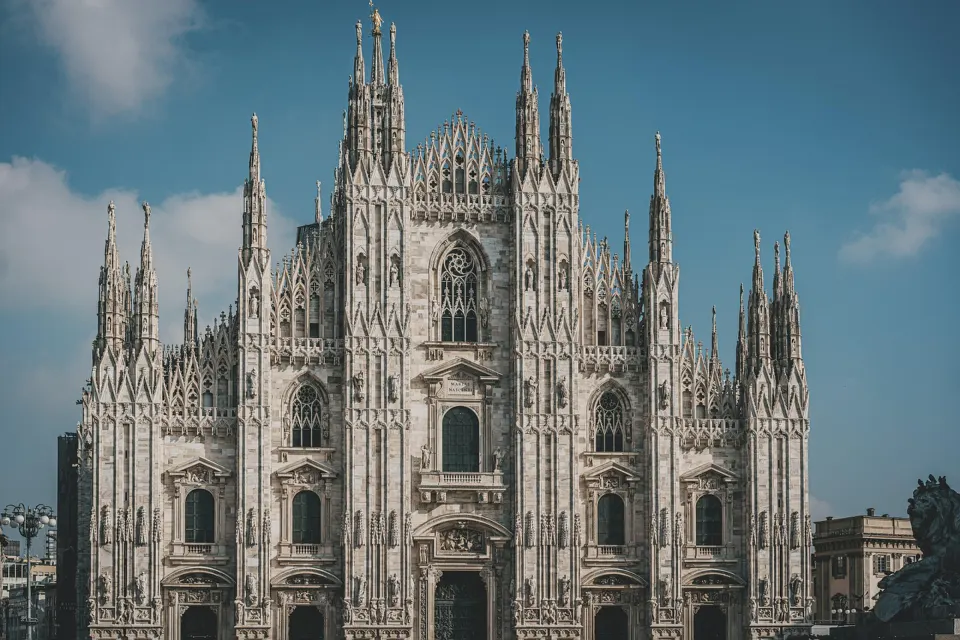
Milan Cathedral facade with gothic spires against blue sky

Milan travel guide

What to see, where to stay and the best time to visit Milan, Italy.

Best: Apr, Sep, Oct

Photo: Antonio_Cansino / Pixabay

Country
Italy

About Milan

Milan is Italy's business and fashion capital, a city of 1,354,196 people built around Gothic spires, canals and galleries rather than ancient ruins. It's compact enough to explore on foot, with the Duomo, La Scala and Brera's art scene close together. Expect good food, design shops and a fast pace. April, September and October bring mild, dry weather, making them the easiest months to walk the city without summer heat or winter fog.

How many days do you need in Milan?

Two to three days cover the main sights: the Duomo, The Last Supper, Sforza Castle and a walk through Navigli or Brera. Add a day for extra museums or a day trip.

Top attractions in Milan

  1. 1Milan Cathedral (Duomo di Milano)

    2–3 hours

    Centro Storico

    Milan's huge Gothic cathedral is the symbol of the city and took centuries to finish. Go inside for the stained glass, then walk on the roof terraces among the marble spires for close views over the centre. Queues can be long, so book ahead.

  2. 2The Last Supper (Cenacolo Vinciano)

    1 hour

    Magenta

    Leonardo da Vinci's mural covers a wall of the old refectory next to the church of Santa Maria delle Grazie. Visits are short, timed and in small groups. Tickets sell out weeks ahead, so don't come without a booking.

  3. 3Galleria Vittorio Emanuele II

    30 minutes–1 hour

    Centro Storico

    This 19th-century shopping arcade has a glass-and-iron roof and mosaic floors, and it links the Duomo square to La Scala. It is free to walk through. Cafés and shops inside are expensive, so many people just look.

  4. 4Sforza Castle (Castello Sforzesco)

    2–3 hours

    Parco Sempione

    A large brick castle that holds several civic museums. Highlights include Michelangelo's unfinished Rondanini Pietà and rooms of paintings and old weapons. The courtyards are free, and Sempione Park behind the castle is good for a break.

  5. 5Pinacoteca di Brera

    2–3 hours

    Brera

    Milan's main art gallery, with Italian paintings by artists such as Mantegna, Raphael and Caravaggio. Afterwards, walk the narrow streets of the Brera district, which are full of small shops and bars.

  6. 6Teatro alla Scala and La Scala Museum

    1 hour

    Centro Storico

    One of the world's most famous opera houses. The museum shows costumes, instruments and portraits, and you can often look into the auditorium from a box when there is no rehearsal. Seeing a performance needs early booking.

  7. 7Navigli

    2–3 hours

    Navigli

    An area of old canals in the south-west of the city, lined with bars and restaurants. It is best in the early evening for aperitivo. It gets very crowded at weekends, and daytime is much quieter.

  8. 8Basilica of Sant'Ambrogio

    1 hour

    Sant'Ambrogio

    One of Milan's oldest churches, built in the Romanesque style and dedicated to the city's patron saint. It has a calm brick courtyard and early Christian mosaics. It is a short walk from The Last Supper, so the two fit well together.

  9. 9San Maurizio al Monastero Maggiore

    30 minutes–1 hour

    Magenta

    From the outside it is a plain church, but inside almost every wall is covered in Renaissance frescoes. It is free to enter and usually far less crowded than the big sights. It sits next to the city's archaeological museum.

  10. 10Monumental Cemetery (Cimitero Monumentale)

    1–2 hours

    Monumentale

    A large cemetery that works like an open-air sculpture museum, with grand family tombs in many styles. It is quiet and free to enter. Pick up a map at the entrance to find the main monuments.
Milan by month

Average weather and our month score, from 10 years of climate data.

Weather by month and month scores for Milan
Month High / low Rain days Sunshine Score
January 8°C / -1°C 6 days (50 mm) 6.3 h/day 3.3/10
February 11°C / 2°C 8 days (81 mm) 6.7 h/day 4.5/10
March 15°C / 4°C 9 days (76 mm) 8.7 h/day 6.5/10
Best month: April 19°C / 8°C 9 days (88 mm) 10.5 h/day 8.2/10
May 22°C / 13°C 16 days (163 mm) 10.6 h/day 7.0/10
June 27°C / 18°C 11 days (115 mm) 13.0 h/day 7.1/10
July 30°C / 20°C 12 days (100 mm) 13.5 h/day 5.7/10
August 29°C / 20°C 10 days (107 mm) 12.0 h/day 6.3/10
Best month: September 24°C / 15°C 10 days (122 mm) 10.1 h/day 8.0/10
Best month: October 19°C / 11°C 12 days (142 mm) 7.4 h/day 7.6/10
November 12°C / 5°C 11 days (112 mm) 5.7 h/day 4.4/10
December 8°C / 1°C 7 days (64 mm) 5.2 h/day 2.9/10
  1. Jan

    Cold days with a high of 8°C and 6.3 rain days; short on sun at 6.3 hours. Score 3.3, the toughest month to visit.

  2. Feb

    Still chilly at 11°C high, with 8.3 rain days and 81mm of rain. Score 4.5, an ok but damp option.

  3. Mar

    Milder at 14.5°C with 8.7 rain days and more sun at 8.7 hours. Score 6.5 marks a good month to visit.

  4. Apr

    Pleasant 18.5°C high, 9.2 rain days, 10.5 sun hours. Score 8.2, the best-rated month of the year.

  5. May

    Warm at 21.9°C but the wettest month, with 16.2 rain days and 163mm of rain. Score 7, still a good month.

  6. Jun

    Hot at 27.4°C with 13 sun hours and 11 rain days. Score 7.1 keeps it a good month despite summer heat building.

  7. Jul

    Peak heat at 29.9°C high and 13.5 sun hours, with 11.6 rain days. Score 5.7, an ok month if you can handle the heat.

  8. Aug

    Still hot at 29.4°C with 10.1 rain days and 12 sun hours. Score 6.3, a good month though summer heat lingers.

  9. Sep

    Cooling to 24.2°C with 10.1 rain days and 10.1 sun hours. Score 8, tied for the best month to visit.

  10. Oct

    Autumn mild at 19°C, 11.5 rain days, 142mm of rain. Score 7.6, a best-rated month despite the wetter skies.

  11. Nov

    Cool and damp at 12.3°C with 10.7 rain days and just 5.7 sun hours. Score 4.4, only an ok month.

  12. Dec

    Cold at 7.9°C high with low sun of 5.2 hours and 6.9 rain days. Score 2.9, the lowest-rated month of the year.

Climate averages 2015–2024 · Best time to visit Italy →

Where to stay in Milan

The best areas to base yourself and who each one suits.

Centro Storico (Duomo)

Good for first-timers, short stays

This is the historic core around the Duomo, the Galleria Vittorio Emanuele II and La Scala, so most major sights are a walk away. Metro links from here reach the rest of the city easily. The drawback is crowds in the day, and many streets feel empty and quiet at night once shops close.

Brera

Good for couples, art lovers

Brera has narrow cobbled streets, small galleries, cafés and the Pinacoteca di Brera art museum, and it is a short walk to the Duomo. It feels calmer and more local than the centre. The downside is that it is one of the more expensive areas, and restaurant terraces can be noisy on warm evenings.

Navigli

Good for nightlife, younger travellers

Built around the old canals in the south-west, Navigli is known for aperitivo bars, restaurants and a relaxed evening scene. It is a good base if you want to go out without needing transport home. Expect noise late at night, especially at weekends, and a longer trip to the main sights than from the centre.

Porta Venezia

Good for food lovers, LGBTQ+ travellers

This area east of the centre has Liberty-style buildings, a wide mix of international restaurants and the Giardini Indro Montanelli park. It is well connected by metro and has a lively, open bar scene. Some streets near the busy bars get loud in the evening.

Isola

Good for repeat visitors, modern design fans

Isola is a former working-class area next to the new Porta Nuova towers and the Bosco Verticale buildings, with independent bars and restaurants. It feels local and modern, and Porta Garibaldi station is close for trains and the metro. You will need the metro or a longer walk to reach the Duomo and older sights.

Stazione Centrale

Good for early trains, day trips

Staying near Milano Centrale makes sense if you plan day trips to places like Lake Como or arrive by airport bus or train. Transport links are the best in the city. The area has little charm, and some streets around the station feel uncomfortable late at night.

Getting to and around Milan

From the airport
Milan has more than one airport serving the city, but no specific fares or journey times are given here. The usual options are a direct train, an airport bus, or a taxi into the centre.
Public transport
Milan has a metro system plus trams and buses that cover the city centre and surrounding districts. A practical tip: get a map of the metro lines first, since it's the fastest way to link up neighbourhoods like Centro Storico, Brera and Navigli.
On foot
The centre is compact and walkable. Centro Storico holds the Duomo, Galleria Vittorio Emanuele II and La Scala within easy walking distance of each other, and Brera's Pinacoteca is a short walk away too.

Food to try in Milan

Risotto alla milanese

A creamy saffron risotto that gives the dish its golden colour. It's a classic Milanese primo, often served alongside osso buco in local trattorias.

Cotoletta alla milanese

A breaded, pan-fried veal cutlet, crisp outside and tender inside. It's a staple on lunch and dinner menus across the city.

Ossobuco

Braised veal shank cooked slowly until the meat falls off the bone, usually served with risotto. It's a hearty dish found in traditional Milanese restaurants.

Panettone

A tall, dome-shaped sweet bread studded with candied fruit and raisins. Though eaten nationwide, it originated in Milan and is especially popular in winter.

Milanese aperitivo

A pre-dinner tradition where a drink comes with a buffet of snacks, popular in bars around the Navigli and Brera districts in the early evening.

More of Italy

Italy travel guide →

Milan: frequently asked questions

Is Milan good to visit in August?

Yes, but it is hot. August scores 6.3 out of 10, rated good. Daytime highs reach 29.4°C and nights stay near 19.7°C. There are 10.1 rain days and 107 mm of rain, with 12 hours of sun, so expect warm, fairly dry weather with occasional storms.

When is the best time to visit Milan?

April, September and October are the top-rated months. April scores 8.2 (best), with highs of 18.5°C and 10.5 hours of sun. September scores 8 (best), with highs of 24.2°C. October scores 7.6 (best), with highs of 19°C. All three balance mild temperatures with moderate rain days.

How many days do I need in Milan?

Two to three days cover the main sights. The Duomo, Sforza Castle and Pinacoteca di Brera each take 2–3 hours, while The Last Supper, La Scala and the Basilica of Sant'Ambrogio need about 1 hour each. Add a third day for Navigli and the Monumental Cemetery if you want a slower pace.

Is Milan cold in winter?

Yes. January and December are the coldest and lowest-scoring months, rated avoid, at 3.3 and 2.9 out of 10. January highs are 7.8°C with lows of -0.6°C, and December highs are 7.9°C with lows of 0.9°C. Sun hours drop to 6.3 and 5.2, the lowest of the year.

What is the rainiest month in Milan?

May has the most rain, with 163 mm over 16.2 rain days, the highest rain total and rain-day count of any month. Even so, May scores 7 out of 10 (good), since highs reach 21.9°C and sun hours hit 10.6, so showers tend to be short rather than constant.