Skip to content
wheretotravel.info
Rome

Rome travel guide

What to see, where to stay and the best time to visit Rome, Italy.

Best: Apr, May, Sep, Oct

Photo: AngMoKio / Wikimedia Commons

Country
Italy

About Rome

Rome is Italy's capital and a large inland city where ancient ruins sit next to everyday streets. Most visitors split their time between the Colosseum and Roman Forum in Monti / Celio, the Vatican Museums and St Peter's Basilica in Vatican City, and the squares of Centro Storico. Monti suits first-timers, Trastevere suits nightlife, and Prati is quieter for families. The best months to go are April, May, September and October.

How many days do you need in Rome?

There is no set recommendation, so plan from sight times. The Vatican Museums and Trastevere each take half a day, the Forum and Palatine Hill 2–3 hours, and the Colosseum 1–2 hours. The main sights alone fill several full days.

Top attractions in Rome

  1. 1Colosseum

    1–2 hours

    Monti / Celio

    The huge stone arena of ancient Rome, where crowds once watched gladiator fights. It is the city's best-known sight, so book a timed ticket ahead and expect queues and security checks.

  2. 2Roman Forum and Palatine Hill

    2–3 hours

    Monti / Celio

    The ruins of ancient Rome's political centre and the hill where emperors built their palaces. It usually shares a ticket with the Colosseum. There is little shade, so bring water and avoid the hottest part of the day.

  3. 3Vatican Museums and Sistine Chapel

    half a day

    Vatican City

    One of the world's largest art collections, ending in the Sistine Chapel with Michelangelo's ceiling. It gets very crowded, so book ahead. Go early or late if you want to move more freely.

  4. 4St Peter's Basilica

    1–2 hours

    Vatican City

    The main church of the Catholic world, with Michelangelo's Pietà inside and a dome you can climb for views over the city. Shoulders and knees must be covered, and the security line can be long.

  5. 5Pantheon

    30–60 minutes

    Centro Storico

    An ancient Roman temple, later a church, with a vast concrete dome and an open hole at the top. It is one of the best-preserved buildings from ancient Rome and a short, easy visit.

  6. 6Trevi Fountain

    15–30 minutes

    Centro Storico

    Rome's most famous fountain, a large Baroque sculpture set against a palace wall. It is crowded for most of the day. Come very early or late at night for a calmer look.

  7. 7Piazza Navona

    30–60 minutes

    Centro Storico

    A long square built on the shape of an ancient stadium, with Bernini's Fountain of the Four Rivers at its centre. It is a pleasant place to walk through, but cafés on the square are usually overpriced.

  8. 8Borghese Gallery

    2 hours

    Villa Borghese

    A villa filled with Bernini sculptures and paintings by Caravaggio, Raphael and Titian. Entry is only with a pre-booked timed slot, which keeps it less crowded than most big museums. The park around it is good for a walk afterwards.

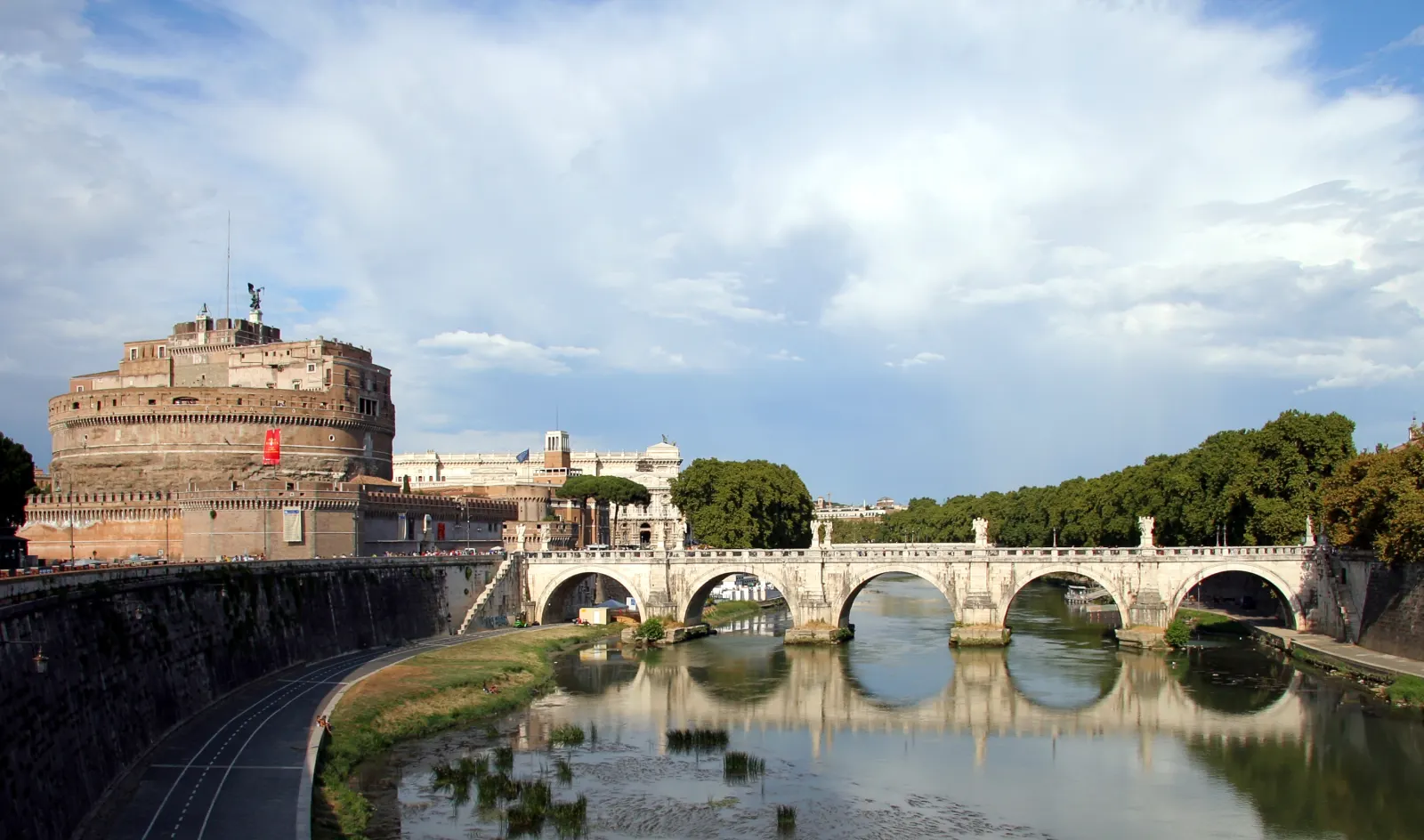
  9. 9Castel Sant'Angelo

    1–2 hours

    Prati

    A round fortress, first built as an emperor's tomb and later used by the popes as a castle and prison. The terrace at the top gives good views of St Peter's and the river.

  10. 10Trastevere

    half a day

    Trastevere

    An old neighbourhood across the river, with narrow streets, small churches and many restaurants. It is best in the evening for dinner. Weekend nights can be loud and very busy.

Rome by month

Average weather and our month score, from 10 years of climate data.

Weather by month and month scores for Rome
Month High / low Rain days Sunshine Score
January 12°C / 4°C 10 days (67 mm) 7.0 h/day 5.0/10
February 14°C / 5°C 9 days (73 mm) 8.3 h/day 6.4/10
March 16°C / 6°C 10 days (89 mm) 9.3 h/day 7.1/10
Best month: April 20°C / 9°C 9 days (60 mm) 10.9 h/day 8.1/10
Best month: May 23°C / 13°C 12 days (77 mm) 11.8 h/day 7.6/10
June 29°C / 18°C 6 days (34 mm) 13.3 h/day 7.3/10
July 33°C / 21°C 4 days (16 mm) 13.8 h/day 4.2/10
August 33°C / 21°C 5 days (30 mm) 12.7 h/day 4.3/10
Best month: September 27°C / 17°C 9 days (90 mm) 10.9 h/day 7.6/10
Best month: October 23°C / 13°C 11 days (105 mm) 8.8 h/day 7.8/10
November 17°C / 9°C 13 days (140 mm) 7.0 h/day 6.8/10
December 14°C / 5°C 10 days (94 mm) 6.9 h/day 5.6/10
  1. Jan

    High of 12°C and 9.7 rain days. Score 5, verdict ok: cold and often grey, but fine if you plan to spend time in museums.

  2. Feb

    High of 14°C and 8.7 rain days. Score 6.4, verdict good: still cool, but a little drier than January and fair for city walks.

  3. Mar

    High of 16°C, 10.4 rain days and 89 mm of rain. Score 7.1, verdict good: mild weather, but pack a jacket and an umbrella.

  4. Apr

    High of 20°C and 9.3 rain days. Score 8.1, the highest of the year: verdict best, with comfortable walking weather and 60 mm of rain.

  5. May

    High of 23°C, but 11.8 rain days. Score 7.6, verdict best: warm and pleasant, though you should expect some wet days.

  6. Jun

    High of 29°C and only 5.5 rain days. Score 7.3, verdict good: dry and sunny, but afternoons get hot for long sightseeing.

  7. Jul

    A bad time to go. Highs reach 33°C with 3.9 rain days. Score 4.2, the lowest of the year: the heat makes walking between sights hard.

  8. Aug

    Also a poor choice. High of 32.5°C and 4.8 rain days. Score 4.3: heat is the problem, so stay indoors at midday if you must go.

  9. Sep

    High of 27°C and 9.1 rain days. Score 7.6, verdict best: the summer heat eases, though rain rises to 90 mm.

  10. Oct

    High of 22.5°C and 11.2 rain days. Score 7.8, verdict best: mild and comfortable, but wetter, with 105 mm of rain.

  11. Nov

    The wettest month: 140 mm over 12.7 rain days. High of 17°C. Score 6.8, verdict good: mild, but bring rain gear and plan indoor options.

  12. Dec

    High of 14°C, 9.5 rain days and 94 mm of rain. Score 5.6, verdict ok: cool and damp, so it suits a museum-focused trip.

Climate averages 2015–2024 · Best time to visit Italy →

Where to stay in Rome

The best areas to base yourself and who each one suits.

Centro Storico (the Pantheon and Piazza Navona)

Good for first-timers, walkers

This is the old centre, with narrow lanes, piazzas and many major sights close together. You can walk to most places and come back to rest in the afternoon. It is the busiest and most touristy area, and some streets are loud until late.

Monti

Good for first-timers, couples, food lovers

A small, older district near the Colosseum and Roman Forum, with small shops, wine bars and a local feel. It is central and has a metro stop, so getting around is easy. Some streets are steep, and bars can be noisy at night.

Trastevere

Good for nightlife, atmosphere seekers

Cobbled streets, ivy-covered buildings and many trattorias and bars across the river from the centre. It feels lively in the evening and it is a short walk over the bridges to the old centre. It gets very crowded and noisy at night, and there is no metro line.

Prati

Good for families, quiet, Vatican visitors

A calm, orderly area with wide streets next to the Vatican. It has good local restaurants, shops and a metro line, and it is quieter at night than the centre. It has fewer historic sights of its own, and the evenings are less lively.

Testaccio

Good for food lovers, repeat visitors

A working-class district known for its covered market and traditional Roman cooking. It feels local rather than touristy and has a metro stop nearby. It is further from the main sights, so expect longer walks or public transport.

Getting to and around Rome

From the airport
Most flights land at Fiumicino. The Leonardo Express train runs direct to Termini station. Regional trains, airport buses and taxis are other options. Some budget flights use the smaller Ciampino airport, which is linked to the centre by bus.
Public transport
Rome has a small metro, plus many buses and trams. The metro skips most of the historic centre, so buses are often more useful there. Tip: validate your ticket when you board, or you risk a fine.
On foot
The centre is very walkable. The Pantheon, Trevi Fountain and Piazza Navona are close together in Centro Storico. The Colosseum and Roman Forum are both in Monti. Castel Sant'Angelo is near the Vatican.

Food to try in Rome

Carbonara

Pasta tossed with guanciale (cured pork cheek), egg yolk, pecorino romano cheese and black pepper. There is no cream. Romans order it in neighbourhood trattorias at lunch or dinner.

Cacio e pepe

A simple pasta, often tonnarelli, coated in a sauce of pecorino romano and black pepper. It is a trattoria staple across the city and a good test of a kitchen's skill.

Supplì

Fried balls of rice in tomato sauce with mozzarella inside. Locals eat them as a street snack or as a starter at pizzerias before the pizza arrives.

Carciofi alla giudia

Whole artichokes deep-fried until crisp, from the Roman Jewish kitchen. The best-known place to eat them is the old Jewish Ghetto, mainly in spring when artichokes are in season.

Pizza al taglio

Pizza baked in large rectangular trays, cut to the size you want and sold by weight. Romans buy it for a quick lunch or snack and eat it standing up.

Maritozzo

A soft sweet bun split open and filled with whipped cream. Locals eat it for breakfast with a coffee at the bar counter.

More of Italy

Italy travel guide →

Rome: frequently asked questions

What is the best month to visit Rome?

April is the best month to visit Rome, with a score of 8.1. October (7.8), May (7.6) and September (7.6) are also rated best. In April, highs reach 19.5°C and lows 8.9°C, which suits long days of walking. October is warmer, with highs of 22.5°C, but it gets 105 mm of rain over 11.2 rain days.

Is Rome good in August?

August is only an OK time for Rome, with a score of 4.3. It is hot: highs average 32.5°C and nights stay warm at 21.2°C. July is similar, with highs of 33.1°C and a score of 4.2. If you struggle in heat, choose May, June or September instead. Rain is rare in August, with just 4.8 rain days.

What is the rainiest month in Rome?

November is the rainiest month in Rome, with 140 mm of rain over 12.7 rain days. It also has only 7 sunshine hours. Even so, it still rates as good, with a score of 6.8, and highs of 17.2°C. Pack an umbrella and plan some indoor sights, such as the Vatican Museums or the Borghese Gallery.

Is Rome worth visiting in January?

January is an OK time for Rome, but not the best. It scores 5, with highs of 12.3°C and lows of 3.8°C. It has 9.7 rain days and 7 sunshine hours. Choose it if you are happy with cool weather. February is a little better, scoring 6.4, with highs of 14.3°C.

How long do the main sights in Rome take?

Plan for half a day at the Vatican Museums and Sistine Chapel, plus 1–2 hours for St Peter's Basilica. The Colosseum takes 1–2 hours. The Roman Forum and Palatine Hill take 2–3 hours, and both are in the same area. The Borghese Gallery needs 2 hours. Give Trastevere half a day. The Pantheon and Piazza Navona take 30–60 minutes each.