Käsknöpfle
This is a dish of small flour dumplings baked with alpine cheese and topped with fried onions. It is the national dish of Liechtenstein and served in restaurants across the country, often with a side of apple sauce.
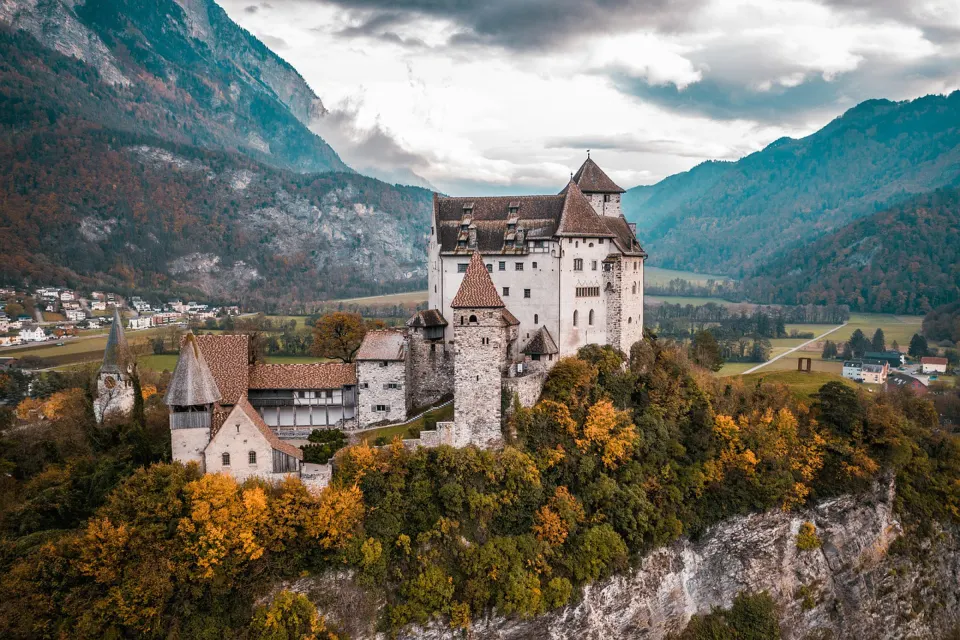
A tiny Alpine country made for short hikes and easy border-hopping
Photo: RandyJost / Pixabay
May, Sep
Top score of 7.2, with highs of 21°C, fewer rain days (14.2) and 9.1 hours of sun daily.
Jun, Jul, Aug, Oct
Jan, Feb, Mar, Nov, Dec
Liechtenstein covers just 160 square kilometres, so it suits travellers who want a quick, low-key Alpine stop rather than a long holiday. May and September bring mild weather for walking around Vaduz and into the hills. One honest limit: with a population of around 41,237, the country has few attractions on its own, so most visitors combine it with a trip through Switzerland or Austria.
Liechtenstein covers just 160 km2 and has only 41,237 people. You can get a sense of a whole country here without the scale of a typical trip, since even the capital, Vaduz, has just 5,668 residents.
Vaduz is small enough to explore on foot in a short visit, with no sprawling traffic or crowds to navigate. Its compact size makes it an easy stop if you're moving through Western Europe.
The best months to visit are May and September, which sit outside the peak summer heat and winter cold. These shoulder-season months tend to offer calmer, more comfortable conditions for walking around.
Liechtenstein uses German as its language and the Swiss franc as currency, the same setup as neighboring Switzerland. This makes it a straightforward add-on if you're already traveling through German-speaking Europe.
With a landlocked, 160 km2 footprint, Liechtenstein offers a rare chance to visit an entire sovereign country in a single day trip. It's one of the few places where crossing the whole nation is realistically possible.
Great for
Less ideal for
Averages for Vaduz.
In Vaduz, late spring to early autumn works best: May to October brings highs of 17-25°C and good sunshine, with September (20.6°C, 9.1 sun hours) and May (18.4°C) standing out. January and December are toughest, with highs near 6-8°C, lows down to -3.6°C, and the least sunshine of the year at 5.1-5.4 hours a day.
Vaduz · averages 2015–2024
This is a dish of small flour dumplings baked with alpine cheese and topped with fried onions. It is the national dish of Liechtenstein and served in restaurants across the country, often with a side of apple sauce.
A shared dish with neighbouring Switzerland, this is grated potato fried into a crisp cake. It appears as a side dish at lunch and dinner in Liechtenstein's inns.
This is a cornmeal dish fried in butter until golden and crumbly, often eaten with milk or coffee for breakfast. It is a traditional farmhouse food in the Rhine valley region that includes Liechtenstein.
A thick porridge made from oats, this is a traditional mountain food once eaten by farmers and shepherds in Liechtenstein's alpine pastures. It is less common today but still appears on some local menus.
Vineyards on the slopes near Vaduz and Balzers produce small amounts of wine, including Pinot Noir. Tastings and wine are offered at local cellars, especially in Vaduz where the prince's own vineyard is located.
This is a braided bread made with eggs and butter, traditionally eaten on Sunday mornings for breakfast with coffee. It is common across German-speaking Alpine countries, including Liechtenstein.
Yes. August scores well, with highs around 24.7°C and lows near 14.9°C in Vaduz. It is one of the wetter months, with 202 mm of rain over about 16 rain days, but the warmth and 10.5 hours of sun a day make it a solid summer choice.
September and May are the top-rated months. September has the highest score (7.2), with highs of 20.6°C, lows of 10.9°C, and only 14.2 rain days. May brings highs of 18.4°C but more rain, with 194 mm over 20.4 days, so September is the drier of the two.
No. December and January are the coldest months, with January highs of just 5.9°C and lows of -3.6°C. Both months also score lowest on the year's scale (1.4), mainly because of cold temperatures and low sun hours, around 5 hours a day.
Yes, rain is spread through the year. Vaduz sees rain on 13 to 20 days a month, with May the wettest for rain days (20.4) and August the wettest by volume (202 mm). October and February are the driest months by rainfall, with 128 mm and 112 mm.
Liechtenstein uses the Swiss franc and German is the official language. The country runs on 230 V electricity with plug types C and J, drives on the right, and the emergency number is 112.
Countries with a year of weather much like Liechtenstein.
Enter to search · Esc to close