Stroopwafel
This is a thin waffle with caramel syrup in the middle. Street vendors in Dutch markets often sell them warm, so the syrup is soft.
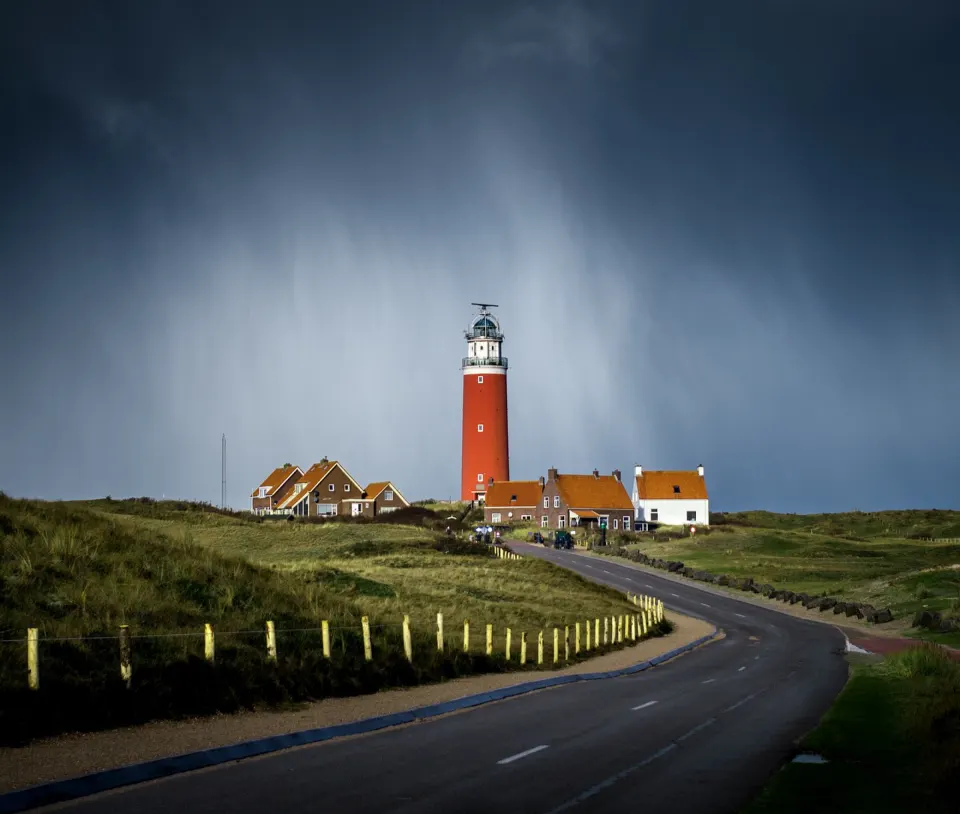
Flat, bike-friendly and easy to explore city to city
Photo: fabianjiskoot / Pixabay
Sep
Top score of 7.6, with mild highs near 19°C and only 12 rainy days, the fewest of any month.
May, Jun, Jul, Aug
Jan, Feb, Mar, Nov, Dec
The Netherlands suits travellers who like cycling, canals and cities you can cover on two wheels in a day. September is the best month to go, with calmer weather and fewer crowds than summer. The honest downside: the country is small and flat, so it offers little variety in landscape or terrain if you want mountains or wilderness.
The Netherlands covers just 41,850 km2, one of the smallest countries in Western Europe. Short distances mean you can base yourself in one city, like the capital Amsterdam, and still reach the rest of the country without long travel days.
September is the month best suited for a visit here. Summer crowds thin out while the weather still holds, making it a practical time to plan city walks or cycling routes.
Amsterdam, the capital, sits within easy reach of the rest of the country thanks to the Netherlands' small size. It works well as a single base for day trips rather than constant hotel changes.
Dutch is the main language and the whole country runs on UTC+1, so there's no internal time-zone confusion. With the euro as currency and driving on the right, trip planning stays straightforward for most European and many international visitors.
With a population of 18,153,271 packed into a small area, the Netherlands feels lived-in rather than empty. Towns and cities sit close together, so moving between them rarely eats up a whole day.
Great for
Less ideal for
Averages for Netherlands.
This climate data is for the Netherlands (Amsterdam-area averages). May to September bring the warmest, sunniest weather, with highs of 18–23°C and up to 11.6 hours of sun a day, and September stands out as the best overall with fewer rainy days. January and December are the toughest months, with highs near 6–8°C, over 14 rainy days each, and just 3–3.4 hours of sun a day.
Netherlands (country average) · averages 2015–2024
This is a thin waffle with caramel syrup in the middle. Street vendors in Dutch markets often sell them warm, so the syrup is soft.
Raw herring is a classic Dutch snack, often eaten with chopped onions and pickles. Food stalls across the country sell it from a cart, standing up.
These are small fried balls filled with a thick meat ragout. They are a common snack in Dutch bars, usually served with mustard.
This is mashed potato mixed with vegetables like kale or sauerkraut, often served with sausage. It is a hearty winter dish eaten at home or in traditional restaurants.
These are small, fluffy pancakes dusted with powdered sugar and topped with butter. They are sold at markets and fairs across the Netherlands.
This is bite-sized battered fish, similar to fish and chips. It is sold at coastal towns and fish stalls, often with a garlic or tartar sauce.
Yes. August scores 7.4 out of 10 and counts as a good month. Highs reach 22.6°C and lows sit near 14.4°C, with about 13 rain days and 83 mm of rain. There are 10.9 sun hours a day, so you get warm weather with a decent chance of dry stretches.
September is the top-rated month, scoring 7.6 and marked as the best time. Highs average 19.4°C and lows 11.8°C, with 12 rain days and 76 mm of rain. Sun hours drop slightly to 9 a day compared with summer, but the mix of mild temperatures and fewer rainy days makes it the strongest pick.
No, winter months score poorly. December scores 0.8 and January scores 0.9, both rated avoid. Highs stay around 6–7°C with lows near 2°C, and sun hours drop to 3 or 3.4 a day. Rain days stay high too, at 14.6 in December and 15.4 in January, so days are short, cool and often wet.
Rain is spread fairly evenly across the year rather than concentrated in one season. Rain days range from 12 in April and September to 15.4 in January, and monthly rainfall sits between 63 mm in April and 94 mm in July. This means some rain is likely whenever you visit, but no month is dramatically wetter than another.
Spring starts cool and warms up quickly. March averages a 10.2°C high and 3°C low, while May jumps to 17.8°C highs and 8.9°C lows. Rain days fall from 13.5 in March to 12.5 in May, and sun hours rise from 7.3 to 11.5, making May a much brighter, warmer month than March.
Yes, both months bring summer warmth. June highs average 21.2°C with lows of 12.6°C, and July highs reach 22°C with lows of 14.1°C. July is slightly wetter, with 94 mm of rain over 15.3 days, compared with 79 mm over 12.8 days in June, but both get around 11.5 sun hours a day.
Countries with a year of weather much like Netherlands.
Enter to search · Esc to close