Skip to content
wheretotravel.info
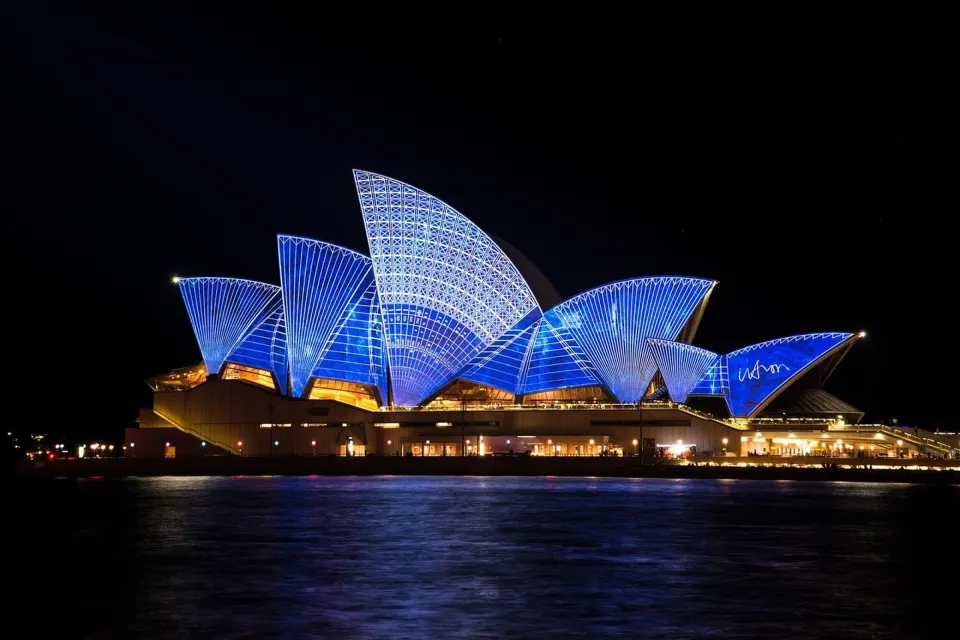
Sydney Opera House lit blue at night

Sydney travel guide

What to see, where to stay and the best time to visit Sydney, Australia.

Best: Apr, May, Aug, Sep

Photo: pattyjansen / Pixabay

Country
Australia
Currency
AUD

About Sydney

Sydney is a coastal city in Australia with 5,450,496 people. Most first visits centre on the harbour. The Sydney Opera House, the Harbour Bridge and The Rocks sit close together around Circular Quay. Beaches are a big part of a trip here too, and Bondi and Manly each need half a day. The best months to go are April, May, August and September.

How many days do you need in Sydney?

We have no set number of days for Sydney. The harbour sights take 1–3 hours each. Bondi, Manly and Taronga Zoo each need half a day. Plan several full days to see the harbour and at least one beach without rushing.

Top attractions in Sydney

  1. 1Sydney Opera House

    1–2 hours

    Bennelong Point, Circular Quay

    Sydney's best-known building sits on a point in the harbour. You can walk around the outside for free, join a guided tour of the inside, or book a show. It looks best from the harbour or from the path towards the Botanic Garden.

  2. 2Sydney Harbour Bridge

    1–3 hours

    The Rocks / Milsons Point

    You can walk across the bridge on the footpath for good views of the Opera House and the harbour. For a higher view, climb inside the Pylon Lookout or book a guided climb over the arch. Guided climbs are expensive, so the free walk is a good choice on a budget.

  3. 3Royal Botanic Garden Sydney

    1–2 hours

    Sydney CBD

    A large, free garden on the harbour next to the Opera House. Walk out to Mrs Macquarie's Chair for a classic view of the Opera House with the bridge behind it. It is an easy break from the city streets.

  4. 4The Rocks

    2–3 hours

    The Rocks

    This is the oldest part of the city, with narrow lanes, sandstone buildings and old pubs. It has a weekend market and the Museum of Contemporary Art on the waterfront. It gets busy with tour groups, so go early or in the evening for a quieter walk.

  5. 5Bondi Beach and Bondi to Coogee Coastal Walk

    Half a day

    Bondi, Eastern Suburbs

    Bondi is Sydney's most famous beach, and the cliff-top walk south to Coogee passes several smaller beaches and ocean pools. The beach is very crowded on hot weekends in summer, so go on a weekday if you can. Only swim between the red and yellow flags, as the currents can be strong.

  6. 6Manly Ferry and Manly Beach

    Half a day

    Manly

    The public ferry from Circular Quay to Manly is a cheap way to see the harbour, the Opera House and the bridge from the water. Manly has a long surf beach and a quieter walk to Shelly Beach. The ferry is crowded on sunny weekends.

  7. 7Taronga Zoo Sydney

    Half a day

    Mosman

    A large zoo on a hillside across the harbour, with Australian animals such as koalas and kangaroos and views back to the city. Take the ferry from Circular Quay. The site is steep, so wear comfortable shoes.

  8. 8Art Gallery of New South Wales

    2–3 hours

    The Domain

    The main art museum in the city, with Australian, Aboriginal and Torres Strait Islander, European and Asian art. It has two buildings linked by a garden path, and general entry is free. It is a good choice on a rainy or very hot day.

  9. 9Darling Harbour

    2–3 hours

    Darling Harbour

    A waterfront area on the west side of the city centre with restaurants, SEA LIFE Sydney Aquarium and the Australian National Maritime Museum. Families will find the most to do here. The restaurants are aimed at tourists, so you can often eat better and cheaper nearby.

  10. 10Queen Victoria Building

    1 hour

    Sydney CBD

    A large Victorian-era shopping arcade with a glass roof, old tiled floors and stained-glass windows. You don't need to shop to enjoy the building. It is easy to combine with a walk along George Street to Circular Quay.
Sydney by month

Average weather and our month score, from 10 years of climate data.

Weather by month and month scores for Sydney
Month High / low Rain days Sunshine Sea temp Score
January 27°C / 20°C 13 days (99 mm) 10.8 h/day 22°C 7.2/10
February 26°C / 19°C 13 days (107 mm) 10.6 h/day 23°C 7.8/10
March 25°C / 18°C 15 days (151 mm) 9.5 h/day 23°C 7.2/10
Best month: April 22°C / 15°C 10 days (96 mm) 9.4 h/day 22°C 8.0/10
Best month: May 20°C / 11°C 8 days (62 mm) 8.7 h/day 21°C 8.4/10
June 17°C / 9°C 10 days (77 mm) 8.2 h/day 20°C 7.4/10
July 17°C / 8°C 8 days (64 mm) 8.9 h/day 18°C 7.8/10
Best month: August 18°C / 9°C 6 days (49 mm) 9.2 h/day 18°C 8.8/10
Best month: September 21°C / 11°C 8 days (49 mm) 10.4 h/day 19°C 8.4/10
October 23°C / 14°C 11 days (75 mm) 10.4 h/day 19°C 7.7/10
November 24°C / 16°C 12 days (81 mm) 11.0 h/day 20°C 7.7/10
December 26°C / 18°C 10 days (66 mm) 11.6 h/day 21°C 8.0/10
  1. Jan

    Peak summer: highs of 27°C, 13 rain days and sea at 22.3°C. Warm and busy, with a score of 7.2 rated good.

  2. Feb

    Still hot at 26°C with 13 rain days and the warmest sea of the year, 23.3°C. Scores 7.8, the best rating.

  3. Mar

    Highs drop to 24.7°C but rain days rise to 14.9, the wettest month at 151mm. Still rated good at 7.2.

  4. Apr

    Autumn brings milder highs of 22.4°C and fewer rain days, 9.9. A top-rated month, scoring 8.

  5. May

    Cooler at 19.5°C with just 8.1 rain days and 62mm of rain. The highest score of the year, 8.4, best rated.

  6. Jun

    Winter begins: highs of 16.8°C, lows down to 9.1°C, 10 rain days. Rated good at 7.4.

  7. Jul

    Coolest highs of the year at 16.8°C and the coldest sea, 17.9°C, but only 7.8 rain days. Still scores 7.8, best rated.

  8. Aug

    Driest month with just 6.1 rain days and 49mm rain, though highs stay cool at 18.1°C. Top score of 8.8, best rated.

  9. Sep

    Spring warms things up to 20.5°C with 8 rain days and rising sun hours. Rated best at 8.4.

  10. Oct

    Highs reach 22.5°C but rain days climb to 11.4. Still a strong month, scoring 7.7, best rated.

  11. Nov

    Warming toward summer, 23.9°C highs and 11.7 rain days. Rated best with a score of 7.7.

  12. Dec

    Summer returns with 26°C highs, fewer rain days at 9.8, and sea warming to 21.1°C. Scores 8, best rated.

Climate averages 2015–2024 · Best time to visit Australia →

Where to stay in Sydney

The best areas to base yourself and who each one suits.

Circular Quay and The Rocks

Good for first-timers, sightseeing

This is the old harbour-front core, with the Opera House, Harbour Bridge and ferry wharves all within walking distance. Staying here makes a short first trip easy, because ferries and trains leave from the quay. The drawback is that it is busy with tour groups by day and fairly quiet with few everyday shops at night.

Sydney CBD

Good for first-timers, business, transport

The central business district has the widest choice of places to stay and good train, light rail and bus links in all directions. It puts you between the harbour, Darling Harbour and the inner suburbs. Office streets can feel empty and flat on evenings and weekends.

Surry Hills

Good for food lovers, couples, nightlife

A former working-class area of terrace houses, now known for cafes, small bars and restaurants. It is a short walk or ride from Central Station and the city. Streets have some hills, and bars can make parts of it noisy late at night.

Potts Point and Darlinghurst

Good for nightlife, LGBTQ+ travellers, walkers

Leafy streets of old apartment blocks, with good bars and restaurants and Kings Cross station close by. You can walk down to the Botanic Garden and the harbour. The Kings Cross strip still draws late-night crowds, so choose a side street if you want to sleep well.

Bondi

Good for beach lovers, longer stays

Sydney's best-known beach suburb, with surf, the coastal walk to Coogee and a relaxed, young crowd. It suits travellers who care more about the ocean than city sights. There is no train station at the beach itself, so getting into the city means a bus or a bus-and-train trip.

Manly

Good for families, beach lovers, quiet

A beach town on the north side of the harbour, linked to Circular Quay by ferry. It has a calm, holiday feel, a walkable centre and both ocean and harbour beaches. The drawback is distance: every trip into the city depends on the ferry, and evenings out in town mean watching the last sailings.

Getting to and around Sydney

From the airport
The fact pack has no route data for Sydney Airport (SYD) to the centre. Visitors usually take the train on the Airport Link, a taxi, or a rideshare into the city; check current options on arrival since no times or prices are given here.
Public transport
Sydney's public transport includes trains, buses, light rail (tram), and ferries, which are useful for reaching Manly or other harbour spots. A practical tip: an Opal card covers trains, buses, ferries, and light rail, making transfers easier for visitors.
On foot
Circular Quay, The Rocks, and Sydney CBD sit close together and are easy to explore on foot. The Sydney Opera House, Harbour Bridge, Royal Botanic Garden, and Queen Victoria Building are all within walking distance of each other in this central cluster.

Typical journey times and fares from the airport and other cities.

Route By Time Price
Sydney → Melbourne NSW TrainLink XPT runs twice daily (day and overnight) from Sydney Central to Melbourne Southern Cross via Albury. The trip takes about 11–12 hours. The $18 'online saver' is the lowest advertised fare. Seats must be reserved before travel. train 11 h 18 AUD ↗
Sydney → Melbourne Firefly Express runs a daily overnight coach from Sydney Central (Pitt St bays) to Melbourne Southern Cross along the Hume Highway. It takes about 12 hours. Fares start at $60 one way. Free WiFi, USB charging and a toilet on board. bus 12 h 60 AUD ↗
Sydney → Brisbane NSW TrainLink XPT, about 14 hours. One daily daytime train runs between Brisbane Roma Street and Sydney Central. The other XPT ends at Casino, with a coach link to Brisbane. Check fares at transportnsw.info. train 14 h – ↗

Food to try in Sydney

Sydney rock oysters

These oysters grow in the estuaries around Sydney and are known for a creamy, briny taste. Locals eat them raw with lemon at harbourside seafood restaurants and fish markets.

Fish and chips at the harbour

Fresh fish, often snapper or flathead, is battered and fried, then served with chips. People often eat this casually by the water, especially around Circular Quay or Manly.

Meat pie

A pastry filled with minced meat and gravy, eaten as a quick lunch or snack. It is a common takeaway food across cafes and bakeries in the city.

Lamingtons

Sponge cake squares coated in chocolate and coconut, a classic Australian treat. They show up at cafes, bakeries, and school or community fundraisers.

Flat white coffee

A milk-based coffee drink that Australians, including Sydneysiders, claim as their own. It is a standard order at cafes throughout the city, any time of day.

Barbecued prawns

Prawns grilled or barbecued, often eaten outdoors at beachside gatherings or family barbecues. They reflect Sydney's strong seafood and outdoor eating culture.

More of Australia

Australia travel guide →

Sydney: frequently asked questions

What is the best month to visit Sydney?

August is the best month to visit Sydney. It has the highest score of the year at 8.8. It also has the fewest rain days, with 6.1 days and 49 mm of rain. Days are cool, with highs of 18.1°C and lows of 8.8°C. May and September are close behind, both scoring 8.4, and April scores 8.

Can you swim in Sydney in July or August?

You can, but the sea is cold for most people. Sea temperatures fall to 17.9°C in July and 18°C in August, with air highs of only about 17°C to 18°C. For warmer swimming, go in February, when the sea reaches 23.3°C, or January at 22.3°C. The sea stays above 20°C from November to May.

What is the rainiest month in Sydney?

March is the wettest month in Sydney. It gets 151 mm of rain over 14.9 rain days, the most of any month. It still scores 7.2 and counts as a good month, because it is warm, with highs of 24.7°C and a sea temperature of 22.8°C. Pack a light rain jacket and plan indoor options.

Is Sydney too hot in January?

No, Sydney is warm but not extreme in January. The average high is 26.8°C and the low is 19.7°C, with 10.8 hours of sun a day and a sea temperature of 22.3°C. The downside is rain: expect about 13.4 rain days and 99 mm. January scores 7.2, which is good but one of the lower scores of the year.

How many days do I need in Sydney?

Plan several days rather than a quick stop. The Bondi to Coogee Coastal Walk, the Manly Ferry and Manly Beach, and Taronga Zoo each take half a day. The Rocks, Darling Harbour and the Art Gallery of New South Wales need 2–3 hours each. The Opera House and Royal Botanic Garden take 1–2 hours each.