Skip to content
wheretotravel.info
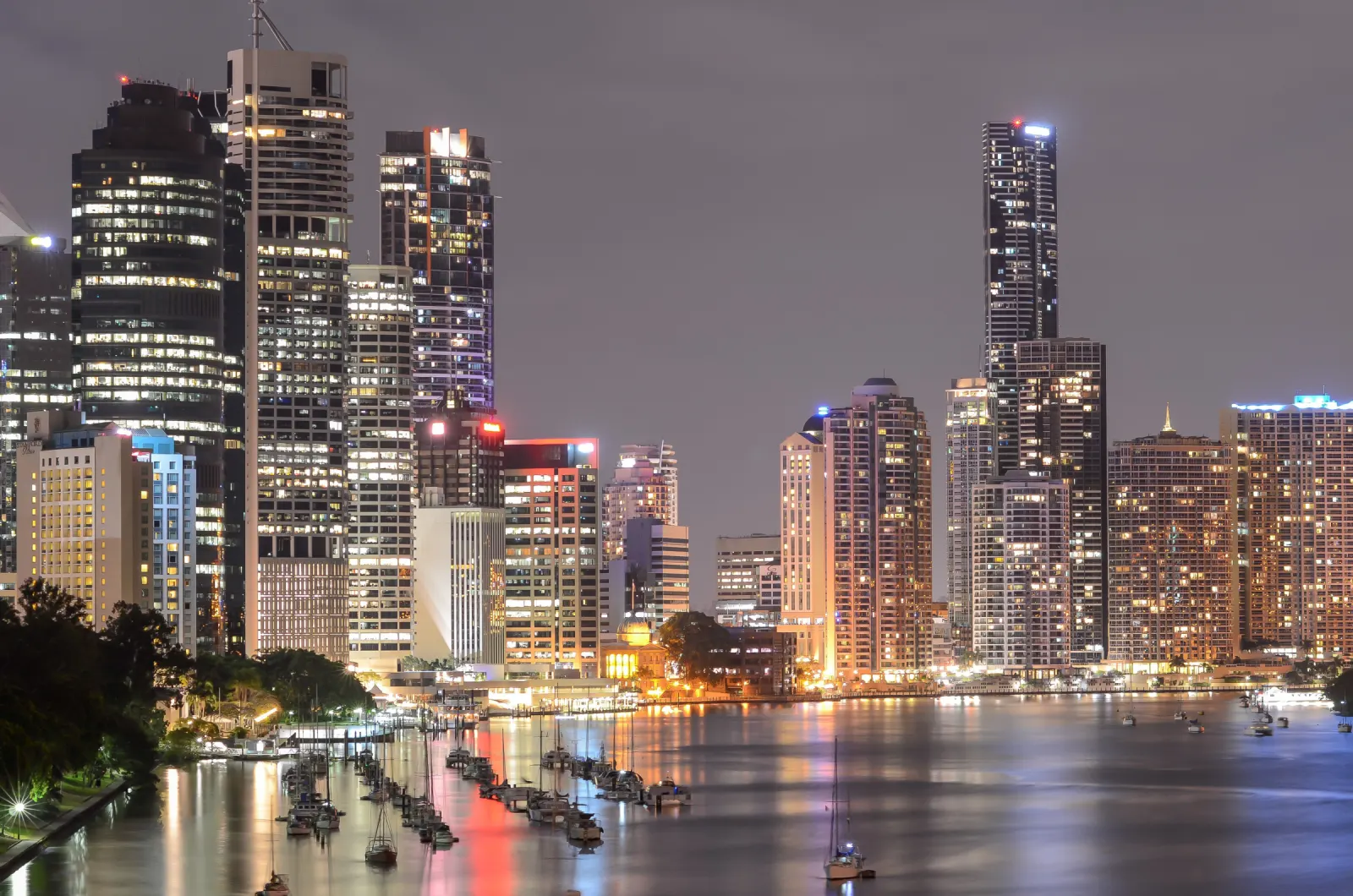
Brisbane city skyline reflected in river at night

Brisbane travel guide

What to see, where to stay and the best time to visit Brisbane, Australia.

Best: Jun, Jul, Aug, Sep

Photo: Lee Burn / Pexels

Country
Australia
Currency
AUD

About Brisbane

Brisbane is a coastal Australian city built around its river, with 2,706,966 people. It's a relaxed base for culture, parks and river life rather than big icon sights. South Bank Parklands, museums and galleries, Mount Coot-tha's lookout and gardens, and a ride on the CityCat ferry give you a feel for the place. The best months to visit are June, July, August and September, when conditions are most comfortable for walking and outdoor time.

How many days do you need in Brisbane?

Two to three days cover the main attractions at South Bank, Mount Coot-tha and the river, with time left for a neighbourhood like West End or Fortitude Valley.

Top attractions in Brisbane

  1. 1South Bank Parklands

    half a day

    South Bank

    A long riverside park across the river from the city centre, with gardens, walking paths, cafes and Streets Beach, a man-made lagoon with a sandy shore. It is the easiest place to spend an unplanned afternoon, and it links to the city's main museums and galleries. Weekends and school holidays get very crowded around the lagoon.

  2. 2Queensland Art Gallery | Gallery of Modern Art (QAGOMA)

    2–4 hours

    South Bank

    Two large art galleries in the Cultural Centre. The Queensland Art Gallery covers Australian, Indigenous and international art, and the Gallery of Modern Art next door shows contemporary work. The buildings are air-conditioned, which makes them a good choice on a hot or wet day.

  3. 3Queensland Museum

    2–3 hours

    South Bank

    The state museum of natural history and culture, with dinosaur fossils, Queensland wildlife and displays on First Nations history. It works well for families and sits right next to the art galleries.

  4. 4Lone Pine Koala Sanctuary

    half a day

    Fig Tree Pocket

    One of the best-known wildlife parks in Australia, focused on koalas but also home to kangaroos, wombats, platypus and native birds. You can walk among kangaroos in an open reserve. It is outside the city centre, so allow time to get there by bus, car or the river cruise.

  5. 5Mount Coot-tha Summit Lookout

    1–2 hours

    Mount Coot-tha

    The main viewpoint over Brisbane, looking across the city, the river and on clear days out towards Moreton Bay. Bushwalking tracks start nearby if you want to walk up. Late afternoon gives the best light, but go on a clear day or the view is not worth the trip.

  6. 6Brisbane Botanic Gardens Mount Coot-tha

    2–3 hours

    Mount Coot-tha

    Large botanic gardens at the foot of Mount Coot-tha, with themed areas such as a tropical dome, a Japanese garden and Australian native plants. It is quieter than the city parks and pairs easily with the lookout on the same trip.

  7. 7CityCat ferry

    1–2 hours

    Brisbane River

    The fast river ferries that run up and down the Brisbane River are public transport, but they also give the best view of the city from the water. Ride a long stretch, for example between the University of Queensland and Northshore Hamilton, and hop off at South Bank, New Farm or the city on the way.

  8. 8Kangaroo Point Cliffs

    1–2 hours

    Kangaroo Point

    Cliffs on the river bank facing the city centre, with a park and walkway along the top and rock climbing and abseiling on the cliff face. The view of the skyline is very good at sunset and after dark. Avoid the middle of the day in summer, as there is little shade on the top.

  9. 9Howard Smith Wharves

    2–3 hours

    Brisbane CBD (below the Story Bridge)

    Old riverside wharves under the Story Bridge, now turned into a place for restaurants, bars and a brewery with river views. It is mainly an evening spot for food and drinks, and you can reach it by CityCat or on foot along the river walk.

  10. 10City Botanic Gardens

    1–2 hours

    Brisbane CBD

    Brisbane's original gardens, on a bend of the river next to the city centre and Queensland Parliament House. Shady paths, big old trees and the riverside walk make it a calm break from the shopping streets. It connects to the Goodwill Bridge for an easy walk across to South Bank.
Brisbane by month

Average weather and our month score, from 10 years of climate data.

Weather by month and month scores for Brisbane
Month High / low Rain days Sunshine Sea temp Score
January 29°C / 21°C 15 days (131 mm) 11.4 h/day 27°C 4.3/10
February 29°C / 21°C 13 days (177 mm) 10.3 h/day 28°C 4.8/10
March 28°C / 20°C 16 days (149 mm) 10.0 h/day 26°C 4.9/10
April 26°C / 17°C 8 days (59 mm) 10.2 h/day 24°C 8.3/10
May 23°C / 14°C 7 days (68 mm) 9.2 h/day 21°C 8.6/10
Best month: June 21°C / 11°C 7 days (43 mm) 9.0 h/day 18°C 8.7/10
Best month: July 21°C / 10°C 6 days (38 mm) 8.9 h/day 17°C 8.9/10
Best month: August 23°C / 11°C 5 days (31 mm) 10.0 h/day 18°C 9.0/10
Best month: September 25°C / 13°C 6 days (48 mm) 10.7 h/day 21°C 8.7/10
October 26°C / 16°C 11 days (113 mm) 10.7 h/day 24°C 7.7/10
November 28°C / 18°C 11 days (101 mm) 11.4 h/day 25°C 7.0/10
December 29°C / 20°C 13 days (117 mm) 11.7 h/day 28°C 4.9/10
  1. Jan

    Highs reach 29.4°C with 15.2 rain days, Brisbane's wettest-feeling stretch; muggy heat gives this month just an ok score of 4.3.

  2. Feb

    Still hot at 29.1°C with 177mm of rain over 13.1 days, the highest monthly rainfall total; scores a modest 4.8, rated ok.

  3. Mar

    Warm at 28.1°C but 15.8 rain days, the most of any month, keep conditions humid and unsettled; verdict stays ok at 4.9.

  4. Apr

    Rain drops sharply to 8.3 days and highs ease to 25.6°C, making this the start of the best run of the year, scoring 8.3.

  5. May

    Mild at 23.2°C with only 7 rain days and 68mm, comfortable dry-season conditions push the score up to 8.6, rated best.

  6. Jun

    Cooler at 20.9°C with just 6.5 rain days, sea temp drops to 18.1°C; dry, sunny weather earns an 8.7 best score.

  7. Jul

    Brisbane's driest month with 5.5 rain days and 38mm rain, highs of 20.7°C; crisp conditions bring the top-tier 8.9 score.

  8. Aug

    Rain stays low at 5.2 days and 31mm, warming slightly to 22.6°C; this is the highest-scoring month overall at 9.0, best.

  9. Sep

    Highs climb to 24.7°C with 6.4 rain days, sunshine rises to 10.7 hours; still firmly in the best bracket at 8.7.

  10. Oct

    Warmer at 26.1°C and wetter, 11 rain days and 113mm, as the wet season builds; score eases to 7.7, still rated best.

  11. Nov

    Heat returns to 27.9°C with 10.5 rain days; humidity builds ahead of summer storms, dropping the verdict to good at 7.0.

  12. Dec

    Hot and humid at 29.1°C with 117mm of rain over 12.6 days; summer storm season brings the score back down to 4.9, ok.

Climate averages 2015–2024 · Best time to visit Australia →

Where to stay in Brisbane

The best areas to base yourself and who each one suits.

South Bank

Good for first-timers, families, culture lovers

Just across the river from the city, South Bank has the riverside parklands, a free man-made lagoon beach, and the state museum, gallery and performing arts centre. You can walk to the CBD over the pedestrian bridges in minutes. It gets crowded on weekends and during events, and the choice of places to stay is smaller than in the city.

Fortitude Valley

Good for nightlife, live music, younger travellers

The Valley is Brisbane's main area for bars, clubs and live music, with Chinatown and plenty of late-night food. It has its own train station and is a short trip from the CBD. It is loud on Friday and Saturday nights and can feel rowdy late, so light sleepers should look elsewhere.

West End

Good for independent travellers, foodies, budget-minded

West End has a relaxed, alternative feel, with independent shops, bars, small music venues and a Saturday market. It is next to South Bank, so the city and cultural sights are within walking distance. Public transport is mostly by bus, and some streets are hilly and busy with traffic.

Kangaroo Point

Good for views, walkers, active travellers

This peninsula faces the CBD across the river and is known for its cliffs, which are popular for climbing and have some of the best city views. Ferries and the Kangaroo Point Bridge link it to the city. There are few shops and restaurants of its own, so you will often head elsewhere to eat out.

Getting to and around Brisbane

From the airport
The fact pack has no direct airport route data for Brisbane, so no times or prices can be given here. Visitors usually take the Airtrain rail link, a taxi, or a rideshare from the airport into the city centre.
Public transport
Brisbane has buses, the CityCat ferry on the Brisbane River, and a light rail-free CBD, but no metro or tram network. The CityCat is a practical way to see riverside attractions like South Bank and Howard Smith Wharves while getting from A to B.
On foot
South Bank is walkable, with South Bank Parklands, QAGOMA, and the Queensland Museum within a short walk of each other. Kangaroo Point and the City Botanic Gardens sit close across the river, reachable by a pedestrian bridge or ferry.

Typical journey times and fares from the airport and other cities.

Route By Time Price
Sydney → Brisbane NSW TrainLink XPT, about 14 hours. One daily daytime train runs between Brisbane Roma Street and Sydney Central. The other XPT ends at Casino, with a coach link to Brisbane. Check fares at transportnsw.info. train 14 h – ↗
Brisbane → Cairns Queensland Rail's Spirit of Queensland tilt train runs along the coast, 1,681 km in about 25 hours, with seats and RailBed options. Sources disagree on frequency (4 or 5 trains a week). One guide lists Brisbane departures Mon/Wed/Fri/Sat at 3:45pm. Check the Queensland Rail timetable for fares. train 24 h 55 min – ↗

Food to try in Brisbane

Moreton Bay bugs

This small, sweet shellfish comes from the waters off the Queensland coast near Brisbane. Locals order it grilled or pan-fried at seafood restaurants along the Brisbane River or at coastal towns nearby.

Barramundi

This flaky white fish is a staple on Brisbane menus, often grilled or battered. It's caught in Queensland's rivers and coastal waters and served at casual pubs and upscale restaurants alike.

Queensland mud crab

Mud crab from the mangroves around Moreton Bay is a prized local dish. Diners usually eat it whole, cracked open at the table, with a simple chilli or garlic sauce at seafood spots across the city.

Macadamia nuts in desserts

Queensland grows most of Australia's macadamia nuts, and Brisbane bakeries use them in cakes, tarts, and ice cream. They show up as a sweet treat after a meal or with coffee.

Tropical fruit platters

Thanks to the subtropical climate, mangoes, pineapples, and papayas grow locally. Brisbane cafes and markets serve fresh fruit platters, especially popular in the warmer months.

More of Australia

Australia travel guide →

Brisbane: frequently asked questions

Is Brisbane good to visit in August?

Yes. August is Brisbane's top-rated month, with a score of 9 out of 10. Days reach a high of 22.6°C and low of 11.1°C, with only 5.2 rain days and 31mm of rain. Sun hours sit at 10 a day, making it a dry, mild time to explore the city on foot.

When is the best time to visit Brisbane?

The best months are June, July, August and September, all rated 'best' with scores between 8.7 and 9. These months have the lowest rainfall of the year, ranging from 31mm to 48mm, and rain days between 5.2 and 6.5. Highs stay comfortable, from 20.7°C to 24.7°C, which suits walking and outdoor sightseeing.

Is Brisbane hot in January?

Yes. January is Brisbane's hottest month, with a high of 29.4°C and a low of 21°C. It also brings 15.2 rain days and 131mm of rain, plus the highest sea temperature of the year at 27.4°C. The combination of heat and frequent rain gives January a lower score of 4.3, rated 'ok' rather than 'best'.

How many days do I need in Brisbane?

Three to four days covers the main sights. South Bank Parklands and the Queensland Art Gallery or Museum each take half a day to 4 hours, Lone Pine Koala Sanctuary needs half a day, and spots like Kangaroo Point Cliffs, Mount Coot-tha Summit Lookout and the CityCat ferry each take 1 to 3 hours.

Is Brisbane rainy in February?

February is the wettest month by rainfall, with 177mm of rain, even though it has fewer rain days (13.1) than March (15.8). Highs average 29.1°C and sun hours drop to 10.3 a day. This mix of heat and heavy rain gives February a score of 4.8, rated 'ok'.