Skip to content
wheretotravel.info
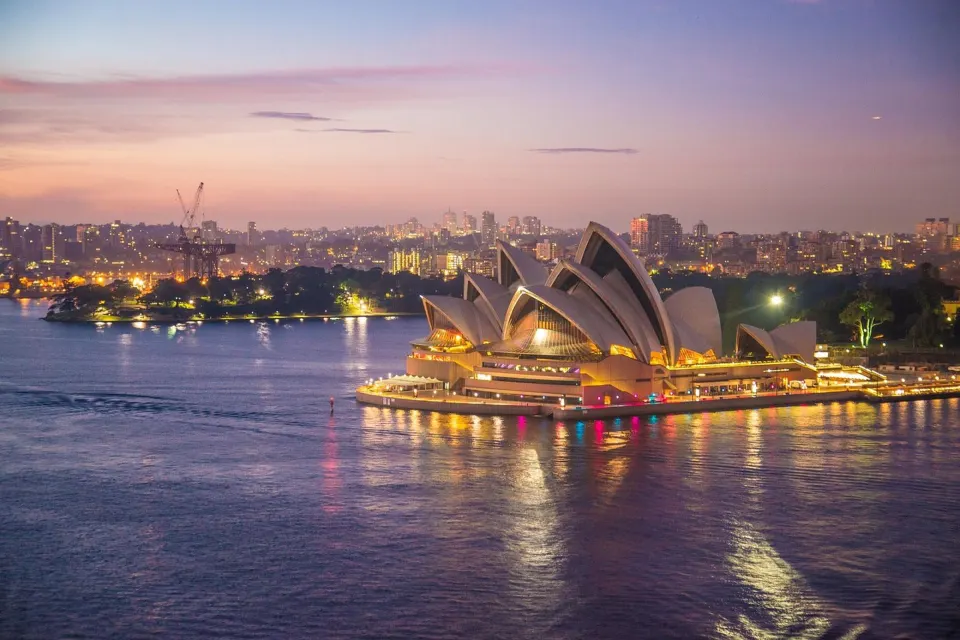
Sydney Opera House at dusk with skyline

Australia travel guide

Coastal cities, long road trips and a vast inland, best from December to March

Best: Apr, May, Sep, Oct

Photo: pattyjansen / Pixabay

Capital
Canberra
Language
English
Currency
Australian dollar (AUD)
Time zone
UTC+05:00, UTC+06:30 +6
Plugs
Type I · 230 V
Driving
On the left
Emergency
000

Why visit Australia

Australia suits independent travellers who want city breaks by the sea, long road trips and time outdoors. Sydney, Melbourne, Brisbane, Perth, Adelaide and Hobart all sit on the coast, while Alice Springs is the main inland stop. The best months are December to March, and Adelaide stays good into April. The honest limit is size. Distances between cities are long, so pick one or two regions rather than trying to see it all.

  • Space on a continental scale

    Australia covers 7692024 km² but has only 27921150 people. Outside the big cities you can drive for hours with few others around. Traffic keeps left, so plan your road trips with that in mind.

  • Two large coastal cities

    Sydney (population 5450496) and Melbourne (5350705) are the country's biggest cities, and both sit on the coast. Together they make an easy first trip. You get city life and the sea in one place.

  • Summer is the best season

    The best months are December, January, February and March. This is the southern summer. Plan around these months and book early, because this is when conditions suit most trips.

  • Hobart and Adelaide in the south

    Hobart (population 197451) is at its best from December to March. Adelaide (1387290) has a slightly longer window, from December into April. That makes Adelaide a good choice if you travel later in the season.

  • From tropical coast to inland town

    Cairns (population 146778) sits on the coast in the north. Alice Springs (31120) is the only city on this list away from the sea. Visiting both shows how varied the country is, but expect long distances between them.

Is Australia right for you?

Great for

  • Summer beach trips December to March, when Adelaide's sea is 22–23°C and highs reach 26–28°C
  • Travellers who want dry, sunny days: Adelaide has about 3–4 rain days in February and March
  • Long days outdoors, with about 12 sun hours in December and January
  • Coastal city breaks: all 7 largest cities, from Sydney to Cairns, sit on the coast
  • English speakers who want a road trip without a language barrier

Less ideal for

  • Winter beach trips: in July Adelaide's sea drops to 12.6°C and highs reach only 13.9°C
  • Travellers who dislike rain: Adelaide has 12–13 rain days a month from June to August
  • Short trips that try to cover a lot: the country covers 7692024 km²
  • Drivers not used to driving on the left side of the road

Australia right now: September

7.8/10
Avg high
21°C
Avg low
11°C
Rain days
8
Sea
19°C

Averages for Sydney.

Weather by month

The chart shows Adelaide (2015–2024), where February and March are best, with highs of 25–27°C, just 18 mm of rain and only 3 to 4 rain days. Avoid June to August if you want warm weather, because highs drop to 14–15°C and each month brings 83–87 mm of rain over up to 13 rain days.

Average highs and lows in Sydney by month January: high 27°C, low 20°C , 13 rain days . February: high 26°C, low 19°C , 13 rain days . March: high 25°C, low 18°C , 15 rain days . April: high 22°C, low 15°C , 10 rain days . May: high 20°C, low 11°C , 8 rain days . June: high 17°C, low 9°C , 10 rain days . July: high 17°C, low 8°C , 8 rain days . August: high 18°C, low 9°C , 6 rain days . September: high 21°C, low 11°C , 8 rain days . October: high 23°C, low 14°C , 11 rain days . November: high 24°C, low 16°C , 12 rain days . December: high 26°C, low 18°C , 10 rain days . 27°C 20°C JAN 13d 26°C 19°C FEB 13d 25°C 18°C MAR 15d 22°C 15°C APR 10d 20°C 11°C MAY 8d 17°C 9°C JUN 10d 17°C 8°C JUL 8d 18°C 9°C AUG 6d 21°C 11°C SEP 8d 23°C 14°C OCT 11d 24°C 16°C NOV 12d 26°C 18°C DEC 10d
Best months Other months (low–high) Nd = rain days

Sydney · averages 2015–2024

Best time to visit Australia: month-by-month weather →

Australia's climate regions

The weather varies across the country; each region has its own best months.

  • Adelaide and South Australia

    Adelaide

    Warm, dry summers with January highs near 28°C, and cool winters with July highs around 14°C. Rain falls on about 97 days a year. Go from December to April, especially February and March.

    Best: Feb, Mar, Apr, Dec

  • Tasmania (Hobart)

    Hobart

    Cooler and wetter, with January highs near 22°C, July highs around 11°C and about 115 rain days a year. Visit in December to March. July is chilly, so pack warm layers if you go then.

    Best: Jan, Feb, Mar, Dec

Where to go in Australia

City guides with their own best months and weather.

Sample itineraries

7 days

Sydney and Melbourne: a first week

  1. Day 1–4

    Sydney

    Start in Australia's biggest city. Spend your first days getting over jet lag with easy walks along the waterfront, then use the rest of your time for beaches and city neighbourhoods.

  2. Day 5–7

    Melbourne

    Finish in Melbourne, the second-biggest city. It is also coastal, but it suits slower days of cafés, markets, museums and walking the city centre. Fly home from here.

10 days

Melbourne, Hobart and Adelaide in the south

  1. Day 1–3

    Melbourne

    Begin in Melbourne and settle in with food, markets and city walks. For this southern route, aim for December, February or March. These months appear on the best-months lists for both Hobart and Adelaide.

  2. Day 4–6

    Hobart

    Cross to Hobart in Tasmania, a small coastal city of about 197,451 people. Use it as a quiet base for the waterfront and day trips into the countryside. Pack warm layers for cooler evenings.

  3. Day 7–10

    Adelaide

    End in Adelaide, a calmer coastal city than Sydney or Melbourne. Mix beach time with food and wine. Avoid the hottest weeks: its best months are February, March, April and December.

Where to stay

One good base in each main city and who it suits.

Norwood

Adelaide

Good for food lovers, return visitors

Just east of the city, Norwood centres on The Parade, a long street of restaurants, cafes, pubs and shops used mostly by locals. It feels like everyday Adelaide rather than a tourist area. There is no tram, so you rely on buses or a car to reach the centre and the beach.

Food to try in Australia

Meat pie

A small pastry pie filled with minced beef and gravy, often topped with tomato sauce. Australians eat it as a quick lunch from bakeries and service stations, and at football matches.

Vegemite on toast

A dark, salty yeast spread eaten on buttered toast, usually at breakfast. Spread it thinly. Many visitors find the taste strong at first.

Flat white

An espresso coffee with steamed milk and a thin layer of microfoam. Cafés in cities and towns serve it all day. Many Australians take their café coffee seriously.

Lamington

A square of sponge cake dipped in chocolate and rolled in desiccated coconut. Some versions have a layer of jam or cream. You find it in bakeries and at school or charity fundraisers.

Pavlova

A meringue dessert with a crisp shell and soft centre, topped with whipped cream and fresh fruit. It is a common dessert at Christmas and summer family gatherings. New Zealand also claims it.

Sausage sizzle

A grilled sausage in a slice of white bread, often with fried onions and sauce. Community groups sell them outside hardware stores and at polling places on election days to raise money.

Know before you go

  • Plugs and voltage: Australia uses plug type I, with 2 flat pins set at an angle. The voltage is 230 V. Bring an adapter, and check that your devices work at 230 V before you plug them in.
  • Driving side: Traffic drives on the left. If you come from a country that drives on the right, take extra care at junctions and roundabouts, especially on your first days behind the wheel.
  • Emergency number: Call 000 for police, fire or ambulance. Save it in your phone before you arrive, because it is different from the numbers used in Europe or North America.
  • Currency: The currency is the Australian dollar (AUD). Check your bank's fees for foreign card payments and cash withdrawals before you travel.
  • Language: English is the main language. Signs, menus and transport information are in English, so most visitors can travel without a translation app.
  • Time zones: Australia and its territories cover several time zones, from UTC+05:00 to UTC+11:30. Check the local time when you book flights, tours or calls between regions.
  • Calling code: The country calling code is +61. Use it when you give your number to hotels or tour operators, or when friends call you from abroad.

Australia: frequently asked questions

What is the best time to visit Australia?

For Adelaide, the best months are January to April and October to December, based on climate data from 2015–2024. February and March score highest at 8.8, with highs of 26.8°C and 25.1°C and only 3 to 3.7 rain days. Our data covers Adelaide only. Australia covers 7692024 km², so the weather in other regions can be very different.

Is Australia good in July?

July is the weakest month in our Adelaide data, with a score of 4.9 and a verdict of 'ok'. Highs reach only 13.9°C and lows 8.4°C. It rains on about 13 days, with 87 mm in total. The sea is 12.6°C, which is too cold for most swimmers. July suits city visits, not beach time.

When is the sea warm enough to swim in Adelaide?

The sea is warmest from January to March, at about 22.6–22.9°C. December is close behind at 21.5°C. From June to August it drops to 12.6–14°C, which most people will find too cold for a comfortable swim.

What plug type and voltage does Australia use?

Australia uses plug type I at 230 V. If your devices have a different plug, bring an adapter. If they are not made for 230 V, you will also need a voltage converter.

Which side of the road do they drive on in Australia?

Australians drive on the left. If you plan a road trip, remember the country is very large, at 7692024 km², so distances between cities can be long. The emergency number is 000.

What currency and language are used in Australia?

Australia uses the Australian dollar (AUD), and the language is English. The country calling code is +61. The capital is Canberra, not Sydney, although Sydney is the largest city with 5450496 people.

Similar destinations

Countries with a year of weather much like Australia.