Skip to content
wheretotravel.info
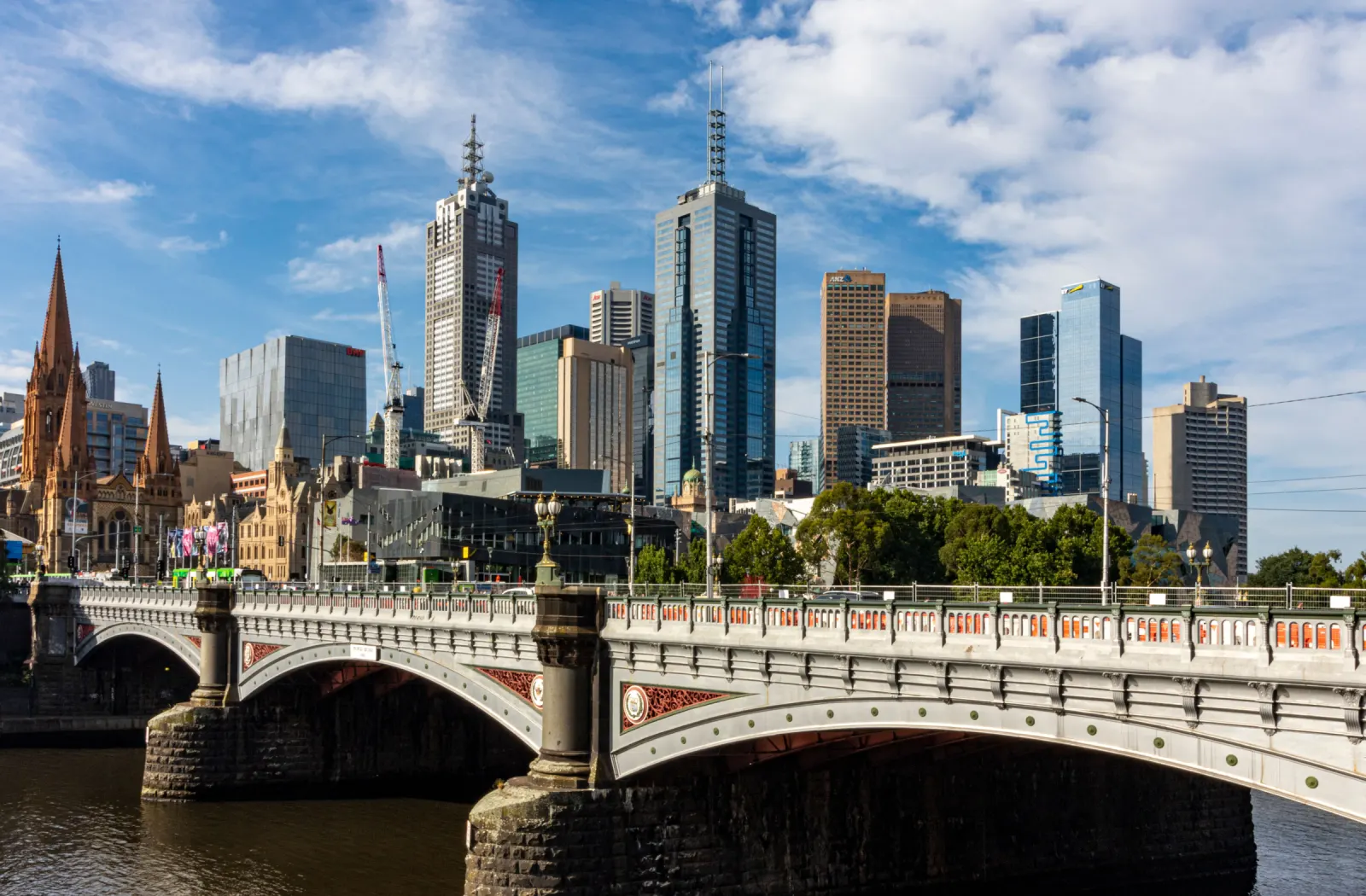
Princes Bridge with Melbourne skyline and blue sky

Melbourne travel guide

What to see, where to stay and the best time to visit Melbourne, Australia.

Best: Jan, Feb, Mar, Dec

Photo: John Simmons / Pexels

Country
Australia
Currency
AUD

About Melbourne

Melbourne is a coastal Australian city of 5,350,705 people. Many of the main sights are in the CBD: Queen Victoria Market, State Library Victoria, Federation Square and the Hosier Lane and Degraves Street laneways. Art, gardens and sport are close by in Southbank, South Yarra and East Melbourne. St Kilda adds a beach. The best months to go are December, January, February and March.

How many days do you need in Melbourne?

Most main sights take between 1 hour and 2–3 hours each. Melbourne Museum and St Kilda each need half a day. Add time for food and nightlife in Fitzroy and Collingwood.

Top attractions in Melbourne

  1. 1National Gallery of Victoria

    2–3 hours

    Southbank

    Australia's oldest public art museum, with international collections at NGV International on St Kilda Road and Australian art at the Ian Potter Centre in Federation Square. It is a strong choice on a rainy day.

  2. 2Royal Botanic Gardens Victoria – Melbourne Gardens

    2–3 hours

    South Yarra

    Large, landscaped gardens with lakes, lawns and plant collections from around the world, a short walk from the city centre. Good for a slow walk or a picnic when the weather is fine.

  3. 3Queen Victoria Market

    1–2 hours

    Melbourne CBD

    A large open-air and covered market selling fresh food, deli goods, clothes and souvenirs. Go in the morning for the food halls. Parts of the site are being redeveloped, so some areas may be closed or moved.

  4. 4Melbourne laneways (Hosier Lane and Degraves Street)

    1–2 hours

    Melbourne CBD

    Narrow lanes and arcades in the city centre known for street art, small cafés and bars. Hosier Lane is covered in graffiti art, and Degraves Street is a good place for coffee. It can get crowded with photo groups.

  5. 5Melbourne Cricket Ground (MCG)

    2–3 hours

    East Melbourne

    One of the world's largest sports stadiums and the home of Australian cricket and Australian rules football. See a match if you can, or take a stadium tour and visit the Australian Sports Museum inside.

  6. 6Shrine of Remembrance

    1 hour

    Melbourne (Kings Domain)

    Victoria's main war memorial, set in parkland near the Botanic Gardens. There is an exhibition space below, and the balcony gives a good view back towards the city skyline.

  7. 7Melbourne Museum and Royal Exhibition Building

    half a day

    Carlton

    The museum covers natural history, science and Aboriginal culture, including the Bunjilaka Aboriginal Cultural Centre. Next door, the Royal Exhibition Building is a UNESCO World Heritage site set in the Carlton Gardens.

  8. 8State Library Victoria

    1 hour

    Melbourne CBD

    A grand public library in the city centre, known for its domed reading room. Entry is free and it has small exhibitions on the history of Victoria.

  9. 9Federation Square

    1 hour

    Melbourne CBD

    A public square across from Flinders Street Station, with cultural venues including the Australian Centre for the Moving Image (ACMI). It is a useful meeting point and a starting place for walks along the Yarra River.

  10. 10St Kilda

    half a day

    St Kilda

    A seaside suburb with a beach, a long pier, the Esplanade and the old Luna Park amusement park. It is easy to reach by tram from the city. The bay is often windy and cool outside summer.
Melbourne by month

Average weather and our month score, from 10 years of climate data.

Weather by month and month scores for Melbourne
Month High / low Rain days Sunshine Sea temp Score
Best month: January 26°C / 16°C 8 days (72 mm) 11.1 h/day 22°C 8.3/10
Best month: February 26°C / 15°C 6 days (32 mm) 11.1 h/day 22°C 8.9/10
Best month: March 24°C / 14°C 7 days (38 mm) 9.7 h/day 21°C 8.6/10
April 20°C / 11°C 9 days (66 mm) 8.4 h/day 18°C 8.2/10
May 16°C / 9°C 12 days (62 mm) 7.4 h/day 15°C 6.6/10
June 14°C / 7°C 11 days (60 mm) 6.9 h/day 12°C 5.4/10
July 13°C / 7°C 12 days (56 mm) 6.9 h/day 11°C 4.9/10
August 14°C / 7°C 13 days (59 mm) 7.9 h/day 12°C 5.5/10
September 17°C / 8°C 13 days (68 mm) 9.2 h/day 13°C 6.7/10
October 20°C / 10°C 12 days (80 mm) 9.9 h/day 16°C 7.6/10
November 22°C / 12°C 11 days (82 mm) 10.7 h/day 18°C 7.8/10
Best month: December 25°C / 14°C 8 days (66 mm) 11.5 h/day 21°C 8.3/10
  1. Jan

    Highs reach 26.4°C with just 7.5 rain days, making this a best-rated month for a visit to Melbourne.

  2. Feb

    The warmest feel of the year holds with a 25.6°C high and only 5.6 rain days, the top-scoring month overall.

  3. Mar

    Highs ease to 24°C with 6.9 rain days and 9.7 sun hours, keeping March in the best-rated tier.

  4. Apr

    Autumn brings a 20°C high and 8.9 rain days; still rated a best month despite cooling temperatures.

  5. May

    Highs drop to 16.2°C and rain days climb to 11.9, pushing the verdict down to good as cooler, wetter weather sets in.

  6. Jun

    Winter arrives with a 13.6°C high, 10.7 rain days and just 6.9 sun hours, rating only ok for most travellers.

  7. Jul

    The coldest month: a 13.2°C high, 12 rain days and the lowest score of the year at 4.9, reflecting grey, wet conditions.

  8. Aug

    Still cold at 14.2°C high with the most rain days of the year, 12.9; the ok rating shows this is tough weather for sightseeing.

  9. Sep

    Highs rise to 16.5°C but rain days stay high at 12.8; the score improves to good as spring begins.

  10. Oct

    Highs reach 19.6°C though rain days remain frequent at 12.1 and rainfall peaks at 80mm; still a best-rated month.

  11. Nov

    Warming to 21.8°C with 10.9 rain days, this best-rated month also has the second-highest rainfall total at 82mm.

  12. Dec

    Highs of 24.6°C and fewer rain days, 8.4, make December one of the best-scoring months to visit.

Climate averages 2015–2024 · Best time to visit Australia →

Where to stay in Melbourne

The best areas to base yourself and who each one suits.

CBD (Central Business District)

Good for first-timers, short stays, public transport users

The city centre is a grid of main streets and narrow laneways full of cafes, bars and shops. You can walk to many sights, and trams and trains leave in every direction. It can feel busy and noisy on weekdays, and some streets go quiet late at night.

Southbank

Good for first-timers, arts lovers, couples

Southbank sits on the south side of the Yarra River, a short walk from the CBD. It is close to the main arts venues and has a riverside path lined with restaurants. It is mostly high-rise towers, so it can feel less personal than older inner suburbs.

Fitzroy and Collingwood

Good for food lovers, nightlife, repeat visitors

These inner-north suburbs have old terrace houses, street art, independent shops and many bars and cafes. They are a good base if you want to eat and drink well and see a more local side of the city. Streets near the main strips can be loud at night, especially at weekends.

St Kilda

Good for beach lovers, backpackers, relaxed stays

St Kilda is a seaside suburb with a pier, a foreshore path and a long history as a nightlife area. It is a good choice if you want to be near the water, and trams run to the city. The trip into the CBD takes longer than from inner suburbs, and some streets are rowdy late at night.

South Yarra and Prahran

Good for shoppers, couples, style-focused travellers

These suburbs south-east of the centre are known for shopping streets, cafes and a well-known food market in Prahran. Train and tram links make it easy to reach the city. Chapel Street can be noisy at weekends, and the area feels more polished than characterful.

Carlton

Good for families, quiet, food lovers

Carlton is just north of the CBD, with wide streets, parks, the University of Melbourne nearby and a long Italian food tradition on Lygon Street. It is calmer than the CBD but still walkable to the centre. Evening options are fewer than in Fitzroy or the CBD.

Getting to and around Melbourne

From the airport
The fact pack doesn't give a direct route price or time for Melbourne's airport, so use the usual options: a SkyBus coach service, a taxi, or a rideshare into the city centre.
Public transport
Melbourne has trams, buses, and trains covering the city and suburbs. Trams are the easiest way to reach the CBD and Southbank. A Myki card covers all three, so buy one early.
On foot
The CBD is flat and compact. Federation Square, the laneways, State Library, and Queen Victoria Market all sit within easy walking distance of each other.

Typical journey times and fares from the airport and other cities.

Route By Time Price
Sydney → Melbourne NSW TrainLink XPT runs twice daily (day and overnight) from Sydney Central to Melbourne Southern Cross via Albury. The trip takes about 11–12 hours. The $18 'online saver' is the lowest advertised fare. Seats must be reserved before travel. train 11 h 18 AUD ↗
Sydney → Melbourne Firefly Express runs a daily overnight coach from Sydney Central (Pitt St bays) to Melbourne Southern Cross along the Hume Highway. It takes about 12 hours. Fares start at $60 one way. Free WiFi, USB charging and a toilet on board. bus 12 h 60 AUD ↗
Melbourne → Adelaide The Overland (Journey Beyond) runs 2 times a week in each direction, a daytime trip of about 10.5 hours. The fare from $160 comes from Rome2Rio (rome2rio.com/Train/Adelaide/Melbourne), not from the operator. Book early because there are only a few departures. train 10 h 30 min 160 AUD ↗
Melbourne → Adelaide Direct flights from Melbourne Airport (MEL) to Adelaide (ADL). About 3h20m including getting to and from the airports. The fare range is a Rome2Rio estimate (not an operator page), so compare airlines when you book. flight 3 h 22 min 89–254 AUD ↗

Food to try in Melbourne

Flat white coffee

Melbourne claims to have invented this espresso drink. Locals grab one from a laneway café on the way to work, any day of the week.

Laneway café brunch

Melbourne's small city lanes are packed with cafés serving brunch plates. Weekends mid-morning are the busiest time for this.

Souvlaki

Melbourne has a large Greek community, and souvlaki wraps are a common quick lunch or late-night snack in the city centre.

Dim sum in Chinatown

Melbourne's Chinatown, one of the oldest in the Western world, serves dim sum for lunch, popular with office workers and weekend family groups.

Italian pasta on Lygon Street

Lygon Street has a long history of Italian immigration and is known for pasta and pizza, eaten for dinner by locals and visitors alike.

More of Australia

Australia travel guide →

Melbourne: frequently asked questions

Is Melbourne good to visit in August?

Melbourne is only an ok choice in August, scoring 5.5 out of 10. Days reach just 14.2°C and nights drop to 7.2°C. It's also one of the wetter months, with rain falling on 12.9 days, so pack a warm layer and a rain jacket.

What is the best time to visit Melbourne?

The best months are December to April, all scoring 8.2 or higher. February tops the list at 8.9, with highs around 25.6°C, lows near 15°C, and only 5.6 rain days. January and March are close behind, with warm days and 9.7 to 11.1 hours of sun.

How many days do I need in Melbourne?

Plan on 2 to 3 days for the main sights. The National Gallery of Victoria, Royal Botanic Gardens, and MCG each take 2 to 3 hours, while Queen Victoria Market and the laneways need 1 to 2 hours. Add a half day each for the Melbourne Museum area and St Kilda if you have more time.

Is Melbourne rainy?

It rains on fewer days in summer than in winter. February has the fewest rain days at 5.6, while July has the most at 12. Rainfall amounts are fairly steady year-round, from 32mm in February to 82mm in November, so no month is dry, but winter brings rain more often.

Is the sea warm enough to swim in Melbourne?

Sea temperatures are warmest from January to March, peaking at 22.4°C in January. They drop through the year to a low of 10.6°C in July, which is too cold for most swimmers. For a swim without a wetsuit, aim for the December to March window.