Skip to content
wheretotravel.info
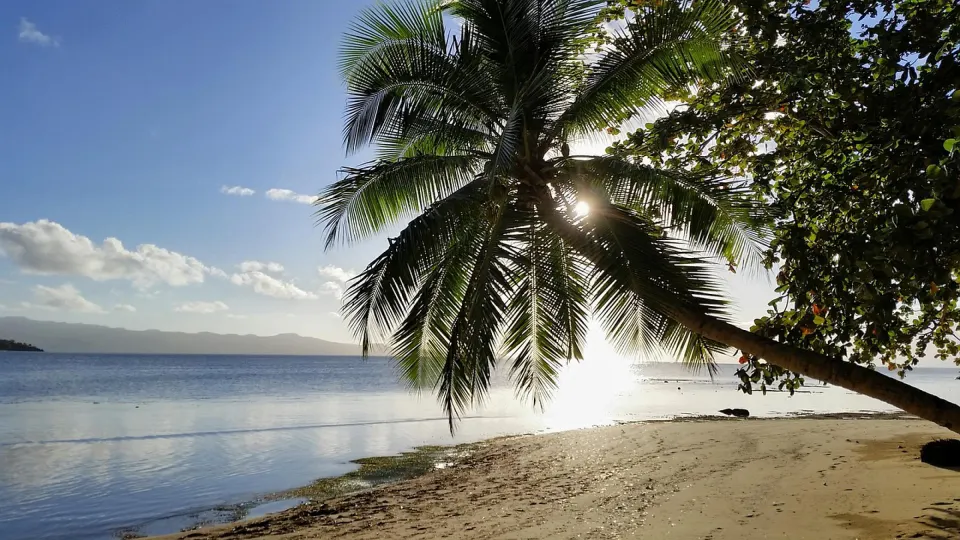
Palm tree overhanging calm beach at sunset

Savusavu travel guide

What to see, where to stay and the best time to visit Savusavu, Fiji.

Best: May, Jun, Jul, Aug

Photo: HeikoBrown / Pixabay

Country
Fiji
Currency
FJD

About Savusavu

Savusavu is a small coastal town on Vanua Levu, Fiji's second-largest island, with a population of around 5,000. It sits on a bay lined with a marina, hot springs, a pearl farm and a market, and it works as a base for snorkelling, diving and short trips into rainforest and waterfall country nearby. The driest, sunniest stretch runs from May through August, which suits boat trips to Namena Marine Reserve and days on the water around Lesiaceva Point.

How many days do you need in Savusavu?

The town sights, such as the hot springs, Copra Shed Marina, the market and J. Hunter Pearls, can be covered in a day or two. Add extra time for half-day or full-day trips to Waisali Rainforest Reserve, Vuadomo Waterfall, Natewa Bay or Namena Marine Reserve.

Top attractions in Savusavu

  1. 1Savusavu Hot Springs

    Under 1 hour

    Savusavu town

    Geothermal springs bubble up right in town, and locals have long used the hot pools to cook food. The water is far too hot to bathe in, so treat it as a short stop to look, not a spa. Ask a local to show you the spots, and watch your step.

  2. 2Copra Shed Marina

    1–2 hours

    Savusavu town

    A former copra warehouse on the waterfront, now a marina with cafés, small shops and tour desks. Yachts moor in the bay in front. It is the easiest place to book diving, snorkelling or boat trips.

  3. 3Savusavu Municipal Market

    1 hour

    Savusavu town

    The town's produce market sells fruit, vegetables, fish and kava from the surrounding villages. Come in the morning for the most choice and activity.

  4. 4J. Hunter Pearls

    2–3 hours

    Savusavu Bay

    A working black pearl farm in Savusavu Bay that runs boat tours to the oyster lines. You learn how Fiji pearls are grown, and you can snorkel over the farm on some tours.

  5. 5Waisali Rainforest Reserve

    Half a day

    Savusavu–Labasa road

    A protected area of native rainforest in the hills north of town, with a walking trail down to a waterfall. It is good for birdwatching and a break from the coast. The track can be muddy and slippery after rain, so wear proper shoes.

  6. 6Vuadomo Waterfall

    Half a day

    Vuadomo village, east of Savusavu

    A waterfall with a swimming pool, reached by a short walk through Vuadomo village land. You pay a small fee to the village and should dress modestly when walking through.

  7. 7Namena Marine Reserve

    Full day

    Offshore, reached by boat from Savusavu

    A protected reef area known for hard and soft corals, reef fish and larger marine life. Dive operators in Savusavu run trips there. Crossings can be rough in poor weather, and trips may be cancelled when the sea is up.

  8. 8Natewa Bay

    Full day

    East of Savusavu

    A large bay on Vanua Levu where tours go out to look for spinner dolphins. Sightings are likely but never guaranteed. The trip also shows you a quieter, rural side of the island.

  9. 9Lesiaceva Point

    Half a day

    West of Savusavu town

    The point at the mouth of Savusavu Bay offers snorkelling over nearby reef. Check local advice on currents and entry points before you go in.
Savusavu by month

Average weather and our month score, from 10 years of climate data.

Weather by month and month scores for Savusavu
Month High / low Rain days Sunshine Sea temp Score
January 29°C / 24°C 27 days (343 mm) 9.9 h/day 30°C 7.0/10
February 29°C / 25°C 26 days (345 mm) 9.2 h/day 30°C 7.0/10
March 29°C / 24°C 27 days (324 mm) 9.2 h/day 30°C 7.0/10
April 28°C / 24°C 22 days (193 mm) 9.8 h/day 29°C 7.0/10
Best month: May 27°C / 24°C 19 days (142 mm) 9.1 h/day 28°C 8.0/10
Best month: June 27°C / 23°C 16 days (99 mm) 9.0 h/day 27°C 8.0/10
Best month: July 26°C / 23°C 17 days (89 mm) 9.0 h/day 26°C 8.0/10
Best month: August 26°C / 22°C 17 days (111 mm) 9.2 h/day 26°C 8.0/10
September 27°C / 23°C 19 days (96 mm) 9.8 h/day 26°C 8.0/10
October 27°C / 23°C 21 days (177 mm) 9.9 h/day 26°C 8.0/10
November 28°C / 24°C 23 days (162 mm) 10.5 h/day 28°C 7.0/10
December 29°C / 24°C 26 days (322 mm) 10.1 h/day 29°C 7.0/10
  1. Jan

    Highs reach 29.1°C with rain on 27.3 days, the wettest pattern of the year. A good month, but expect frequent showers and this is cyclone season in Fiji.

  2. Feb

    Similar to January: 29.2°C highs and rain on 26.3 days. Scored good, though the cyclone season and heavy rainfall continue.

  3. Mar

    Highs of 28.9°C with 27.3 rain days, still the wet season. Rated good, with sea temperature at a warm 29.6°C.

  4. Apr

    Rain days drop to 21.8 and highs sit at 28.4°C. Scored good as the wet season starts to ease.

  5. May

    Drier weather arrives: 19.4 rain days and 27.3°C highs. Scored best, marking the start of the cooler, drier season.

  6. Jun

    Highs fall to 26.5°C with just 15.7 rain days. Rated best, with calmer skies and 9 hours of sun daily.

  7. Jul

    The coolest, driest stretch: 26°C highs and only 16.8 rain days. Scored best for stable, comfortable conditions.

  8. Aug

    Highs of 25.9°C and 16.9 rain days keep this a best-rated month, with sea temperature cooling to 25.9°C.

  9. Sep

    Highs climb slightly to 26.6°C, rain days at 19.4. Scored best, with sun hours rising to 9.8.

  10. Oct

    Highs reach 27.3°C with 21.3 rain days as the dry season winds down. Still rated best, with 9.9 hours of sun.

  11. Nov

    Rain returns somewhat, with 23.2 rain days and highs of 28.2°C. Scored good as the wetter season builds again.

  12. Dec

    Highs of 28.7°C and rain on 26.4 days mark the return of the wet season. Rated good, with cyclone risk present through this period.

Climate averages 2015–2024 · Best time to visit Fiji →

Where to stay in Savusavu

The best areas to base yourself and who each one suits.

Hills above town

Good for couples, views, longer stays

Homes and guesthouses on the slopes behind the town look out over Savusavu Bay and are quieter than the waterfront. You are still close to the shops and marinas. The roads are steep, though, so walking back up in the heat is hard work, and you may rely on taxis.

Lesiaceva Point and Lesiaceva Road

Good for snorkellers, divers, beach time

West of town, this coastal road leads to the point at the mouth of the bay, where there is better swimming and snorkelling off the shore. It feels calm and residential, with the reef close by. The drawback is distance: you need a taxi or car to reach town for food and supplies.

Hibiscus Highway (east coast)

Good for honeymooners, privacy, nature lovers

The road east of the airstrip follows a quiet coastline of coconut plantations, small villages and scattered places to stay. It suits people who want seclusion and are happy to stay put. It is far from town shops and restaurants, the road can be rough in places, and public transport is limited.

Getting to and around Savusavu

From the airport
No route data is given for Savusavu's airport. Visitors usually take a pre-arranged resort transfer or a taxi into town, since there is no train or bus link laid on for arriving flights.
Public transport
Savusavu has no metro, tram or train. Getting around town is mostly on foot, with local buses and taxis covering longer stretches like Lesiaceva Road, the Hibiscus Highway or the Savusavu–Labasa road. For reefs and islands such as Namena Marine Reserve, visitors need to book a boat.
On foot
Savusavu town itself is small and walkable: the Hot Springs, Copra Shed Marina and the Municipal Market all sit within the same compact centre, so you can cover them on foot in under an afternoon.

Food to try in Savusavu

Kokoda

This is raw fish marinated in lime juice and coconut milk, mixed with onions, tomatoes and chilli. It's a common starter in Savusavu's cafes and at family gatherings near the coast.

Lovo-cooked meat and root vegetables

Lovo is food cooked in an underground earth oven lined with hot stones. Locals prepare it for special occasions, using pork, chicken, cassava and taro wrapped in banana leaves.

Rourou

Rourou is taro leaves cooked slowly in coconut milk, often with a little onion or corned beef. It's a everyday side dish served with rice or root vegetables in Savusavu homes.

Cassava and dalo

These starchy root vegetables are boiled or baked and served at nearly every meal. They replace rice or bread as the main carbohydrate in Savusavu's town eateries and village kitchens.

Kava

Kava is a mildly numbing drink made from the root of the pepper plant, mixed with water. It's shared in a communal bowl during evening gatherings, a custom still common around Savusavu.

More of Fiji

Fiji travel guide →

Savusavu: frequently asked questions

Is Savusavu good in August?

Yes. August scores 8 out of 10, Savusavu's highest rating. The high is 25.9°C and the low is 22.1°C, the coolest of the year. Rain falls on about 16.9 days, totalling 111mm, and there are 9.2 hours of sun a day. Sea temperature is 25.9°C, the coolest time to swim but still warm enough for snorkelling.

What is the best time to visit Savusavu?

May to August is the best stretch, each scoring 8 out of 10. These months have the lowest rainfall, from 89mm in July to 142mm in May, and fewer rain days than the rest of the year, ranging from 15.7 to 19.4 days a month. Temperatures stay warm, with highs between 25.9°C and 27.3°C.

How many days do I need in Savusavu?

Two to three days cover the main sights. The town itself, including the Hot Springs, Copra Shed Marina and the Municipal Market, takes a few hours. Add a half day each for Waisali Rainforest Reserve, Vuadomo Waterfall or Lesiaceva Point, and a full day if you want to reach Namena Marine Reserve or Natewa Bay by boat.

Is Savusavu rainy?

Rain is common for much of the year but drops off from May to September. January to March are the wettest, with 324mm to 345mm of rain and 26 to 27 rain days a month. June to September are driest, with rain days falling to between 15.7 and 19.4 and rainfall as low as 89mm in July.

What is the sea temperature like in Savusavu?

The sea stays warm all year, ranging from 25.9°C in August and September to 30°C in February. Even in the coolest months it's comfortable for swimming and diving, while the warmest water lines up with the wetter January-to-March period.