Skip to content
wheretotravel.info
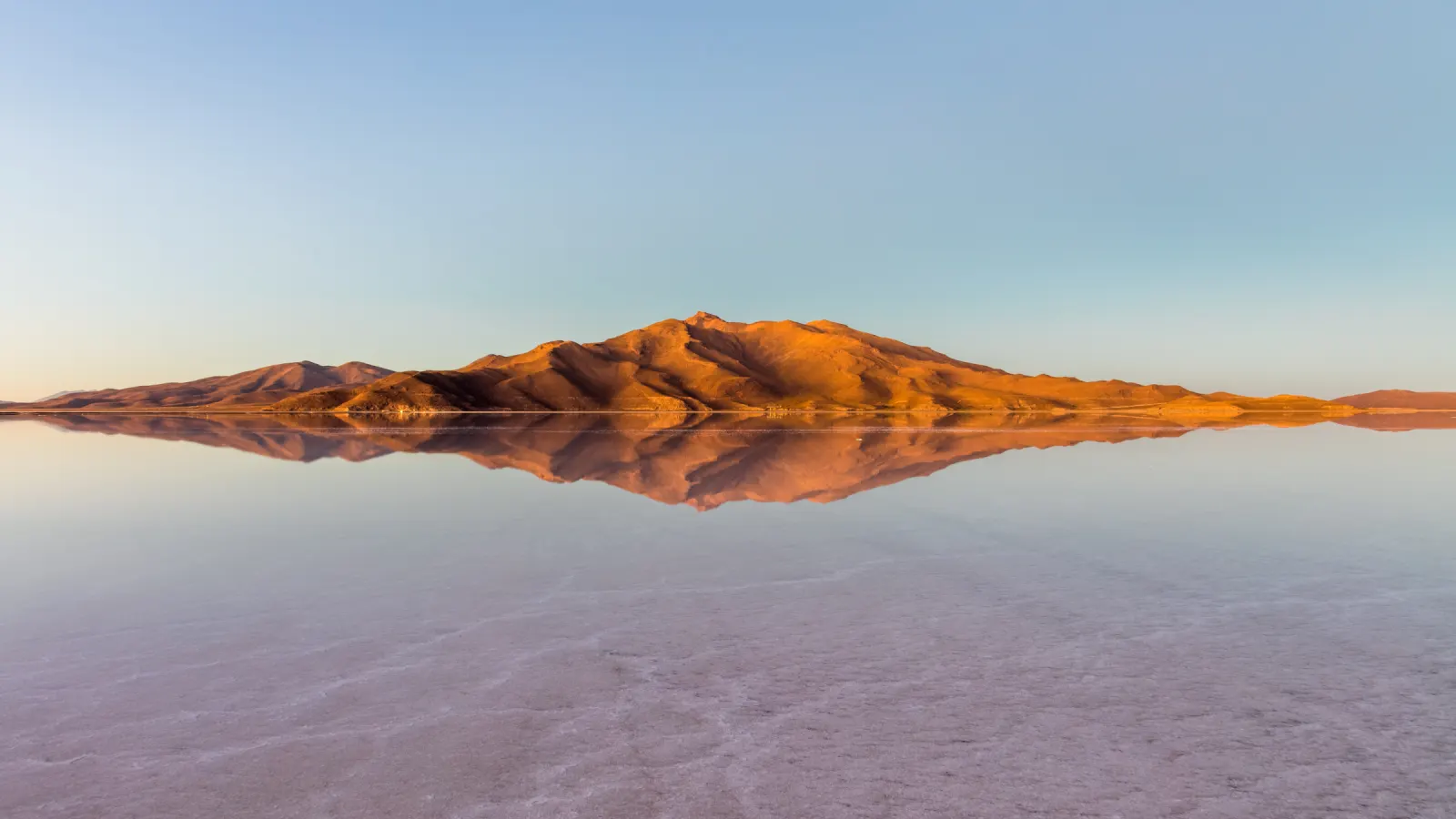
Mountain reflected perfectly on salt flat water

Uyuni travel guide

What to see, where to stay and the best time to visit Uyuni, Bolivia.

Best: Apr, May, Sep, Oct

Photo: Diego Delso / Wikimedia Commons

Country
Bolivia

About Uyuni

Uyuni is a small, windswept town in southwest Bolivia, and most people come for one reason: the Salar de Uyuni, the world's largest salt flat, right on its doorstep. The town itself is basic, with a train cemetery and a small museum to fill an hour, but it's really a base for salt flat tours, island stops at Incahuasi, and multi-day trips into the Eduardo Avaroa reserve further south. Best months to visit are September, April, October and May, when conditions suit both the dry salt crust and the mirror-like flooded season.

How many days do you need in Uyuni?

Most visitors need 2 to 3 days: one for the classic Salar de Uyuni day tour, plus extra time if you add a multi-day trip into the Eduardo Avaroa Andean Fauna National Reserve.

Top attractions in Uyuni

  1. 1Salar de Uyuni

    Full day

    West of Uyuni town

    The world's largest salt flat, a white plain that stretches to the horizon. Most visitors join a jeep tour from town. In the wet season a thin layer of water can turn the surface into a mirror, while the dry season brings a cracked, hexagon-patterned crust that is easier to cross.

  2. 2Train Cemetery (Cementerio de Trenes)

    1 hour

    Southwest edge of Uyuni town

    Rusting steam locomotives and carriages from Bolivia's mining railway era sit in the desert just outside town. You can climb on the old engines, and it is usually the first stop on salt flat tours.

  3. 3Incahuasi Island (Isla Incahuasi)

    1–2 hours

    Salar de Uyuni

    A rocky hill in the middle of the salt flat, covered in giant columnar cacti. A short, steep trail leads to the top for wide views across the white salt.

  4. 4Dakar Monument and Flags

    30 minutes–1 hour

    Salar de Uyuni, near Colchani

    A large salt sculpture marks the route of the Dakar Rally, which once crossed the salt flat. Nearby, flags left by travellers from around the world fly beside the old Playa Blanca salt hotel.

  5. 5Ojos del Salar

    30 minutes

    Salar de Uyuni

    Small pools where water and gas bubble up through the salt crust. It is a quick stop that shows the salt flat is still active below the surface.

  6. 6Eduardo Avaroa Andean Fauna National Reserve

    Multi-day tour

    Southwest Bolivia, south of Uyuni

    A high-altitude reserve reached on multi-day jeep tours from Uyuni. Highlights include Laguna Colorada, a red lake with flamingos, Laguna Verde below Licancabur volcano, geysers and hot springs. Nights are very cold at this altitude, so pack warm layers.

  7. 7Archaeological and Anthropological Museum of the Southern Andes

    1 hour

    Uyuni town centre

    A small museum in town with mummies, deformed skulls and objects from the region's early cultures. It is a useful short visit before or after a tour.

Uyuni by month

Average weather and our month score, from 10 years of climate data.

Weather by month and month scores for Uyuni
Month High / low Rain days Sunshine Score
January 18°C / 5°C 16 days (89 mm) 11.7 h/day 6.5/10
February 17°C / 5°C 16 days (91 mm) 11.3 h/day 6.5/10
March 17°C / 5°C 9 days (43 mm) 11.4 h/day 7.9/10
Best month: April 16°C / 2°C 2 days (7 mm) 11.0 h/day 9.7/10
Best month: May 13°C / -1°C 0 days (1 mm) 10.8 h/day 9.1/10
June 11°C / -2°C 0 days (1 mm) 10.7 h/day 8.2/10
July 12°C / -2°C 1 day (3 mm) 10.8 h/day 8.3/10
August 13°C / -2°C 1 day (2 mm) 11.0 h/day 8.9/10
Best month: September 16°C / 0°C 1 day (3 mm) 11.5 h/day 9.8/10
Best month: October 18°C / 2°C 1 day (5 mm) 12.2 h/day 9.7/10
November 19°C / 3°C 4 days (14 mm) 12.5 h/day 9.0/10
December 19°C / 5°C 8 days (54 mm) 12.3 h/day 8.1/10
  1. Jan

    Highs reach 17.6°C with 16.1 rain days and 89mm of rain, the wettest month of the year. Score 6.5, good: the salt flats can flood, which some travellers seek out for mirror photos.

  2. Feb

    Highs of 17°C and 15.8 rain days with 91mm of rain keep the wet season going. Score 6.5, good, with flooded salt flats still likely.

  3. Mar

    Rain eases to 9.1 days and 43mm, with highs of 17.2°C. Score 7.9, best, as the flats start drying while mirror effects can still appear.

  4. Apr

    Rain drops sharply to 1.5 days and 7mm, with a high of 16.4°C. Score 9.7, best, giving dry, walkable salt crust and clear skies.

  5. May

    Nearly rain-free with 0.1 rain days and a high of 13.1°C, though nights fall to -0.7°C. Score 9.1, best, for dry conditions and cold, clear nights.

  6. Jun

    The coldest month: highs of 11.1°C, lows of -1.7°C, and just 0.4 rain days. Score 8.2, best, but pack warm layers for sharp nighttime cold.

  7. Jul

    Highs stay low at 11.5°C with lows of -1.7°C and only 0.6 rain days. Score 8.3, best, with dry air and strong sun despite the cold.

  8. Aug

    Highs climb slightly to 13°C while lows still hit -1.7°C, with 0.7 rain days. Score 8.9, best, for dry, stable weather.

  9. Sep

    Highs of 15.7°C, 0.8 rain days, and 11.5 sun hours mark the start of warmer, drier conditions. Score 9.8, best, the top-rated month.

  10. Oct

    Highs reach 17.8°C with just 1.3 rain days and 12.2 sun hours. Score 9.7, best, for dry weather and long daylight.

  11. Nov

    Rain starts returning with 4.2 rain days and 14mm, alongside highs of 19°C, the warmest month. Score 9, best, still favourable overall.

  12. Dec

    Rain picks up to 8.1 days and 54mm as the wet season begins, with highs of 19.3°C. Score 8.1, best, though afternoon showers become more common.
Climate averages 2015–2024 · Best time to visit Bolivia →

Where to stay in Uyuni

The best areas to base yourself and who each one suits.

Avenida Potosí

Good for budget travellers, tour shoppers

This street runs through the centre and is lined with tour offices, simple guesthouses and places to eat. It is handy for booking a salt flat trip and grabbing food before departure. Tour jeeps load and leave here early, so expect engine noise and activity in the morning.

Avenida Ferroviaria

Good for train travellers, late arrivals

This wide street runs along the railway, close to the station and the clock tower. It suits you if your train arrives late at night or leaves early, because you can walk to your room. Trains and passengers arriving at odd hours can make it noisy, and the street feels empty and windy after dark.

Colchani

Good for photographers, salt hotel stays

This small salt-processing village sits right at the edge of the salt flat, north of Uyuni town. Staying here puts you close to the flat for sunrise and sunset, and several hotels are built from salt blocks. There are very few shops or restaurants, so you rely on your hotel for meals and transport.

Coqueza

Good for quiet, slow travel, hikers

This tiny village lies at the foot of Tunupa volcano on the far northern side of the salt flat, with views across the white surface. It suits travellers who want silence, starry skies and a hike on the volcano's slopes. It is remote and a long drive from Uyuni town, with basic services and limited heating.

Getting to and around Uyuni

From the airport
Uyuni has a small airport, but the fact pack has no route data for it. Most visitors instead arrive by bus from La Paz (9 hours, about 43 USD) or Potosí (3 hours), landing near the centre or the Avenida Ferroviaria area.
Public transport
Uyuni is a small town with little formal public transport. There are no metro, tram or ferry services. Visitors mostly walk or use shared tour vehicles arranged through agencies for trips onto the Salar de Uyuni.
On foot
The town centre is small and walkable. The Train Cemetery sits on the southwest edge, a short trip from the centre, while the Archaeological and Anthropological Museum is right in the centre itself.

Typical journey times and fares from the airport and other cities.

Route By Time Price
La Paz → Uyuni Overnight bus taking about 9–12 h. Bolivia Hop recommends Todo Turismo, which offers semi-cama and cama seats with blankets, a meal and a toilet. Fares start at about USD 43 (Bs fare not found). VIP seats cost extra. Another option is a bus to Oruro (about 4 h), then a train to Uyuni (about 7 h). bus 9 h 43 USD ↗
Potosí → Uyuni 204 km on a paved road, about 3 h. Leaves from Potosí's old bus terminal on Av. Universitaria. A traveller report says Uyuni–Potosí buses leave around 9:00–9:30 and 18:00–18:30. Fare not found. bus 3 h – ↗

Food to try in Uyuni

Llama meat dishes

Llama is a staple meat on the Bolivian altiplano around Uyuni. Locals grill it as steak or stew it with potatoes and herbs, often served in simple family-run restaurants near the town centre.

Quinoa soup and dishes

Quinoa grows in the highlands surrounding Uyuni and appears in soups, stews and side dishes. It's a filling, high-altitude staple eaten at lunch in most local eateries.

Salteñas

These baked pastries filled with meat, potato and a juicy sauce are a popular mid-morning snack across Bolivia, including in Uyuni's market stalls and bakeries.

Charque

Dried, salted llama or beef meat, charque is a traditional preservation method from the altiplano. It's often rehydrated and served with corn, cheese and potatoes.

Trout from nearby lakes

Freshwater trout, caught in lakes and rivers of the region, shows up on menus in Uyuni, usually pan-fried and served with rice or potatoes.

Api con pastel

A warm, thick purple corn drink called api is served alongside a fried pastry called pastel, often as a breakfast combination sold by street vendors in the early morning.

More of Bolivia

Bolivia travel guide →

Uyuni: frequently asked questions

Is Uyuni good to visit in August?

Yes. August scores 8.9 out of 10 and counts as one of the best months. Days reach 13°C and nights drop to -1.7°C. Rain is rare, with only 0.7 rain days and 2mm of rain, so the salt flat stays dry and easy to cross.

When is the best time to visit Uyuni?

September, April, October and May are the top months, all scoring 9.1 or higher. These months sit between the wet and dry extremes: rain drops off sharply after March, and daytime highs stay comfortable between 13°C and 19°C. October and September also offer the most sunshine, at 12.2 and 11.5 hours.

Is Uyuni good in January?

January is rated good but not the best, scoring 6.5 out of 10. It's the wettest month, with 16.1 rain days and 89mm of rain. This is when the famous mirror effect on the Salar de Uyuni happens, since a thin layer of water covers the salt and reflects the sky.

How many days do I need in Uyuni?

Most travellers need 1 to 2 days for the town itself and the main salt flat sights. The Train Cemetery takes about 1 hour, Incahuasi Island 1 to 2 hours, and the Dakar Monument around 30 minutes to 1 hour. If you add the Eduardo Avaroa Andean Fauna National Reserve, plan for a multi-day tour.

Is Uyuni cold at night?

Yes, nights are cold most of the year. Lows drop below freezing from May through September, reaching -1.7°C in June, July and August. Even in the warmer months of November and December, nights only reach around 3°C to 5°C, so warm layers are needed year-round.