Skip to content
wheretotravel.info
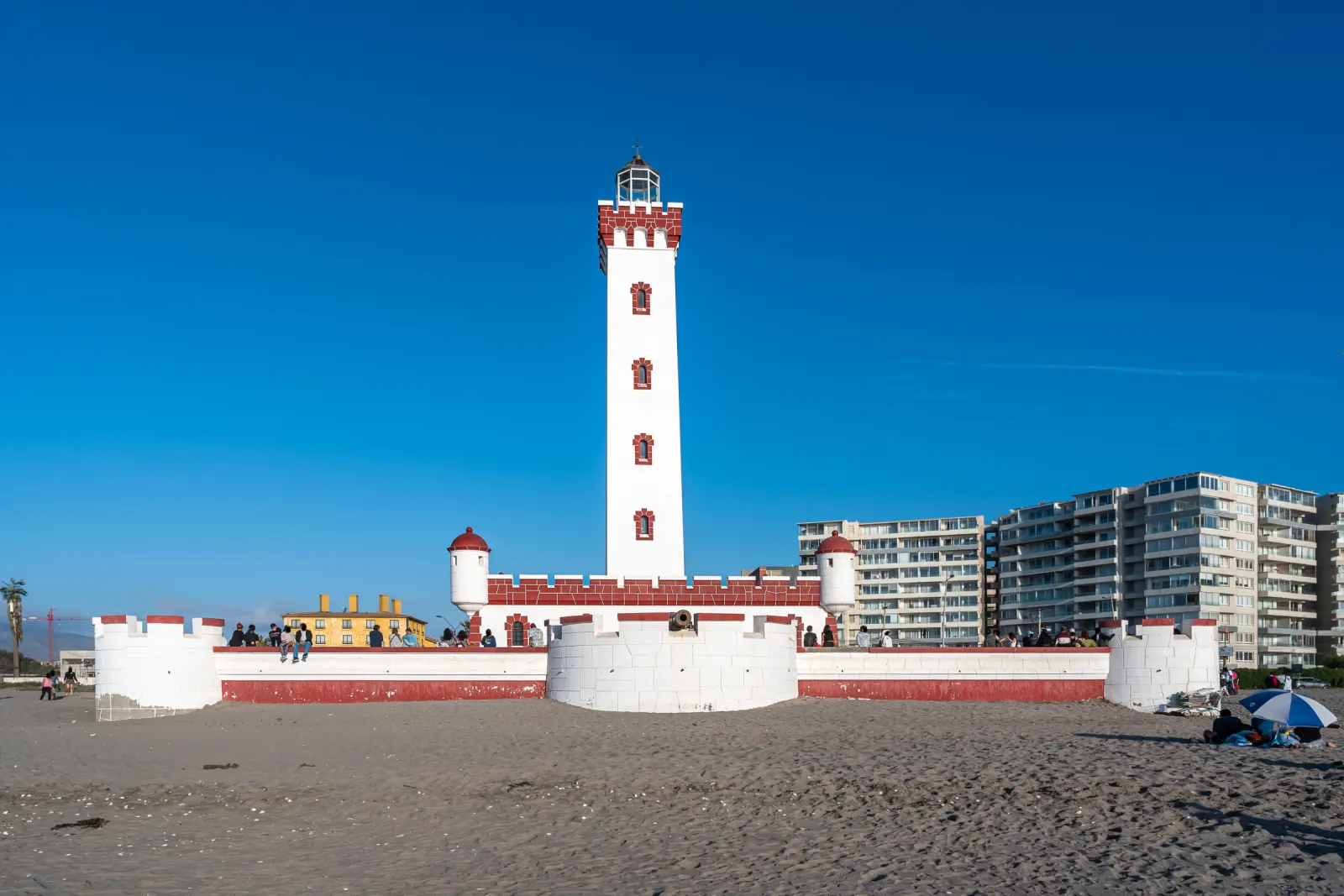
White and red lighthouse on sandy beach

La Serena travel guide

What to see, where to stay and the best time to visit La Serena, Chile.

Best: Jan, Feb, Mar, Nov

Photo: Rjcastillo / Wikimedia Commons

Country
Chile
Currency
CLP

About La Serena

La Serena sits on Chile's north coast, mixing colonial architecture with long sandy beaches along Avenida del Mar. With 195382 people, it's a manageable size for walking between the historic centre, the lighthouse, and the Japanese Garden. The city works as a base for desert and coastal trips, and it gets good, dry weather for much of the year. The best months to visit are January, February, March, and November, when days are warm and skies stay clear.

How many days do you need in La Serena?

Two to three days cover the main sights: the historic centre, Avenida del Mar, the Japanese Garden, and the museums. That gives time to walk the plaza, see the churches, and still relax on the beach.

Top attractions in La Serena

  1. 1Avenida del Mar and La Serena beaches

    half a day

    Avenida del Mar

    A long seafront road runs beside a wide sandy beach that joins La Serena with neighbouring Coquimbo. People come here to walk, cycle, swim and eat at the restaurants along the strip. The Pacific water is usually cool, and mornings are often grey with coastal cloud.

  2. 2Faro Monumental (Lighthouse)

    30 minutes–1 hour

    Avenida del Mar

    This white and red lighthouse stands at the start of Avenida del Mar and is the best-known symbol of the city. Many visitors stop here for photos and then walk along the beach. It looks especially good at sunset.

  3. 3Japanese Garden (Jardín del Corazón)

    1–2 hours

    Parque Pedro de Valdivia

    A formal Japanese garden with ponds, small bridges, stone paths and careful planting. It is a calm place for a slow walk away from the traffic of the centre.

  4. 4Plaza de Armas

    30 minutes–1 hour

    City centre

    The main square of La Serena is the natural starting point for a walk around the old town. Colonial-style buildings, the cathedral and government offices stand around it, and locals meet here in the shade.

  5. 5Cathedral of La Serena

    30 minutes

    City centre

    The stone cathedral stands on the Plaza de Armas and is one of the main landmarks of the historic centre. La Serena is known for its many churches, and this is the most important of them.

  6. 6Church of San Francisco

    30 minutes

    City centre

    A solid stone church with thick walls and a simple colonial look, a few blocks from the main square. It is one of the oldest churches in the city and worth a short stop on a walk through the centre.

  7. 7La Serena Archaeological Museum

    1–2 hours

    City centre

    The museum shows the cultures of northern Chile, with a strong collection of Diaguita pottery and its painted patterns. It also holds a moai statue brought from Easter Island, which many visitors come to see.

  8. 8Gabriel González Videla Historical Museum

    1 hour

    City centre

    Set in the former home of a Chilean president who was born in La Serena, this museum covers regional history and his life. It sits next to the Plaza de Armas, so it is easy to combine with the cathedral.

  9. 9La Recova Market

    1 hour

    City centre

    A covered market selling local crafts, dried fruit and products made from papaya, a speciality of the region. It is a good place to look for souvenirs and try local sweets.

  10. 10Ignacio Domeyko Mineralogical Museum

    1 hour

    University of La Serena

    A university museum with a large collection of minerals and rocks from Chile and other countries, including meteorites. It suits travellers interested in geology and the mining history of northern Chile.
La Serena by month

Average weather and our month score, from 10 years of climate data.

Weather by month and month scores for La Serena
Month High / low Rain days Sunshine Sea temp Score
Best month: January 23°C / 16°C 0 days (1 mm) 13.1 h/day 18°C 10.0/10
Best month: February 24°C / 16°C 0 days (1 mm) 12.0 h/day 19°C 10.0/10
Best month: March 22°C / 15°C 0 days (6 mm) 11.5 h/day 18°C 9.9/10
April 20°C / 13°C 0 days (3 mm) 10.2 h/day 16°C 9.9/10
May 18°C / 12°C 2 days (23 mm) 9.2 h/day 14°C 9.6/10
June 17°C / 10°C 3 days (33 mm) 8.7 h/day 14°C 8.9/10
July 16°C / 9°C 2 days (23 mm) 9.1 h/day 14°C 8.8/10
August 17°C / 9°C 3 days (15 mm) 9.7 h/day 14°C 9.2/10
September 18°C / 10°C 1 day (2 mm) 10.7 h/day 14°C 9.9/10
October 19°C / 11°C 1 day (7 mm) 11.8 h/day 15°C 9.8/10
Best month: November 21°C / 13°C 0 days (2 mm) 12.5 h/day 15°C 10.0/10
December 22°C / 14°C 0 days (2 mm) 13.0 h/day 17°C 9.9/10
  1. Jan

    High of 23.1°C with almost no rain, just 0.1 rain days. Sea temp is 17.8°C. Scores best for the year at 10, a top pick.

  2. Feb

    Warmest month at 23.5°C high and zero rain days. Sea temp peaks near 18.7°C. Still scores a perfect 10.

  3. Mar

    High of 22.3°C with light rain, 0.4 rain days and 6mm. Sun hours start to drop slightly. Scores 9.9, still best.

  4. Apr

    High of 20.2°C, cooler nights down to 13.4°C, rain stays light at 3mm. Score stays high at 9.9.

  5. May

    Rain picks up here, 2.2 rain days and 23mm, with high dropping to 18.3°C. Still scores 9.6, best category.

  6. Jun

    Coolest daytime high so far at 17.1°C and the wettest month, 3.2 rain days and 33mm of rain. Score dips slightly to 8.9.

  7. Jul

    Coldest month overall, high of 16.3°C and low of 8.9°C, with 1.7 rain days. Score is 8.8, the year's lowest but still best verdict.

  8. Aug

    High rises a touch to 17.4°C but rain days stay elevated at 2.5, totalling 15mm. Score recovers to 9.2.

  9. Sep

    Drier again, just 0.5 rain days and 2mm, with high back up to 18.3°C. Scores 9.9, among the top months.

  10. Oct

    High climbs to 19.3°C with only 0.8 rain days and more sun, 11.8 hours. Scores 9.8, best verdict.

  11. Nov

    High reaches 20.8°C with barely any rain, 0.2 rain days. Perfect score of 10 again, a strong choice.

  12. Dec

    High of 21.9°C, sea warming to 16.5°C, and rain minimal at 0.4 days. Scores 9.9, closing the year as best.

Climate averages 2015–2024 · Best time to visit Chile →

Where to stay in La Serena

The best areas to base yourself and who each one suits.

Centro Histórico

Good for first-timers, culture, no car

The old centre has colonial-style churches, the Plaza de Armas, museums, markets and plenty of places to eat, all within walking distance. Most buses and tours leave from here or nearby, so it makes a practical base. The beach is a bus or taxi ride away, and some streets feel empty in the evening once the shops close.

Cuatro Esquinas

Good for families, longer stays, value

This mostly residential area sits between the centre and the beach, with supermarkets, local shops and short trips to both the sand and the old town. It suits travellers who want everyday services and a quieter, local feel. It has little character for sightseeing and you will often need a bus or taxi.

San Joaquín

Good for quiet, students, views

A hillside residential area on the edge of the centre, close to the university, with calm streets and views over the city and the bay. It is a peaceful base if you mainly want to sleep well and explore by day. The slopes make walking tiring, and there is less to do in the evening.

Getting to and around La Serena

From the airport
No route data is given for La Serena airport. Visitors usually rely on taxis, private transfers or ride-hailing apps to reach the centre, since no fixed timings or fares are confirmed here.
Public transport
La Serena has no metro or tram, and public transport mainly means city buses, called colectivos locally. Service is limited, so a practical tip is to walk or use ride-hailing apps for most trips within the centre and to the beach area.
On foot
The city centre is compact and walkable. The Plaza de Armas, Cathedral, Church of San Francisco, Archaeological Museum, Historical Museum and La Recova Market all sit within the City centre area, close enough to cover on foot in one outing.

Food to try in La Serena

Papayas con crema

A local dessert made with Chilean papaya, a different fruit from tropical papaya, served with whipped cream. It is a classic treat in La Serena's coastal cafés and sweet shops.

Pisco sour

La Serena sits near the Elqui Valley, Chile's main pisco-producing region. Locals and visitors drink pisco sours, made with pisco, lime juice and sugar, in bars along the coast and in town.

Mariscal

A cold seafood soup loaded with raw and cooked shellfish, onion and lime juice. Since La Serena is a coastal city, it is a common lunch dish in seafood restaurants near the harbor and fish market.

Empanadas de mariscos

Baked or fried pastries filled with a mix of local shellfish and cheese. They are sold at food stalls and small eateries throughout the city, especially near the beach.

Congrio frito

Fried conger eel, a fish common off the Chilean coast, is served with rice, salad or potatoes. It appears on menus in many of La Serena's seafood restaurants as a main course.

More of Chile

Chile travel guide →

La Serena: frequently asked questions

Is La Serena good to visit in August?

Yes. August is a good month, with a score of 9.2 out of 10. Daytime highs reach 17.4°C and lows drop to 9.4°C, so pack a jacket for mornings and evenings. Expect about 2.5 rain days and 15mm of rain for the month, plus 9.7 hours of sun a day, so dry, sunny spells are still common.

What is the best time to visit La Serena?

January, February, November and March score highest, all above 9.9 out of 10. These months bring the warmest weather, with highs of 21.9–23.5°C and sea temperatures of 15.3–18.7°C, good for beach days on Avenida del Mar. Rain is rare in all four months, with no more than 6mm falling even in the wettest of them.

How many days do I need in La Serena?

Two days is enough for the main sights. Allow half a day for the beaches and Avenida del Mar, then split the rest between the city centre (Plaza de Armas, the Cathedral, Church of San Francisco, the Archaeological Museum and La Recova Market) and the Japanese Garden, each needing 30 minutes to 2 hours.

Does it rain a lot in La Serena?

No. Rain is light and infrequent all year. The driest months are January, February, September and November, with 1–2mm of rain and under 1 rain day. The wettest month is June, with 33mm over 3.2 days, still a small amount compared to most coastal cities.

Is the sea warm enough to swim in La Serena?

The sea stays cool year-round, so swimming is for those who don't mind cold water. Sea temperature peaks at 18.7°C in February and drops to 13.8°C in July and September. The warmest swimming window runs from December to April, when the sea sits between 15.7°C and 18.7°C.