Skip to content
wheretotravel.info
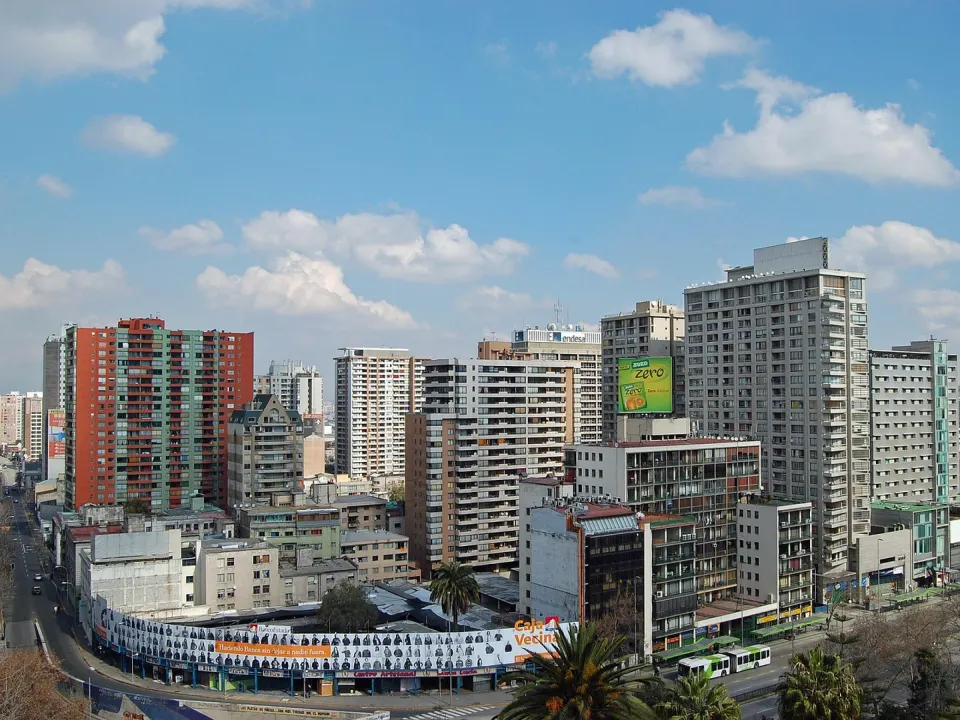
City skyline with high-rise buildings under clouds

Santiago travel guide

What to see, where to stay and the best time to visit Santiago, Chile.

Best: Apr, May, Oct, Nov

Photo: lebastias / Pixabay

Country
Chile
Currency
CLP

About Santiago

Santiago is the capital of Chile and a large inland city. For visitors, it offers museums, hilltop parks and neighbourhoods that each feel different. You can climb Cerro San Cristóbal or Cerro Santa Lucía for views, see La Moneda Palace and the Plaza de Armas in the Centro, and eat at the Mercado Central. Lastarria and Providencia suit first-timers, and Bellavista is the nightlife area. The best months to go are April, May, October and November.

How many days do you need in Santiago?

There is no fixed answer, but most main sights take 1–2 hours each. Cerro San Cristóbal needs half a day, and the Museum of Memory and Human Rights needs 2–3 hours. Many Centro sights are close together, so you can see several in one day.

Top attractions in Santiago

  1. 1Cerro San Cristóbal (Parque Metropolitano)

    half a day

    Providencia / Recoleta

    A large hill park rising above the city, reached by funicular, cable car or on foot. At the top, a white statue of the Virgin Mary looks out over Santiago, with the Andes behind on clear days. Walking trails, viewpoints and a public swimming pool make it easy to spend several hours here.

  2. 2La Moneda Palace

    1–2 hours

    Centro

    The seat of Chile's president and the place where the 1973 coup unfolded. Watch the changing of the guard outside, then visit the Centro Cultural La Moneda underneath the square for rotating exhibitions and Chilean crafts.

  3. 3Plaza de Armas and Metropolitan Cathedral

    1–2 hours

    Centro

    Santiago's main square, where the city was founded, lined with colonial and nineteenth-century buildings. The Metropolitan Cathedral, the Central Post Office and the National History Museum all face the square, and street artists and chess players gather under the palm trees.

  4. 4Museum of Memory and Human Rights

    2–3 hours

    Barrio Yungay / Quinta Normal

    A moving museum about human rights abuses under the military dictatorship. It uses photos, documents, testimonies and video to explain a period that still shapes Chilean politics. Some displays have English texts or audio guides.

  5. 5Chilean Museum of Pre-Columbian Art

    2 hours

    Centro

    A compact, well-designed museum showing textiles, ceramics, gold work and sculpture from cultures across Latin America before European arrival. It is one of the best introductions to the region's Indigenous history, including Andean and Mapuche pieces.

  6. 6Cerro Santa Lucía

    1–2 hours

    Centro

    A small hill in the city centre, laid out with stone stairs, terraces, fountains and a small fort. The climb is short and gives good views across the rooftops towards the mountains.

  7. 7La Chascona (Pablo Neruda House)

    1–2 hours

    Bellavista

    One of the poet Pablo Neruda's three houses, built on a slope and full of his collections and quirky design ideas. Guided or audio tours explain his life and his links to Chilean politics. The surrounding Bellavista district is known for street art, bars and restaurants.

  8. 8Mercado Central

    1–2 hours

    Centro

    The city's historic fish and seafood market, under an iron roof made in the nineteenth century. Come for lunch to try Chilean dishes such as seafood stews and fresh fish, either at the central restaurants or the simpler stalls around the edges.

  9. 9Barrio Lastarria

    2–3 hours

    Centro

    A walkable neighbourhood of cobbled streets, cafés, bookshops and small galleries at the foot of Cerro Santa Lucía. It is home to the Museum of Visual Arts and close to the GAM cultural centre, with a craft market on some days.

  10. 10Sky Costanera

    1–2 hours

    Providencia

    An observation deck at the top of the Gran Torre Santiago, the city's tallest building. It gives a full view over the city and the Andes, and it is popular at sunset. Clear days after rain give the sharpest views, as smog can reduce visibility.
Santiago by month

Average weather and our month score, from 10 years of climate data.

Weather by month and month scores for Santiago
Month High / low Rain days Sunshine Score
January 30°C / 16°C 0 days (9 mm) 13.5 h/day 8.2/10
February 29°C / 16°C 1 day (5 mm) 12.7 h/day 8.1/10
March 28°C / 15°C 1 day (3 mm) 11.6 h/day 8.9/10
Best month: April 23°C / 12°C 2 days (33 mm) 9.7 h/day 9.6/10
Best month: May 19°C / 9°C 5 days (36 mm) 8.0 h/day 9.1/10
June 16°C / 7°C 6 days (79 mm) 6.8 h/day 7.3/10
July 15°C / 6°C 5 days (56 mm) 7.6 h/day 7.4/10
August 16°C / 7°C 6 days (66 mm) 8.4 h/day 7.9/10
September 19°C / 9°C 6 days (40 mm) 9.2 h/day 8.8/10
Best month: October 22°C / 10°C 5 days (37 mm) 11.0 h/day 9.0/10
Best month: November 26°C / 12°C 2 days (12 mm) 12.3 h/day 9.5/10
December 28°C / 14°C 1 day (7 mm) 13.5 h/day 8.7/10
  1. Jan

    Peak summer heat with highs of 29.5°C and almost no rain, just 0.4 rain days. Scores rate it a best month despite the strong sun.

  2. Feb

    Still hot at 29.4°C with only 1.2 rain days. A best month on the scores, dry and sunny throughout.

  3. Mar

    Highs ease to 27.8°C with under a day of rain on average. Scores climb to 8.9, marking a best month.

  4. Apr

    Autumn brings highs of 23.3°C and more rain, 33mm over 2.2 days. The top-scoring month of the year at 9.6.

  5. May

    Cooler at 18.8°C with rain picking up to 4.5 days and 36mm. Still a best month with a 9.1 score.

  6. Jun

    Winter sets in: highs of just 15.5°C, the wettest month at 79mm over 5.9 rain days, and fewer sun hours. Scored good rather than best because of the tough, wet weather.

  7. Jul

    Cold and damp with highs of 14.9°C, 56mm of rain and low sun hours of 7.6. Rated a good month, the coolest stretch of the year.

  8. Aug

    Highs rise slightly to 16.4°C but rain days peak at 6.3, with 66mm total. Despite the wet conditions, it still scores a best month at 7.9.

  9. Sep

    Spring starts with highs of 18.6°C and rain easing to 40mm over 6.1 days. Scores jump to 8.8, a best month.

  10. Oct

    Warmer at 21.5°C with rain dropping to 37mm over 5.2 days. A best month with a 9.0 score.

  11. Nov

    Highs reach 25.6°C with rain down to just 12mm over 2.3 days. The second-highest score of the year at 9.5, a best month.

  12. Dec

    Summer returns with highs of 28.4°C and minimal rain, 0.6 days on average. Scores 8.7, a best month to close the year.

Climate averages 2015–2024 · Best time to visit Chile →

Where to stay in Santiago

The best areas to base yourself and who each one suits.

Lastarria

Good for first-timers, culture, walkers

A compact area of old buildings, small cafés, bookshops and galleries next to Cerro Santa Lucía, with the historic centre and Bellavista within walking distance. It is a good base for seeing the main sights on foot. Weekend evenings can be loud, and bag snatching is a known problem, so stay alert.

Providencia

Good for first-timers, families, easy transport

A leafy, mostly residential district with good metro links, plenty of restaurants and a calm, practical feel. It sits between the centre and the business districts, so both are easy to reach. It has less historic character than Lastarria, and some streets feel quiet at night.

Bellavista

Good for nightlife, younger travellers

Colourful streets at the foot of Cerro San Cristóbal, full of bars, street art and Pablo Neruda's house, La Chascona. You can walk up the hill or take the funicular for city views. The bar streets are noisy late into the night, and some blocks feel rough after dark.

Barrio Italia

Good for couples, food lovers, design fans

A low-rise area of converted houses filled with design shops, cafés and restaurants, at the edge of Providencia. It feels relaxed and local, with good places to eat. It is a walk from the nearest metro stations, and there are fewer places to stay than in other areas.

Las Condes

Good for business travellers, families, comfort

A modern district of glass towers, wide avenues and large malls, including the area often called Sanhattan. It is clean, orderly and close to the road towards the ski areas in the Andes. It is far from the historic centre and has little old-city atmosphere.

Barrio Brasil

Good for budget travellers, architecture fans

An older area west of the centre with faded mansions, a leafy central square and many hostels. It is good value and has a local, lived-in feel close to the historic sights. Some streets feel run-down and unsafe at night, so choose your street carefully.

Getting to and around Santiago

From the airport
No route data is given for Santiago's airport. Visitors usually take an airport bus, a shared shuttle van, or a taxi/rideshare into the centre; the metro does not reach the airport.
Public transport
Santiago has a metro network plus city buses, which most visitors use to move between Centro, Providencia and Las Condes. A rechargeable transit card makes fares easier, since cash is not accepted on buses.
On foot
Centro is walkable: La Moneda Palace, Plaza de Armas, the Metropolitan Cathedral, Cerro Santa Lucía, Mercado Central and Barrio Lastarria are all close together. Bellavista and its La Chascona house sit just across the river, an easy walk from Centro.

Food to try in Santiago

Empanada de pino

A baked pastry filled with minced beef, onion, a slice of hard-boiled egg and an olive. It's a everyday snack in Santiago, often eaten for lunch or as a quick bite from a bakery.

Completo

Santiago's take on the hot dog, piled high with mashed avocado, tomato and mayonnaise. Street carts and small diners sell them all over the city, especially in the afternoon.

Pastel de choclo

A corn pie with a sweet-savoury crust made from ground corn, layered over a filling of beef, chicken, onion, olives and egg. It's a home-cooked dish, common for Sunday family lunches.

Chorrillana

A large plate of fries topped with fried onions, strips of beef and fried eggs, meant for sharing. It's popular late at night in bars around the city centre.

Mote con huesillo

A cold drink made of husked wheat and a dried peach cooked in syrup. Vendors sell it from carts on the street, especially when the weather is warm.

More of Chile

Chile travel guide →

Santiago: frequently asked questions

Is Santiago good to visit in August?

Yes, August works, with a score of 7.9 out of 10. Days reach 16.4°C and nights drop to 7.1°C. It's one of the rainier months, with 6.3 rain days and 66 mm of rain, plus only 8.4 hours of sun, so pack a jacket for cool, damp conditions.

When is the best time to visit Santiago?

April, November, May and October score highest, all above 9 out of 10. April has a high of 23.3°C and low rain at 33 mm over 2.2 days. November is warmer, with highs of 25.6°C and only 2.3 rain days, giving sunny days without summer's peak heat.

How many days do I need in Santiago?

Plan on 2 to 3 days for the main sights. Cerro San Cristóbal takes half a day, while La Moneda Palace, Plaza de Armas, Cerro Santa Lucía and the Pre-Columbian Art Museum each take 1 to 2 hours. Add a half day for Barrio Lastarria and Mercado Central if you want to explore at a slower pace.

Is Santiago hot in January?

Yes, January is Santiago's hottest month, with highs averaging 29.5°C and lows of 15.8°C. It's also dry, with just 0.4 rain days and 9 mm of rain, plus 13.5 hours of sun daily, so expect strong summer sun and little rain.

Does it rain a lot in Santiago in winter?

June, July and August are the wettest months. June gets 79 mm of rain over 5.9 days, the highest monthly total. July and August bring 56 mm and 66 mm respectively, with sun hours dropping to 6.8–8.4 per day, so winter visits mean shorter, cloudier, wetter days.