Skip to content
wheretotravel.info
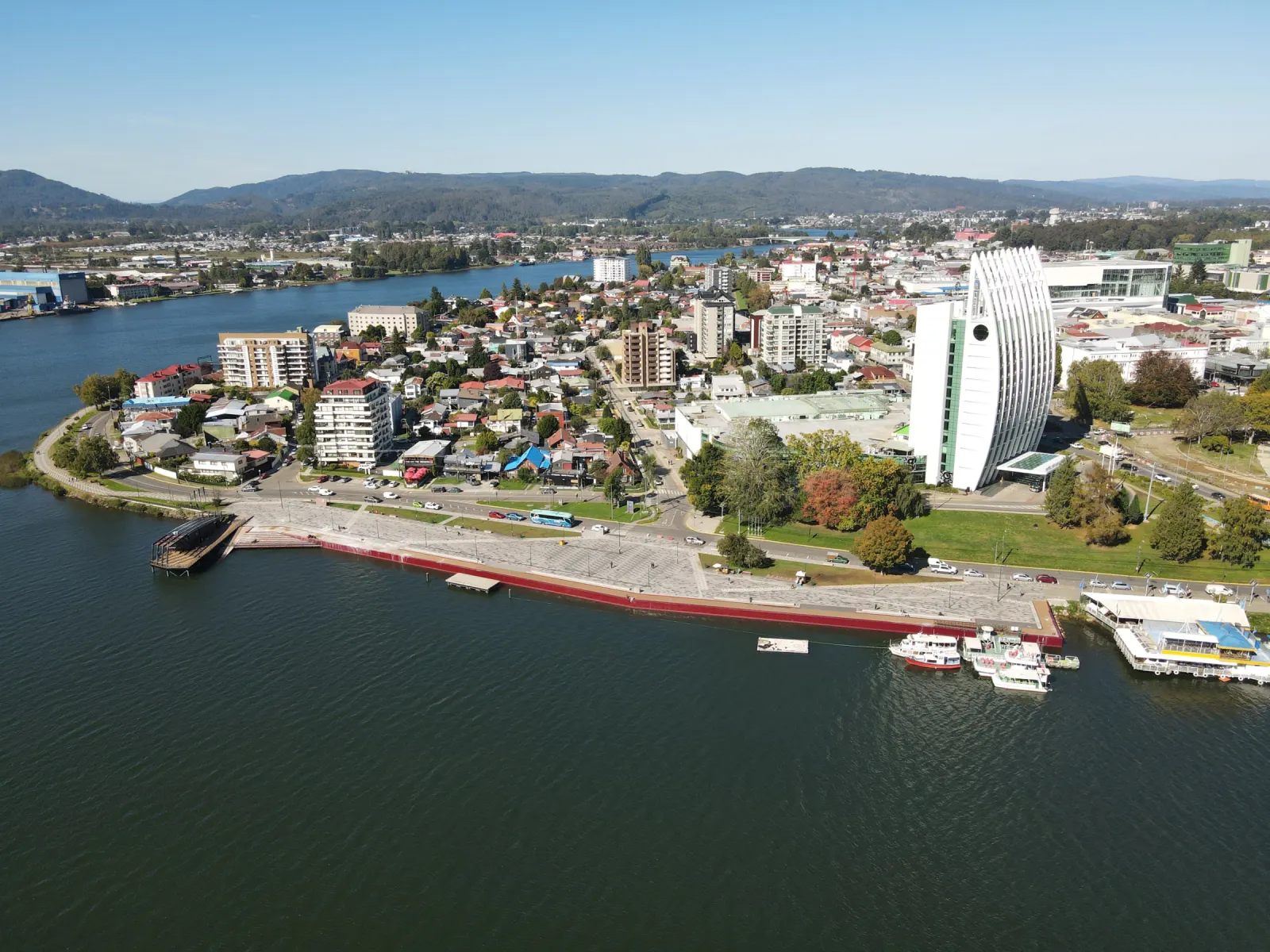
aerial riverfront with white tower building

Valdivia travel guide

What to see, where to stay and the best time to visit Valdivia, Chile.

Best: Jan, Feb, Mar, Dec

Photo: Marc Espejo / Pexels

Country
Chile
Currency
CLP

About Valdivia

Valdivia is a riverside city in southern Chile, built around rivers rather than the ocean, with a strong German colonial history and a lively university population. Visitors come for forts guarding the old river mouth, markets full of sea lions and fish, and museums on Isla Teja. The best months to visit are January, February, March and December, when days are warmer and drier, good for boat trips and fort visits along the coast at Niebla and Corral.

How many days do you need in Valdivia?

Two to three days are enough to see the fish market, a fort or two, and the Isla Teja museums, with time for a boat trip on the river.

Top attractions in Valdivia

  1. 1Riverside Fish Market (Feria Fluvial)

    1 hour

    Costanera Arturo Prat

    Fishmongers sell the day's catch on the bank of the Valdivia River, and sea lions wait below the stalls for scraps. It is the city's best-known sight and a good place to start a walk along the riverfront.

  2. 2Niebla Fort (Castillo de Niebla)

    1–2 hours

    Niebla

    A Spanish colonial fort with cannons cut into the rock above the mouth of the river. It was part of a defence system that protected Valdivia from the sea. A small museum explains the history, and the views over the bay are wide.

  3. 3Corral Fort (Castillo de San Sebastián de la Cruz)

    2–3 hours

    Corral

    The largest of the Spanish forts guarding the bay, on the far side of the estuary in the fishing town of Corral. Most visitors reach it by boat from Niebla or Valdivia, which is part of the appeal.

  4. 4Mancera Island Fort (Castillo San Pedro de Alcántara)

    1–2 hours

    Isla Mancera

    Fort ruins and a colonial church on a small, green island in the middle of the bay. Boats between Niebla and Corral often stop here, so it fits easily into a day of fort visits.

  5. 5Carlos Anwandter Nature Sanctuary

    half a day

    Río Cruces

    Wetlands north of the city, formed when the land sank in the great earthquake. They are home to many water birds, including black-necked swans. Boat trips from the city take you through the marshes.

  6. 6Maurice van de Maele Historical and Anthropological Museum

    1–2 hours

    Isla Teja

    Housed in an old German settler family's mansion by the river. It covers Mapuche culture, the Spanish period and German immigration, which shaped much of Valdivia's character.

  7. 7Austral University Botanical Garden

    1–2 hours

    Isla Teja

    A large, shady garden on the university campus with native Chilean trees and plants from the southern rainforest. It is a quiet place to walk, a short distance from the centre across the bridge.

  8. 8Kunstmann Brewery

    1–2 hours

    Road to Niebla

    One of Chile's best-known craft breweries, a reminder of Valdivia's German brewing heritage. Visitors come for tours, tastings and German-style food, and it is easy to combine with a trip to Niebla.

  9. 9Spanish Towers (Torreón Los Canelos and Torreón del Barro)

    30 minutes

    City centre

    Two round stone towers left from the Spanish defences of the colonial city. They are small, but worth a look on a walk through the centre.

  10. 10Oncol Park

    half a day

    Coast north-west of Valdivia

    A private reserve of temperate coastal rainforest with walking trails and viewpoints over the Pacific and the Andes. The weather here is often wet, which keeps the forest thick and green.
Valdivia by month

Average weather and our month score, from 10 years of climate data.

Weather by month and month scores for Valdivia
Month High / low Rain days Sunshine Score
Best month: January 22°C / 12°C 4 days (35 mm) 12.9 h/day 9.2/10
Best month: February 23°C / 12°C 4 days (29 mm) 12.0 h/day 9.2/10
Best month: March 20°C / 11°C 7 days (80 mm) 10.2 h/day 8.6/10
April 16°C / 9°C 12 days (143 mm) 7.4 h/day 6.4/10
May 13°C / 7°C 15 days (208 mm) 6.2 h/day 4.2/10
June 11°C / 5°C 18 days (328 mm) 4.8 h/day 2.7/10
July 11°C / 5°C 18 days (294 mm) 5.4 h/day 2.6/10
August 11°C / 5°C 18 days (276 mm) 6.5 h/day 3.3/10
September 13°C / 5°C 13 days (171 mm) 8.4 h/day 4.8/10
October 15°C / 7°C 11 days (124 mm) 10.0 h/day 6.2/10
November 17°C / 9°C 10 days (97 mm) 11.1 h/day 7.6/10
Best month: December 20°C / 11°C 7 days (57 mm) 12.6 h/day 8.5/10
  1. Jan

    Peak summer: highs of 22°C, only 4.2 rain days and 12.9 sun hours a day. Scores rate it a best month for a visit.

  2. Feb

    The warmest month, 22.8°C highs, just 4 rain days and 12 sun hours. Another best-rated month for Valdivia.

  3. Mar

    Still mild at 19.8°C, but rain days rise to 7.2. Scores still call it a best month overall.

  4. Apr

    Autumn sets in: highs drop to 16°C and rain days jump to 12.3. Rated good, with wetter, greyer days ahead.

  5. May

    Highs fall to 13.3°C with 15.1 rain days and 208mm of rain. Rated only ok as the wet season builds.

  6. Jun

    Tough weather: highs of just 11°C, 17.8 rain days and 328mm of rain, the wettest month. Rated avoid.

  7. Jul

    The coldest month at 10.5°C highs, with 17.9 rain days and only 5.4 sun hours. Rated avoid for tough, cold, wet conditions.

  8. Aug

    Still harsh: 11.3°C highs, 18 rain days, the most of the year, and 276mm of rain. Rated avoid.

  9. Sep

    Rain days ease to 13.3 and highs climb to 12.9°C as spring begins. Rated ok, still damp.

  10. Oct

    Drier and warmer at 15°C, with rain days down to 11.3. Scores lift it to good.

  11. Nov

    Spring warmth returns: 17.2°C highs, 10.2 rain days, 11.1 sun hours. Rated a best month.

  12. Dec

    Early summer brings 20°C highs, just 7.4 rain days and 12.6 sun hours. Rated a best month to visit.

Climate averages 2015–2024 · Best time to visit Chile →

Where to stay in Valdivia

The best areas to base yourself and who each one suits.

Centro

Good for first-timers, short stays, no car

The compact grid around Plaza de la República puts you within walking distance of the riverside Costanera, the fish market and the boat departures. Cafés, restaurants and buses to the coast are all close by. Streets near the plaza and main roads can be noisy with traffic and weekend crowds.

Isla Teja

Good for museum lovers, quiet, university visitors

Across the bridge from the centre, this leafy residential island holds the Universidad Austral campus, its botanical garden and the riverside museums. It feels calmer and greener than downtown, and the centre is a short walk over the river. Evenings are quiet and choices for eating out are fewer, so you will often cross back to Centro for dinner.

General Lagos

Good for architecture fans, couples, walkers

This historic street south of the centre is lined with old wooden houses built by German settlers, some now used as guesthouses and cafés. It is a pleasant, quieter base with an easy riverside walk into town. It is a little further from the bus terminal and main shopping streets.

Getting to and around Valdivia

From the airport
No specific airport-transfer data is given for Valdivia, but visitors usually take a taxi, a pre-booked transfer, or an airport shuttle bus to reach the centre, since no fixed schedule or fare is confirmed here.
Public transport
Valdivia has local buses, but there is little formal metro or tram service. A practical tip: use buses or boat trips for Niebla, Corral and Isla Mancera; taxis cover shorter hops within the centre easily.
On foot
Centro is compact and walkable, with Isla Teja's museums and botanical garden just a short bridge-crossing away for pedestrians exploring both riverside areas.

Food to try in Valdivia

Curanto

A mix of shellfish, meat, potatoes and chapaleles cooked together, often steamed in a pot rather than underground here. Locals eat it at markets and family lunches, especially on weekends.

Kuchen

A fruit or custard cake brought by German settlers who shaped much of Valdivia's history. Bakeries and cafés around the city serve it with afternoon coffee or tea.

Marisco empanadas

Pastries filled with local shellfish such as mussels or clams instead of the usual beef. They are a common snack at the riverside market by the Calle-Calle river.

Cazuela de mariscos

A warm soup with shellfish, potato, corn and squash, cooked slowly. It is a typical home-style lunch, especially during the cooler, wetter months.

Cerveza Kunstmann

A locally brewed beer tied to Valdivia's German heritage, served in bars and the brewery itself on the edge of town. It pairs with hearty local dishes like sausages and stews.

More of Chile

Chile travel guide →

Valdivia: frequently asked questions

Is Valdivia good in August?

No, August is one of the toughest months. It scores 3.3 out of 10 and is marked as a month to plan around. Expect 18 rain days, 276 mm of rain, and only 6.5 hours of sunshine, with highs near 11.3°C. It's one of the wettest and cloudiest months of the year.

When is the best time to visit Valdivia?

January, February, March and December score highest, all rated 'best' with scores of 8.5 to 9.2. January and February are warmest, with highs around 22°C and only 4 rain days a month. March stays warm (19.8°C high) but rain days rise to 7.2, so it's slightly cooler and wetter than midsummer.

How many days do I need in Valdivia?

Two to three days cover the main sights. The fish market and Spanish towers take about an hour each, the forts at Niebla, Corral and Mancera Island need 1–3 hours, and the nature sanctuary or Oncol Park each take half a day. Spreading these over two or three days avoids rushing between the river, coast and city centre.

What is the rainiest month in Valdivia?

June is the wettest month, with 328 mm of rain over 17.8 days. July and August are close behind, with 294 mm and 276 mm. These three months also have the fewest sun hours of the year, between 4.8 and 6.5 hours a day.

Is Valdivia warm in summer?

Yes, December to February is the warmest stretch. Highs reach 20–22.8°C and lows stay around 10–12.3°C. Rain is light too, with only 4 to 7.4 rain days per month and 29 to 57 mm of rainfall, making this the driest and sunniest period of the year.