Skip to content
wheretotravel.info
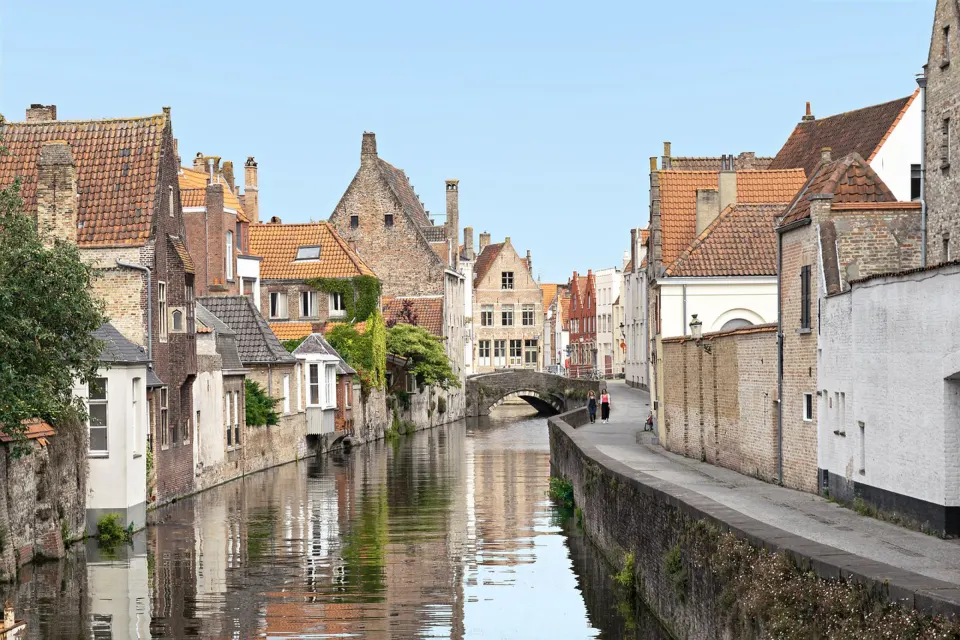
Canal lined with historic gabled houses and bridge

Bruges travel guide

What to see, where to stay and the best time to visit Bruges, Belgium.

Best: Jun, Jul, Aug, Sep

Photo: ErinSummer / Pixabay

Country
Belgium

About Bruges

Bruges is a Belgian city of 118,509 people, and most visitors spend their time in and around the old town. Many key sights are grouped in the centre: the Belfry and the Markt, and Burg Square with City Hall and the Basilica of the Holy Blood. Art lovers can add the Groeningemuseum and Saint John's Hospital. A canal boat tour takes 30–45 minutes. The best months to visit are June, July, August and September.

How many days do you need in Bruges?

We have no set number of days for Bruges. Most main sights take 30 minutes to 2 hours each, and many sit around the Markt and Burg. Allow extra time for quieter areas like Sint-Anna or the Beguinage and Minnewater.

Top attractions in Bruges

  1. 1Belfry of Bruges

    1–2 hours

    Markt

    This medieval bell tower is the symbol of the city. You climb a long, narrow staircase past the carillon to a view over the rooftops. Queues can be long in busy periods, so go early, and skip it if you dislike tight spaces.

  2. 2Markt (Market Square)

    30–60 minutes

    City centre

    The main square, lined with colourful guild houses and the Provincial Court, with the Belfry on one side. It is the natural starting point for a walk. The cafés here are very touristy, so eat a few streets away.

  3. 3Burg Square and City Hall

    1 hour

    Burg

    A small square next to the Markt with some of the city's finest buildings. The Gothic City Hall has a richly decorated hall that you can visit inside.

  4. 4Basilica of the Holy Blood

    30–45 minutes

    Burg

    A small church in the corner of the Burg with a dark lower chapel and a more ornate upper chapel. It keeps a relic said to hold drops of Christ's blood and is still an active place of worship, so dress and behave accordingly.

  5. 5Canal Boat Tour

    30–45 minutes

    City centre

    Open boats leave from several jetties in the centre and show the city from the water, passing under low bridges. It is the easiest way to see the canals. Boats may not run in bad weather or when the canals freeze.

  6. 6Groeningemuseum

    1–2 hours

    Dijver

    The city's main art museum, best known for its Flemish Primitive paintings, including works by Jan van Eyck and Hans Memling. It is compact, so art lovers can see it well in a short visit.

  7. 7Church of Our Lady

    45–60 minutes

    Mariastraat

    A large brick church with one of the tallest towers in the city. Inside is Michelangelo's marble Madonna and Child, one of his few works to leave Italy in his lifetime, plus the tombs of Mary of Burgundy and Charles the Bold.

  8. 8Saint John's Hospital

    1–2 hours

    Mariastraat

    One of Europe's oldest surviving hospital buildings, now a museum. It shows how the sick were cared for in the Middle Ages and holds several paintings by Hans Memling in the old chapel.

  9. 9Beguinage and Minnewater

    1 hour

    South of the centre

    The Beguinage is a quiet walled courtyard of white houses around a garden, once home to a community of religious women and now a place for silence. Just beyond it, the Minnewater lake and park are pleasant for a walk. Come early or late to avoid tour groups.

  10. 10Windmills on the Kruisvest

    1 hour

    East edge of the old town

    A green path along the old city ramparts with a row of historic windmills. It is a calm walk away from the crowded centre, and one mill can usually be visited inside.
Bruges by month

Average weather and our month score, from 10 years of climate data.

Weather by month and month scores for Bruges
Month High / low Rain days Sunshine Score
January 7°C / 2°C 14 days (83 mm) 4.0 h/day 1.1/10
February 9°C / 3°C 12 days (59 mm) 5.5 h/day 2.3/10
March 11°C / 4°C 14 days (72 mm) 7.3 h/day 3.4/10
April 14°C / 5°C 11 days (51 mm) 10.4 h/day 5.5/10
May 17°C / 9°C 12 days (59 mm) 11.5 h/day 7.3/10
Best month: June 21°C / 13°C 11 days (64 mm) 12.1 h/day 7.8/10
Best month: July 22°C / 14°C 12 days (63 mm) 11.9 h/day 7.6/10
Best month: August 23°C / 15°C 13 days (73 mm) 10.9 h/day 7.5/10
Best month: September 20°C / 12°C 12 days (71 mm) 9.2 h/day 7.5/10
October 16°C / 10°C 13 days (74 mm) 6.4 h/day 5.9/10
November 11°C / 6°C 15 days (87 mm) 4.4 h/day 2.4/10
December 9°C / 4°C 15 days (81 mm) 3.2 h/day 1.1/10
  1. Jan

    Avoid. It is cold, wet and dark, with highs of 7°C, about 14 rain days and only 4 hours of sun a day. Score: 1.1.

  2. Feb

    Avoid. Highs reach just 8.7°C, with around 12 rain days and 5.5 hours of sun. It is still too cold and grey. Score: 2.3.

  3. Mar

    Avoid. Highs are 10.8°C, but there are nearly 14 rain days and only 7.3 hours of sun. Spring has not really arrived. Score: 3.4.

  4. Apr

    OK. Highs rise to 13.5°C, rain days drop to about 11 and sun reaches 10.4 hours. Pack layers for cool mornings. Score: 5.5.

  5. May

    Good. Highs are a pleasant 17.2°C, with about 12 rain days and 11.5 hours of sun. This is a solid time for walking. Score: 7.3.

  6. Jun

    Best. This is the top-scoring month, with highs of 20.8°C, the fewest rain days at about 11 and 12.1 hours of sun. Score: 7.8.

  7. Jul

    Best. Highs are 22°C, with about 12 rain days and 11.9 hours of sun. It is warm, but still bring a rain jacket. Score: 7.6.

  8. Aug

    Best. This is the warmest month, with highs of 22.5°C. Expect around 13 rain days and 73 mm of rain, so some showers are likely. Score: 7.5.

  9. Sep

    Best. Highs are still 19.8°C, with about 12 rain days and 9.2 hours of sun. It is a good late-summer option. Score: 7.5.

  10. Oct

    OK. Highs fall to 15.7°C and sun drops to 6.4 hours, with nearly 13 rain days. Go early in the month if you can. Score: 5.9.

  11. Nov

    Avoid. This is the wettest month, with about 15 rain days and 87 mm of rain. Highs are 10.7°C and there are only 4.4 hours of sun. Score: 2.4.

  12. Dec

    Avoid. It is the darkest month, with only 3.2 hours of sun. Highs are 8.5°C and there are nearly 15 rain days. Score: 1.1.

Climate averages 2015–2024 · Best time to visit Belgium →

Where to stay in Bruges

The best areas to base yourself and who each one suits.

Markt and Burg (historic centre)

Good for first-timers, short stays

This is the medieval core around the two main squares, with the belfry, canal boat departures and most sights a short walk away. Staying here saves time if you only have a night or two. Drawback: day-trippers and tour groups fill the streets from late morning. Rooms facing the squares can hear bells and late crowds.

Sint-Anna

Good for couples, quiet, repeat visitors

A residential area just east of the centre, across the canal, with lived-in streets, local cafés and the windmills along the old ramparts. You get calm evenings but are still a short walk from the main squares. Drawback: there are fewer restaurants and shops on your doorstep.

Sint-Gillis and Jan van Eyckplein

Good for couples, photographers, quiet

The old merchant quarter north of the Markt has quiet canals, brick houses and some of the city's most attractive corners with far fewer people. Mornings and evenings are peaceful. Drawback: the northern edge is a longer walk from the station if you carry luggage.

Begijnhof and Minnewater

Good for families, romantics, rail arrivals

The southern part of the old town, around the béguinage and the lake, is green and calm once the day visitors leave. It is handy for the train station and still walkable to the centre. Drawback: the paths around the Begijnhof get very busy with groups in the middle of the day.

't Zand

Good for practical travellers, concert-goers

A large open square on the western side of the old town, near the concert hall and a short walk from the station. It has plenty of cafés and is easy to reach by bus. Drawback: it feels more modern and less charming than the canal streets, and there is traffic around the square.

Langestraat

Good for nightlife, budget-minded

A long street in the eastern part of the old town with bars, small restaurants and a younger, more local feel. Good if you want a drink after the centre goes quiet. Drawback: it can be noisy late at night, especially at weekends.

Getting to and around Bruges

From the airport
Bruges has no major airport of its own. Most visitors fly into Brussels and take a train to Bruges station. From there, walk into the centre or take a local bus.
Public transport
There is no metro or tram. Local De Lijn buses link the station with Markt and the edges of town. Tip: the centre is small, so most visitors only need a bus between the station and their hotel.
On foot
The old town is compact and best seen on foot. Markt and Burg are side by side. Dijver and Mariastraat sights lie just south, then the Beguinage. The windmills sit on the east edge.

Food to try in Bruges

Frites (Belgian fries)

Thick-cut potatoes fried twice and served in a paper cone with mayonnaise or other sauces. Locals buy them from frituur stalls and snack bars, including the stands on the Markt square.

Stoofvlees

A slow-cooked Flemish beef stew made with dark beer, onions and often a slice of bread with mustard. It is usually served with fries in traditional brown cafés, especially in colder weather.

Moules-frites

A pot of mussels steamed in white wine, beer or a simple celery and onion broth, served with fries. Belgians eat it as a sit-down restaurant meal, often in the colder months.

Belgian chocolate

Bruges has many chocolate shops selling pralines and filled chocolates, many made on site. People buy them as gifts or treats, and hot chocolate is a common café drink in winter.

Waffles

Belgian waffles come in two main styles: light, rectangular Brussels waffles and denser, sweeter Liège waffles. In Bruges they are eaten as a street snack or in tearooms, often with sugar or cream.

Brugse Zot beer

A blond and a dark beer brewed by De Halve Maan, the family brewery in the old town. Locals drink it in cafés, and beer is also a common cooking ingredient in Flemish dishes.

More of Belgium

Belgium travel guide →

Bruges: frequently asked questions

When is the best time to visit Bruges?

June to September is the best time to visit Bruges. These 4 months score between 7.5 and 7.8 out of 10. Daytime highs reach 20.8 to 22.5°C and June gets about 12.1 hours of sun a day. Rain is still common, with 10.8 to 12.6 rain days a month, so bring a light rain jacket even in summer.

Is Bruges good in August?

Yes, August is one of the best months for Bruges, with a score of 7.5. It is the warmest month, with highs of 22.5°C and lows of 14.6°C, plus about 10.9 hours of sun a day. The downside is rain: expect around 12.6 rain days and 73 mm in the month, so plan some indoor stops.

Is Bruges worth visiting in December or January?

Not for the weather. December and January both score just 1.1 and are rated months to avoid. Highs are only 7 to 8.5°C, there are about 14 to 15 rain days, and sunshine drops to 3.2 hours a day in December. If you go anyway, expect short, grey and wet days.

Is April or October a good time for Bruges?

Both are acceptable but not ideal, and both are rated ok. April scores 5.5, with highs of 13.5°C and 11.2 rain days. October scores slightly higher at 5.9, with milder highs of 15.7°C but more rain, at 12.8 rain days and 74 mm. Pack warm layers for either month.

How many days do I need in Bruges?

You can see the core sights around the Markt and Burg in a full day, but a longer stay suits museum lovers. The Markt takes 30–60 minutes, the Belfry 1–2 hours and a canal boat tour 30–45 minutes. The Groeningemuseum and Saint John's Hospital each need 1–2 hours, so adding them makes one day tight.