Skip to content
wheretotravel.info
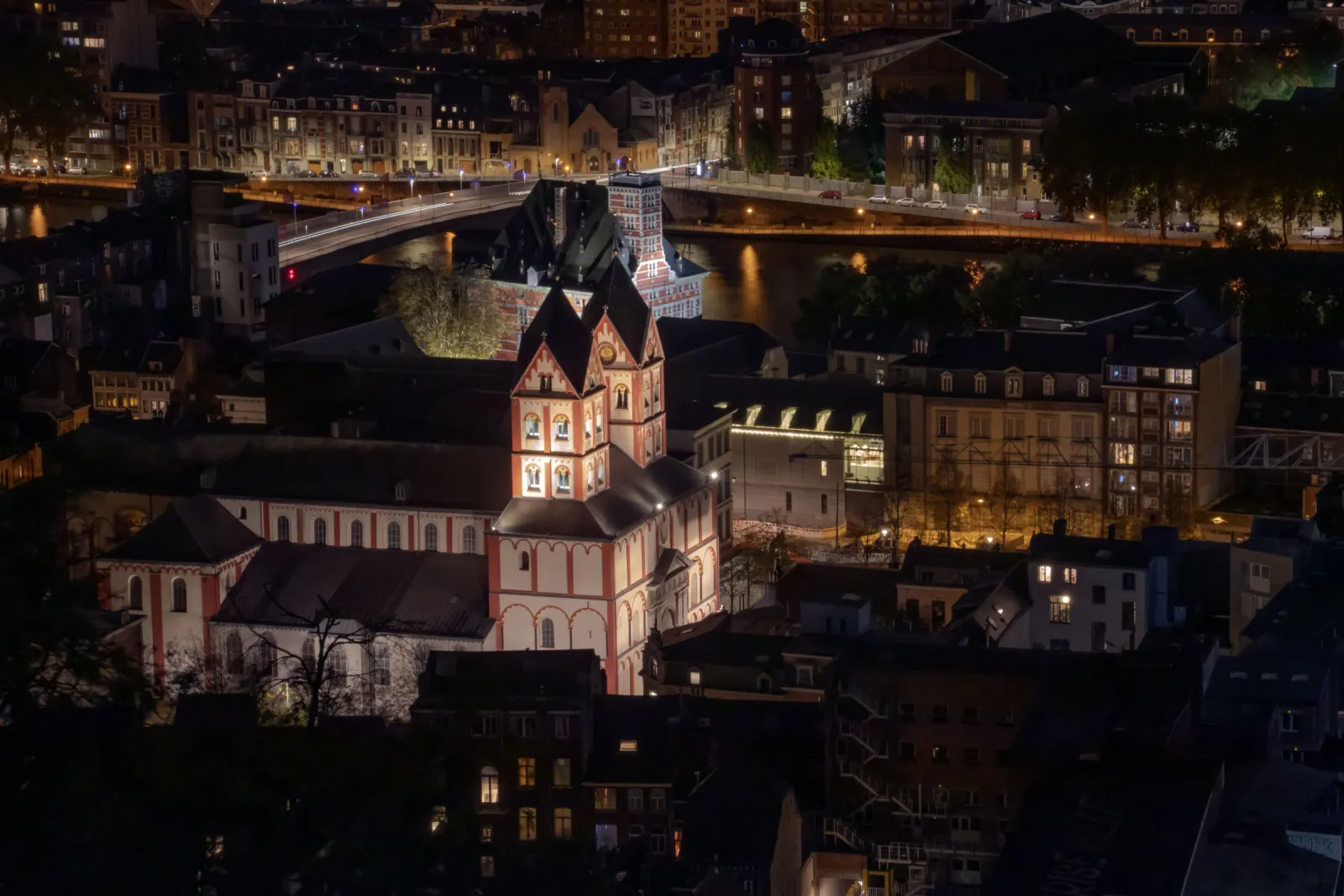
Church illuminated at night above city

Liège travel guide

What to see, where to stay and the best time to visit Liège, Belgium.

Best: May, Jun, Sep

Photo: Julien GAROT / Pexels

Country
Belgium

About Liège

Liège is a city of 195,278 people in Belgium, on the river Meuse. It is not the capital and it is not on the coast. Most of its history sits in the old core around Hors-Château and Féronstrée. Here you find the Montagne de Bueren, the Museum of Walloon Life and St Bartholomew's Collegiate Church. Le Carré suits nightlife, and Guillemins, with its station, suits rail travellers. The best months to visit are May, June and September.

How many days do you need in Liège?

Plan about 2 days. Most main sights take between 30 minutes and 2 hours. The Grand Curtius needs 2–3 hours on its own. Several sights sit together in Hors-Château, so one day there is easy to plan.

Top attractions in Liège

  1. 1Montagne de Bueren

    1 hour

    Hors-Château

    A long, steep public staircase that climbs from the old Hors-Château street up to the Citadel hill. The climb is tiring, but the view over the rooftops and the Meuse valley from the top is the best in the city.

  2. 2Palace of the Prince-Bishops

    30 minutes–1 hour

    Place Saint-Lambert

    The former seat of the prince-bishops who ruled Liège for centuries, on the city's main square. Today it holds law courts and government offices, so most visitors only see the arcaded main courtyard. That courtyard is still worth a short stop on any walk through the centre.

  3. 3Liège-Guillemins Station

    30 minutes–1 hour

    Guillemins

    The main railway station, designed by Santiago Calatrava, with a huge curved roof of white steel and glass. Many travellers arrive here anyway, so take a few minutes to walk through it and look back from the square in front.

  4. 4Grand Curtius

    2–3 hours

    Féronstrée, on the Meuse quays

    The city's main history museum, set in a group of old buildings including a red-brick mansion by the river. Collections cover archaeology, religious art from the Meuse region, decorative arts and weapons. It is the best single place to understand the history of Liège.

  5. 5La Boverie

    1–2 hours

    Parc de la Boverie, Outremeuse

    The city's fine arts museum, in a restored building in a riverside park between the Meuse and a side channel. It shows a permanent collection of Belgian and European art and hosts large temporary exhibitions. Combine it with a walk in the park.

  6. 6La Batte Market

    2 hours

    Quai de la Batte

    A large open-air market held on Sunday mornings along the Meuse quays, selling food, clothes, plants and everyday goods. It is lively and local, but very crowded around midday; go early if you dislike crowds, and note there is nothing to see on other days.

  7. 7St Bartholomew's Collegiate Church

    30 minutes–1 hour

    Hors-Château

    A Romanesque church with two tall west towers, at the end of the Hors-Château quarter. Inside is a famous medieval bronze baptismal font, attributed to Renier de Huy, one of the key works of Mosan art.

  8. 8St Paul's Cathedral

    1 hour

    City centre

    The cathedral of Liège, a Gothic church with a quiet cloister. Its treasury holds precious religious objects, including a richly decorated reliquary bust of Saint Lambert.

  9. 9Coteaux de la Citadelle

    1–2 hours

    Citadel hill, above Hors-Château

    A network of footpaths, steps, gardens and old terraces on the green hillside between the old town and the Citadel. It is a good walk after the Montagne de Bueren, with several viewpoints over the city. Paths are steep and can be slippery after rain.

  10. 10Museum of Walloon Life

    1–2 hours

    Hors-Château

    A museum about daily life, crafts, customs and language in Wallonia, housed in a former convent. It also has a traditional puppet theatre, including Tchantchès, the city's folk hero.
Liège by month

Average weather and our month score, from 10 years of climate data.

Weather by month and month scores for Liège
Month High / low Rain days Sunshine Score
January 6°C / 1°C 16 days (89 mm) 3.5 h/day 0.9/10
February 8°C / 2°C 13 days (72 mm) 5.5 h/day 1.7/10
March 11°C / 3°C 14 days (80 mm) 7.0 h/day 3.3/10
April 14°C / 5°C 11 days (50 mm) 9.4 h/day 5.7/10
Best month: May 18°C / 9°C 13 days (70 mm) 10.7 h/day 7.5/10
Best month: June 22°C / 13°C 12 days (85 mm) 11.0 h/day 7.6/10
July 23°C / 14°C 13 days (79 mm) 11.2 h/day 7.4/10
August 23°C / 15°C 13 days (81 mm) 10.4 h/day 7.3/10
Best month: September 20°C / 11°C 13 days (76 mm) 9.0 h/day 7.5/10
October 15°C / 9°C 14 days (72 mm) 5.9 h/day 5.3/10
November 10°C / 5°C 14 days (75 mm) 4.5 h/day 2.3/10
December 7°C / 3°C 16 days (84 mm) 3.1 h/day 0.8/10
  1. Jan

    Highs near 5.5°C with rain on about 16 days and just 3.5 hours of sun; cold, grey and damp makes this the lowest-scoring month, score 0.9.

  2. Feb

    Still chilly at 8°C high, rain on 13.3 days, sun creeping up to 5.5 hours; score 1.7 keeps it a tough-weather month.

  3. Mar

    Highs reach 10.6°C with 14 rain days and 7 sun hours; milder but still unsettled, score 3.3.

  4. Apr

    Highs of 13.9°C, rain drops to 11.2 days and sun hours rise to 9.4; an ok month with a score of 5.7.

  5. May

    Warm at 18°C with 12.5 rain days and 10.7 sun hours; one of the best months, score 7.5.

  6. Jun

    Highs of 21.9°C, 11.9 rain days and 11 sun hours; the top-scoring month at 7.6.

  7. Jul

    Hot at 23.1°C high with 12.9 rain days and 11.2 sun hours; a good month, score 7.4.

  8. Aug

    Peak warmth at 23.3°C, 13.4 rain days, 10.4 sun hours; still good, score 7.3.

  9. Sep

    Highs of 19.7°C, rain on 12.6 days and 9 sun hours; back among the best months, score 7.5.

  10. Oct

    Cooling to 15.2°C with 13.8 rain days and sun down to 5.9 hours; an ok month, score 5.3.

  11. Nov

    Highs of just 9.8°C, 13.8 rain days and only 4.5 sun hours; damp and dim, score 2.3.

  12. Dec

    Coldest run-in with 7.3°C highs, rain on 15.9 days and 3.1 sun hours; the lowest score of the year at 0.8.

Climate averages 2015–2024 · Best time to visit Belgium →

Where to stay in Liège

The best areas to base yourself and who each one suits.

Hors-Château and Féronstrée

Good for history lovers, couples

These old streets run below the hillside, with brick houses, small courtyards, museums and the steps of the Montagne de Bueren nearby. The area feels calmer and more characterful than the main squares while staying close to the centre. Expect cobbles and steep lanes if you head uphill, which can be tiring with luggage.

Le Carré

Good for nightlife, younger travellers

This small grid of pedestrian streets is packed with bars, restaurants and late-night venues, and it is a short walk from the main shopping streets. Stay here if you want to walk home after a night out. It is loud late at night, especially at weekends, so light sleepers should look elsewhere.

Guillemins

Good for rail travellers, day trips

This area surrounds the striking Liège-Guillemins station, with fast trains to Brussels, Germany and beyond. It is practical if you plan day trips or arrive late. The streets around the station feel less charming, and the historic centre is a longish walk or a bus ride away.

Cointe

Good for families, quiet

A residential hill above Guillemins, with a park, older houses and wide views over the city. It is calm and green, which suits a slower stay. It is steep and far from the centre, so you will depend on buses, taxis or a car.

Getting to and around Liège

From the airport
Liège has no major passenger airport link listed here. Most visitors arrive by train into Liège-Guillemins Station, then continue into the centre by local bus or taxi from there.
Public transport
Liège runs city buses as its main public transport, with no metro or tram network. A practical tip: Liège-Guillemins Station in the Guillemins area is the main hub, so plan bus connections from there if you arrive by train.
On foot
The centre is compact and walkable. Hors-Château, Féronstrée, and the Citadel hill sit close together, linking Montagne de Bueren, St Bartholomew's Church, Grand Curtius, and the Museum of Walloon Life on foot.

Food to try in Liège

Boulets à la liégeoise

Meatballs cooked in a sweet-sour sauce made with Liège syrup, often served with fries. This is a classic home-style dish found on menus in local brasseries across the city.

Liège waffle

A dense, sweet waffle made with chunks of pearl sugar that caramelise when cooked. Locals eat it warm from street stalls or bakeries, usually as a snack rather than a breakfast item.

Sirop de Liège

A thick, dark syrup made from fruit such as apples and pears, used as a spread or as an ingredient in sauces like the one for boulets. It's a regional product tied closely to the city's name.

Salade liégeoise

A warm salad of green beans, potatoes, bacon, and onions, dressed with vinegar. It's a traditional dish served as a starter or light meal in local restaurants.

Peket

A juniper-flavoured spirit similar to gin, traditionally drunk in local bars. It comes in many fruit-flavoured versions and is closely linked to Liège's drinking culture.

More of Belgium

Belgium travel guide →

Liège: frequently asked questions

Is Liège good in August?

Yes, August scores 7.3 out of 10 and is rated 'good'. Daytime highs reach 23.3°C, the warmest month of the year alongside July. It still rains on about 13 days with 81mm total, so pack a light rain jacket even in summer.

What is the best time to visit Liège?

May, June and September are the best months, each scoring 7.5–7.6 out of 10. June is warmest of the three with highs of 21.9°C and 11 hours of sun a day, while September offers 19.7°C highs with slightly fewer rain days (12.6) than June (11.9).

How many days do I need in Liège?

Two days is enough to see the main sights. The ten key attractions, from Montagne de Bueren (1 hour) to Grand Curtius (2–3 hours) and La Batte Market (2 hours), add up to roughly 13 hours of visiting time, which fits comfortably into two unhurried days.

Is Liège rainy?

Liège sees rain on 11 to 16 days every month, so some rain is likely whenever you visit. December and January are wettest, with 15.9 and 15.7 rain days and only 3.1 and 3.5 hours of sun per day. April has the fewest rain days, at 11.2, with 50mm of rainfall.

What is Liège like in winter?

December and January are the coldest, darkest months, both scoring under 1 out of 10. Highs sit at 7.3°C in December and 5.5°C in January, with lows near or below freezing and only 3 to 3.5 hours of sun a day, so days feel short and grey rather than snowy.