Skip to content
wheretotravel.info
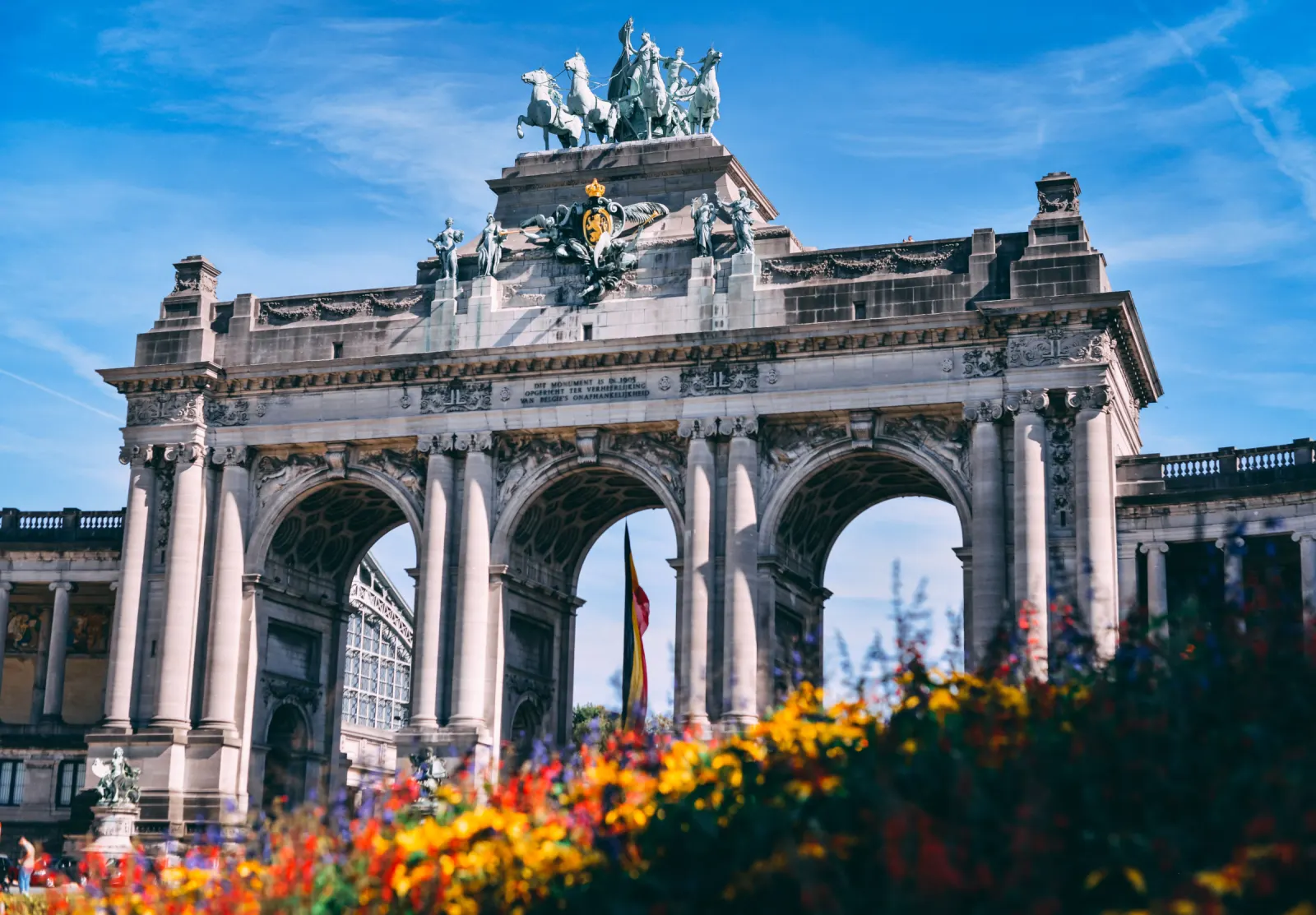
Triumphal arch with colorful flowers in foreground

Brussels travel guide

What to see, where to stay and the best time to visit Brussels, Belgium.

Best: Jun, Jul, Aug, Sep

Photo: Paul Deetman / Pexels

Country
Belgium

About Brussels

Brussels is the capital of Belgium. It is inland, so come for museums, architecture and food, not beaches. The Lower Town is compact. It holds the Grand-Place, the Royal Galleries of Saint-Hubert and Manneken Pis. The Upper Town adds the Magritte Museum and the Musical Instruments Museum. Sainte-Catherine suits food lovers, and Saint-Gilles suits budget travellers. The best months to visit are June to September.

How many days do you need in Brussels?

There is no set figure, but the main sights fit a short stay. The Lower Town sights take 15 minutes to 1 hour each. Allow 2 hours for the Atomium, 1–2 hours per museum and half a day for Parc du Cinquantenaire.

Top attractions in Brussels

  1. 1Grand-Place

    1 hour

    City centre (Lower Town)

    The central market square, lined with ornate guild houses and the Gothic Town Hall. It is a UNESCO World Heritage Site and the natural starting point for any visit. Come early in the morning or after dark to avoid the worst crowds.

  2. 2Royal Galleries of Saint-Hubert

    30 minutes–1 hour

    City centre (Lower Town)

    A set of glass-roofed shopping arcades from the 19th century, a short walk from the Grand-Place. They hold chocolate shops, cafés, bookshops and a theatre, and are a dry place to walk when it rains.

  3. 3Manneken Pis

    15 minutes

    City centre (Lower Town)

    A small bronze fountain statue of a boy urinating, and the city's best-known symbol. It is much smaller than most people expect, so treat it as a quick stop on the way between other sights. He is often dressed in one of his many costumes.

  4. 4Magritte Museum

    1–2 hours

    Mont des Arts (Upper Town)

    Part of the Royal Museums of Fine Arts of Belgium, this museum holds a large collection of works by the Belgian surrealist René Magritte. The neighbouring Oldmasters Museum, in the same complex, shows Flemish painting including works by Bruegel and Rubens.

  5. 5Atomium

    2 hours

    Heysel (north of the centre)

    A giant steel model of an iron crystal, built for a world's fair and now a museum and viewpoint. Inside you move between the spheres by escalators and stairs, and the top sphere gives views over the city. It is outside the centre, so plan the trip there by metro.

  6. 6Musical Instruments Museum

    1–2 hours

    Mont des Arts (Upper Town)

    A large collection of instruments from around the world, housed in the Art Nouveau Old England building. The rooftop café has one of the best views over the Lower Town.

  7. 7Parc du Cinquantenaire

    Half a day

    European Quarter

    A large park with a triumphal arch at its centre. Around it are the Art & History Museum, the Royal Military Museum and Autoworld, a car museum, so it works well as a day for museums and green space together.

  8. 8Horta Museum

    1–1.5 hours

    Saint-Gilles

    The former home and studio of architect Victor Horta, one of the founders of Art Nouveau. It is part of a UNESCO World Heritage listing, and shows the style down to the door handles and furniture. Space inside is limited, so expect queues at busy times.

  9. 9Belgian Comic Strip Center

    1–2 hours

    City centre (Lower Town)

    A museum about Belgian comics, including Tintin and the Smurfs, in an Art Nouveau building designed by Victor Horta. It is a good choice for families and for anyone interested in how comics are made.
Brussels by month

Average weather and our month score, from 10 years of climate data.

Weather by month and month scores for Brussels
Month High / low Rain days Sunshine Score
January 6°C / 2°C 14 days (75 mm) 3.6 h/day 1.1/10
February 8°C / 2°C 12 days (67 mm) 5.4 h/day 2.1/10
March 11°C / 3°C 14 days (71 mm) 7.0 h/day 3.5/10
April 14°C / 5°C 11 days (47 mm) 9.7 h/day 5.9/10
May 18°C / 9°C 12 days (63 mm) 10.9 h/day 7.6/10
Best month: June 22°C / 13°C 10 days (71 mm) 11.3 h/day 8.0/10
Best month: July 23°C / 14°C 11 days (68 mm) 11.4 h/day 7.8/10
Best month: August 23°C / 15°C 12 days (59 mm) 10.7 h/day 7.7/10
Best month: September 20°C / 12°C 11 days (65 mm) 9.0 h/day 7.8/10
October 16°C / 9°C 12 days (71 mm) 6.0 h/day 5.8/10
November 10°C / 5°C 13 days (69 mm) 4.5 h/day 2.6/10
December 8°C / 3°C 14 days (75 mm) 3.2 h/day 1.0/10
  1. Jan

    Avoid. Highs reach only 6.3°C and it rains on about 14 days. A score of 1.1 makes this one of the worst months to visit.

  2. Feb

    Avoid. Still cold, with highs of 8.4°C and about 12 rain days. It scores 2.1, so most days are grey and damp.

  3. Mar

    Avoid. Highs rise to 10.9°C, but it rains on about 14 days. A score of 3.5 means spring has not really arrived yet.

  4. Apr

    OK. Highs of 14.1°C and about 11 rain days. It scores 5.9, so it is fine if you pack layers and a raincoat.

  5. May

    Best. Highs of 18.2°C make walking pleasant, though it still rains on about 12 days. It scores 7.6.

  6. Jun

    Best, and the top month with a score of 8. Highs reach 22°C and it has the fewest rain days, about 10.

  7. Jul

    Best. The warmest weather arrives, with highs of 23°C and about 11 rain days. It scores 7.8.

  8. Aug

    Best. Highs of 23.4°C are the warmest of the year, with about 12 rain days. It scores 7.7.

  9. Sep

    Best. Highs of 20.1°C and about 11 rain days. A score of 7.8 makes it as good as July.

  10. Oct

    OK. Highs fall to 15.6°C and it rains on about 12 days. It scores 5.8, so expect cooler, wetter days.

  11. Nov

    Avoid. Highs drop to 10.3°C and it rains on about 13 days. A score of 2.6 means short, damp days.

  12. Dec

    Avoid. It has the lowest score of the year, 1. Highs are 7.8°C and it rains on about 14 days.

Climate averages 2015–2024 · Best time to visit Belgium →

Where to stay in Brussels

The best areas to base yourself and who each one suits.

Sainte-Catherine and Rue Antoine Dansaert

Good for food lovers, couples, design shops

Just west of the centre, this area has seafood restaurants around the old fish market, independent fashion shops and lively bars. You can still walk to the Grand-Place. Drawback: the squares get busy and loud on weekend evenings.

Sablon and the Marolles

Good for culture, antiques, weekend markets

The Sablon is an elegant area of chocolate shops, antique dealers and galleries, close to the main art museums on the Mont des Arts. The Marolles below it is more down-to-earth, with a daily flea market. Drawback: the streets climb steeply between the Lower and Upper Town.

Saint-Gilles

Good for budget-minded, nightlife, creative crowd

A relaxed, mixed area with Art Nouveau architecture, bars around the Parvis and good links from Brussels-Midi station for Eurostar and Thalys arrivals. Drawback: the streets right around Midi station feel run-down and are less pleasant at night.

European Quarter

Good for business travellers, quiet evenings

Home to the EU institutions, with the large Parc du Cinquantenaire and Parc Léopold nearby. It is calm, well served by the metro and often has more hotel availability at weekends. Drawback: it empties out after office hours and at weekends, so evenings can feel lifeless.

Getting to and around Brussels

From the airport
Brussels Airport is outside the city. The usual options are a direct train to the central stations, an airport bus or a taxi. Check current fares and journey times before you travel.
Public transport
Brussels has a metro, trams and buses that work as one network. You will mostly need them for sights outside the centre. Tip: take the metro to the Atomium in Heysel, north of the centre, instead of walking.
On foot
The Lower Town is compact. Grand-Place, the Royal Galleries of Saint-Hubert, Manneken Pis and the Comic Strip Center are close together. Mont des Arts is uphill nearby. Saint-Gilles and the European Quarter are further out.

Food to try in Brussels

Moules-frites

A pot of mussels steamed with white wine or celery and onion, served with fries. Locals eat it in brasseries, often in the colder months when mussels are in season.

Brussels waffle

A light, crisp, rectangular waffle with deep squares. It is usually topped with powdered sugar, cream or fruit, and eaten as a snack from street stands or in tea rooms.

Frites from a friterie

Thick fries cooked twice, served in a paper cone with mayonnaise or another sauce. People buy them at street kiosks called friteries, often as a quick lunch or late-night snack.

Carbonnade flamande

A slow-cooked beef stew made with Belgian beer, onions and often a slice of bread spread with mustard. It is a home-style dish found in traditional brasseries, usually served with fries.

Stoemp

Mashed potatoes mixed with vegetables such as carrots, leeks or cabbage, usually served with sausage or bacon. It is a simple, filling Brussels dish, eaten mostly in winter.

Pralines

Belgian chocolates with soft fillings such as nut paste or cream. Brussels has many chocolate shops, and locals buy boxes of pralines as gifts or for special occasions.

More of Belgium

Belgium travel guide →

Brussels: frequently asked questions

What is the best time to visit Brussels?

May to September is the best time to visit Brussels. All 5 months get a 'best' rating, and June scores highest at 8. Highs in this period range from 18.2°C in May to 23.4°C in August, with 10.2 to 12.2 rain days per month. April and October are rated 'ok', with scores of 5.9 and 5.8.

Is Brussels good in August?

Yes, August is a good month for Brussels. It is rated 'best' with a score of 7.7. It is the warmest month, with an average high of 23.4°C and a low of 14.6°C. Expect about 11.6 rain days and 59 mm of rain, so pack a light rain jacket.

Is it worth visiting Brussels in winter?

Not for good weather. November to March are all rated 'avoid'. December scores 1 and January scores 1.1. January highs are only 6.3°C, and December has just 3.2 sun hours and 14.1 rain days. Go in winter only if you plan to spend most of your time indoors, for example in museums.

Does it rain a lot in Brussels?

Yes, rain is common all year. Brussels has between 10.2 rain days (June) and 14.2 rain days (January) per month. Rainfall is highest in January and December at 75 mm. April is the driest month at 47 mm, but it is still cool, with highs of 14.1°C.

How much time do I need to see Brussels?

It depends on how many museums you want to see. In the Lower Town, the Grand-Place takes about 1 hour and Manneken Pis 15 minutes. The Magritte Museum, Musical Instruments Museum and Belgian Comic Strip Center take 1–2 hours each. The Atomium takes 2 hours, and Parc du Cinquantenaire takes half a day.