Skip to content
wheretotravel.info
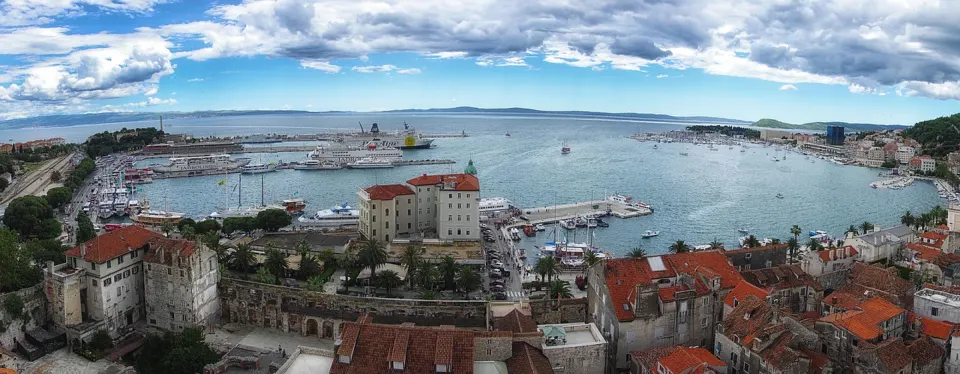
Aerial panorama of Split harbor and old town

Split travel guide

What to see, where to stay and the best time to visit Split, Croatia.

Best: Jun, Jul, Aug, Sep

Photo: DS-Foto / Pixabay

Country
Croatia

About Split

Split is a coastal city in Croatia built around Diocletian's Palace, a Roman-era complex that still forms the heart of the Old Town. Visitors can walk through palace streets, climb the cathedral tower, relax on Riva waterfront, or walk up Marjan Forest Park for sea views. It's a mixed destination, good for history, beaches and nightlife together. July, August and September bring warm, busy summer weather, while June offers similar sun with fewer crowds.

How many days do you need in Split?

2 to 3 days cover the Old Town sights, Riva, Marjan Forest Park and a beach visit at Bačvice, with time left for a relaxed pace.

Top attractions in Split

  1. 1Diocletian's Palace

    half a day

    Old Town

    The Roman emperor Diocletian built this huge retirement palace by the sea, and today it forms the heart of Split's old town. People still live, shop and eat inside its walls. Walk through the gates and around the Peristyle, the colonnaded central square, to see how the city grew inside a Roman building.

  2. 2Cathedral of St. Domnius

    1–2 hours

    Old Town

    This cathedral was once Diocletian's own mausoleum and is one of the oldest cathedral buildings still in use in the world. Climb the bell tower for wide views over the red roofs, the harbour and the islands.

  3. 3Diocletian's Palace Cellars

    1 hour

    Old Town

    These vaulted halls under the palace held up the emperor's living quarters above. Because they were filled with rubble for centuries, they stayed in good condition and show the original floor plan of the palace. The main passage is also a market for crafts and souvenirs.

  4. 4Temple of Jupiter

    30 minutes

    Old Town

    A small Roman temple inside the palace, later turned into a baptistery. Look up at the carved stone ceiling, and stop at the headless sphinx near the entrance.

  5. 5Riva

    1 hour

    Waterfront

    Split's wide seafront promenade runs along the south wall of the palace. It is lined with palm trees and cafés and is where locals meet for coffee or an evening walk, with views of the ferries and the harbour.

  6. 6Marjan Forest Park

    half a day

    Marjan

    A pine-covered hill on the western edge of the city with walking and cycling paths, small chapels and quiet coves for swimming. Take the stone steps up from the Varoš district to the Vidilica viewpoint for a good view over the old town and the islands.

  7. 7Statue of Gregory of Nin

    30 minutes

    Old Town

    A giant bronze statue by the sculptor Ivan Meštrović, standing just outside the palace's Golden Gate. It honours a medieval bishop who fought for church services in the Croatian language. Visitors rub his big toe for luck, which is why it shines.

  8. 8Meštrović Gallery

    1–2 hours

    Meje

    The former villa of Ivan Meštrović, Croatia's best-known sculptor, now shows a large collection of his work in stone, bronze and wood. The garden looks out over the sea, and the nearby Kaštelet chapel holds his carved wooden reliefs of the life of Christ.

  9. 9Bačvice Beach

    2–3 hours

    Bačvice

    A sandy, shallow beach a short walk east of the old town and the main city beach for locals. It is the home of picigin, a local game where players keep a small ball in the air while splashing in the water.

  10. 10People's Square (Pjaca)

    30 minutes

    Old Town

    The main square of medieval Split, just outside the palace's west gate. It is paved with white stone and surrounded by old town houses, the Old Town Hall and cafés, and it shows how the city spread beyond the Roman walls.
Split by month

Average weather and our month score, from 10 years of climate data.

Weather by month and month scores for Split
Month High / low Rain days Sunshine Sea temp Score
January 11°C / 4°C 11 days (133 mm) 6.5 h/day 15°C 3.8/10
February 13°C / 5°C 10 days (108 mm) 7.7 h/day 14°C 5.3/10
March 15°C / 7°C 10 days (104 mm) 9.4 h/day 14°C 6.5/10
April 18°C / 10°C 9 days (89 mm) 10.8 h/day 16°C 8.2/10
May 22°C / 15°C 12 days (101 mm) 11.9 h/day 19°C 7.6/10
Best month: June 28°C / 19°C 6 days (48 mm) 13.2 h/day 23°C 8.7/10
Best month: July 31°C / 22°C 3 days (23 mm) 13.6 h/day 26°C 9.6/10
Best month: August 31°C / 22°C 5 days (54 mm) 12.9 h/day 26°C 9.4/10
Best month: September 26°C / 18°C 8 days (116 mm) 10.6 h/day 25°C 9.0/10
October 21°C / 14°C 9 days (124 mm) 9.0 h/day 22°C 8.2/10
November 16°C / 10°C 13 days (238 mm) 6.6 h/day 19°C 6.2/10
December 13°C / 6°C 11 days (166 mm) 6.1 h/day 16°C 4.6/10
  1. Jan

    Highs near 11°C with 11 rain days; cold, damp, and quiet. Scores lowest of the year at 3.8, though the sea stays milder than the air.

  2. Feb

    Highs reach 13°C with about 10 rain days. Still chilly and rated 'ok' at 5.3, but sunshine hours start to climb.

  3. Mar

    Highs of 15°C and 9.5 rain days mark a shift toward spring. Scored 6.5, a 'good' month as days lengthen.

  4. Apr

    Highs of 18°C, 9 rain days, and 11.9 sun hours bring warm, mostly dry weather. Scores 8.2, the first 'best' month.

  5. May

    Highs of 22°C with 11.9 rain days; sea warms to 18.8°C. Rated 'best' at 7.6 despite the wetter spell.

  6. Jun

    Highs of 28°C and just 6.4 rain days give reliable summer weather. Scores 8.7, with sea temperatures reaching 23.3°C.

  7. Jul

    Highs peak near 31°C with only 3.2 rain days, the driest month. Top-rated at 9.6, with sea at 26°C.

  8. Aug

    Highs stay at 31°C with 4.7 rain days and sea temperatures of 26.2°C. Scores 9.4, nearly as strong as July.

  9. Sep

    Highs of 26°C and 7.8 rain days keep summer warmth going. Scores 9, still 'best', as the sea holds at 24.6°C.

  10. Oct

    Highs drop to 21°C with 8.8 rain days. Scores 8.2, a 'best' rating as crowds thin and the sea stays at 21.7°C.

  11. Nov

    Highs of 16°C but 13.1 rain days and 238mm of rain make this the wettest month. Rated 'good' at 6.2.

  12. Dec

    Highs near 13°C with 11.2 rain days and short daylight of 6.1 sun hours. Scores 4.6, an 'ok' close to the year.

Climate averages 2015–2024 · Best time to visit Croatia →

Where to stay in Split

The best areas to base yourself and who each one suits.

Diocletian's Palace

Good for first-timers, sightseeing, nightlife

The Roman palace walls hold the heart of the old town, with narrow stone lanes, cafés and the main sights on your doorstep. You can walk to the Riva waterfront, the ferry port and the bus station. Bars and crowds can make it loud late into the night in summer, and many buildings have steep stairs and no lift.

Varoš

Good for first-timers, couples, food lovers

This old fishermen's quarter sits just west of the palace, with stone houses, quiet lanes and small family-run restaurants. It is a short walk to the centre and to the paths up Marjan Hill, but calmer at night. The streets climb steeply and many are stepped, which is hard work with luggage.

Bačvice

Good for beach lovers, young travellers, nightlife

Split's best-known city beach is a short walk east of the centre and the ferry port. It has a shallow sandy bay, beach bars and clubs along the shore. It gets very crowded by day in summer and noisy at night.

Meje

Good for couples, quiet stays, walkers

A leafy, upmarket residential area on the southern slopes of Marjan Hill, with villas, sea views and small rocky beaches nearby. It feels calm and green, yet the old town is within walking distance. Expect hills and fewer shops and restaurants close by.

Firule

Good for families, longer stays

A residential area east of Bačvice with a pebble beach, local cafés and a more everyday feel. It is quieter than the centre and handy for the beach with children. The walk into the old town is longer, so you may want the bus or a taxi at night.

Žnjan

Good for families, beach days, self-caterers

A newer area further east with a long, wide pebble beach and a seafront promenade. There is plenty of space and it feels relaxed, with apartment blocks rather than historic streets. It is too far to walk to the old town comfortably, so plan on buses or taxis.

Getting to and around Split

From the airport
No specific route data is available for Split Airport. Visitors usually take an airport bus timed to flights, a shuttle, or a taxi to reach the city centre.
Public transport
Split has a city bus network run by local operators, useful for reaching beaches like Bačvice or Žnjan and neighbourhoods such as Meje and Firule. There is no metro or tram. Many visitors walking the Old Town rarely need a bus at all.
On foot
The centre is compact and walkable. Diocletian's Palace, the Cathedral of St. Domnius, the Temple of Jupiter, People's Square, and the Statue of Gregory of Nin all sit within Old Town, and the Riva waterfront is a one-hour stroll away.

Food to try in Split

Peka

Meat or octopus slow-cooked with vegetables under a metal lid covered in hot coals. It takes hours to prepare, so locals usually order it in advance at a konoba, a traditional Dalmatian tavern.

Black risotto (crni rižot)

Risotto cooked with cuttlefish or squid ink, giving it a dark colour and briny taste. It is a common lunch or dinner dish along Split's coast, often served with a glass of local white wine.

Soparnik

A thin savoury pie filled with Swiss chard, garlic and olive oil, baked flat on embers. It comes from the wider Split region and is eaten as a snack or light meal, sometimes sold at markets.

Pašticada

Beef marinated for days then slow-braised in a sweet-and-sour wine sauce with prunes, usually served with homemade gnocchi. It is a festive dish, often reserved for Sundays or celebrations.

Fresh seafood on the Riva

Grilled fish, octopus salad and shellfish are staples given Split's coastal location. Restaurants along the Riva waterfront serve seafood caught that day, especially in the warmer months.

Fritule

Small fried dough balls flavoured with rum, citrus zest and sometimes raisins, dusted with sugar. They are a popular sweet snack, especially common around winter holidays and local festivals.

More of Croatia

Croatia travel guide →

Split: frequently asked questions

Is Split good in August?

Yes. August scores 9.4 out of 10 and carries a 'best' verdict. Expect a high of 31.2°C, a low of 22.2°C, and sea water at 26.2°C, which is the warmest swimming temperature of the year. Rain is light, with only 4.7 rain days and 54mm for the month, so you get long dry stretches.

How many days do I need in Split?

Plan on 2 full days for the main sights. Diocletian's Palace and Marjan Forest Park each take half a day, while the Cathedral of St. Domnius, the Cellars, and the Meštrović Gallery need 1–2 hours each. Add Bačvice Beach for 2–3 hours if you want time by the sea, and the Riva and People's Square fit easily into spare afternoon hours.

Is Split warm enough to swim in June?

Yes. Sea temperature reaches 23.3°C in June, which is comfortable for most swimmers. Air temperatures climb to a high of 27.7°C and a low of 19°C, and rain is limited to 6.4 days and 48mm for the month, so beach days are reliable.

What is the weather like in Split in November?

November is the wettest month, with 238mm of rain over 13.1 days, more than any other month on the chart. Highs average 16.3°C and lows 9.7°C, with sunshine dropping to 6.6 hours a day. The sea still holds at 19.2°C, so it's cool but not cold if you're prepared for rain.

Is January a bad time to visit Split?

January scores lowest on the year, at 3.8 out of 10. Highs reach only 10.7°C and lows drop to 3.7°C, with 11 rain days and 133mm of rainfall. Sunshine is also at its weakest point, just 6.5 hours a day, making it the coolest, greyest month to visit.