Skip to content
wheretotravel.info
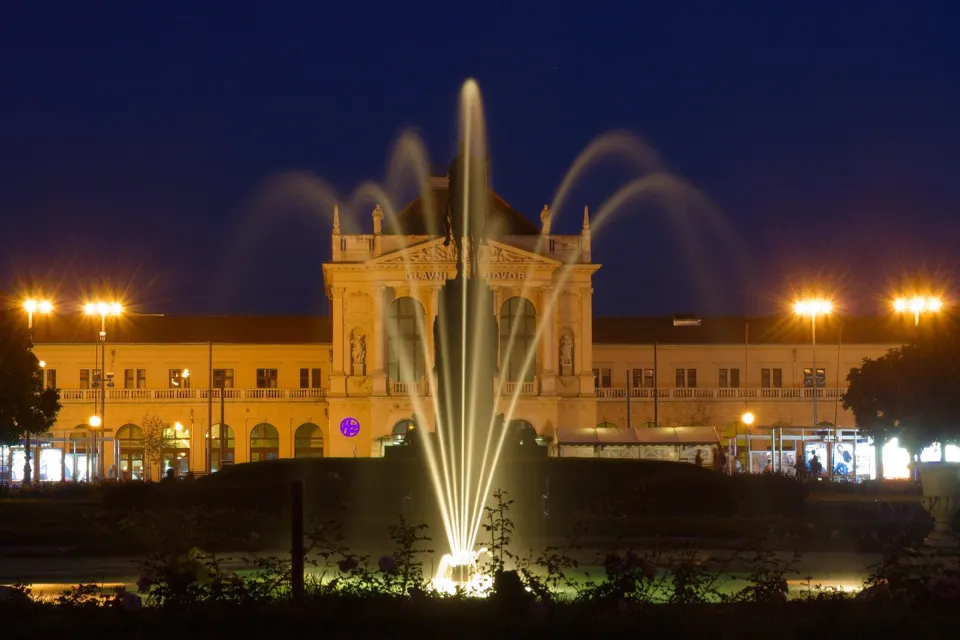
illuminated fountain at Zagreb train station at night

Zagreb travel guide

What to see, where to stay and the best time to visit Zagreb, Croatia.

Best: Apr, Jun, Sep, Oct

Photo: 19306 / Pixabay

Country
Croatia

About Zagreb

Zagreb is the capital of Croatia and a city of 767,131 people, away from the coast. The Upper Town (Gornji Grad) holds Dolac Market, Tkalčićeva Street and the Museum of Broken Relationships. Ride the Zagreb Funicular up to the Strossmayer Promenade. Below, Donji Grad has Ban Jelačić Square and the parks of the Lenuci Horseshoe. For green space, head to Maksimir Park or Medvednica Nature Park. The best months to visit are April, June, September and October.

How many days do you need in Zagreb?

Plan half a day for the Upper Town and another half a day for Medvednica Nature Park. Add 1–2 hours each for Mirogoj Cemetery and the Lenuci Horseshoe, and 2–3 hours for Maksimir Park. Many top sights share the Gornji Grad area.

Top attractions in Zagreb

  1. 1Upper Town (Gornji Grad)

    half a day

    Gornji Grad

    The old hilltop town is Zagreb's historic core, with steep cobbled lanes, government buildings and St Mark's Church, known for its colourful tiled roof. Walk through the Stone Gate, a small shrine inside an old town gate where locals stop to light candles.

  2. 2Ban Jelačić Square

    30 minutes–1 hour

    Donji Grad

    This is the main square and the city's natural meeting point, with trams passing on all sides. It sits between the Upper and Lower Towns, so most walks start here.

  3. 3Dolac Market

    1 hour

    Gornji Grad

    The central open-air market sells fruit, vegetables, cheese and flowers under red umbrellas, with an indoor hall below for meat and fish. Go in the morning, when it is busiest and the stalls are full.

  4. 4Tkalčićeva Street

    1–2 hours

    Gornji Grad

    A long, gently curving pedestrian street of low, colourful houses filled with cafés and bars. It is the easiest place to sit outside with a coffee by day or a drink in the evening.

  5. 5Museum of Broken Relationships

    1–2 hours

    Gornji Grad

    A small museum of everyday objects donated by people after a breakup, each with a short personal story. It is funny, sad and very human, and it is one of the city's best-known museums.

  6. 6Mirogoj Cemetery

    1–2 hours

    Mirogoj

    Zagreb's main cemetery is also a calm park, with long ivy-covered arcades, domes and trees. Many well-known Croatians are buried here, and the grounds are pleasant for a quiet walk.

  7. 7Zagreb Funicular and Strossmayer Promenade

    30 minutes–1 hour

    Gornji Grad

    A very short, old funicular links the Lower Town with the Upper Town. At the top, the Strossmayer Promenade gives wide views over the rooftops and is popular for evening strolls.

  8. 8Lenuci Horseshoe (Green Horseshoe)

    1–2 hours

    Donji Grad

    A U-shaped chain of parks and squares in the Lower Town, including Zrinjevac with its music pavilion and plane trees. It is lined with grand buildings and makes an easy, shady walk.

  9. 9Maksimir Park

    2–3 hours

    Maksimir

    A large, old landscaped park east of the centre with woods, lakes and walking paths. The city zoo is inside the park, which makes it a good choice for families.

  10. 10Medvednica Nature Park

    half a day

    Sljeme

    The forested mountain north of the city offers hiking trails and views over Zagreb from its top, Sljeme. Locals go here to escape the city heat in summer, and in winter it often has snow.
Zagreb by month

Average weather and our month score, from 10 years of climate data.

Weather by month and month scores for Zagreb
Month High / low Rain days Sunshine Score
January 5°C / -2°C 10 days (63 mm) 5.3 h/day 2.3/10
February 9°C / 0°C 8 days (64 mm) 6.6 h/day 3.4/10
March 13°C / 2°C 9 days (56 mm) 8.5 h/day 5.4/10
Best month: April 17°C / 6°C 9 days (62 mm) 10.0 h/day 7.6/10
May 21°C / 11°C 15 days (117 mm) 10.4 h/day 7.0/10
Best month: June 26°C / 16°C 11 days (82 mm) 12.3 h/day 7.8/10
July 28°C / 18°C 9 days (81 mm) 12.6 h/day 6.9/10
August 28°C / 18°C 9 days (76 mm) 11.9 h/day 7.2/10
Best month: September 22°C / 13°C 10 days (95 mm) 9.5 h/day 8.0/10
Best month: October 17°C / 9°C 9 days (87 mm) 7.5 h/day 7.7/10
November 11°C / 4°C 9 days (87 mm) 5.1 h/day 3.7/10
December 6°C / 0°C 9 days (62 mm) 4.9 h/day 2.4/10
  1. Jan

    Cold and grey: highs of 5.3°C, lows of -2°C, 10.3 rain days and only 5.3 sun hours. This is the lowest score of the year, at 2.3.

  2. Feb

    Still cold, with highs of 8.9°C, lows near 0.1°C and 8.3 rain days. The score stays low at 3.4, but it is drier than January.

  3. Mar

    Spring starts slowly. Highs reach 12.5°C, with 9 rain days and 8.5 sun hours. Rated ok at 5.4. Pack layers for cool 2.1°C nights.

  4. Apr

    One of the best months: mild 16.8°C highs, 9.2 rain days and 10 sun hours. Nights are cool at 6.1°C, so bring a jacket.

  5. May

    Warm at 20.6°C, but this is the wettest month, with 14.9 rain days and 117 mm of rain. Still rated good at 7 if you carry an umbrella.

  6. Jun

    A best month, scoring 7.8: warm 26.2°C highs, 12.3 sun hours and 10.5 rain days. Evenings stay mild at 15.9°C.

  7. Jul

    The hottest month, with highs of 28.4°C and 12.6 sun hours. Rain falls on 9.4 days. Rated good at 6.9, and afternoons can feel hot.

  8. Aug

    Much like July: 28°C highs, 17.8°C lows and 9.1 rain days. Rated good at 7.2, with 11.9 sun hours for long days outdoors.

  9. Sep

    The top score of the year, at 8. Highs are a pleasant 22.4°C, with 9.8 rain days. Expect some heavy showers, as 95 mm falls.

  10. Oct

    Another best month, scoring 7.7: 17.1°C highs, only 8.8 rain days and 7.5 sun hours. Nights cool to 8.6°C, so pack a warm layer.

  11. Nov

    Tough weather returns. Highs drop to 10.5°C, 9.2 rain days bring 87 mm of rain, and there are just 5.1 sun hours. The score falls to 3.7.

  12. Dec

    Cold, dark and damp: 6.3°C highs, lows of -0.2°C and the least sun of the year, at 4.9 hours. Rain falls on 8.9 days. Score: 2.4.

Climate averages 2015–2024 · Best time to visit Croatia →

Where to stay in Zagreb

The best areas to base yourself and who each one suits.

Donji Grad

Good for first-timers, museums, transport links

Zagreb's Lower Town is a grid of Austro-Hungarian streets, parks and squares that runs south from Ban Jelačić Square towards the main railway station. It puts you within walking distance of most sights, cafés and tram lines. Streets near the main square and the station can be noisy late at night and in summer.

Gornji Grad

Good for couples, history lovers, quiet evenings

The Upper Town is the old hilltop quarter of cobbled lanes, St Mark's Church and gas-lit streets, with views over the rooftops below. It feels calm once day visitors leave. The streets are steep and cobbled, so walking with luggage takes effort and cars have limited access.

Kaptol

Good for first-timers, nightlife, food

Kaptol is the historic cathedral quarter next to Dolac market, with Tkalčićeva Street's bars and restaurants on its edge. You are a short walk from both the main square and the Upper Town. Tkalčićeva can be loud until late, especially at weekends.

Trešnjevka

Good for longer stays, local life, budget travellers

Trešnjevka is a residential district west of the centre, built around its own busy market and everyday shops. It gives a more local feel, and trams link it to the centre. It has few sights of its own, so you will ride the tram most days.

Maksimir

Good for families, runners, green space

Maksimir lies east of the centre around a large historic park, the city zoo and the national football stadium. It is leafy and quieter than the centre, with direct tram links into town. Match days bring crowds and noise near the stadium.

Novi Zagreb

Good for drivers, business trips, modern apartments

New Zagreb is the post-war district south of the Sava River, with wide streets, large housing blocks and easier parking. It suits travellers with a car or on business near the southern ring. It is far from the historic centre and has little old-town character.

Getting to and around Zagreb

From the airport
Zagreb Airport lies outside the city. The usual options are the airport shuttle bus to the main bus station, where you can change to a tram, a local city bus, or a taxi or ride-hailing app.
Public transport
Zagreb has no metro. Trams are the main way to get around, with buses and a short funicular up to the Upper Town. Tip: buy tickets at newspaper kiosks before you ride and validate them on board.
On foot
The centre is compact and easy on foot. Ban Jelačić Square links Donji Grad with Gornji Grad and Kaptol, where Dolac Market, Tkalčićeva Street and the funicular sit close together.

Food to try in Zagreb

Štrukli

Thin pastry filled with fresh cottage cheese, then boiled or baked with cream. It comes from the Zagorje hills north of the city, and locals order it as a starter, a main or a sweet.

Zagrebački odrezak

The Zagreb schnitzel is a veal or pork cutlet filled with ham and cheese, then breaded and fried. It is a standard dish in traditional restaurants, often served with potatoes or salad.

Purica s mlincima

Roast turkey served with mlinci, thin dried flatbreads softened in the roasting juices. It is a classic dish for Sunday lunch and holidays in Zagreb and the surrounding region.

Sir i vrhnje

Fresh soft cheese served with sour cream. Farmers from nearby villages sell it at Dolac, the main open-air market, and locals eat it with bread, paprika or spring onion.

Kremšnita

A custard cream slice between layers of puff pastry. It is linked to the nearby town of Samobor, and Zagreb cafés and pastry shops serve it with coffee.

Paprenjak

A traditional honey and black pepper biscuit, often pressed with decorative patterns. People in Zagreb eat it with coffee and buy it as a local souvenir.

More of Croatia

Croatia travel guide →

Zagreb: frequently asked questions

When is the best time to visit Zagreb?

September is the best month to visit Zagreb, followed by June, October and April. September scores 8 out of 10, with highs around 22°C and 9.5 hours of sun a day. June is warmer at 26°C, and October and April are milder at 17°C, which suits walking around the city.

Is Zagreb good in August?

Yes, August is a good month for Zagreb. Days are hot, with highs around 28°C and lows near 18°C. You get about 12 hours of sun a day and rain on about 9 days. July is similar, with highs of 28.4°C. Zagreb is not on the coast, so there is no sea breeze to cool the city.

What is the weather like in Zagreb in winter?

Winter in Zagreb is cold, grey and short on daylight. In January, highs are about 5°C and nights drop to -2°C. December has only 4.9 hours of sun a day. Both months get rain or snow on about 9 to 10 days. These months score lowest for sightseeing, so pack warm layers and plan more indoor time.

What is the rainiest month in Zagreb?

May is the wettest month in Zagreb. It gets about 117 mm of rain spread over 15 days. It is still a good month to visit, with highs around 21°C and more than 10 hours of sun a day. Bring an umbrella and plan some indoor stops, such as the Museum of Broken Relationships.

How many days do I need in Zagreb?

About 2 days covers Zagreb's main sights. Upper Town (Gornji Grad) takes about half a day. Dolac Market, Tkalčićeva Street and the Museum of Broken Relationships are close by and take 1 to 2 hours each. Add a few hours for Mirogoj Cemetery and 2 to 3 hours for Maksimir Park. If you want to hike in Medvednica Nature Park, add another half day.