Skip to content
wheretotravel.info
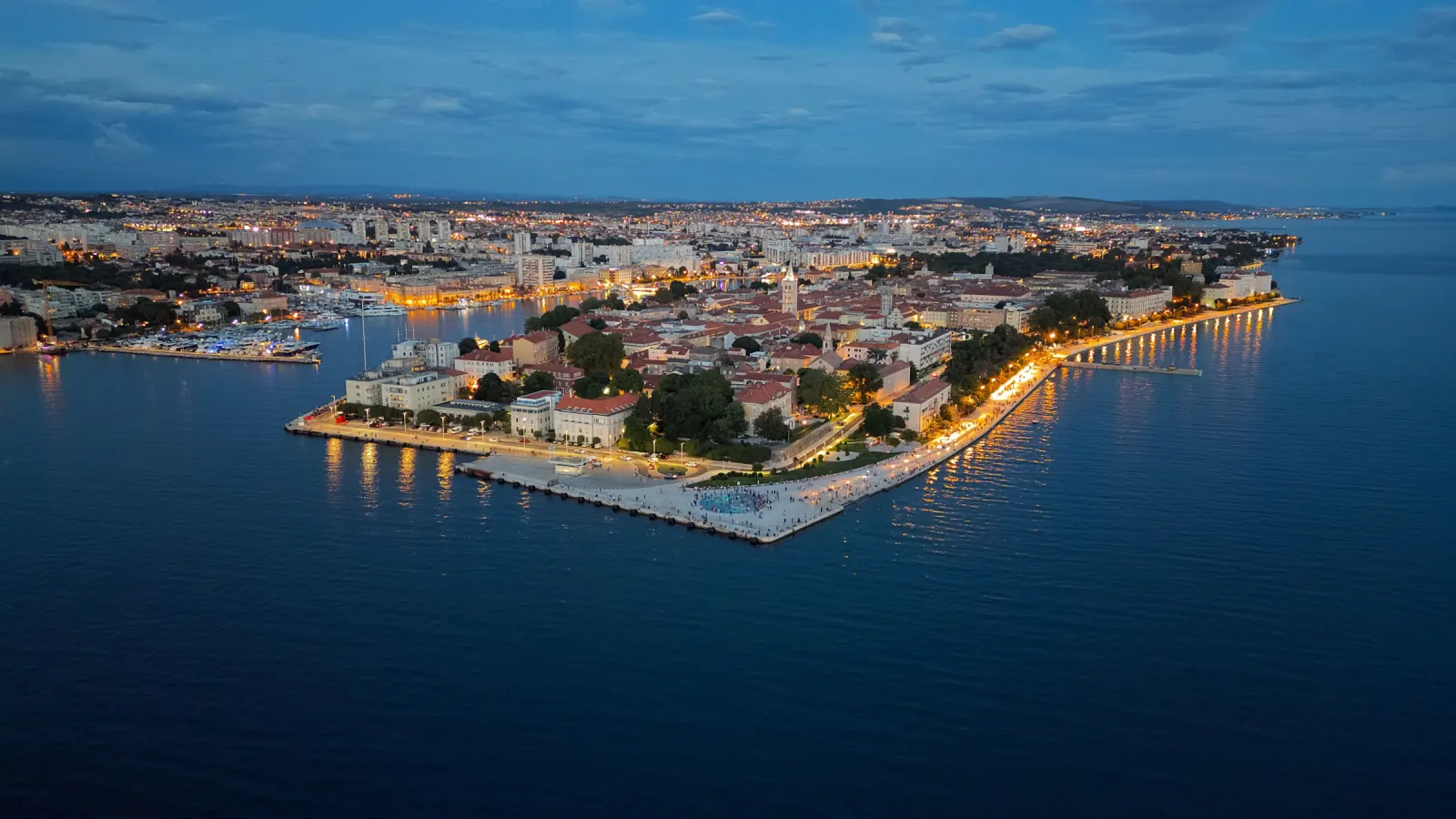
Aerial night view of Zadar peninsula illuminated

Zadar travel guide

What to see, where to stay and the best time to visit Zadar, Croatia.

Best: Jun, Jul, Aug, Sep

Photo: DeLuca G / Pexels

Country
Croatia

About Zadar

Zadar sits on the Dalmatian coast in Croatia, with an Old Town built on a small peninsula (Poluotok) surrounded by sea. With a population of 70,779, it feels easy to walk around, not overwhelming. You get Roman ruins, a medieval core, and modern spots like the Sea Organ and Greeting to the Sun along the waterfront. Beaches sit close to the centre in areas like Kolovare and Borik. The best months to visit are June, July, August, and September, when the sea is warm and the town is lively.

How many days do you need in Zadar?

Two to three days cover the Old Town sights, from the Roman Forum to St. Donatus and the Sea Organ, plus time on a nearby beach. Add a day if you also want to relax in Kolovare or Borik.

Top attractions in Zadar

  1. 1Sea Organ

    30–60 minutes

    Old Town waterfront (Riva)

    Pipes set under marble steps on the western tip of the peninsula play sounds as waves push air through them. People sit on the steps to listen and look out to sea, especially in the late afternoon.

  2. 2Greeting to the Sun

    30–60 minutes

    Old Town waterfront (Riva)

    A large circle of solar-powered glass panels set into the pavement, right next to the Sea Organ. It collects light by day and shows a light display after dark, so it pairs well with a sunset visit.

  3. 3Church of St. Donatus

    30–60 minutes

    Old Town

    A round, early medieval stone church and the best-known symbol of Zadar. It is no longer used for regular services, and its bare, tall interior sometimes hosts concerts.

  4. 4Roman Forum

    30 minutes

    Old Town

    The open remains of Zadar's Roman town square, beside St. Donatus. You can walk freely among the columns and stone fragments, and it is free to wander.

  5. 5Cathedral of St. Anastasia

    1 hour

    Old Town

    The largest church in Dalmatia, with a Romanesque front facing the Forum area. You can climb the separate bell tower for wide views over the old town roofs, the sea and nearby islands.

  6. 6Archaeological Museum Zadar

    1–2 hours

    Old Town

    Collections that run from prehistory through Roman times to the early Croatian period, placed beside the Forum. It gives useful background before or after walking the ruins outside.

  7. 7Land Gate

    20–30 minutes

    Old Town

    The main Venetian-era entrance to the old town, carved with the winged lion of St. Mark. It sits by the small Foša harbour and is part of the city walls.

  8. 8Five Wells Square

    20–30 minutes

    Old Town

    A square with a row of old stone wellheads built over a cistern that once supplied the city with water. The small Queen Jelena Madijevka Park on the walls above is a quiet spot for a short break.

Zadar by month

Average weather and our month score, from 10 years of climate data.

Weather by month and month scores for Zadar
Month High / low Rain days Sunshine Sea temp Score
January 10°C / 3°C 11 days (101 mm) 6.5 h/day 14°C 3.4/10
February 12°C / 4°C 9 days (102 mm) 7.5 h/day 13°C 4.8/10
March 14°C / 6°C 10 days (91 mm) 9.4 h/day 14°C 5.9/10
April 17°C / 9°C 9 days (69 mm) 10.8 h/day 15°C 7.8/10
May 21°C / 14°C 10 days (92 mm) 11.8 h/day 19°C 8.0/10
Best month: June 27°C / 19°C 6 days (49 mm) 13.2 h/day 22°C 8.7/10
Best month: July 30°C / 21°C 4 days (32 mm) 13.5 h/day 25°C 9.5/10
Best month: August 30°C / 21°C 4 days (49 mm) 12.7 h/day 25°C 9.4/10
Best month: September 25°C / 17°C 9 days (119 mm) 10.5 h/day 24°C 8.5/10
October 20°C / 13°C 9 days (127 mm) 8.7 h/day 21°C 8.2/10
November 15°C / 9°C 13 days (173 mm) 6.5 h/day 18°C 5.7/10
December 12°C / 5°C 12 days (133 mm) 5.9 h/day 15°C 4.1/10
  1. Jan

    Cold and wet: highs of 10°C with 11 rain days. Score is just 3.4, the lowest of the year, so this is Zadar's toughest month for weather.

  2. Feb

    Still cool at 11.7°C with 9.4 rain days, but sun hours rise to 7.5. Score climbs to 4.8, an OK shoulder month.

  3. Mar

    Highs reach 13.8°C with 9.8 rain days and sea still cold at 13.8°C. Score of 5.9 makes it an OK time to visit.

  4. Apr

    Highs of 17.1°C, fewer rain days at 9, and sun hours near 10.8. Score jumps to 7.8, marking the start of the best season.

  5. May

    Warm days averaging 21.4°C with 10.2 rain days and sea warming to 18.5°C. Score of 8 keeps it in the best range.

  6. Jun

    Hot and drier: 26.5°C highs, just 5.5 rain days, sea at 22.3°C. Score 8.7, one of the top months.

  7. Jul

    Peak summer heat of 29.9°C with only 4.1 rain days and sea at 24.8°C. Highest score of the year at 9.5.

  8. Aug

    Similarly hot at 30.1°C with 4.3 rain days and warm sea of 24.6°C. Score 9.4, still among the best months.

  9. Sep

    Highs ease to 24.8°C but rain picks up with 8.5 days and 119mm. Score stays strong at 8.5.

  10. Oct

    Mild at 20.1°C with 9 rain days and sea still pleasant at 21.3°C. Score of 8.2 keeps it in the best category.

  11. Nov

    Wet month with 173mm of rain over 13.1 days and highs dropping to 15.3°C. Score falls to 5.7, an OK but rainy stretch.

  12. Dec

    Cool and damp: 11.9°C highs, 11.5 rain days, 133mm rainfall. Score of 4.1 shows weather turns tough again.

Climate averages 2015–2024 · Best time to visit Croatia →

Where to stay in Zadar

The best areas to base yourself and who each one suits.

Poluotok

Good for first-timers, sightseeing, evenings out

This is the walled Old Town on the peninsula, with Roman ruins, churches, cafés and the Sea Organ and Sun Salutation on the waterfront. You can walk to nearly every sight and to the ferry and catamaran port. Summer brings crowds and late-night noise, and most streets are closed to cars, so parking is hard.

Kolovare

Good for beach lovers, couples, easy access to Old Town

A residential area just southeast of the Old Town, with a long town beach, a promenade and pine shade. You get a swim close to your door and a flat walk into the centre along the sea. The beach gets crowded in peak season, and some streets near the main roads have traffic noise.

Borik

Good for families, resort stays, beaches

A resort area northwest of the centre, with larger hotels, pine woods, shallow beaches and sports facilities. It is good for families who want space, water and green areas in one place. It feels separate from the Old Town, so you will need a bus, a taxi or a long walk to reach the sights.

Puntamika

Good for quiet stays, sea views, sunsets

A calm residential and marina area at the northwest tip of the city, next to Borik, with small beaches and open views towards the islands. It suits travellers who want a local feel and quiet evenings. The Old Town is far enough away that most people take the bus or drive in.

Arbanasi

Good for budget-minded travellers, local life

A residential district northwest of the Old Town, founded by Albanian settlers, with apartments, local shops and a seafront path. It is more everyday Zadar than holiday Zadar and often quieter than the centre. There are fewer restaurants and sights, and the walk to the Old Town is long for some.

Diklo

Good for families, slow travel, drivers

A former fishing village southeast of the centre, now a quiet area of holiday apartments, small pebble beaches and a few seafood restaurants. It is relaxed and close to the water. You will depend on a car or the bus to reach the Old Town, and evenings are very quiet.

Getting to and around Zadar

From the airport
No route data is available for Zadar Airport (ZAD). Visitors usually rely on an airport bus timed around flights, a taxi, or a pre-booked transfer to reach the city centre, since there's no train or metro link.
Public transport
Zadar has a local bus network run by Liburnija that covers the city and nearby beaches, but there's no tram or metro. Buy tickets from the driver or a kiosk, and check timetables ahead since services can be infrequent outside peak hours.
On foot
The Old Town on Poluotok is flat, compact, and fully walkable. The Sea Organ, Greeting to the Sun, Roman Forum, Cathedral of St. Anastasia, and Land Gate all sit within a short walk of each other.

Food to try in Zadar

Maraschino liqueur

This cherry liqueur was first produced in Zadar and is still linked to the city. Locals often drink it as a digestif after dinner or add it to desserts.

Black risotto (crni rižot)

Rice cooked with cuttlefish or squid ink, giving it a dark colour and briny taste. It's a staple on restaurant menus along the Dalmatian coast, including Zadar's waterfront.

Pašticada

A slow-cooked beef dish marinated in wine and spices, then served with gnocchi. It's a festive meal in Dalmatia, often eaten on Sundays or special occasions.

Paprenjak

A spiced biscuit made with pepper, honey, and walnuts, said to have originated in the Zadar region centuries ago. It's still baked today, especially around holidays.

Fresh grilled fish and seafood

Given Zadar's coastal location, grilled fish, octopus, and shellfish are common, usually served simply with olive oil and lemon in konobas near the old town.

More of Croatia

Croatia travel guide →

Zadar: frequently asked questions

Is Zadar good in August?

Yes, August is one of the best months to visit Zadar, with a score of 9.4 out of 10. Daytime highs reach 30.1°C and the sea warms to 24.6°C, ideal for swimming. Rain is rare, with only 4.3 rain days expected, so sunny beach days are almost guaranteed.

What is the best time to visit Zadar?

The best months are June, July, August and September, all scoring 8.5 or higher. July is the top month with a score of 9.5, highs of 29.9°C and just 4.1 rain days. September keeps warm sea temperatures of 23.5°C with slightly cooler air at 24.8°C, a good shoulder-season option.

How many days do I need in Zadar?

Two days is enough to see Zadar's main sights. The Old Town attractions, including the Sea Organ, Greeting to the Sun, Church of St. Donatus, Roman Forum, Cathedral of St. Anastasia and Archaeological Museum, each take 20 minutes to 2 hours, so they fit comfortably into a day and a half with time to relax by the water.

Is Zadar warm in winter?

No, Zadar is cool and wet in winter. January has a high of just 10°C and a low of 2.9°C, with 11 rain days and 101 mm of rainfall. It scores 3.4, the lowest of the year, making it a quiet, low-season month rather than a beach destination.

Does it rain a lot in Zadar in autumn?

Yes, November is the wettest month in Zadar, with 173 mm of rain spread over 13.1 days. Temperatures also drop, with a high of 15.3°C and a low of 8.7°C. The sea still holds some warmth at 18.3°C, but this is a month for rain gear rather than swimming.