Skip to content
wheretotravel.info
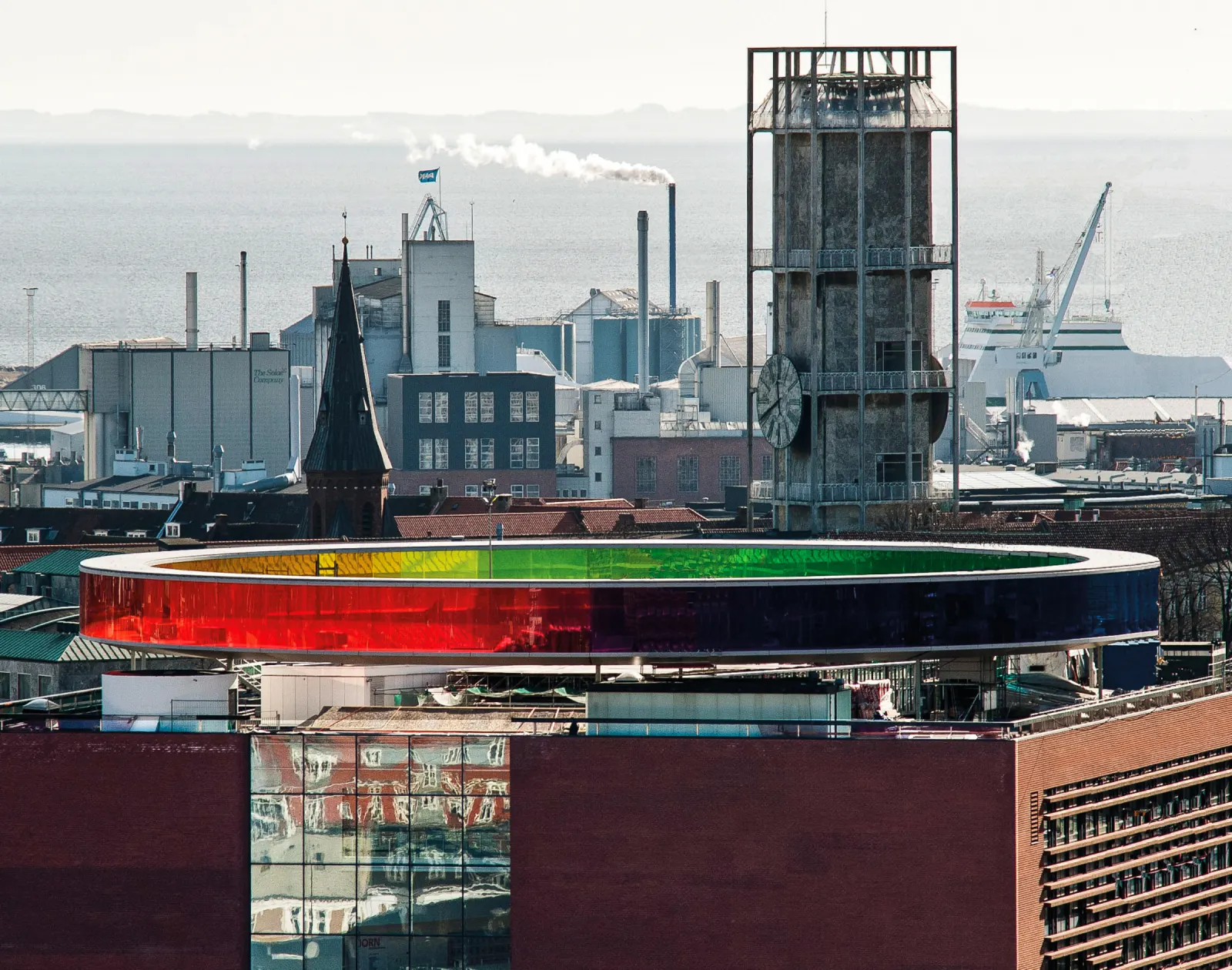
ARoS museum rainbow panorama rooftop over Aarhus city

Aarhus travel guide

What to see, where to stay and the best time to visit Aarhus, Denmark.

Best: Jun

Photo: Ssjensby / Wikimedia Commons

Country
Denmark
Currency
DKK

About Aarhus

Aarhus is Denmark's second city, a coastal mix of old-town streets, modern harbour architecture and museums. It's small enough to walk across yet big enough to feel like a real city, with around 290,598 people. You can wander the Latin Quarter, visit ARoS Aarhus Art Museum, walk the open-air Den Gamle By, or head to the harbour to see Aarhus Ø and The Iceberg. June is the best month to visit, with long days and milder weather for walking the river and the deer park.

How many days do you need in Aarhus?

Two to three days cover the main museums, the old town and the harbourfront. Add a day if you want to explore Marselisborg Forests, Risskov's beach, or spend more time in Frederiksbjerg's food scene.

Top attractions in Aarhus

  1. 1ARoS Aarhus Art Museum

    2–3 hours

    City centre

    Aarhus's main art museum holds Danish and international art across several floors. The highlight is 'Your rainbow panorama', a circular walkway of coloured glass on the roof with views over the whole city.

  2. 2Den Gamle By (The Old Town)

    Half a day

    City centre

    An open-air museum of historic Danish townhouses, shops and workshops moved here from across the country. Staff in period clothes work in some buildings, and newer streets show how Danes lived in more recent decades.

  3. 3Moesgaard Museum

    Half a day

    Højbjerg, south of the centre

    A museum of archaeology and ethnography in a modern building with a sloping grass roof you can walk on. It is home to the Grauballe Man, a well-preserved Iron Age bog body, and has strong Viking-era displays.

  4. 4Aarhus Cathedral

    30–60 minutes

    Latin Quarter

    Denmark's longest church, with a tall nave and a large collection of medieval frescoes on its walls. It sits on the main square near the old streets of the centre.

  5. 5Latin Quarter

    1–2 hours

    City centre

    The oldest part of the city, with narrow cobbled lanes, colourful houses, small shops and cafés. It is a good area to wander without a plan.

  6. 6Aarhus River and Åboulevarden

    1 hour

    City centre

    A short stretch of the river that was uncovered and lined with cafés and bars. It is the city's main spot for sitting outside in warmer weather.

  7. 7Dokk1

    1 hour

    Harbourfront

    A large public library and cultural centre on the harbour, open to everyone. Inside are reading areas and play spaces for children, and the outside terraces look over the water.

  8. 8Aarhus Ø and The Iceberg

    1–2 hours

    Aarhus Ø, harbour

    A new waterfront district built on former docks. The Iceberg, a set of white apartment blocks with sharp peaks, is the best-known building, and there is a harbour bath for swimming nearby.

  9. 9Marselisborg Deer Park

    1–2 hours

    Marselisborg Forests, south of the centre

    A forest park where tame deer roam freely and often come close to visitors. It is part of a larger wooded area that runs down to the beaches south of the city.

Aarhus by month

Average weather and our month score, from 10 years of climate data.

Weather by month and month scores for Aarhus
Month High / low Rain days Sunshine Sea temp Score
January 4°C / 0°C 13 days (61 mm) 3.0 h/day 4°C 1.1/10
February 5°C / 1°C 11 days (57 mm) 4.7 h/day 4°C 2.0/10
March 7°C / 1°C 12 days (53 mm) 6.9 h/day 5°C 2.4/10
April 11°C / 3°C 11 days (53 mm) 10.5 h/day 8°C 4.1/10
May 15°C / 8°C 12 days (60 mm) 12.1 h/day 12°C 6.3/10
Best month: June 19°C / 12°C 12 days (72 mm) 13.2 h/day 16°C 7.7/10
July 20°C / 13°C 14 days (87 mm) 12.4 h/day 17°C 7.2/10
August 20°C / 13°C 14 days (82 mm) 11.2 h/day 18°C 7.2/10
September 17°C / 11°C 12 days (67 mm) 8.7 h/day 17°C 7.4/10
October 13°C / 8°C 14 days (76 mm) 5.5 h/day 13°C 4.0/10
November 8°C / 4°C 13 days (61 mm) 3.1 h/day 9°C 1.3/10
December 6°C / 2°C 15 days (65 mm) 2.3 h/day 6°C 0.6/10
  1. Jan

    Cold and dark, with highs near 4°C, 13.2 rain days and just 3 hours of sun a day; the low score of 1.1 reflects tough winter weather rather than a reason to skip the city.

  2. Feb

    Still chilly at 5.1°C with 10.7 rain days and short daylight; the score stays low at 2 as winter conditions linger.

  3. Mar

    Highs reach 7.1°C and sun hours climb to 6.9, but 11.7 rain days keep the score at 2.4, a transitional, often grey month.

  4. Apr

    Spring arrives with highs of 10.6°C, more sun at 10.5 hours and fewer rain days at 10.8; the score rises to 4.1, an ok month to visit.

  5. May

    A good month with highs of 15.4°C, sea temperature up to 12.4°C and 12.1 hours of sun; the score of 6.3 marks warmer, brighter days.

  6. Jun

    The best month of the year, scoring 7.7, with highs of 19.2°C, 13.2 sun hours and a warming sea at 15.6°C.

  7. Jul

    Warm at 20.1°C with the sea at 17.4°C, though rain picks up to 87mm over 14 days; the score holds at a solid 7.2.

  8. Aug

    Similar to July, with highs of 20.4°C, 14 rain days and the warmest sea of the year at 17.9°C; score stays good at 7.2.

  9. Sep

    Highs drop to 17.4°C but sun hours fall to 8.7 and rain eases to 11.5 days; the score of 7.4 makes it the top-rated month.

  10. Oct

    Autumn cooling begins with highs of 12.6°C, 13.5 rain days and just 5.5 sun hours; the score of 4 marks a mixed, ok month.

  11. Nov

    Dark and wet, with highs of 8.1°C, 12.7 rain days and only 3.1 sun hours; the score drops to 1.3, reflecting the gloomy conditions.

  12. Dec

    The darkest month, with highs of 5.6°C, 14.9 rain days and just 2.3 sun hours; the lowest score of the year at 0.6 shows the harsh winter weather.

Climate averages 2015–2024 · Best time to visit Denmark →

Where to stay in Aarhus

The best areas to base yourself and who each one suits.

Indre By

Good for first-timers, short stays, sightseeing

The city centre is close to the train station, the main shopping streets and the ARoS art museum, with cafés and bars along the Aarhus River. You can walk to most sights from here. Weekend nights by the river can be loud.

Latinerkvarteret

Good for couples, cafés, old-town feel

The Latin Quarter, just north of the cathedral, is the oldest part of town, with narrow cobbled lanes, small shops and cafés. It feels charming and is a short walk from almost everything. There are few places to stay, and cobbles are hard work with wheeled luggage.

Frederiksbjerg

Good for food lovers, longer stays, local feel

This residential area south of the train station has a relaxed local mood, with many restaurants and bars around Jægergårdsgade. It suits travellers who want neighbourhood life over sights. Most attractions are a walk away rather than on your doorstep.

Aarhus Ø

Good for design fans, harbour views, quiet evenings

The new harbour district east of the centre has modern housing such as the Iceberg, waterfront paths and a harbour bath for swimming. It is calm and feels open, with the central library Dokk1 close by. It can be windy and fairly empty at night, and parts are still under construction.

Trøjborg

Good for budget travellers, students, laid-back

North of the centre near the university, Trøjborg has a young, easy-going feel, with small cafés and quick access to the Riis Skov woods and the sea. It feels lived-in rather than touristy. Most places to stay are flats, and the station is a long walk or a bus ride away.

Risskov

Good for families, nature, beach

This green suburb north of the city has woods, a seafront promenade and the Den Permanente sea bath. It is quiet and good for kids and outdoor time. You will need a bus, bike or car to reach the centre.

Getting to and around Aarhus

From the airport
Aarhus Airport sits outside the city, and the fact pack gives no route details for it. The usual options are an airport bus or a taxi into the centre; check current schedules before you fly.
Public transport
Aarhus has no metro. Visitors mostly use city buses and the light rail (Letbane) to reach areas like Aarhus Ø or Risskov. Buy tickets before boarding, since coverage is limited compared to bigger capitals.
On foot
Indre By, the Latin Quarter, ARoS, Aarhus Cathedral, and the river at Åboulevarden all sit close together in the city centre, making it easy to explore on foot.

Food to try in Aarhus

Smørrebrød

This is an open-faced rye bread sandwich topped with things like pickled herring, liver pâté, or roast beef. Locals eat it for lunch at cafés around the city centre.

Stegt flæsk med persillesovs

Crispy fried pork belly served with parsley sauce and boiled potatoes. It's a classic Danish home-style dish found on many traditional restaurant menus in Aarhus.

Fresh fish and seafood

As a coastal city on the Baltic Sea, Aarhus has restaurants serving fresh catches like plaice and herring, often grilled or pickled, especially near the harbour area.

Danish pastries (Wienerbrød)

Flaky, buttery pastries are a morning staple, eaten with coffee at bakeries throughout the city, especially in the Latin Quarter.

Frikadeller

These are pan-fried pork and veal meatballs, usually served with boiled potatoes, gravy, and pickled red cabbage. They're a common home-cooked and casual restaurant dish.

Rugbrød

Dense, dark rye bread forms the base of many meals, from breakfast with cheese to the foundation of smørrebrød at lunchtime.

More of Denmark

Denmark travel guide →

Aarhus: frequently asked questions

Is Aarhus good in August?

Yes, August scores 7.2 and counts as a good month to visit Aarhus. Daytime highs reach 20.4°C and lows sit around 13.4°C, with about 14 rain days in the month. The sea warms up to 17.9°C, which is comfortable for swimming.

When is the best time to visit Aarhus?

June is rated the best month, with a score of 7.7. Highs average 19.2°C and lows 11.5°C, sunshine runs to 13.2 hours a day, and the sea reaches 15.6°C. July, August and September also score well, between 7.2 and 7.4, so the whole summer stretch works for a visit.

Is Aarhus good in January?

No, January is the weakest month, scoring just 1.1. Daytime highs only reach 4.2°C and lows drop to 0.3°C. There are 13.2 rain days and just 3 hours of sunshine a day on average, and the sea sits at a cold 4.3°C, so this is a month for short, cosy visits rather than outdoor sightseeing.

How many days do I need in Aarhus?

It depends on how many sights you want to cover. ARoS Aarhus Art Museum needs 2–3 hours, Aarhus Cathedral takes 30–60 minutes, and the Latin Quarter or Aarhus river walk each take 1–2 hours. Den Gamle By and Moesgaard Museum each need half a day on their own, so spreading these out over a few days lets you see everything without rushing.

Is the sea warm enough to swim in Aarhus?

The sea is warmest from June to September. It reaches 15.6°C in June, 17.4°C in July, peaks at 17.9°C in August, and stays at 17.3°C in September. Outside these months it drops well below 13°C, falling as low as 3.5°C in February, so summer is the main swimming window.