Skip to content
wheretotravel.info
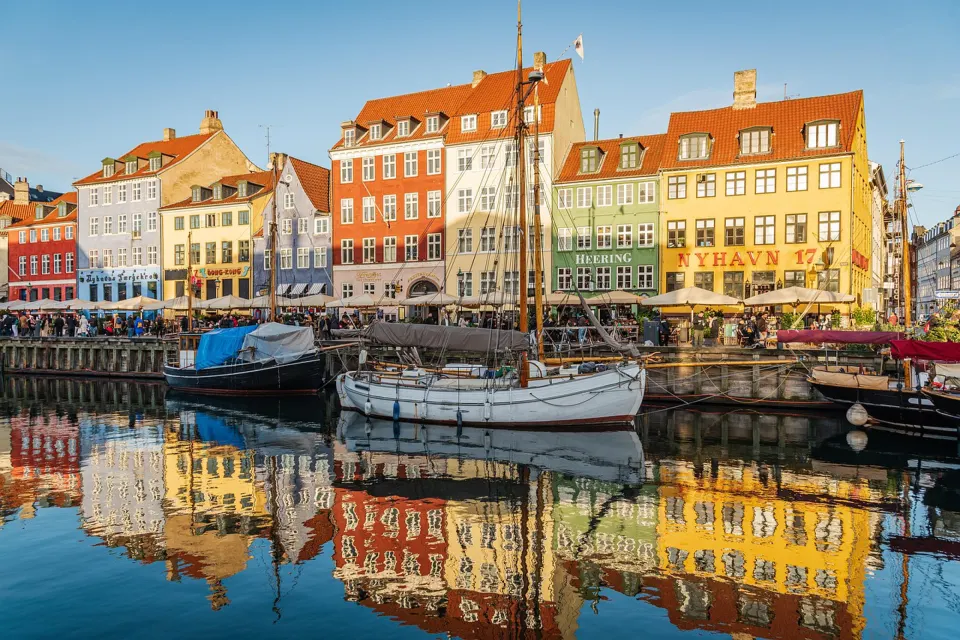
Colorful Nyhavn harbor houses with boats and reflections

Copenhagen travel guide

What to see, where to stay and the best time to visit Copenhagen, Denmark.

Best: Jun, Jul, Aug, Sep

Photo: DUCTINH91 / Pixabay

Country
Denmark
Currency
DKK

About Copenhagen

Copenhagen is the capital of Denmark and a coastal city of 667,099 people. Many classic sights sit close together in Indre By, including Nyhavn, Rosenborg Castle and the Round Tower. Tivoli Gardens and Ny Carlsberg Glyptotek are in Vesterbro, an area known for food and nightlife. Christianshavn has canal views and Freetown Christiania. The best months to visit are June, July, August and September.

How many days do you need in Copenhagen?

Plan for a few full days. Tivoli Gardens alone takes half a day. The National Museum of Denmark and Christiansborg Palace need 2–3 hours each. Most other main sights take 1–2 hours, so you can see them without rushing.

Top attractions in Copenhagen

  1. 1Tivoli Gardens

    half a day

    Vesterbro

    A historic amusement park in the city centre with gardens, old-style rides, concert stages and restaurants. Locals and visitors both go, and it is especially atmospheric after dark when the lights come on.

  2. 2Nyhavn

    1–2 hours

    Indre By

    A canal lined with brightly painted townhouses, old wooden ships and outdoor cafés. It is the classic Copenhagen view and a starting point for many canal boat tours.

  3. 3Rosenborg Castle

    1–2 hours

    Indre By

    A Renaissance royal castle set in the King's Garden, with richly decorated rooms and the Danish crown jewels in its treasury. The surrounding park is a popular spot to relax.

  4. 4Christiansborg Palace

    2–3 hours

    Slotsholmen

    The seat of the Danish Parliament, which also holds royal reception rooms, ruins of earlier castles underground and the royal stables. The tower offers wide views over the city.

  5. 5Amalienborg

    1 hour

    Frederiksstaden

    The Danish royal family's home, made up of four matching palaces around an octagonal square. Visitors come to watch the changing of the guard and to see the nearby Marble Church.

  6. 6The Little Mermaid

    30 minutes–1 hour

    Langelinie

    A small bronze statue on the waterfront, based on Hans Christian Andersen's fairy tale. It is smaller than many expect, so it works best combined with a walk past Kastellet fortress nearby.

  7. 7National Museum of Denmark

    2–3 hours

    Indre By

    Denmark's main museum of cultural history, covering the Stone Age, the Vikings and modern Danish life. It is a good choice for understanding the country's past, and a solid option on a rainy day.

  8. 8Ny Carlsberg Glyptotek

    2 hours

    Vesterbro

    An art museum with ancient sculpture from Egypt, Greece and Rome, plus French and Danish paintings. The glass-roofed winter garden with palm trees is a calm place to sit.

  9. 9Round Tower (Rundetaarn)

    1 hour

    Indre By

    A historic tower and observatory in the old town, climbed by a wide spiral ramp instead of stairs. The top gives views across the rooftops of central Copenhagen.

  10. 10Freetown Christiania

    1–2 hours

    Christianshavn

    A self-governing community founded by squatters in former military buildings, with murals, handmade houses, workshops and cafés. Respect the local rules, especially the ban on taking photos in some areas.
Copenhagen by month

Average weather and our month score, from 10 years of climate data.

Weather by month and month scores for Copenhagen
Month High / low Rain days Sunshine Sea temp Score
January 4°C / 1°C 13 days (58 mm) 2.9 h/day 3°C 1.1/10
February 5°C / 1°C 11 days (52 mm) 4.9 h/day 3°C 2.1/10
March 7°C / 1°C 11 days (50 mm) 6.6 h/day 4°C 2.4/10
April 10°C / 4°C 9 days (44 mm) 10.4 h/day 8°C 4.3/10
May 15°C / 9°C 10 days (42 mm) 12.2 h/day 13°C 6.7/10
Best month: June 20°C / 13°C 10 days (51 mm) 12.8 h/day 17°C 8.0/10
Best month: July 20°C / 14°C 13 days (71 mm) 12.1 h/day 19°C 7.5/10
Best month: August 21°C / 15°C 12 days (68 mm) 11.0 h/day 19°C 7.6/10
Best month: September 18°C / 13°C 11 days (57 mm) 8.9 h/day 18°C 7.6/10
October 13°C / 9°C 13 days (69 mm) 5.3 h/day 13°C 4.2/10
November 8°C / 5°C 12 days (56 mm) 3.2 h/day 8°C 1.5/10
December 6°C / 3°C 13 days (61 mm) 2.2 h/day 5°C 0.9/10
  1. Jan

    Cold and dark: highs of 4°C, 13.1 rain days, just 2.9 sun hours a day. Score 1.1, the toughest month to visit.

  2. Feb

    Still chilly at 4.6°C highs with 10.8 rain days and only 4.9 sun hours. Score 2.1, weather stays firmly wintery.

  3. Mar

    Highs reach 6.6°C and rain falls on 11.2 days. Sun hours creep up to 6.6. Score 2.4, early spring but still raw.

  4. Apr

    Highs hit 10.3°C with fewer rain days, 9.4, and sun hours rise to 10.4. Score 4.3, a workable shoulder month.

  5. May

    Mild at 15.3°C highs, sea warms to 12.6°C, 9.9 rain days. Score 6.7, a good month to visit.

  6. Jun

    Warm days of 19.5°C, long daylight with 12.8 sun hours, 10.1 rain days. Score 8, the top-rated month.

  7. Jul

    Highs of 20.4°C but rainier, 12.7 rain days and 71 mm of rain. Score 7.5, still rated among the best.

  8. Aug

    Warmest month at 20.6°C highs, sea at 19°C, 12.1 rain days. Score 7.6, prime summer conditions.

  9. Sep

    Highs drop to 17.7°C, sea still warm at 17.8°C, 11.3 rain days. Score 7.6, a strong late-summer choice.

  10. Oct

    Highs fall to 12.8°C with 12.5 rain days and only 5.3 sun hours. Score 4.2, autumn turns cooler and wetter.

  11. Nov

    Highs of 8.2°C, 12 rain days, sun down to 3.2 hours. Score 1.5, dark and damp conditions dominate.

  12. Dec

    Coldest light at 2.2 sun hours, highs of 5.7°C and 13.1 rain days. Score 0.9, the lowest-rated month of the year.

Climate averages 2015–2024 · Best time to visit Denmark →

Where to stay in Copenhagen

The best areas to base yourself and who each one suits.

Indre By

Good for first-timers, sightseeing

The old city centre holds Strøget, Nyhavn, the main museums and Tivoli on its edge, so most sights are a short walk away. It is the easiest base for a first visit, with good metro and train links. Streets around Nyhavn and Strøget get crowded and noisy, especially on summer evenings.

Vesterbro

Good for food lovers, nightlife

A former working-class district west of Central Station, now full of cafés, bars and the Meatpacking District's restaurants. It is close to the station, which helps with airport and day-trip travel. Parts near the station feel scruffy, and bar streets stay loud late at night.

Christianshavn

Good for couples, canal views

A canal-lined island district across the harbour from the centre, with old warehouses, houseboats and Christiania nearby. It feels calmer than the centre but is one metro stop away. Choice of places to stay is smaller than in the central areas.

Nørrebro

Good for young travellers, budget-minded

A lively, mixed area north-west of the lakes, known for Jægersborggade, Assistens Cemetery and many small bars and ethnic eateries. It gives a local feel and good value for eating out. It is a longer walk to the main sights, and some streets are busy with traffic.

Østerbro

Good for families, quiet

A leafy residential district north of the centre, with parks, the lakes and an easy walk to The Little Mermaid. It is calm and safe-feeling, good for families and longer stays. Evenings are quiet, with less nightlife than other areas.

Frederiksberg

Good for families, relaxed stays

Technically its own municipality surrounded by Copenhagen, with elegant streets, Frederiksberg Gardens and the zoo. It is green and peaceful, with metro links to the centre. Distances to the old town are longer, so you will rely more on the metro or a bike.

Getting to and around Copenhagen

From the airport
No route data is given for Copenhagen Airport, but visitors usually reach the centre by metro, regional train, or taxi. The metro and train are the standard options most first-time visitors use to get into town.
Public transport
Copenhagen has a metro system plus buses that cover the city, and visitors can also use ferries along the canals. Tip: bikes are extremely common here, and many short trips in the centre are faster by bike or on foot than by public transport.
On foot
Indre By, where Nyhavn, Rosenborg Castle, the National Museum, and the Round Tower sit, is compact and walkable. Vesterbro's Tivoli Gardens and Ny Carlsberg Glyptotek are also within walking distance of the centre, as is Christianshavn's Freetown Christiania across the water.

Food to try in Copenhagen

Smørrebrød

This is an open-faced rye bread sandwich topped with things like herring, egg or roast beef. Locals eat it for lunch at casual cafes across Copenhagen.

Hot dogs from a pølsevogn

These are sausage stands found on street corners around the city. People grab a quick snack from one when walking through town at any time of day.

Danish pastry

Known locally as wienerbrød, this flaky, buttery pastry is eaten with coffee at bakeries throughout the morning.

Frikadeller

These are pan-fried pork and veal meatballs, usually served with potatoes and gravy as a home-style meal, also found on some restaurant menus.

New Nordic cuisine

Copenhagen is known for restaurants that focus on local, seasonal ingredients from the region. This style of cooking has shaped the city's dining scene over the past couple of decades.

More of Denmark

Denmark travel guide →

Copenhagen: frequently asked questions

Is Copenhagen good to visit in August?

Yes, August is one of the best months, scoring 7.6 out of 10. The high is 20.6°C and the low 14.9°C, with 11 hours of sun a day. Rain still falls on about 12.1 days, with 68mm total, so pack a light jacket even in summer.

What is the best time to visit Copenhagen?

June, July, August and September all score 7.5 or higher and are rated 'best'. June has the highest score at 8, with highs of 19.5°C and 12.8 hours of sun. September stays warm too, with a 17.7°C high and sea temperature of 17.8°C, useful if you want fewer summer crowds.

How many days do I need in Copenhagen?

Plan for 3 days to see the main sights. Tivoli Gardens alone takes half a day, and sights like Christiansborg Palace and the National Museum need 2–3 hours each. Smaller stops such as Amalienborg or the Round Tower only take about an hour, so you can fit several into one day.

Is Copenhagen cold in January?

Yes, January is the coldest month, with a high of just 4°C and a low of 0.7°C. It also has 13.1 rain days and only 2.9 hours of sun a day, which is why it scores 1.1 and is rated 'avoid' for a typical sightseeing trip.

Is the sea warm enough for swimming in Copenhagen in summer?

The sea reaches its warmest in July and August, at 19.1°C and 19°C. June is close behind at 16.8°C. Outside summer the sea cools fast, dropping to around 2.7°C in February, so swimming is really a June-to-September activity.