Skip to content
wheretotravel.info
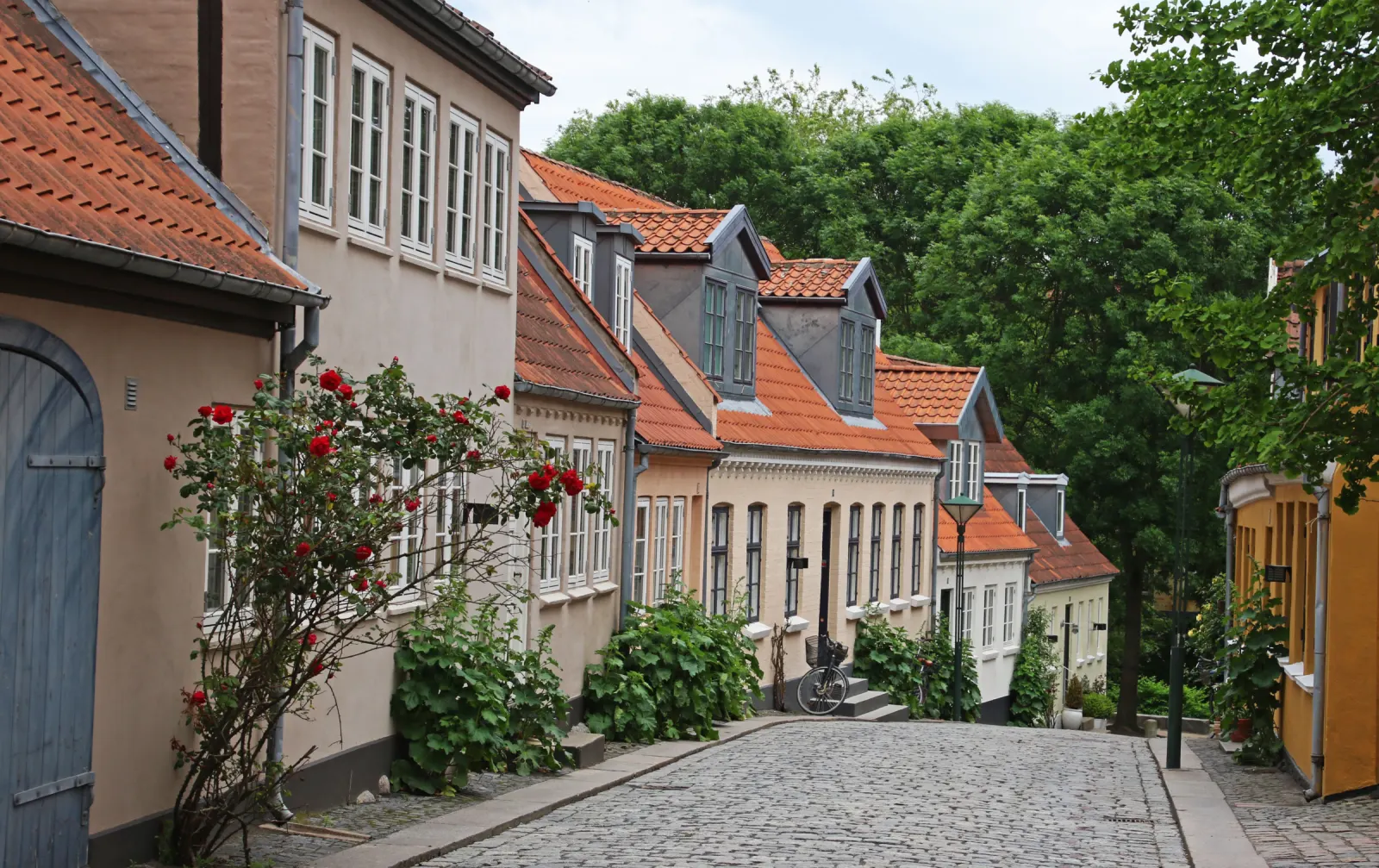
Quaint street with roses and colorful houses

Odense travel guide

What to see, where to stay and the best time to visit Odense, Denmark.

Best: Jun, Aug, Sep

Photo: Magda Ehlers / Pexels

Country
Denmark
Currency
DKK

About Odense

Odense, in Denmark, is a city of about 185,480 people and the childhood home of H.C. Andersen. Most sights are in the compact city centre: H.C. Andersen's House, his childhood home, St. Canute's Cathedral, the Brandts art museum and the old lanes around Overgade. The Odense River runs past the park at Munke Mose, and the harbour lies north of the centre. The best months to visit are June, August and September.

How many days do you need in Odense?

Plan a full day for the city centre. H.C. Andersen's House takes 2–3 hours, and so does Brandts. Add half a day for The Funen Village, south of the centre. Allow 1–2 hours each for the harbour or the Danish Railway Museum.

Top attractions in Odense

  1. 1H.C. Andersen's House

    2–3 hours

    City centre

    The main museum about Hans Christian Andersen, built around the house where he was born. It tells his life and fairy tales through rooms, sound and light, and has a garden and a separate children's area. It is the reason many visitors come to Odense.

  2. 2H.C. Andersen's Childhood Home

    Under 1 hour

    City centre

    The small, simple house where Andersen lived as a boy, close to the cathedral. It shows how poor his family was and pairs well with a visit to the main museum.

  3. 3St. Canute's Cathedral

    1 hour

    City centre

    Odense's Gothic brick cathedral, named after King Canute, who was killed in the town. His remains are shown in the crypt, and the carved altarpiece is one of the finest in Denmark.

  4. 4The Funen Village

    Half a day

    Fruens Bøge, south of the centre

    An open-air museum with old farmhouses, a mill and workshops moved here from across the island of Funen. Farm animals and gardens show what rural life was like in Andersen's time. You can reach it on foot or by bike along the river.

  5. 5Brandts – Museum of Art & Visual Culture

    2–3 hours

    Brandts Klædefabrik, city centre

    Art, photography and visual culture in a former textile factory. The surrounding square has cafés and bars and is a lively meeting place in the evening.

  6. 6Danish Railway Museum

    1–2 hours

    Next to Odense Station

    Denmark's national railway museum, with historic steam locomotives, royal carriages and ferry history in large halls. Children can climb into some trains, and it is right by the station.

  7. 7Munke Mose and the Fairy Tale Garden

    1 hour

    City centre, by the Odense River

    Green parks along the river close to the cathedral. The Fairy Tale Garden has a statue of Andersen, and Munke Mose is a quiet spot for a walk or a picnic.

  8. 8Old town lanes around Overgade

    1–2 hours

    City centre

    Cobbled streets with low, colourful houses, small shops and cafés east of the cathedral. Walking here gives a feel for the town Andersen knew, and you will find Andersen-themed details along the way.

  9. 9Odense Harbour

    1–2 hours

    Harbour, north of the centre

    A former industrial harbour turned into a modern waterfront with new housing, places to eat and a harbour bath for swimming in summer. It shows the newer side of the city.
Odense by month

Average weather and our month score, from 10 years of climate data.

Weather by month and month scores for Odense
Month High / low Rain days Sunshine Score
January 5°C / 1°C 14 days (63 mm) 3.0 h/day 1.0/10
February 5°C / 1°C 12 days (59 mm) 4.8 h/day 1.9/10
March 8°C / 1°C 11 days (52 mm) 6.8 h/day 2.5/10
April 11°C / 3°C 10 days (52 mm) 10.5 h/day 4.5/10
May 16°C / 8°C 11 days (56 mm) 11.9 h/day 6.8/10
Best month: June 20°C / 12°C 11 days (69 mm) 12.7 h/day 7.8/10
July 21°C / 13°C 14 days (78 mm) 12.1 h/day 7.2/10
Best month: August 21°C / 14°C 12 days (73 mm) 11.0 h/day 7.7/10
Best month: September 18°C / 12°C 12 days (63 mm) 8.9 h/day 7.7/10
October 13°C / 9°C 14 days (72 mm) 5.6 h/day 4.2/10
November 8°C / 4°C 12 days (58 mm) 3.2 h/day 1.6/10
December 6°C / 2°C 14 days (64 mm) 2.2 h/day 0.8/10
  1. Jan

    Cold and dark, with highs near 4.5°C and rain on about 14 days. Only 3 hours of sun a day. Scores lowest of the year here.

  2. Feb

    Still chilly, highs of 5.4°C, rain on 11.5 days, just 4.8 sun hours daily. Low scores continue through winter.

  3. Mar

    Highs reach 7.6°C with 10.9 rain days and 6.8 sun hours. Weather is improving but scores remain weak.

  4. Apr

    Highs climb to 11.1°C, rain drops to 10.3 days, sun hours rise to 10.5. Conditions turn workable, scoring ok.

  5. May

    Pleasant with highs of 16°C, 11 rain days and 11.9 sun hours. Scores rate it good for a visit.

  6. Jun

    Warm, highs near 19.9°C, 10.8 rain days, 12.7 sun hours. This month scores best of the year.

  7. Jul

    Warmest stretch continues, highs 20.7°C, but rain days rise to 14 and rainfall hits 78mm. Still scores good.

  8. Aug

    Highs peak at 21.2°C with 11.6 rain days and 11 sun hours. Another top-scoring month for travel.

  9. Sep

    Highs ease to 18.1°C, rain days stay at 11.6, sun hours drop to 8.9. Still scores among the best months.

  10. Oct

    Highs fall to 13.2°C, rain days climb to 14.2, sun hours shrink to 5.6. Scores slip back to ok.

  11. Nov

    Highs drop to 8.4°C, with 12 rain days and only 3.2 sun hours. Dark, damp conditions bring low scores.

  12. Dec

    Coldest light of the year, highs 5.8°C, rain on 13.7 days, just 2.2 sun hours. Scores are the lowest of the year.

Climate averages 2015–2024 · Best time to visit Denmark →

Where to stay in Odense

The best areas to base yourself and who each one suits.

Indre By

Good for first-timers, short stays, food and shopping

Odense's compact city centre has the cathedral, pedestrian shopping streets and most cafés, bars and museums within walking distance. It is the easiest base for a first visit, and the train station is close by. Weekend evenings can be noisy near the bars on and around the main streets.

H.C. Andersen Kvarteret

Good for couples, culture lovers, families

This old quarter on the east side of the centre has cobbled lanes and small, colourful houses around the H.C. Andersen museum and his birthplace. It is quiet and pretty at night, yet only a short walk from the main streets. Cobblestones can be hard with wheeled suitcases or pushchairs, and the lanes get busy with tour groups by day.

Kongens Have

Good for rail travellers, business trips, budget-minded

The area around the King's Garden park and Odense Castle sits right next to the train and bus station, on the north edge of the centre. It is practical for day trips across Funen and arrivals by train. It feels more functional than charming, and traffic around the station is constant.

Odense Havn

Good for modern apartments, longer stays, water views

The redeveloped harbour north of the station mixes new housing, harbour baths and waterside spaces with some remaining industry. It is calmer than the centre and has a newer, open feel. Choice of restaurants is smaller, and it can feel windy and empty in the colder months.

Munke Mose

Good for families, nature lovers, quiet

This leafy area around the Munke Mose park and the Odense River lies just south of the centre, with river paths that lead towards Odense Zoo. It is green and peaceful but still a short walk from the old town. Evenings are quiet, with few bars or late-night places nearby.

Hunderup

Good for families, residential feel, cyclists

Hunderup is a residential neighbourhood south-west of the centre with villa streets, local shops and easy access to green spaces. It suits travellers who want to live like a local and are happy to cycle or take the bus into town. It is too far from the centre for most first-timers who want to walk everywhere.

Getting to and around Odense

From the airport
No airport data is given for Odense. Most visitors arrive by train into Odense Station, which sits right by Kongens Have and the city centre, so a taxi or train link is the usual way in rather than a direct flight connection.
Public transport
Odense has a city bus network and a light rail (Odense Letbane) line running through town, useful for reaching the harbour or outer neighbourhoods like Hunderup. For most sightseeing, you won't need either, since the main sights cluster in the compact city centre.
On foot
The centre is small and flat, so walking works well. H.C. Andersen's House, St. Canute's Cathedral, Brandts, the old lanes around Overgade and Munke Mose are all within easy walking distance of each other.

Food to try in Odense

Smørrebrød

This is an open-faced rye bread sandwich topped with items like herring, liver pâté, or roast pork. Locals eat it for lunch in cafés across Odense.

Frikadeller

These are pan-fried pork and veal meatballs, a staple of Danish home cooking. Restaurants in Odense often serve them with boiled potatoes and gravy.

Flæskesteg

This is roast pork with crispy crackling, a classic Danish main course. It appears on menus around Odense, especially during colder months and festive meals.

Rød pølse

This is a red Danish sausage sold from street carts, often eaten standing up with mustard and crispy onions. You will find pølsevogn stalls around Odense's city centre.

Æbleskiver

These are round, pancake-like balls dusted with sugar and served with jam. Locals eat them as a treat, especially around Christmas markets in Odense.

More of Denmark

Denmark travel guide →

Odense: frequently asked questions

Is Odense good to visit in August?

Yes, August is one of the best months. It scores 7.7 out of 10, with highs around 21.2°C and lows near 13.7°C. There are about 11.6 rain days and 11 hours of sun, so you get warm, fairly dry days for walking the old town and visiting the Funen Village.

How many days do I need in Odense?

Two days cover the main sights comfortably. H.C. Andersen's House takes 2–3 hours, the Funen Village needs half a day, and smaller stops like the Childhood Home, St. Canute's Cathedral, Munke Mose and the harbour each take 1–2 hours. Spread across two days you can see the centre and the open-air museum without rushing.

What is the best time to visit Odense?

June, August and September are the top months, each scoring 7.7–7.8. June has the longest days with 12.7 hours of sun and highs of 19.9°C, while August and September stay warm (18.1–21.2°C highs) with fewer rain days than July. May and July are also rated good, with scores of 6.8 and 7.2.

Is Odense worth visiting in winter, like December or January?

Winter scores low: December gets 0.8 and January 1.0 out of 10. Daylight is short, with only 2.2 hours of sun in December and 3 hours in January. Highs stay near 4.5–5.8°C and rain falls on about 13–14 days a month, so outdoor sightseeing is limited, though the city still works for museums and the Christmas period.

Does it rain a lot in Odense?

Rain is spread fairly evenly through the year, with 10–14 rain days most months. October has the most, at 14.2 days and 72mm, followed by July with 14 days and 78mm, the wettest month by volume. Spring months like March and April are drier, with around 10–11 rain days and 52mm each.