Skip to content
wheretotravel.info
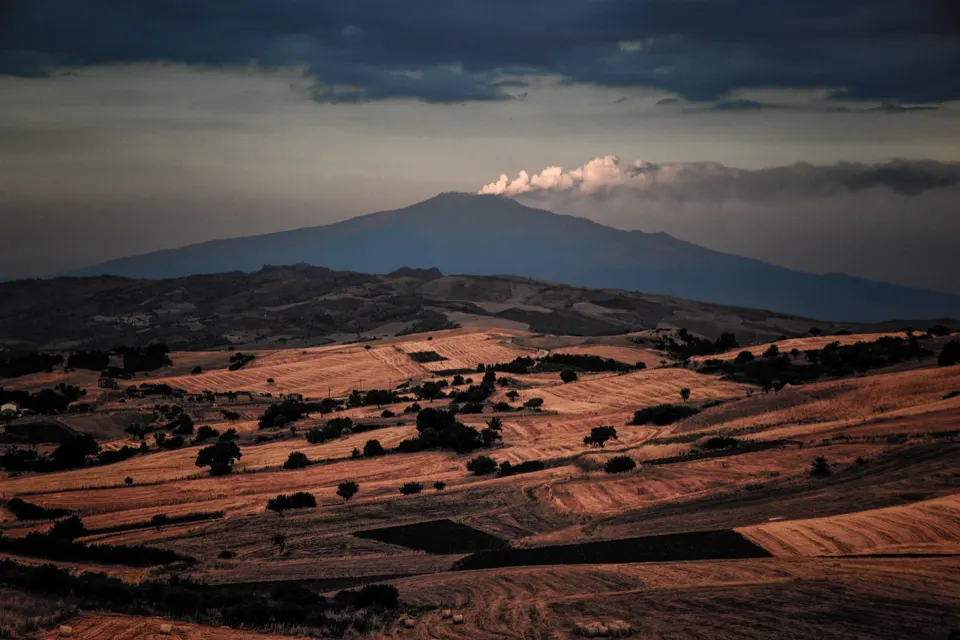
Mount Etna volcano seen at dusk over fields

Catania travel guide

What to see, where to stay and the best time to visit Catania, Italy.

Best: Apr, May, Jun, Sep

Photo: Sammy-Sander / Pixabay

Country
Italy

About Catania

Catania is a coastal city in Italy with a population of 311,584. Most sights sit close together in the historic centre: Piazza del Duomo and the Elephant Fountain, the cathedral, the Benedictine Monastery of San Nicolò l'Arena, the Roman Theatre and Castello Ursino. Each takes between 30 minutes and 2 hours. The biggest draw is a full-day trip to Mount Etna. The best months to visit are April, May, June and September.

How many days do you need in Catania?

The historic centre sights take 30 minutes to 2 hours each, so you can see them in a full day on foot. Mount Etna needs its own full day. Add extra time if you want slower days by the sea in Ognina.

Top attractions in Catania

  1. 1Mount Etna

    Full day

    Day trip from Catania

    Europe's most active volcano rises above the city and is the main reason many people come to Catania. You can walk among old craters on the upper slopes or join a guided trip higher up. The summit area can close when the volcano is active or the weather is bad, so keep your plans flexible.

  2. 2Piazza del Duomo and Elephant Fountain

    30 minutes–1 hour

    Historic centre

    The main square of Catania is built in the dark lava-stone baroque style that defines the city. In the middle stands the Elephant Fountain, a lava-stone elephant carrying an Egyptian obelisk, which is the symbol of Catania.

  3. 3Catania Cathedral (Cathedral of Sant'Agata)

    30 minutes–1 hour

    Historic centre

    The cathedral on Piazza del Duomo is dedicated to Saint Agatha, the city's patron saint. Inside you can see the tomb of the composer Vincenzo Bellini, who was born in Catania.

  4. 4Benedictine Monastery of San Nicolò l'Arena

    1–2 hours

    Historic centre

    One of the largest monasteries in Europe, it is now part of the University of Catania and a UNESCO World Heritage site. Guided tours show the cloisters, the library and Roman remains found under the building.

  5. 5Roman Theatre and Odeon

    1 hour

    Historic centre

    The remains of a Roman theatre and a smaller odeon lie hidden between houses in the old town. Seeing the stone seats squeezed in among later buildings shows how the city grew on top of its past.

  6. 6Castello Ursino

    1–2 hours

    Historic centre

    This medieval castle was built by Emperor Frederick II on the coast, but a lava flow later pushed the shoreline away and left it inland. Today it holds the Civic Museum, with archaeology, paintings and sculpture.

  7. 7Via Etnea

    1–2 hours

    Historic centre

    Catania's main street runs straight from Piazza del Duomo towards Mount Etna, which you can see at the end on clear days. It is lined with shops, cafés and baroque churches, and is the best place for an evening walk.

  8. 8Via dei Crociferi

    30 minutes–1 hour

    Historic centre

    A short, quiet street packed with baroque churches, convents and palaces. It is one of the best places to see the style the city used when it was rebuilt after a major earthquake.

  9. 9Villa Bellini

    1 hour

    Via Etnea

    The city's main public garden, named after Vincenzo Bellini, sits along Via Etnea. It has shady paths, fountains and views, and is a good break from the heat and traffic of the centre.

Catania by month

Average weather and our month score, from 10 years of climate data.

Weather by month and month scores for Catania
Month High / low Rain days Sunshine Sea temp Score
January 15°C / 7°C 7 days (47 mm) 8.3 h/day 16°C 7.1/10
February 16°C / 8°C 7 days (66 mm) 8.8 h/day 15°C 7.5/10
March 18°C / 9°C 9 days (64 mm) 10.0 h/day 16°C 7.9/10
Best month: April 20°C / 12°C 5 days (28 mm) 10.8 h/day 17°C 9.0/10
Best month: May 24°C / 16°C 6 days (41 mm) 12.2 h/day 20°C 8.9/10
Best month: June 29°C / 21°C 3 days (21 mm) 13.4 h/day 25°C 9.6/10
July 33°C / 24°C 1 day (7 mm) 13.9 h/day 28°C 8.2/10
August 32°C / 24°C 2 days (12 mm) 12.5 h/day 29°C 8.1/10
Best month: September 29°C / 21°C 8 days (44 mm) 10.8 h/day 27°C 9.0/10
October 24°C / 17°C 8 days (105 mm) 9.3 h/day 25°C 8.7/10
November 20°C / 14°C 9 days (90 mm) 8.1 h/day 22°C 8.2/10
December 16°C / 9°C 6 days (38 mm) 7.8 h/day 18°C 7.9/10
  1. Jan

    High 15°C and 7.1 rain days. Rated good, with the year's lowest score of 7.1. Mild, but nights drop to 7.4°C, and the sea is 16°C.

  2. Feb

    High 16°C and 7.3 rain days, with 66 mm of rain. Rated best, but the score is only 7.5. The sea is at its coldest, 14.9°C.

  3. Mar

    High 17.5°C, but March ties November for the most rain days, at 9. Rated best with a score of 7.9. Pack a rain jacket.

  4. Apr

    High 20°C, only 5.2 rain days and just 28 mm of rain. Rated best with a strong 9. A great time for walking the city.

  5. May

    High 24°C, 5.5 rain days and 12.2 hours of sun. Rated best with 8.9. The sea warms to 20°C, which is cool but swimmable for some.

  6. Jun

    The top month, with a score of 9.6. High 29°C, 2.8 rain days and a 24.5°C sea. Warm, dry and good for the beach.

  7. Jul

    The hottest month: highs of 33°C and nights at 23.5°C, with 1 rain day. Rated best at 8.2, but the heat makes midday sightseeing hard.

  8. Aug

    High 32°C, 2.4 rain days and the warmest sea, at 28.5°C. Rated best at 8.1. Hot nights of 23.9°C, so choose a room with air conditioning.

  9. Sep

    High 28.7°C and a 27.2°C sea, but rain days rise to 7.7. Rated best with 9. A great month for swimming without peak heat.

  10. Oct

    High 24°C, but it is the wettest month, with 105 mm over 8.1 rain days. Still rated best at 8.7. Expect some heavy showers.

  11. Nov

    High 20°C, 9 rain days and 90 mm of rain. Rated best at 8.2, but plan indoor options. The sea is still 21.5°C.

  12. Dec

    High 16.4°C and 6 rain days, but the fewest sun hours, at 7.8. Rated best at 7.9. Cool evenings of 9.4°C.

Climate averages 2015–2024 · Best time to visit Italy →

Where to stay in Catania

The best areas to base yourself and who each one suits.

Centro Storico (around Piazza Duomo)

Good for first-timers, sightseeing

This is the old Baroque core, with the cathedral, the elephant fountain and the fish market all a short walk apart. You can see most of the main sights on foot without using transport. The drawback is noise: the market starts early, scooters are common in the narrow streets, and some side streets feel run-down.

Teatro Massimo and Piazza Bellini

Good for nightlife, young travellers

The streets around the opera house fill with bars and outdoor tables in the evening, especially at weekends. It is close to the Duomo, so it works well for sightseeing too. Expect loud music and crowds late at night, so ask for a room away from the street if you sleep lightly.

Upper Via Etnea (near Villa Bellini)

Good for couples, shopping, calmer stays

This stretch of the main shopping street is more orderly than the old centre and sits next to Villa Bellini, the city's main park. It is a good middle ground: walkable to the sights but a little quieter at night. Via Etnea rises gently towards the volcano, so the walk back from the centre is slightly uphill.

Borgo and Corso Italia

Good for families, longer stays

These are mainly residential areas with local cafés, food shops and wider streets. They give a calmer, everyday view of the city and are linked to the centre by the metro and buses. The main drawback is distance: the old town is a long walk away, so you will use transport often.

Ognina

Good for sea lovers, quiet

Ognina is a small fishing harbour on the northern coast, with black lava rocks and seafood restaurants. It is a relaxed base if you want the sea close by. There are few sights here, the coast is rocky rather than sandy, and you need a bus or taxi to reach the centre.

Around Catania Centrale station

Good for short stays, early transport

Staying near the station makes sense if you are catching an early train or bus, including connections to the airport and other parts of Sicily. It is practical, not attractive. Some streets here feel unsafe and empty after dark, so most visitors are better off in the centre.

Getting to and around Catania

From the airport
Catania Fontanarossa airport is close to the city. The usual options are the Alibus shuttle bus, which stops in the centre and at Catania Centrale station, or a taxi. Check current fares before you travel.
Public transport
Public transport is limited. City buses cover most areas, and the small metro has 1 line that reaches only a little of the historic centre. Tip: buy bus tickets before boarding, at tobacconists or newsstands.
On foot
The historic centre is compact and easy on foot. Piazza del Duomo, the Cathedral, Via dei Crociferi, the Roman Theatre, the Benedictine Monastery and Castello Ursino are close. Via Etnea runs to Villa Bellini.

Food to try in Catania

Pasta alla Norma

Pasta with fried aubergine, tomato sauce, basil and grated salted ricotta. It is named after the opera Norma by Vincenzo Bellini, who was born in Catania, and appears on most trattoria menus.

Arancini

Fried rice balls filled with meat ragù, cheese or other fillings. In Catania they are usually shaped like a cone, said to echo Mount Etna. Locals grab them from bars and rosticcerie as a quick snack.

Granita with brioche

A semi-frozen ice made with almond, pistachio, lemon, coffee or mulberry, served with a soft brioche bun for dipping. Locals often eat it for breakfast, especially in summer.

Cipollina

A puff pastry parcel filled with onion, tomato, cheese and ham. It is a classic Catanese savoury snack, sold in bakeries and bars alongside arancini, often eaten mid-morning or at aperitivo time.

Grilled horse meat

Horse meat is a Catania tradition. In the evening, grill stalls and butchers along Via Plebiscito cook horse steaks and meatballs to order. Skip it if eating horse is not for you.

Minne di Sant'Agata

Small round sponge cakes filled with ricotta and topped with white icing and a cherry. They honour Saint Agatha, Catania's patron saint, and pastry shops sell them especially around her feast.

More of Italy

Italy travel guide →

Catania: frequently asked questions

Is Catania good to visit in August?

Yes, but only if you handle heat well. August scores 8.1 out of 10, yet the average high is 32.3°C and nights stay warm at 23.9°C. Rain is rare, with about 2.4 rain days. The sea is at its warmest, around 28.5°C, so it suits beach time more than long walks around the city at midday.

What is the best month to visit Catania?

June is the best month, with a score of 9.6 out of 10. Highs reach 29.1°C, there are only about 2.8 rain days, and the sea is around 24.5°C. April and September follow at 9 each, then May at 8.9. For sightseeing without strong heat, April is cooler, with highs near 19.9°C.

Is Catania worth visiting in winter?

Yes, winter is mild, but you cannot swim. January is the lowest-scoring month at 7.1, still rated good. Highs are about 15°C and lows 7.4°C, with around 7.1 rain days. The sea is only 16°C in January and drops to 14.9°C in February, so plan for sightseeing, not the beach.

What is the rainiest month in Catania?

October is the wettest month, with about 105 mm of rain over 8.1 rain days. November is also wet, with 90 mm over 9 rain days. The upside is that the sea is still warm in October, at around 24.5°C. If you want dry weather, July is the driest month, with just 7 mm.

How many days do I need in Catania?

Plan at least a full day for the historic centre and a separate full day for Mount Etna. Most central sights take 30 minutes to 2 hours each, such as the Benedictine Monastery of San Nicolò l'Arena, Castello Ursino and Via Etnea. A trip to Mount Etna needs a full day on its own.