Skip to content
wheretotravel.info
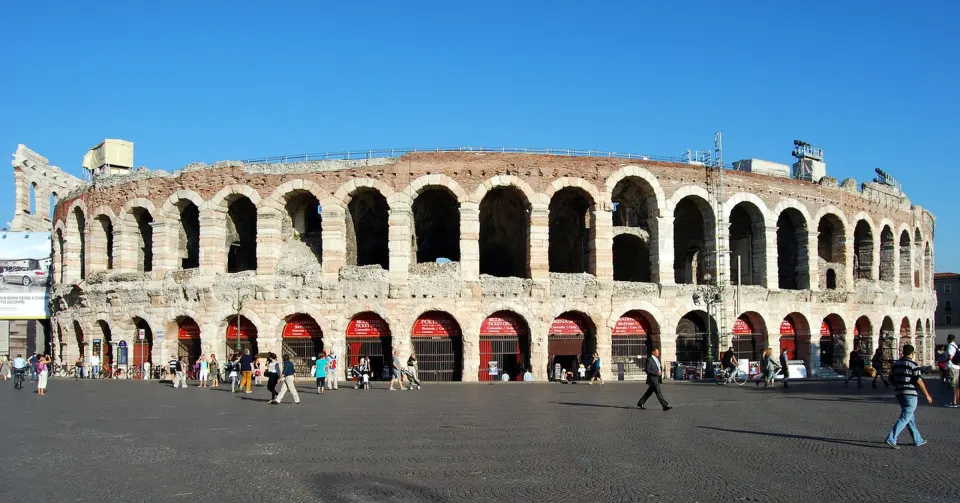
Verona Arena Roman amphitheater with people in piazza

Verona travel guide

What to see, where to stay and the best time to visit Verona, Italy.

Best: Apr, Sep, Oct

Photo: pcdazero / Pixabay

Country
Italy

About Verona

Verona is a compact city in northern Italy, built around a Roman arena and a riverside old town of pink-marble piazzas. Visitors come for the Verona Arena, the narrow streets of Città Antica, and the Juliet's House legend, but the city also has a real local feel in neighbourhoods like San Zeno and Borgo Trento. September, October and April bring mild, comfortable weather for walking the streets and climbing towers.

How many days do you need in Verona?

Two days cover the main sights: the Arena, Piazza delle Erbe, Lamberti Tower, and Castelvecchio Museum. A third day lets you add San Zeno, the Roman Theatre, and Castel San Pietro at a slower pace.

Top attractions in Verona

  1. 1Verona Arena

    1–2 hours

    Piazza Bra

    A Roman amphitheatre that is still in use, best known for its summer opera festival. You can walk the stone tiers and look down into the arena. Seeing an evening opera here is a very different experience from a daytime visit.

  2. 2Piazza delle Erbe

    30–60 minutes

    Città Antica (old town)

    The city's oldest square, on the site of the Roman forum, lined with painted houses and market stalls. The stalls are now mostly souvenirs, but the square itself is the heart of old Verona and a good place to start a walk.

  3. 3Lamberti Tower

    45–60 minutes

    Città Antica (old town)

    The tallest tower in the old town, next to Piazza delle Erbe. You can climb the stairs or take a lift most of the way. From the top you get the best view over the rooftops, the river and the hills.

  4. 4Piazza dei Signori and Scaliger Tombs

    30–60 minutes

    Città Antica (old town)

    A calmer square next to Piazza delle Erbe, surrounded by old government palaces and a statue of Dante. Just around the corner are the Scaliger Tombs, the ornate Gothic tombs of the family that once ruled Verona.

  5. 5Castelvecchio Museum

    2–3 hours

    Castelvecchio

    A medieval brick castle turned into an art museum, with sculpture and paintings from Verona and the Veneto. The modern redesign by architect Carlo Scarpa is famous in its own right. Afterwards, walk across the fortified Castelvecchio Bridge over the Adige.

  6. 6Basilica of San Zeno

    1 hour

    San Zeno

    One of the finest Romanesque churches in northern Italy, a pleasant walk from the centre. Look for the bronze panels on the main doors and the Mantegna altarpiece inside. It is usually much quieter than the old-town sights.

  7. 7Juliet's House

    30 minutes

    Città Antica (old town)

    A medieval house with a balcony, linked to Shakespeare's Romeo and Juliet. The connection is a legend, not history, and the small courtyard is often very crowded. Go early if you want to see it, or skip it if crowds bother you.

  8. 8Verona Cathedral

    45–60 minutes

    Città Antica (old town)

    The Duomo mixes Romanesque and later styles and holds Titian's painting of the Assumption. The complex also includes older church remains and a cloister. It is a short walk north of the main squares.

  9. 9Roman Theatre and Archaeological Museum

    1–2 hours

    Veronetta

    The remains of a Roman theatre built into the hillside across the river, with a museum of Roman finds in the old convent above it. Reach it by crossing the Ponte Pietra, the city's old stone bridge.

  10. 10Castel San Pietro

    1 hour

    Veronetta

    A hilltop terrace above the Roman Theatre with a wide view over the river bend and the old town. You can walk up the steps or take the funicular. It is a popular spot around sunset.
Verona by month

Average weather and our month score, from 10 years of climate data.

Weather by month and month scores for Verona
Month High / low Rain days Sunshine Score
January 8°C / 0°C 6 days (42 mm) 6.8 h/day 3.6/10
February 11°C / 2°C 8 days (73 mm) 7.0 h/day 4.5/10
March 15°C / 5°C 9 days (60 mm) 9.0 h/day 6.5/10
Best month: April 19°C / 8°C 10 days (72 mm) 10.6 h/day 8.0/10
May 22°C / 13°C 16 days (136 mm) 10.7 h/day 7.0/10
June 28°C / 18°C 11 days (89 mm) 13.2 h/day 6.9/10
July 31°C / 21°C 10 days (64 mm) 13.5 h/day 5.6/10
August 30°C / 20°C 9 days (70 mm) 12.1 h/day 6.2/10
Best month: September 25°C / 16°C 8 days (83 mm) 10.4 h/day 8.3/10
Best month: October 20°C / 11°C 9 days (95 mm) 8.0 h/day 8.2/10
November 13°C / 5°C 9 days (84 mm) 6.4 h/day 5.2/10
December 9°C / 1°C 7 days (61 mm) 5.7 h/day 3.4/10
  1. Jan

    Highs reach just 7.8°C with 5.5 rain days. Cold, quiet, low light. Scores lowest of the year, so plan for chilly sightseeing.

  2. Feb

    Highs climb to 10.8°C but rain days jump to 8.3. An OK month with mild improvement, still grey and damp.

  3. Mar

    Highs reach 14.5°C with 8.6 rain days and 9 sun hours. A good month as spring warmth and light return.

  4. Apr

    Highs hit 18.6°C, sun hours rise to 10.6, rain days 10. The best-scoring spring month, mild and bright.

  5. May

    Highs reach 22.1°C but rain days peak at 15.6 with 136mm of rain, the wettest month. Still rated good despite the showers.

  6. Jun

    Highs jump to 27.6°C with 13.2 sun hours and 11.3 rain days. A good month, warm and increasingly sunny.

  7. Jul

    Highs hit 30.6°C, the hottest month, with 13.5 sun hours. Rated only OK since the heat can feel intense.

  8. Aug

    Highs stay near 30.1°C with 8.8 rain days and 12.1 sun hours. A good month, hot but slightly less punishing than July.

  9. Sep

    Highs ease to 24.8°C with 8.4 rain days and 10.4 sun hours. The top-scoring month, warm with fading summer crowds.

  10. Oct

    Highs drop to 19.5°C, rain days 8.8, sun hours 8. Another best-rated month, mild with autumn colour.

  11. Nov

    Highs fall to 12.9°C with 9.1 rain days and just 6.4 sun hours. An OK month, cool and often grey.

  12. Dec

    Highs reach only 8.5°C with 5.7 sun hours, the darkest month. Scores lowest alongside January due to cold, short days.

Climate averages 2015–2024 · Best time to visit Italy →

Where to stay in Verona

The best areas to base yourself and who each one suits.

Città Antica (historic centre)

Good for first-timers, sightseeing, opera-goers

This is the old town inside the bend of the Adige river, around the Arena, Piazza Bra and Piazza delle Erbe. You can walk to almost every major sight, and the streets feel lively into the evening. The drawback is crowds and noise, especially on opera nights, and cars are restricted, so driving to your room is awkward.

Cittadella and Porta Nuova

Good for train travellers, short stays

This area sits between the Porta Nuova station and Piazza Bra, linked by the wide Corso Porta Nuova. It is practical if you arrive by rail or plan day trips, and the Arena is an easy walk away. The streets nearest the station are busy with traffic and less attractive than the old town.

San Zeno

Good for repeat visitors, quiet, couples

West of the centre, this neighbourhood grew up around the Basilica of San Zeno and has a calm, residential feel with a few good local restaurants. Castelvecchio and its bridge are close by. It is a longer walk to Piazza delle Erbe and the east bank, and evenings are quiet.

Borgo Trento

Good for families, quiet, longer stays

North of the river, this is a leafy residential area with wide streets and everyday shops. It is calmer than the old town and a bridge crossing takes you into the centre on foot. There is little nightlife, and it can feel far from the sights after a long day.

Getting to and around Verona

From the airport
Verona has a small airport, and the fact pack has no fixed route data for it. Visitors usually take a bus or a taxi into the centre, or arrange a transfer, since no train line runs directly from the airport.
Public transport
Verona runs a city bus network, which is the main public transport for visitors, since there's no metro or tram system. Many sights in the historic centre are close enough to skip buses altogether; use them mainly to reach Borgo Trento or the train station area at Porta Nuova.
On foot
The historic centre, Città Antica, is compact and easy to explore on foot. Piazza delle Erbe, Lamberti Tower, Piazza dei Signori, Juliet's House and Verona Cathedral all sit within this small old-town area, an easy walk from Piazza Bra and the Verona Arena.

Food to try in Verona

Pastissada de caval

A slow-cooked horse meat stew in red wine and spices, a traditional Veronese dish often served with polenta, especially in colder months.

Risotto all'Amarone

Risotto cooked with Amarone della Valpolicella wine, a rich red wine produced in the hills near Verona. It's a classic primo course in local trattorias.

Pandoro

A star-shaped sweet bread dusted with icing sugar, originally from Verona. It's a traditional treat, especially around the Christmas season.

Bollito misto with pearà sauce

Mixed boiled meats served with pearà, a peppery bread-based sauce unique to Verona. This hearty dish is popular in winter and at family gatherings.

Tortellini di Valeggio

Small stuffed pasta parcels from the nearby town of Valeggio sul Mincio, often served in broth. They're a specialty found on many Veronese menus.

More of Italy

Italy travel guide →

Verona: frequently asked questions

Is Verona good in August?

Yes, but it is hot. August scores 6.2 out of 10, rated good. Daytime highs reach 30.1°C and lows stay around 20.1°C, so afternoons are heavy. There are 8.8 rain days and 70mm of rain, plus 12.1 hours of sun a day, so expect long, bright days with little relief from the heat.

What is the best month to visit Verona?

September is the top-rated month, scoring 8.3 out of 10. Highs average 24.8°C and lows 15.6°C, which feels comfortable for walking. Rain falls on 8.4 days totalling 83mm, and there are 10.4 hours of sun a day. October (8.2) and April (8) follow close behind as the other best-rated months.

How many days do I need in Verona?

Two to three days cover the main sights. Verona Arena takes 1–2 hours, Castelvecchio Museum needs 2–3 hours, and smaller stops like Piazza delle Erbe, Lamberti Tower, Juliet's House and the Cathedral each take 30 minutes to an hour. Add the Roman Theatre and Castel San Pietro in Veronetta if you want a fuller itinerary.

Is Verona cold in January?

Yes. January is the lowest-scoring month, rated avoid at 3.6 out of 10. Highs average only 7.8°C and lows drop to -0.1°C, close to freezing overnight. There are 5.5 rain days and 42mm of rain, with just 6.8 hours of sun a day, so days are short and grey.

Does it rain a lot in Verona in May?

May is the wettest month. It brings 136mm of rain over 15.6 days, more than any other month in the fact pack. Despite this, temperatures are mild, with highs of 22.1°C and lows of 13°C, and sun hours reach 10.7, so showers tend to be mixed with sunny spells rather than constant rain.