Skip to content
wheretotravel.info
Barcelona

Barcelona travel guide

What to see, where to stay and the best time to visit Barcelona, Spain.

Best: Apr, May, Jun, Oct

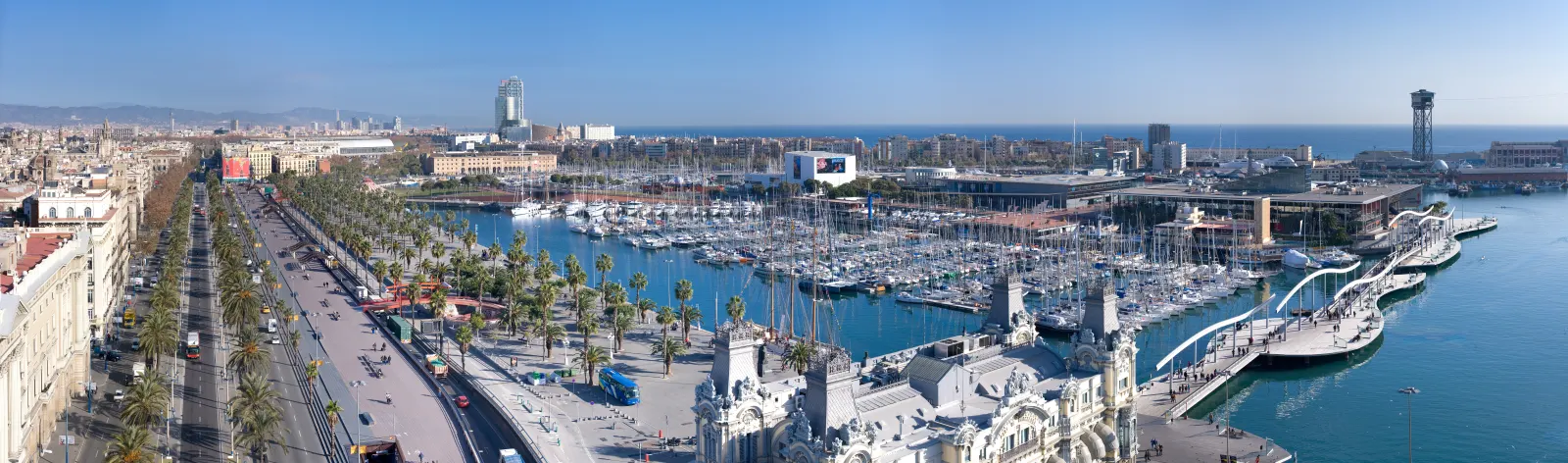
Photo: Diliff / Wikimedia Commons

Country
Spain

About Barcelona

Barcelona mixes Gothic streets, Modernist architecture and a city beach, all within reach on foot or by metro. Antoni Gaudí's work defines much of the skyline, from Sagrada Família to Casa Batlló and Casa Milà, while the Gothic Quarter and El Born keep their medieval layout. Barceloneta adds sand and seafood, and Montjuïc adds hilltop views and museums. The best months to visit are April, May, June and October, when temperatures are milder than in the busy summer peak.

How many days do you need in Barcelona?

The main sights span several districts: Eixample for Gaudí's buildings, Ciutat Vella for the Gothic Quarter and La Rambla, El Born for the Picasso Museum, plus Montjuïc and Barceloneta. Covering these comfortably takes more than a single day.

Top attractions in Barcelona

  1. 1Sagrada Família

    1–2 hours

    Eixample

    Antoni Gaudí's basilica is still being built, and it is the city's best-known sight. Inside, the tall columns branch like trees and the stained glass fills the space with coloured light. Tickets are timed, so book ahead.

  2. 2Park Güell

    2–3 hours

    Gràcia

    A hillside park designed by Gaudí, with mosaic benches, curving terraces and gatehouses that look like gingerbread houses. The central area with the famous mosaics needs a timed ticket, but the wider park has views over the city to the sea.

  3. 3Gothic Quarter (Barri Gòtic)

    Half a day

    Ciutat Vella

    The medieval core of the city: narrow lanes, small squares and remains of Roman walls. Barcelona Cathedral stands at its centre, and walking the side streets is the best way to see it.

  4. 4Casa Batlló

    1–2 hours

    Eixample

    A Gaudí house on Passeig de Gràcia with a wavy facade, bone-like balconies and a roof shaped like a dragon's back. The audio-guided visit takes you through the rooms and up to the roof terrace.

  5. 5Casa Milà (La Pedrera)

    1–2 hours

    Eixample

    Gaudí's stone apartment building, nicknamed 'the stone quarry' for its rough, rippling facade. The highlight is the rooftop, with its sculpted chimneys and views along the avenue.

  6. 6La Rambla and La Boqueria Market

    1–2 hours

    Ciutat Vella

    La Rambla is a long tree-lined walking street running from Plaça de Catalunya towards the port. Halfway down, La Boqueria is a large covered food market with fruit, seafood, ham and counter bars. The street is crowded and pickpockets work here, so keep bags closed.

  7. 7Picasso Museum

    2 hours

    El Born

    A large collection of Picasso's work, especially from his early years, set in connected medieval palaces. It shows how his style developed, including his series based on Velázquez's Las Meninas.

  8. 8Montjuïc

    Half a day

    Sants-Montjuïc

    A green hill above the port with museums, gardens and a castle at the top. The National Art Museum of Catalonia (MNAC) holds a major collection of Romanesque church paintings, and the Magic Fountain below it puts on light-and-music shows on some evenings. You can reach the top by cable car or funicular.

  9. 9Barceloneta Beach

    2–3 hours

    Barceloneta

    The city beach closest to the old town, with a long seafront promenade and seafood restaurants in the old fishing quarter behind it. It gets very busy in summer; beaches further north along the coast are usually calmer.

Barcelona by month

Average weather and our month score, from 10 years of climate data.

Weather by month and month scores for Barcelona
Month High / low Rain days Sunshine Score
January 13°C / 5°C 4 days (44 mm) 7.9 h/day 6.8/10
February 15°C / 6°C 6 days (36 mm) 8.7 h/day 7.1/10
March 16°C / 8°C 7 days (46 mm) 9.8 h/day 7.6/10
Best month: April 18°C / 10°C 9 days (70 mm) 10.7 h/day 8.1/10
Best month: May 21°C / 14°C 7 days (47 mm) 12.3 h/day 8.5/10
Best month: June 26°C / 18°C 6 days (35 mm) 13.0 h/day 8.8/10
July 29°C / 21°C 4 days (27 mm) 13.5 h/day 6.9/10
August 29°C / 21°C 7 days (52 mm) 12.2 h/day 6.4/10
September 25°C / 18°C 12 days (92 mm) 10.2 h/day 7.6/10
Best month: October 22°C / 15°C 10 days (105 mm) 8.8 h/day 8.1/10
November 17°C / 9°C 8 days (58 mm) 7.8 h/day 8.1/10
December 15°C / 6°C 4 days (25 mm) 7.7 h/day 7.6/10
  1. Jan

    Highs reach 13°C with only 4.2 rain days, so it stays mild and fairly dry. Score 6.8, a good month for quiet sightseeing.

  2. Feb

    Highs climb to 15°C but rain days rise to 6.2. Still a good month, scoring 7.1, with decent sun at 8.7 hours a day.

  3. Mar

    Highs hit 16°C and sun hours grow to 9.8. This is rated the best verdict, scoring 7.6, as spring weather settles in.

  4. Apr

    Highs reach 17.7°C but rain picks up to 70mm over 8.7 days. Despite the showers, it scores 8.1 and keeps the best verdict.

  5. May

    Highs of 21.3°C and 12.3 sun hours make for warm, bright days. Scoring 8.5, this is one of the best months to visit.

  6. Jun

    Highs of 25.7°C with lower rain at 35mm over 6.2 days. The top score of the year, 8.8, marks this as the best month.

  7. Jul

    Highs of 28.5°C bring real heat, though rain drops to just 4.4 days. The score falls to 6.9 as the heat makes walking tougher.

  8. Aug

    Highs stay at 28.5°C with humidity adding to the heat, and rain returns to 52mm over 6.9 days. The lowest score of the year, 6.4, reflects tough summer conditions.

  9. Sep

    Highs ease to 24.9°C but rain jumps sharply to 92mm over 11.8 days, the wettest stretch of the year. Still, it scores 7.6 and keeps the best verdict.

  10. Oct

    Highs of 21.6°C come with the heaviest rainfall of the year at 105mm over 9.6 days. Despite the wet weather, it scores 8.1 as temperatures turn comfortable.

  11. Nov

    Highs drop to 17.3°C with rain easing to 58mm over 7.7 days. Scoring 8.1, it remains one of the best months thanks to mild, settled air.

  12. Dec

    Highs of 14.9°C and just 4 rain days make this a dry, mild close to the year. It scores 7.6, keeping the best verdict.

Climate averages 2015–2024 · Best time to visit Spain →

Where to stay in Barcelona

The best areas to base yourself and who each one suits.

Barri Gòtic

Good for first-timers, sightseeing on foot

This is the medieval core next to La Rambla, with narrow lanes, the cathedral and old squares. You can walk to most central sights and the seafront from here. Streets are crowded with visitors by day, and some lanes stay noisy late at night.

El Born

Good for couples, food and bars

East of the Barri Gòtic, El Born has old stone streets, small shops, the Picasso Museum and many tapas bars. It is close to Parc de la Ciutadella and the beach. Bar noise can carry into rooms on weekend nights.

Eixample

Good for first-timers, families, architecture

Eixample is a grid of wide streets north of Plaça de Catalunya, home to Gaudí buildings such as Casa Batlló and the Sagrada Família. It is calmer than the old town and has good metro links. Main roads carry heavy traffic, and it feels less atmospheric in the evening than the older quarters.

Gràcia

Good for repeat visitors, local life, quiet nights

Gràcia was once a separate town and still has a village feel, with small squares, independent shops and neighbourhood cafés. Park Güell is within walking distance. It sits further from the beach and old town, so you will use the metro more, and the walk to Park Güell is uphill.

Barceloneta

Good for beach lovers, seafood

This old fishermen's quarter sits right by the city beach, with narrow streets and many seafood restaurants. It suits travellers who want sand and sea on the doorstep. Rooms are often small, and the beach area gets very busy and loud in summer.

Poble-sec

Good for budget-minded travellers, tapas, Montjuïc

Poble-sec lies at the foot of Montjuïc hill, with a busy tapas street, Carrer de Blai, and easy access to the hill's museums and gardens. It feels local and less touristy than the centre. Some streets climb steeply toward Montjuïc.

Getting to and around Barcelona

From the airport
The fact pack doesn't give flight or airport-transfer details for Barcelona. In practice, visitors usually reach the centre by a direct train or metro link, an airport bus, or a taxi, with no times or prices confirmed here.
Public transport
Barcelona has a metro network plus buses and trams that cover the main neighbourhoods, from Barri Gòtic and El Born to Eixample, Gràcia, Barceloneta and Poble-sec. A practical tip: buy a multi-trip travel card at a metro station to avoid buying single tickets each time.
On foot
The old centre is compact and easy to explore on foot. Barri Gòtic, El Born and La Rambla with La Boqueria Market sit close together in Ciutat Vella, so you can walk between the Gothic Quarter and Picasso Museum in minutes.

Day trips from Barcelona

Places within 2½ hours by train, bus, ferry or car.

  • Madrid

    train · 9–90 EUR

    Three operators: Renfe AVE/Avlo, iryo and OUIGO, 35+ departures a day. Fares start at 9 EUR (OUIGO), 15 EUR (iryo), 17 EUR (Renfe) in advance; walk-up fares reach 90 EUR or more. Atocha to Barcelona Sants.

    2 h 30 min

Food to try in Barcelona

Pa amb tomàquet

This is bread rubbed with ripe tomato, olive oil, and salt. Locals eat it with almost every meal, from breakfast to tapas at dinner.

Fideuà

A noodle dish similar to paella, made with short pasta and seafood. It's popular for lunch, especially on weekends with family or friends.

Esqueixada

A cold salad made with shredded salted cod, tomato, onion, and olive oil. It's a common summer starter, often served at home or in casual restaurants.

Crema catalana

A custard dessert with a caramelized sugar top, similar to crème brûlée. It's a classic way to end a meal, especially in traditional restaurants.

Botifarra amb mongetes

Grilled pork sausage served with white beans. This hearty dish is a staple at lunch, often found in no-frills local eateries.

More of Spain

Spain travel guide →

Barcelona: frequently asked questions

Is Barcelona good to visit in August?

Yes, but with trade-offs. August scores 6.4 out of 10, the lowest of the year alongside January. Highs average 28.5°C and lows stay near 21.4°C, so nights stay warm. There are 6.9 rain days and 52mm of rain, more than June or July, often from short storms rather than steady rain.

What is the best time to visit Barcelona?

June scores highest at 8.8, followed by May (8.5), April (8.1) and October (8.1). These months combine warm days (17.7–25.7°C highs) with manageable rain and strong sun hours, up to 13 hours a day in June. September through December also score 7.6 or higher, so the mild season runs long.

How many days do I need in Barcelona?

Plan for 3 to 4 days. The Gothic Quarter and Montjuïc each take half a day, Park Güell needs 2–3 hours, and the Sagrada Família, Casa Batlló, Casa Milà and Picasso Museum each take 1–2 hours. Add Barceloneta Beach for 2–3 hours and La Rambla with La Boqueria Market for another 1–2 hours.

Does it rain a lot in Barcelona?

Rain is moderate but uneven across the year. September is the wettest month with 92mm over 11.8 rain days, and October follows with 105mm over 9.6 days. December and July are driest, with 25mm and 27mm respectively. Even in wetter months, rain usually falls in shorter bursts rather than all day.

What is winter like in Barcelona?

Winter is mild, not cold. January highs reach 13.4°C with lows around 4.6°C, and December is similar at 14.9°C highs. Sun hours drop to around 7.7–7.9 a day, the lowest of the year, but January still scores 6.8 and December scores 7.6, both rated 'good' or 'best'.