Skip to content
wheretotravel.info
Lanzarote

Lanzarote travel guide

What to see, where to stay and the best time to visit Lanzarote, Spain.

Best: Jun, Jul, Aug, Sep

Photo: Lviatour / Wikimedia Commons

Country
Spain

About Lanzarote

Lanzarote, in Spain, mixes open landscapes, small towns and beaches. Most visitors come for Timanfaya National Park, the vineyards of La Geria, the Papagayo Beaches and the caves and viewpoints around Haría. Playa Blanca and Costa Teguise suit families. Caleta de Famara draws surfers, and Arrecife suits budget travellers who want local life. Our data puts the best months at June to September, with July and August at the top.

How many days do you need in Lanzarote?

Timanfaya, La Geria and the Papagayo Beaches each take half a day. Most other sights take 1–2 hours. Jameos del Agua, Cueva de los Verdes and Mirador del Río are all in Haría, so you can see them on one trip.

Top attractions in Lanzarote

  1. 1Timanfaya National Park

    Half a day

    Yaiza

    A huge field of lava and volcanic cones formed by eruptions in the 18th and 19th centuries. You see the core of the park on a guided coach route from Islote de Hilario, where staff show how hot the ground still is. You cannot drive or walk freely inside, so if you dislike coach tours, see the edges instead.

  2. 2Jameos del Agua

    1–2 hours

    Haría

    A collapsed lava tube that artist César Manrique turned into gardens, a pool and a concert hall. The dark underground lake is home to tiny blind white crabs. It gets crowded when tour coaches arrive, so go early or late if you can.

  3. 3Cueva de los Verdes

    1–2 hours

    Haría

    A long lava tube near Jameos del Agua that you visit on a guided walk. The lighting and one clever surprise make it more than just a cave. Paths are low and uneven in places, so it is not ideal if you have trouble bending or with steps.

  4. 4Mirador del Río

    1 hour

    Haría

    A viewpoint built into the cliffs at the island's northern tip, designed by César Manrique. From the glass-fronted café you look straight down to La Graciosa and the smaller islands. Skip it on cloudy or misty days, when the view can disappear.

  5. 5Fundación César Manrique

    1–2 hours

    Tahíche, Teguise

    Manrique's former home, built into five volcanic bubbles in a lava field. It now shows his art and his ideas about building in harmony with the landscape. It is the best place to understand why the island looks the way it does.

  6. 6La Geria

    Half a day

    Between Yaiza and San Bartolomé

    A wine area where each vine grows in its own pit in black volcanic ash, protected by a low stone wall. Drive the road slowly, stop at the viewpoints and visit one or two wineries for a tasting. Arrange a driver if you plan to drink.

  7. 7El Golfo and Charco de los Clicos

    1 hour

    Yaiza

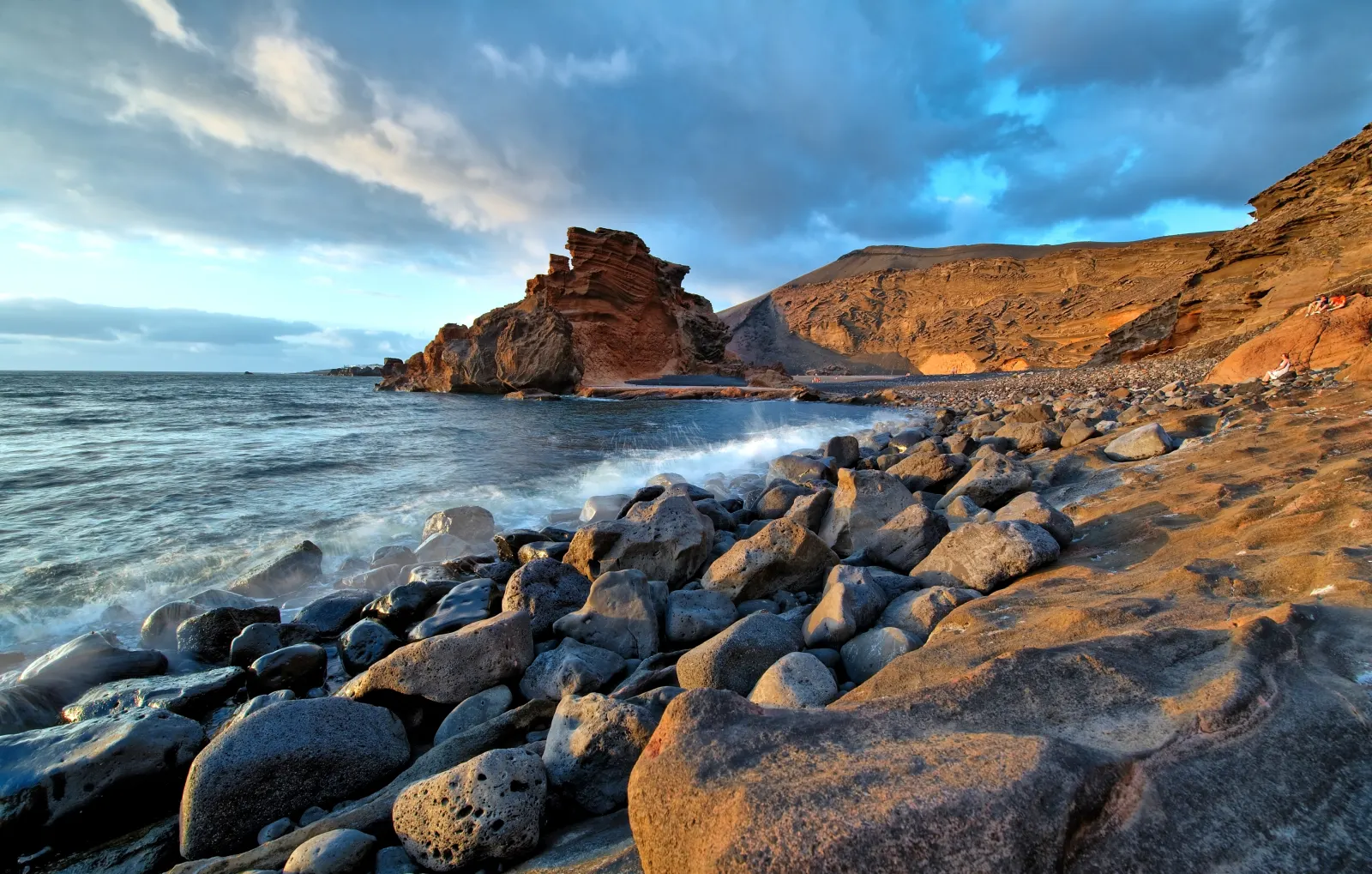
    A green lagoon sitting between a black beach and a red-brown crater wall on the west coast. Walk to the viewpoint above it, then have fish in the small village of El Golfo. Swimming in the lagoon is not allowed.

  8. 8Papagayo Beaches

    Half a day

    Playa Blanca, Yaiza

    A row of sandy coves with calm, clear water inside a protected natural area. Access is by a rough dirt road, on foot, or by boat from Playa Blanca. There is little shade and few facilities, so bring water and sun protection.

  9. 9Teguise

    2–3 hours

    Teguise

    The island's old capital, with whitewashed houses, churches and quiet squares. It is pleasant to wander on a normal weekday. The large weekly Sunday market brings big crowds and traffic; go then only if you want the market.

  10. 10Jardín de Cactus

    1 hour

    Guatiza, Teguise

    Manrique's last major project: a cactus garden laid out in terraces inside an old quarry, with a restored windmill above. It works well as a short stop on the way to the north of the island. Visit in the morning, before the midday heat.
Lanzarote by month

Average weather and our month score, from 10 years of climate data.

Weather by month and month scores for Lanzarote
Month High / low Rain days Sunshine Score
January 19°C / 13°C 2 days (8 mm) 9.6 h/day 9.5/10
February 19°C / 13°C 4 days (19 mm) 9.9 h/day 9.3/10
March 20°C / 14°C 4 days (11 mm) 11.3 h/day 9.3/10
April 21°C / 15°C 2 days (7 mm) 11.8 h/day 9.6/10
May 22°C / 16°C 1 day (4 mm) 12.5 h/day 9.7/10
Best month: June 23°C / 17°C 1 day (3 mm) 13.0 h/day 9.8/10
Best month: July 25°C / 19°C 0 days (1 mm) 12.3 h/day 10.0/10
Best month: August 26°C / 20°C 0 days (1 mm) 11.7 h/day 9.9/10
Best month: September 25°C / 19°C 1 day (8 mm) 11.2 h/day 9.8/10
October 25°C / 18°C 3 days (18 mm) 10.5 h/day 9.5/10
November 22°C / 16°C 3 days (11 mm) 9.7 h/day 9.4/10
December 20°C / 15°C 2 days (8 mm) 9.5 h/day 9.6/10
  1. Jan

    Highs of 18.5°C and 2.3 rain days. Score 9.5, rated a best month. Mild and dry, with lows around 13.3°C in the evening.

  2. Feb

    Highs of 18.9°C and 3.7 rain days, one of the wetter months with 19 mm. Still scores 9.3 and rates as a best month.

  3. Mar

    Highs of 19.7°C and 3.6 rain days. Score 9.3, a best month. Sunshine rises to 11.3 hours a day.

  4. Apr

    Highs of 20.9°C and only 2 rain days. Score 9.6, a best month, with 11.8 hours of sun a day.

  5. May

    Highs of 21.9°C and 1.3 rain days. Score 9.7, a best month. Very dry, with just 4 mm of rain.

  6. Jun

    Highs of 23.1°C and 0.8 rain days. Score 9.8, a best month, with the most sun of the year at 13 hours.

  7. Jul

    Highs of 24.5°C and 0 rain days. Top score of 10, the best month of the year. Warm nights, with lows near 18.7°C.

  8. Aug

    The warmest month, with highs of 25.8°C and 0.3 rain days. Score 9.9, a best month. Nights stay around 19.6°C.

  9. Sep

    Highs of 25.2°C and 1 rain day. Score 9.8, a best month. Still warm, with 11.2 hours of sun.

  10. Oct

    Highs of 24.6°C and 2.6 rain days, with rain rising to 18 mm. Score 9.5, still a best month.

  11. Nov

    Highs of 22.1°C and 3.2 rain days. Score 9.4, a best month. Days are shorter, with 9.7 hours of sun.

  12. Dec

    Highs of 19.7°C and 2 rain days. Score 9.6, a best month. There is no bad time to go; every month rates best.

Climate averages 2015–2024 · Best time to visit Spain →

Where to stay in Lanzarote

The best areas to base yourself and who each one suits.

Playa Blanca

Good for families, couples, quiet

A calmer resort on the southern tip, with a seafront promenade and a short drive to the Papagayo beaches. Ferries leave from here to Fuerteventura, which makes day trips easy. It is spread out and far from the northern sights, so you will need a car or long bus rides to see the rest of the island.

Costa Teguise

Good for families, watersports

A mid-sized resort on the east coast, close to Arrecife and the airport, with sheltered beaches and good conditions for windsurfing. It is quieter than Puerto del Carmen but still has enough restaurants. It is often windy, and some parts feel dated.

Arrecife

Good for budget, independent travellers, local life

The capital is a working Canarian town with a lagoon harbour at Charco de San Ginés, local bars and the island's main bus hub. It suits travellers who want everyday Spanish life rather than a resort. The town beach is urban, and evenings are less geared to holidaymakers.

Caleta de Famara

Good for surfers, nature lovers

A small surf village with sandy streets, a long wild beach and cliffs behind it. It feels relaxed and very different from the southern resorts. Wind and currents are strong, so swimming is often unsafe, and there are few services, so a car is almost essential.

Haría

Good for walkers, quiet, rural stays

A white village in a green valley of palm trees in the north, with a small weekly market and good walking nearby. It is peaceful and close to northern sights. It is far from the main beaches, and you will need a car to get around.

Getting to and around Lanzarote

From the airport
Lanzarote's airport is just outside Arrecife. Local buses and taxis run to Arrecife and the main resorts, such as Playa Blanca and Costa Teguise. Many visitors pick up a hire car at the airport instead.
Public transport
Public transport is buses only, known locally as guaguas. They link Arrecife with the resorts but reach few sights. Timanfaya National Park and La Geria are hard to reach without a car or tour. Check return times before you set off.
On foot
Lanzarote is spread out, so walking works within one town. Arrecife and Teguise are easy on foot. In Haría, Jameos del Agua and Cueva de los Verdes are close together.

Food to try in Lanzarote

Papas arrugadas with mojo

Small potatoes boiled in very salty water until the skins wrinkle. They come with mojo, a red sauce with pepper or a green sauce with coriander. Most Canarian restaurants serve them as a side dish.

Sancocho canario

Salted fish, often cherne (wreckfish), boiled with potatoes and sweet potato. It is served with mojo and gofio. Canarian families often cook it for home meals and celebrations.

Gofio

Flour made from toasted grain, usually maize or wheat. It is an old staple of the Canary Islands. People stir it into soups and stews, knead it into a dough, or eat it at breakfast.

Lanzarote goat cheese

The island's goat farms make fresh, semi-cured and cured cheeses. Some rinds are rubbed with paprika or gofio. Look for it as a starter in local restaurants and at markets.

Malvasía wine from La Geria

Vines grow in pits dug into black volcanic ash, sheltered by low stone walls. The best-known grape is Malvasía, made into dry and sweet white wines. Many bodegas in La Geria offer tastings.

More of Spain

Spain travel guide →

Lanzarote: frequently asked questions

What is the best time to visit Lanzarote?

Lanzarote works well all year, and every month scores between 9.3 and 10 out of 10. July scores highest at 10, followed by August at 9.9 and June and September at 9.8. In these months, highs reach 23.1–25.8°C, there is at most 1 rain day, and the sun shines for 11.2–13 hours a day. These figures are averages for 2015–2024.

Is Lanzarote warm in January?

Yes, Lanzarote is mild in January, and the month scores 9.5 out of 10. Highs average 18.5°C and nights stay around 13.3°C. You get about 9.6 hours of sun a day and only 2.3 rain days, with 8 mm of rain. It feels like a mild spring day, not beach heat. December is similar, with highs of 19.7°C and 9.5 hours of sun.

Is Lanzarote too hot in August?

August is Lanzarote's warmest month, but the heat is moderate. Highs average 25.8°C and nights stay around 19.6°C. Rain is very rare, with 0.3 rain days and 1 mm of rain. There are about 11.7 hours of sun a day, and the month scores 9.9 out of 10.

When does it rain in Lanzarote?

Rain is light all year. February is the wettest month, with 19 mm over 3.7 rain days, and October has 18 mm over 2.6 days. March and November each have 11 mm. Summer is almost dry: July averages 0 rain days and 1 mm. Even in the wettest months, you get 9.9–10.5 hours of sun a day.

How much time do I need to see Lanzarote?

Plan several days to see the main sights at an easy pace. Timanfaya National Park, La Geria and the Papagayo Beaches each take about half a day. Teguise takes 2–3 hours. Jameos del Agua, Cueva de los Verdes and Fundación César Manrique each take 1–2 hours. Mirador del Río, El Golfo and Jardín de Cactus take about 1 hour each. Three sights are in Haría, so you can combine them.