Skip to content
wheretotravel.info
Sevilla

Sevilla travel guide

What to see, where to stay and the best time to visit Sevilla, Spain.

Best: Feb, Apr, Oct, Nov

Photo: CEphoto, Uwe Aranas / Wikimedia Commons

Country
Spain

About Sevilla

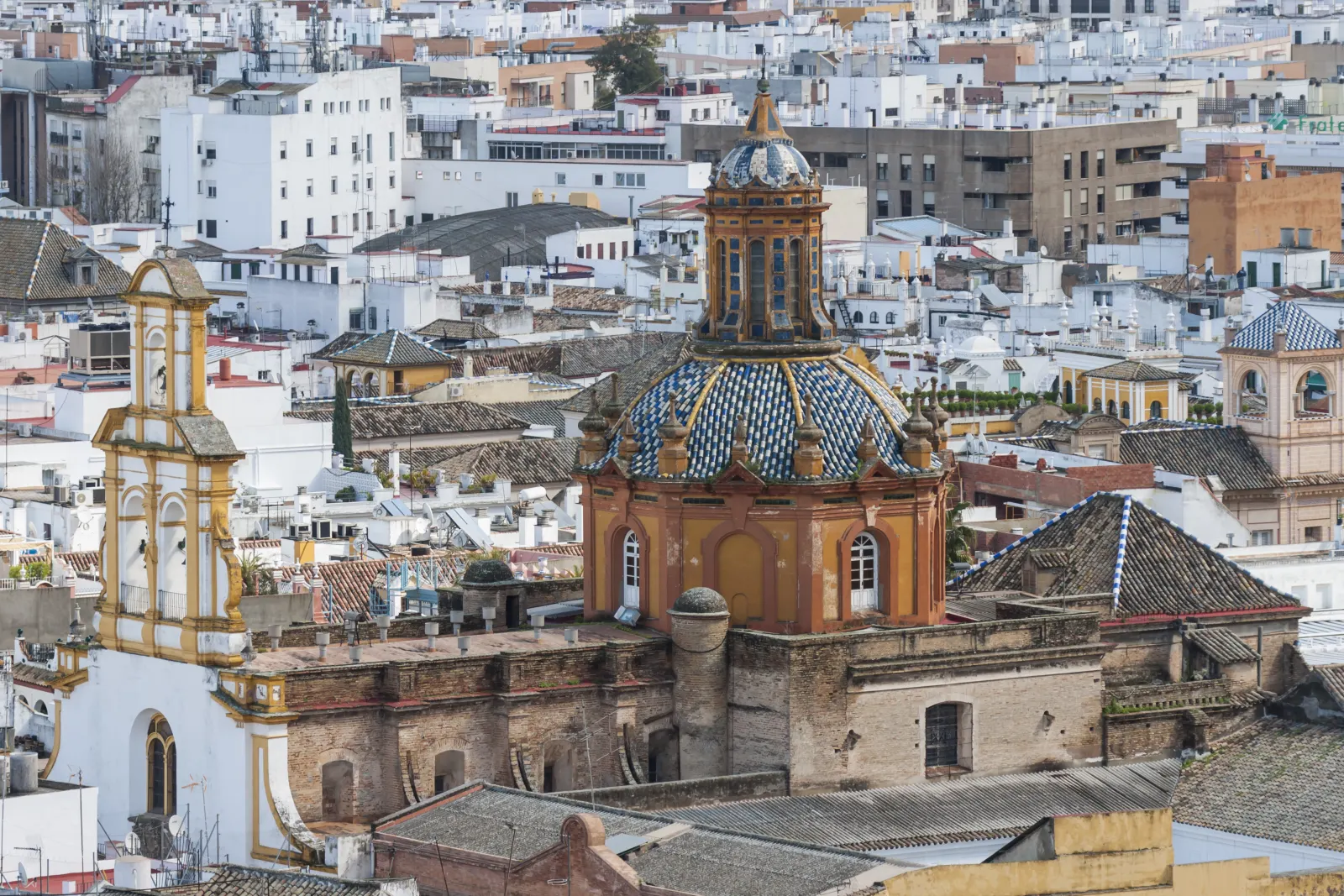
Sevilla is a compact, walkable city in southern Spain, built around Moorish palaces, a huge Gothic cathedral and narrow lanes in Santa Cruz. Cross the river to Triana for a more local feel, flamenco and food. Summers are brutally hot, so the best months to visit are February, April, October and November, when days are warm but walkable and the light is good for Plaza de España and the Alcázar gardens.

How many days do you need in Sevilla?

Two to three days cover the Alcázar, cathedral, Santa Cruz and Triana at an easy pace, with time left for Plaza de España and Parque de María Luisa.

Top attractions in Sevilla

  1. 1Royal Alcázar of Seville (Real Alcázar)

    2–3 hours

    Santa Cruz

    A royal palace that is still in use, with Mudéjar halls, carved stucco, tiled courtyards and large walled gardens. It is the sight most visitors rank first in Sevilla, so book a timed ticket ahead.

  2. 2Seville Cathedral and La Giralda

    2–3 hours

    Santa Cruz

    One of the largest Gothic cathedrals in the world, built on the site of a mosque. It holds the tomb of Christopher Columbus. You can climb the Giralda bell tower, a former minaret, by ramps instead of stairs for views over the old town.

  3. 3Plaza de España

    1–2 hours

    Parque de María Luisa

    A large semicircular square with a brick-and-tile building, a canal you can row on, and tiled alcoves for each Spanish province. It is free to walk around and looks best in the softer light of early morning or late afternoon.

  4. 4Barrio Santa Cruz

    1–2 hours

    Santa Cruz

    The old Jewish quarter next to the Alcázar. It is a maze of narrow lanes, small squares with orange trees, and whitewashed houses with flower-filled patios. Get lost on foot and stop at a tapas bar.

  5. 5Parque de María Luisa

    1–2 hours

    Parque de María Luisa

    Sevilla's main park, with shaded paths, ponds, fountains and tiled benches. It is a good place to cool down on hot afternoons and connects directly to Plaza de España.

  6. 6Metropol Parasol (Las Setas)

    1 hour

    Encarnación

    A huge modern wooden structure shaped like giant mushrooms over Plaza de la Encarnación. A walkway on top gives wide views of the city, and Roman remains are on show in the museum underneath. Many people go up at sunset.

  7. 7Triana

    Half a day

    Triana

    The neighbourhood across the Guadalquivir river, long known for its ceramics workshops, sailors and flamenco. Walk over the Isabel II bridge, visit the Triana market and the tile shops, and eat along Calle Betis by the river.

  8. 8Casa de Pilatos

    1–2 hours

    San Bartolomé

    A noble family palace mixing Mudéjar, Gothic and Renaissance styles. It has some of the finest tilework in the city and quiet gardens, and it is usually much less crowded than the Alcázar.

  9. 9Real Maestranza Bullring

    1 hour

    El Arenal

    One of the oldest and most famous bullrings in Spain, painted white and ochre beside the river. A guided tour shows the arena, the chapel and a museum on the history of bullfighting.

  10. 10Torre del Oro

    Under 1 hour

    El Arenal

    A medieval watchtower on the riverbank that once helped guard the port. It holds a small naval museum, and the top has views along the Guadalquivir. River cruises leave from nearby.
Sevilla by month

Average weather and our month score, from 10 years of climate data.

Weather by month and month scores for Sevilla
Month High / low Rain days Sunshine Score
January 16°C / 6°C 5 days (39 mm) 7.7 h/day 7.9/10
Best month: February 18°C / 8°C 5 days (31 mm) 9.0 h/day 9.1/10
March 21°C / 10°C 10 days (80 mm) 9.4 h/day 8.1/10
Best month: April 23°C / 12°C 7 days (52 mm) 11.0 h/day 8.6/10
May 29°C / 16°C 4 days (28 mm) 12.3 h/day 7.9/10
June 33°C / 19°C 1 day (10 mm) 13.4 h/day 5.0/10
July 37°C / 22°C 0 days (1 mm) 13.4 h/day 3.5/10
August 37°C / 22°C 0 days (3 mm) 12.7 h/day 3.4/10
September 32°C / 19°C 3 days (24 mm) 11.2 h/day 6.6/10
Best month: October 27°C / 16°C 7 days (87 mm) 9.0 h/day 8.3/10
Best month: November 20°C / 11°C 7 days (59 mm) 8.1 h/day 8.6/10
December 17°C / 8°C 6 days (60 mm) 7.6 h/day 8.3/10
  1. Jan

    Highs reach 15.9°C with about 5.1 rain days. One of the best months to visit, mild and relatively dry.

  2. Feb

    Highs climb to 18.4°C with 4.6 rain days. Scores highest of the year, a great time for sightseeing in comfortable temperatures.

  3. Mar

    Highs of 20.6°C but rain picks up, with 9.6 rain days and 80mm of rain, the wettest month. Still rated among the best.

  4. Apr

    Warm days averaging 23.3°C high with 7.2 rain days. A top-rated month with 11 hours of sun and pleasant conditions.

  5. May

    Highs reach 28.5°C with only 4.2 rain days. Sunny and rated among the best months before summer heat arrives.

  6. Jun

    Temperatures jump to 32.5°C high with almost no rain, just 1.3 rain days. Conditions turn hot, so the score drops to a middling 5.0.

  7. Jul

    Scorching with highs of 37°C and virtually no rain, 0.1 rain days. Extreme heat makes this the lowest-scoring month.

  8. Aug

    Highs stay near 36.9°C with just 0.4 rain days. Intense dry heat continues, keeping the score at its lowest alongside July.

  9. Sep

    Highs ease to 31.5°C with 3.4 rain days. Still warm but improving conditions bring a good rating.

  10. Oct

    Highs of 26.6°C with 7 rain days and 87mm of rain, the wettest total of the year. Despite the rain, scores rank this among the best months.

  11. Nov

    Mild at 20°C high with 7.1 rain days. One of the top-scoring months as temperatures cool further.

  12. Dec

    Highs of 17.1°C with 5.9 rain days and 60mm of rain. A cooler but highly rated month to visit, with 7.6 hours of daily sun.

Climate averages 2015–2024 · Best time to visit Spain →

Where to stay in Sevilla

The best areas to base yourself and who each one suits.

Santa Cruz

Good for first-timers, sightseeing

The old Jewish quarter is a maze of narrow lanes and small squares right beside the Cathedral and the Real Alcázar. You can walk to the main sights in minutes. The drawback is crowds of tour groups by day, and the tight streets make arriving by taxi with luggage awkward.

El Arenal

Good for first-timers, food lovers

Between the Cathedral and the Guadalquivir river, this area has the bullring, riverside walks and many traditional tapas bars. It is central but feels a little less packed than Santa Cruz. Bars stay busy late, so some streets are noisy at night.

Triana

Good for local feel, flamenco, food

Across the river, Triana has its own identity, with a food market, ceramics workshops and flamenco bars. It feels more like a living neighbourhood than a tourist zone. The main sights are a walk across the bridge, which adds time to every trip.

Alameda de Hércules

Good for nightlife, younger travellers

This long tree-lined square in the north of the old town is full of bars, cafés and terraces popular with locals. It is relaxed by day and lively at night. Late-night noise can be a problem if your room faces the square.

Macarena

Good for budget, repeat visitors

In the north of the old town, around the Basílica de la Macarena and a surviving stretch of the old city walls, this area is residential and less touristy. Daily life feels local, with neighbourhood markets and churches. It is a longer walk to the Cathedral area, and some streets feel quiet after dark.

Nervión

Good for families, business travellers

A modern district east of the centre, with wide streets, shopping centres and the Sevilla FC stadium. It is calmer and more practical, with good metro and bus links. It lacks old-town charm, and you will need transport or a longer walk to reach the historic sights.

Getting to and around Sevilla

From the airport
The fact pack has no direct route data for Sevilla airport (SVQ) to the centre. The usual options are an airport bus, a taxi, or a private transfer, with no times or prices given here.
Public transport
Sevilla has a tram and bus network, but no metro line covering the main tourist sights. Most visitors walk between the central areas and use buses only for longer hops like Nervión or Macarena.
On foot
The centre is very walkable. Santa Cruz holds the Royal Alcázar, Seville Cathedral and La Giralda, and Barrio Santa Cruz within a short walk, and El Arenal's Torre del Oro and Real Maestranza Bullring are close by too.

Typical journey times and fares from the airport and other cities.

Route By Time Price
Granada → Sevilla ALSA runs 12 buses a day; 3 hours direct, up to 5 hours on services with more stops. From 12 EUR. Check the timetable before booking, as the slow runs cost the same time-wise as a half day. bus 3 h 12 EUR ↗

Day trips from Sevilla

Places within 2½ hours by train, bus, ferry or car.

  • Madrid

    train · 27.3–77.1 EUR

    Renfe AVE, Atocha to Sevilla Santa Justa. Around 27.30 EUR if booked about a month ahead; same-day average 77.10 EUR. OUIGO and iryo also run this line.

    2 h 30 min
  • Cordoba

    train · 8.42 USD

    About 28 trains a day (Renfe AVE and Avant, plus OUIGO and iryo), average 42 minutes. Trainline's US site lists fares from USD 8.42; Avant tickets are the cheapest and rarely sell out. Good as a day trip either way.

    42 min

Food to try in Sevilla

Espinacas con garbanzos

A stew of spinach and chickpeas, often spiced with cumin and paprika. It is a classic tapa served in bars across the city, especially around Lent.

Salmorejo

A thick, cold tomato and bread soup, richer and creamier than gazpacho. It is usually topped with chopped boiled egg and jamón, and eaten as a starter in the hot months.

Cola de toro

Slow-cooked oxtail stew, tender and rich from hours of braising. It is a traditional dish linked to the city's bullfighting history and appears on many tapas menus.

Pescaíto frito

An assortment of small fish and squid, lightly floured and fried. Locals eat it in casual bars near the river, often shared straight from the paper cone.

Gazpacho

A cold raw tomato and vegetable soup, served chilled as a refreshing starter during Sevilla's long, hot summer.

Tapas crawl (tapeo)

Rather than one dish, Sevillanos eat out by moving between bars, trying small plates like croquetas or montaditos at each stop. It is a social evening habit rather than a single meal.

More of Spain

Spain travel guide →

Sevilla: frequently asked questions

Is Sevilla good to visit in August?

No, August scores just 3.4 out of 10. Highs average 36.9°C with only 0.4 rain days, so the heat is intense and dry. It's one of the two lowest-scoring months, alongside July at 37°C highs. If you still go, plan around midday heat.

What is the best time to visit Sevilla?

February, April, October and November score highest, all rated 'best' with scores between 8.3 and 9.1. February has mild highs of 18.4°C, April reaches 23.3°C, and October and November cool to 26.6°C and 20°C. Rain is moderate in these months, and the extreme summer heat is gone.

How many days do I need in Sevilla?

Two to three days covers the main sights. The Royal Alcázar and Cathedral each take 2–3 hours, Plaza de España and Casa de Pilatos need 1–2 hours, and Triana is a half-day visit. Three days lets you add Metropol Parasol, Torre del Oro and a slower walk through Barrio Santa Cruz.

Is Sevilla hot in summer?

Yes, July and August are the hottest months, with average highs of 37°C and 36.9°C. Both months get almost no rain, with 0.1 and 0.4 rain days respectively. June is also warm at 32.5°C but scores higher overall at 5 out of 10, making it a milder entry into summer.

When does Sevilla get the most rain?

October has the highest rainfall, averaging 87mm over 7 rain days. March follows closely with 80mm over 9.6 rain days. By contrast, July and August are nearly dry, with 1mm and 3mm of rain. If you want to avoid wet days, aim for June through September.